ACTIVE TRAJECTORIES - A Vision for Lahti Sport Center and Beyond
Lahti (FI) - Lauréat
DONNÉES DE L’ÉQUIPE
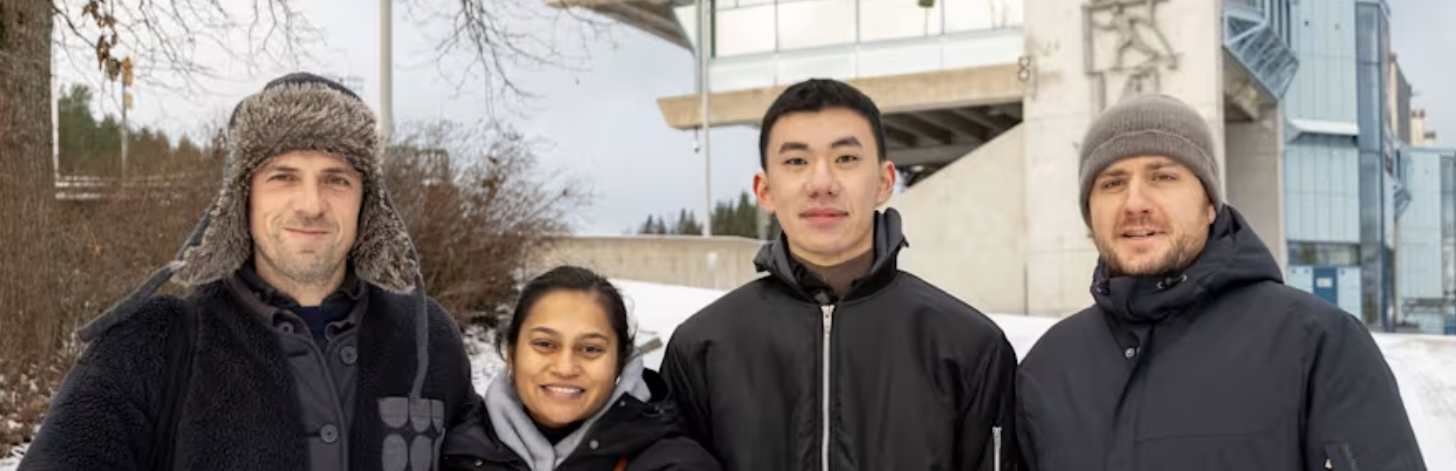
Associés: Jacopo Gennari Feslikenian (IT), Ishaani Paresh Shah (IN), Hengxing Cao (CN), Abhinand Krishnakumar Menon (IN) – architectes paysagistes, Matteo Motti (IT) – urbaniste
Collaborateur: Buket Turan (TR) – architecte paysagiste
info@jgf.works
http://www.bluworks.eu/
TEAM PORTRAIT
VIDEO (by the team)
INTERVIEW
Click on the images to enlarge
1. How do you define the main issues of your project in relation with the theme “Re-sourcing”? Re-sourcing thanks to nature, to social dynamics, to new materiality? In which way do you think your project can contribute to an ecological and/or social evolution? And in which way do you think your project can be called a “regenerative project”?
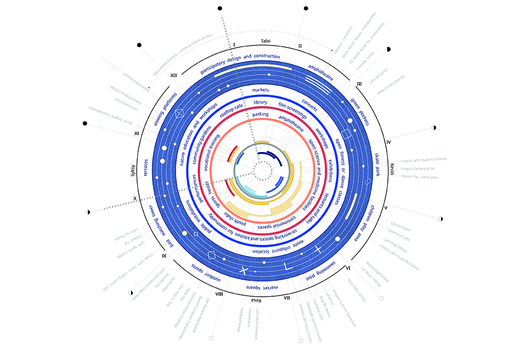
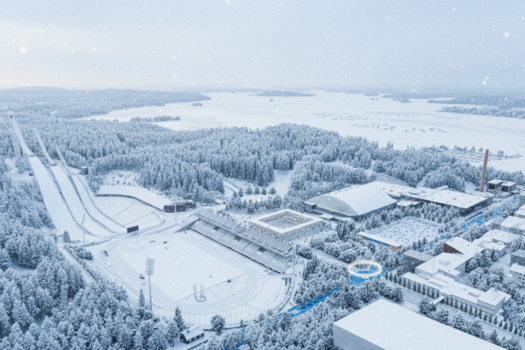
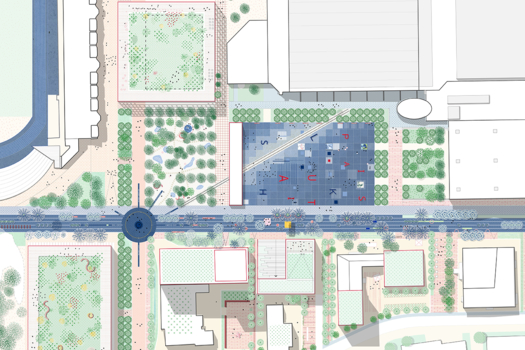
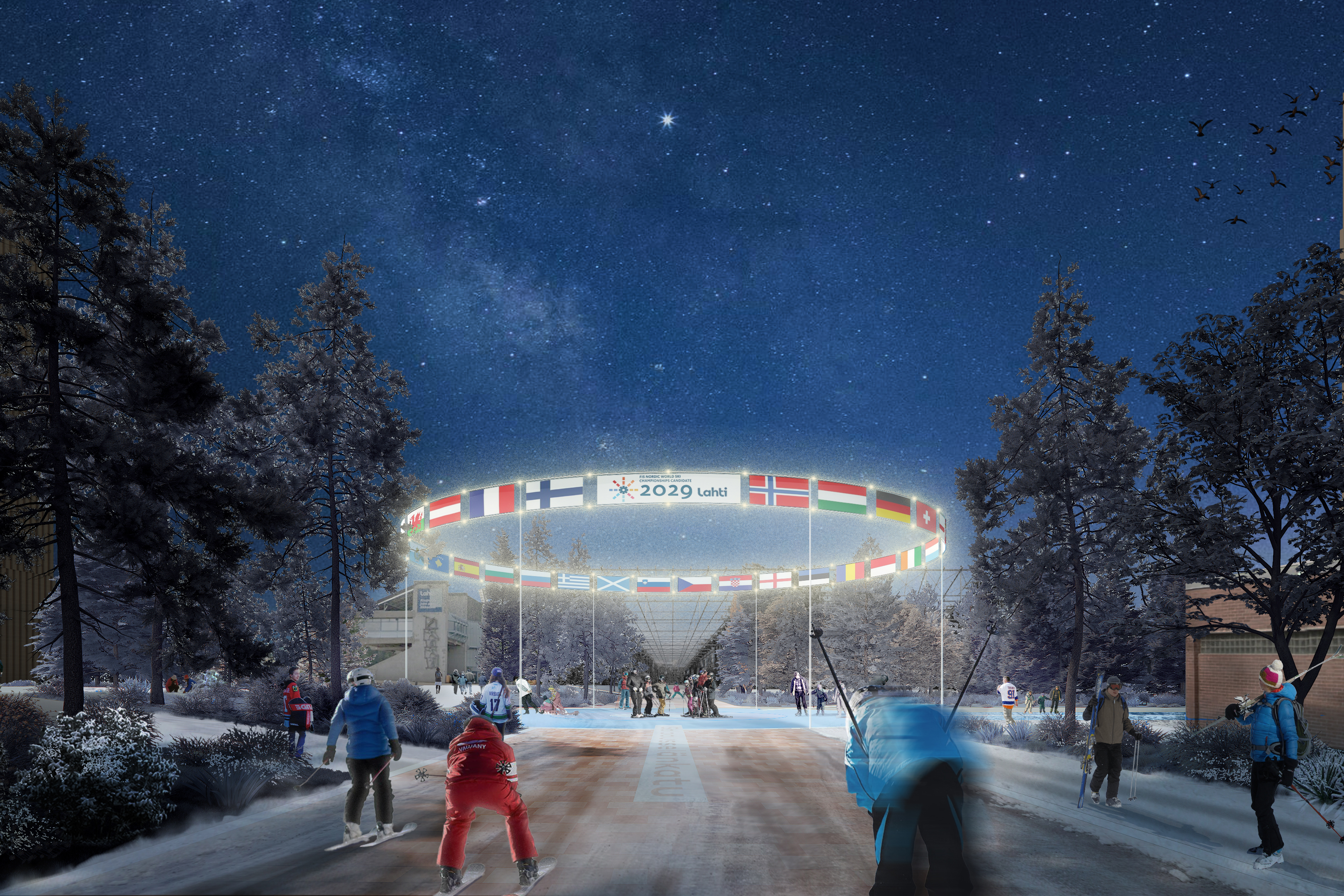
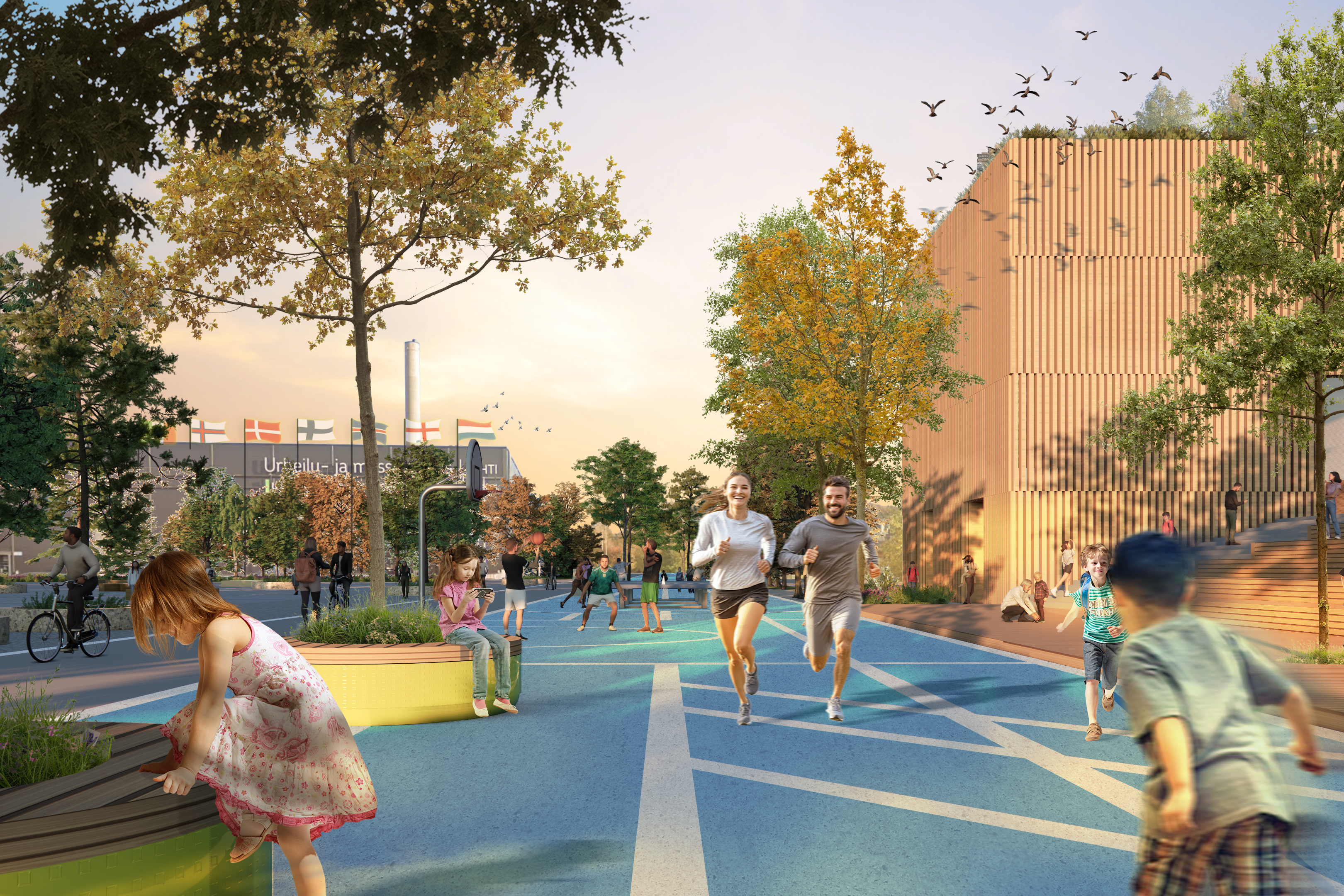
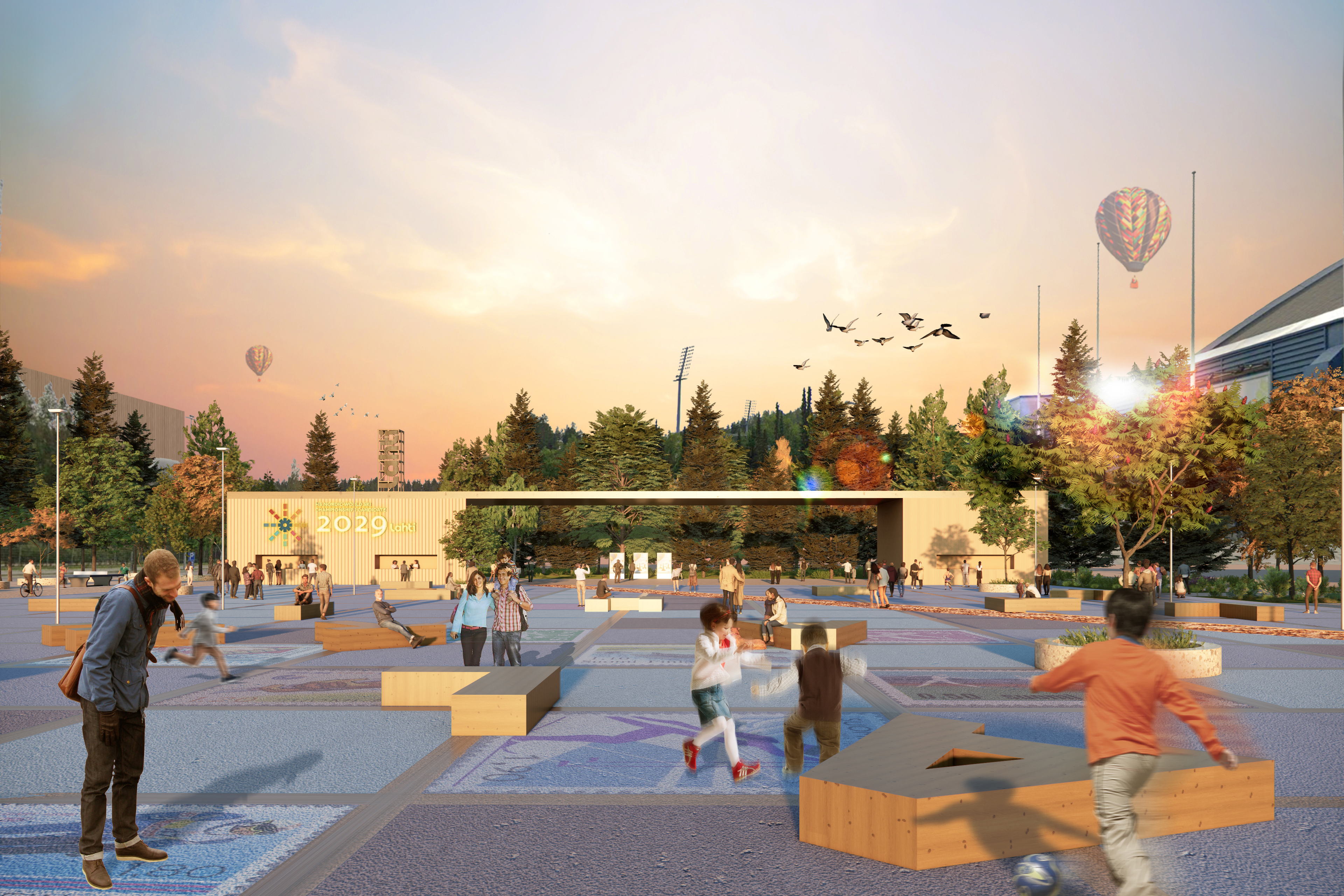
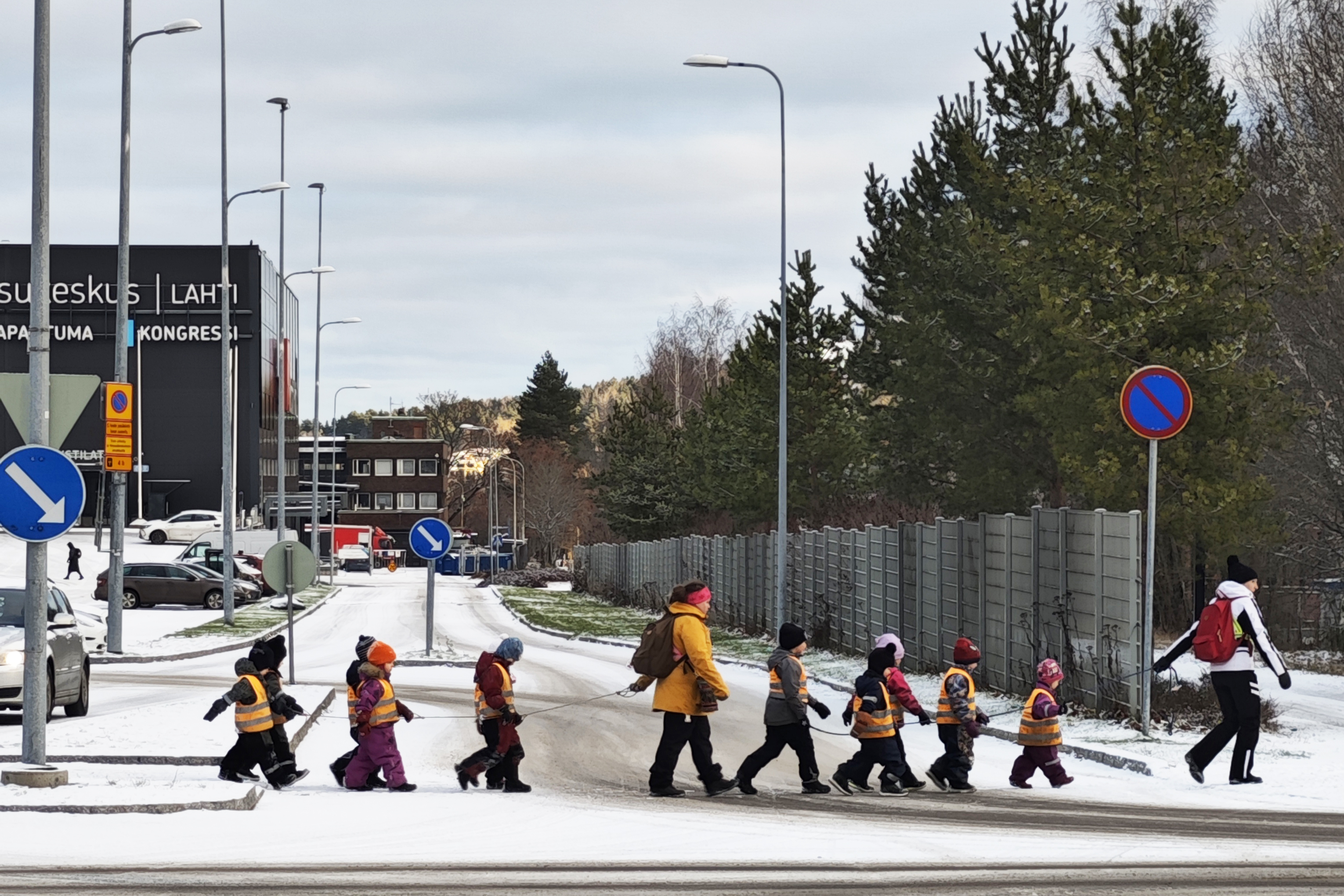
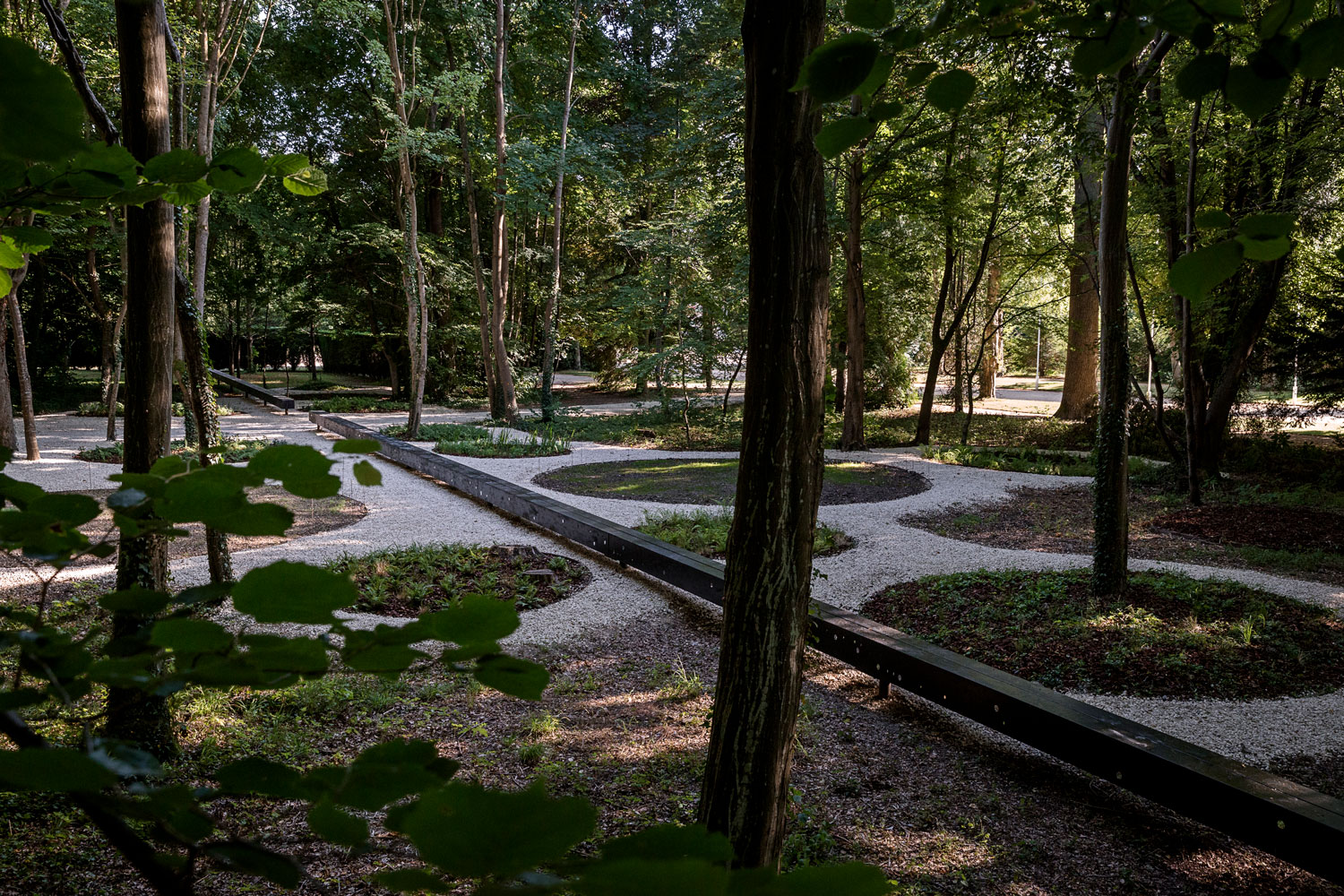
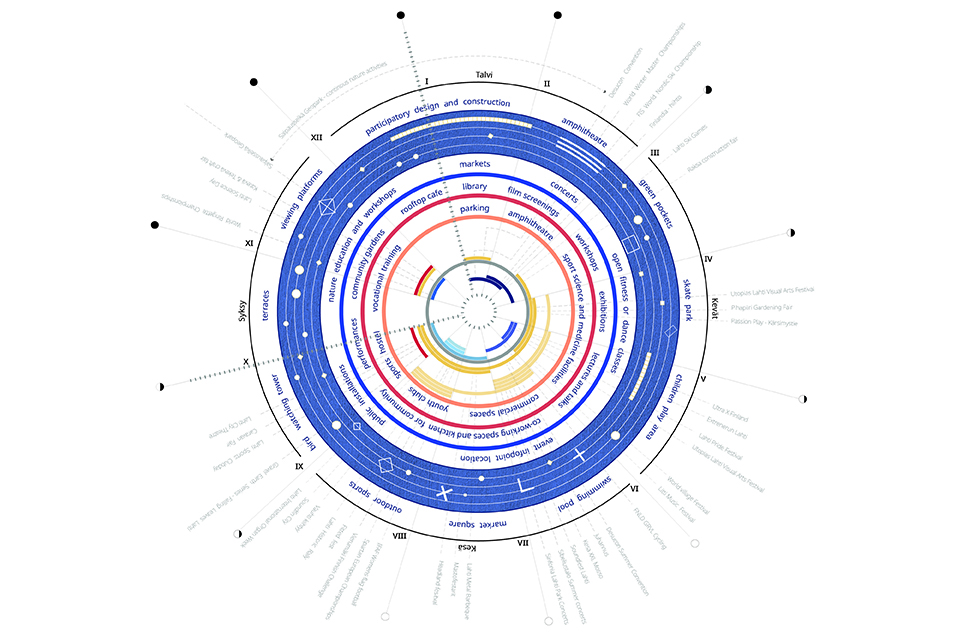
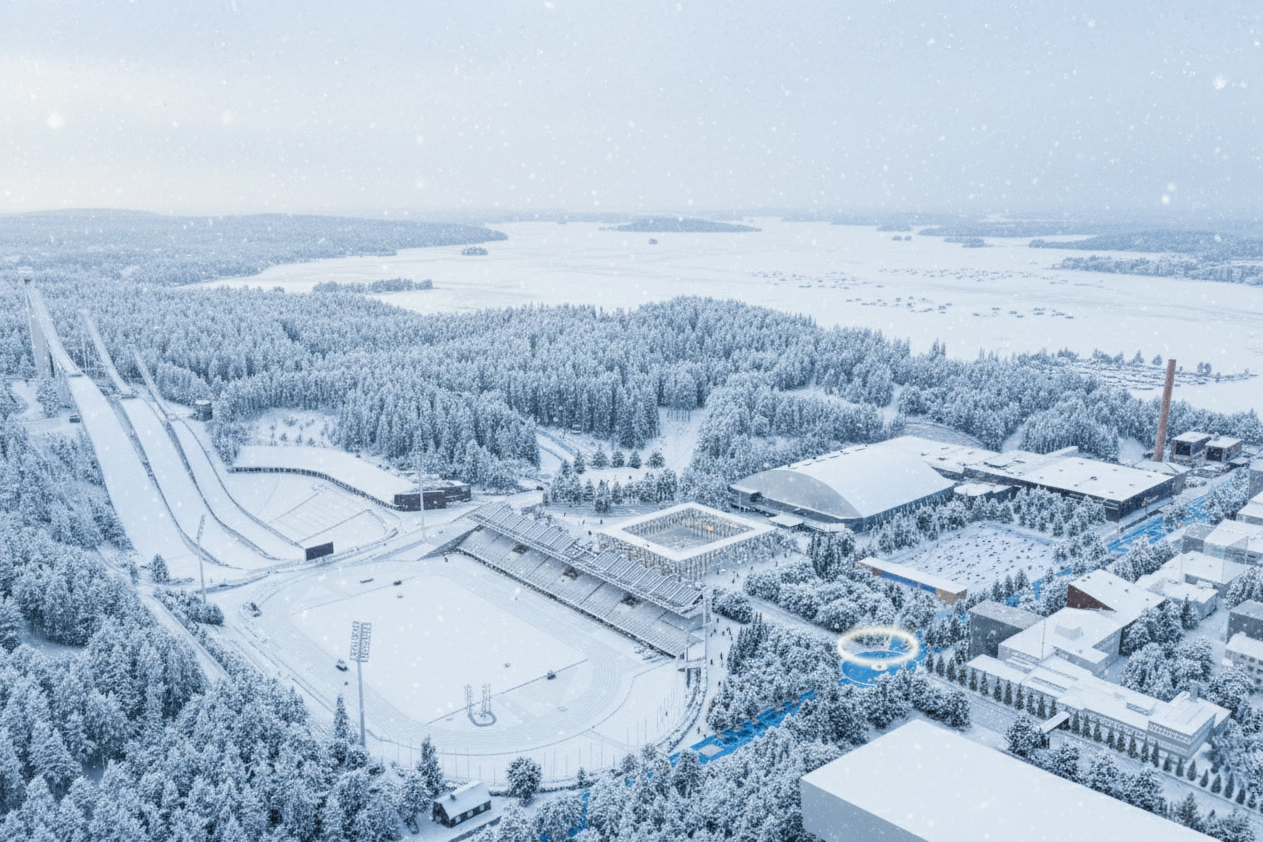
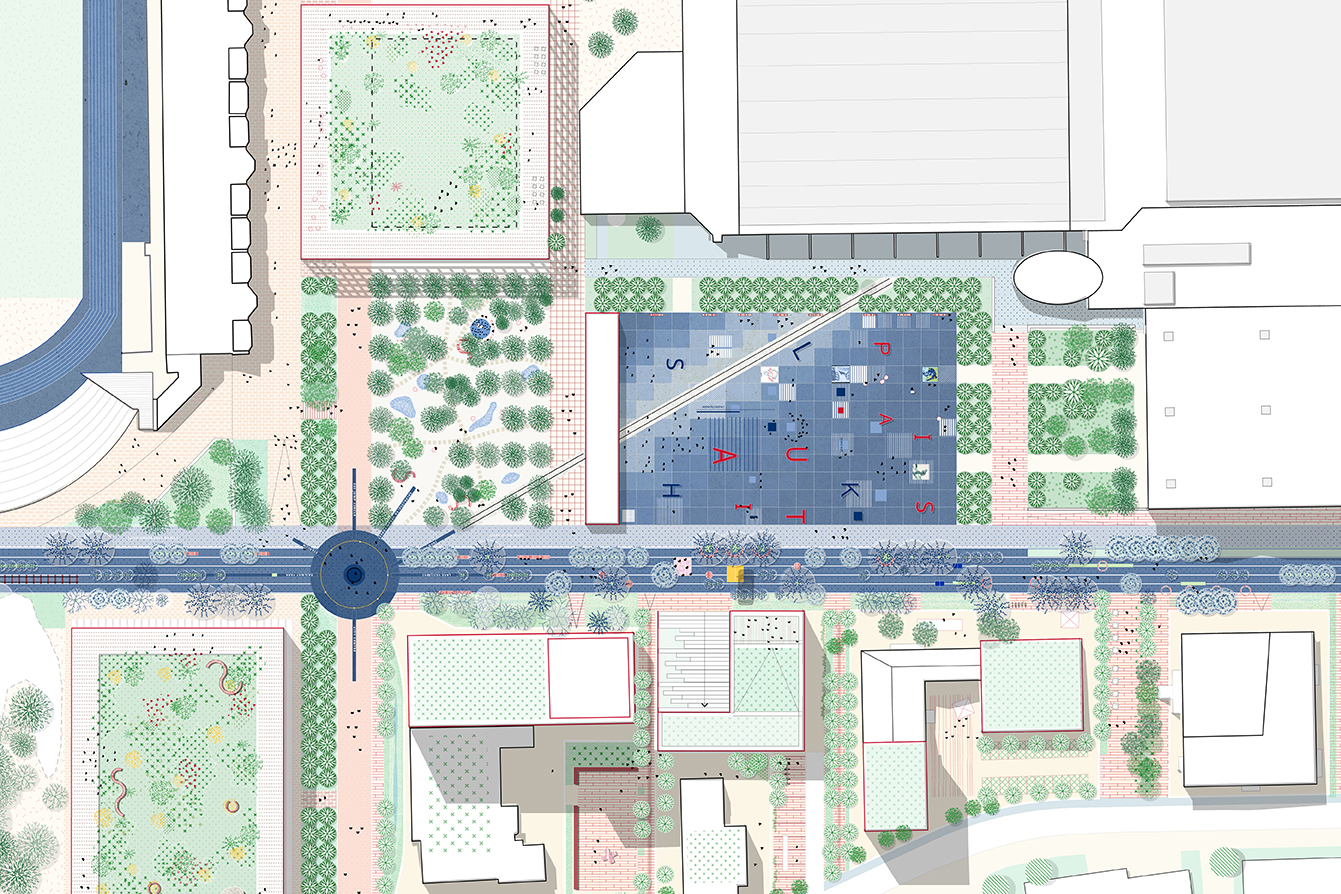
Our project aims to create an active and flexible public space network that addresses the needs of multiple target groups, day-and-night uses, and seasonal variations. The area is currently characterized by peak winter use during sports events and is underused, especially in the summertime. With our project, we envision transforming the site into a new destination for citizens and visitors throughout the year. Our approach aims to regenerate social dynamics by creating a coherent public space surface and implementing a new identity based on well-being, social gathering, and coexistence between different species. Lastly, our project re-connect the city with the forest ecosystem and the waterfront by transforming an existing road into a new linear park.
2. How did the issues of your design and the questions raised by the site mutation meet?
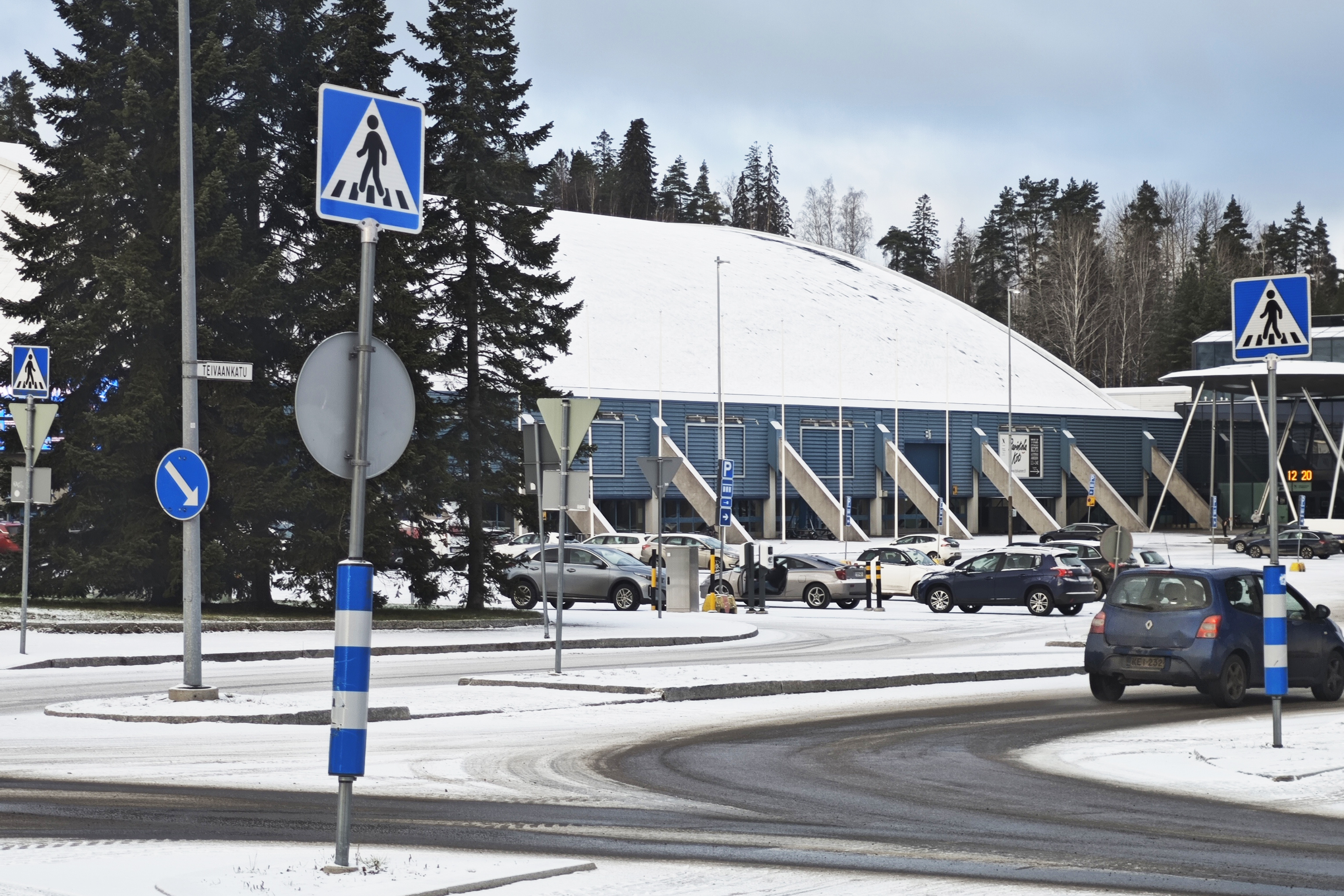
The project seeks to inform and steer future transformations of the site, moving beyond a mere analysis of changes that have occurred to date. Its underlying premise is the conversion of monofunctional spaces and infrastructures—primarily dedicated to vehicular circulation and parking—into hybrid infrastructures that integrate ecological and social dimensions.
PROJECT:
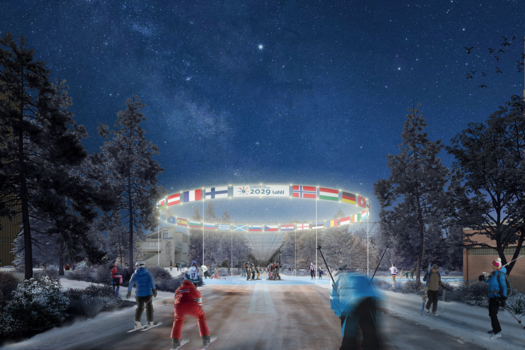
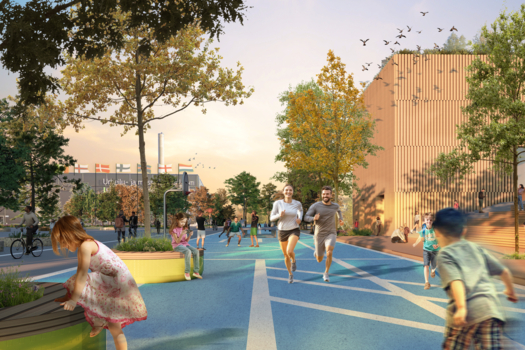
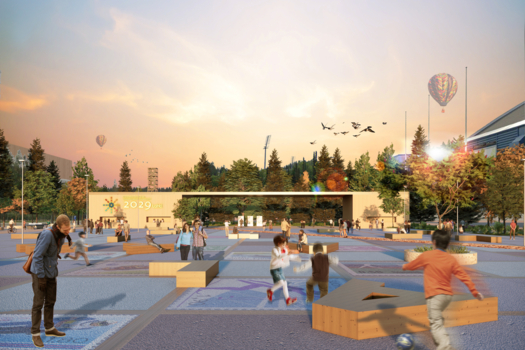
Yes, topics such as public space design and urban regeneration, the creation of a strong new identity, and the connection between urban and ecological systems are key issues in our work and experience, which we have extensively investigated and designed at multiple scales and in different climatic and social conditions. In particular, our consolidated experience in designing public-space-related projects in similar climatic contexts, such as Sweden (Solander Ring, Piteå) and Russia (Revealing Geometries, Kaliningrad), was crucial in properly understanding seasonal variations and Nordic dynamics.
SITE:
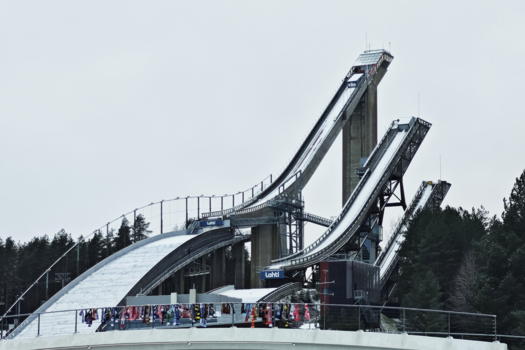
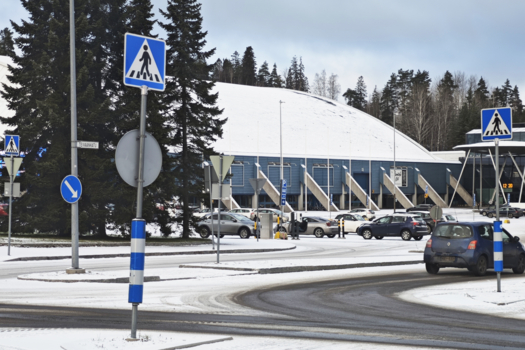
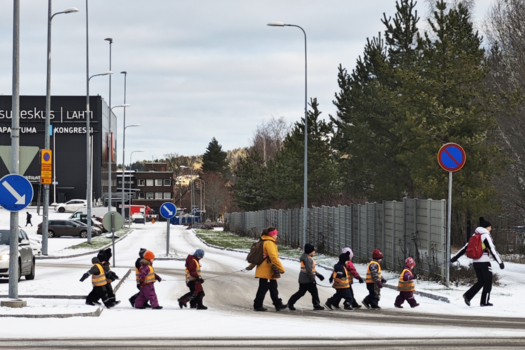
Phasing and flexibility are key elements of our proposal. We developed the project by taking into account short-, mid-, and long-term development scenarios. The high degree of flexibility of our proposal allows us to respond to unpredictable changes throughout the process while maintaining the core elements that define the project. As landscape architects and urban designers, we need to mediate and integrate the needs and intentions of different tangible stakeholders, such as public and private interests, as well as intangible ones, including nature and climate.
REFERENCES:
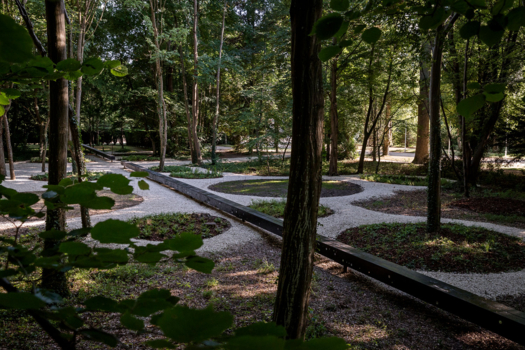
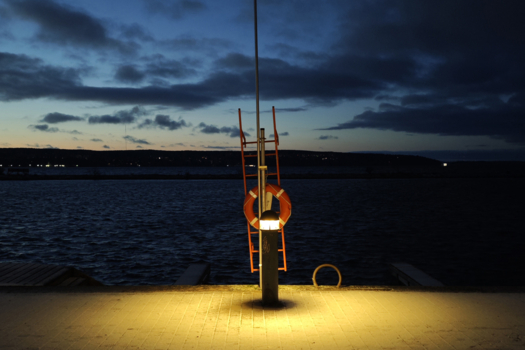
The team has a strong experience in working together. It is a crafted mix of international experience and diverse sensibilities. The team is also defined by a rich multiculturalism having members from Italy, India, China and Turkey. The senior members worked for many years at the intersections between Landscape architecture, Urban design, Spatial strategies and Public space design. In addition they both have a background of studies in architecture. The junior members are landscape architects with a developed understanding for large scale urban dynamics and ecological systems. The team has strong experience working together and represents a carefully crafted mix of international experience and diverse sensibilities. It is also characterized by rich multiculturalism, with members from Italy, India, China, and Turkey. The senior members have worked for many years at the intersection of landscape architecture, urban design, spatial strategies, and public space design. In addition, both have an academic background in architecture. The junior members are landscape architects with a strong understanding of large-scale urban dynamics and ecological systems.
6. How could this prize help you in your professional career?
First of all we consider it as a great and rewarding achievement. Secondly, we already started a strong collaboration with the client that clearly demonstrates to be very determined in moving forward with the project and therefore it’s a fantastic opportunity for our career.
TEAM IDENTITY
Legal status:
Team name:
Average age of the associates: 35 years old
Has your team, together or separately, already conceived or implemented some projects and/or won any competition? if so, which ones?
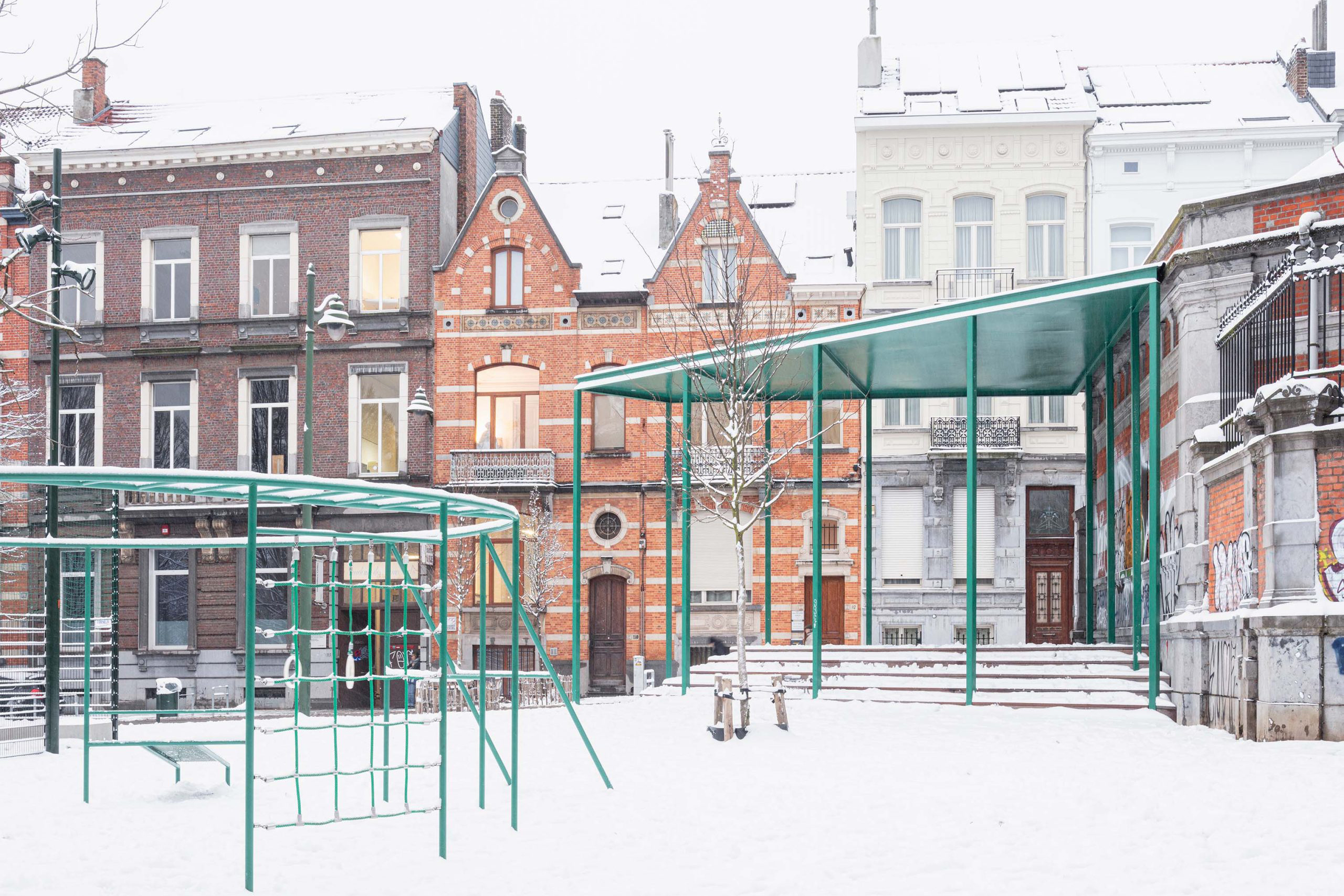
Yes, we conceived and implemented a broad array of projects, dealing with multiple scales and different climatic condi- tions. Among them, members of our team have won the Europan 17 in Piteå, Sweden. All the members share either a pres- ent or past experience working together at an office called Openfabric, with which we realized public space projects such as ‘Gridgrounds’ in Amsterdam (NL), Piazza degli Alpini in Desio (IT), and A3 Courtyards in Ekaterinburg (RU).
WORKS: