Capriccio: Beyond the Analogue
Amersfoort-Amicitia (NL) - Lauréat
TEAM PORTRAIT
VIDEO (by the team)
INTERVIEW
Click on the images to enlarge
1. How do you define the main issues of your project in relation with the theme “Re-sourcing”? Re-sourcing thanks to nature, to social dynamics, to new materiality? In which way do you think your project can contribute to an ecological and/or social evolution? And in which way do you think your project can be called a “regenerative project”?
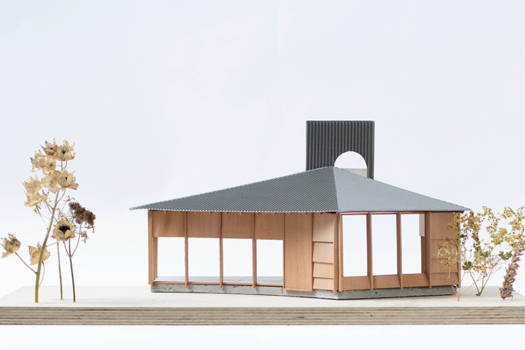
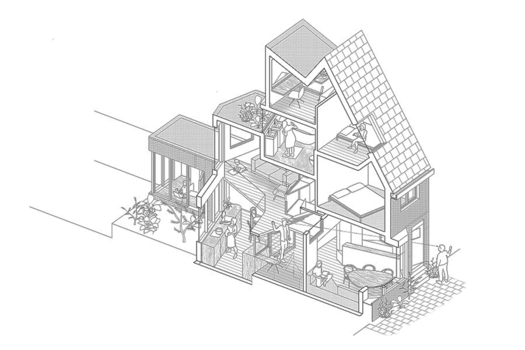
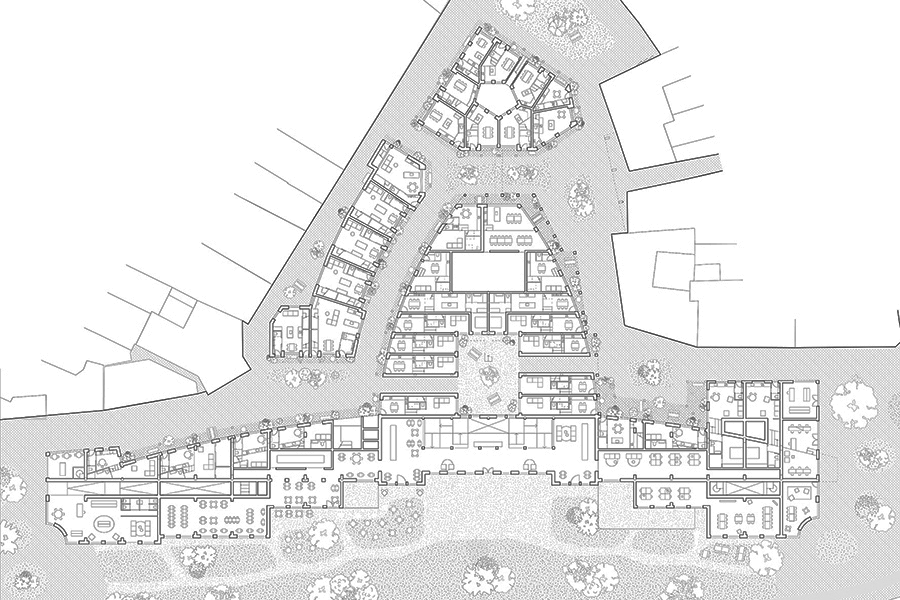
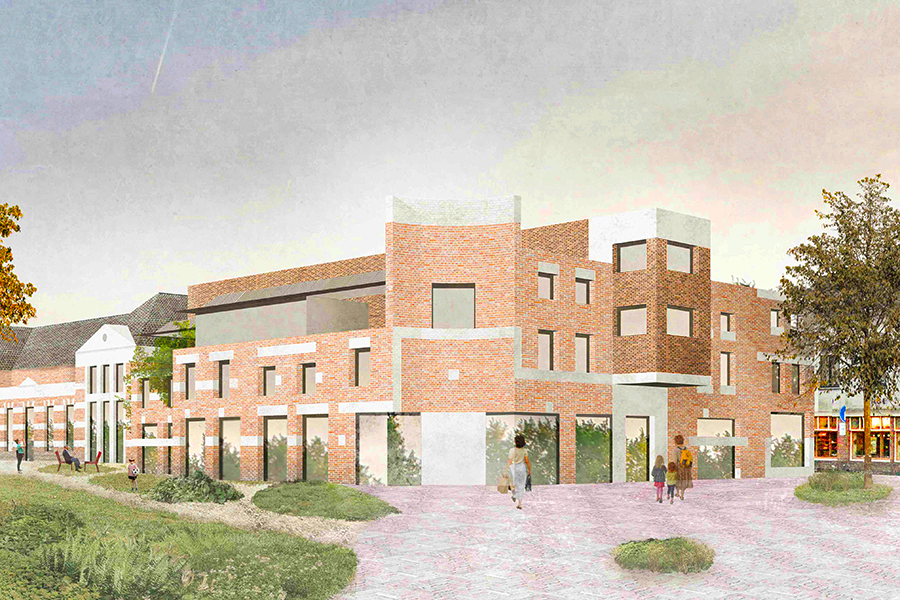
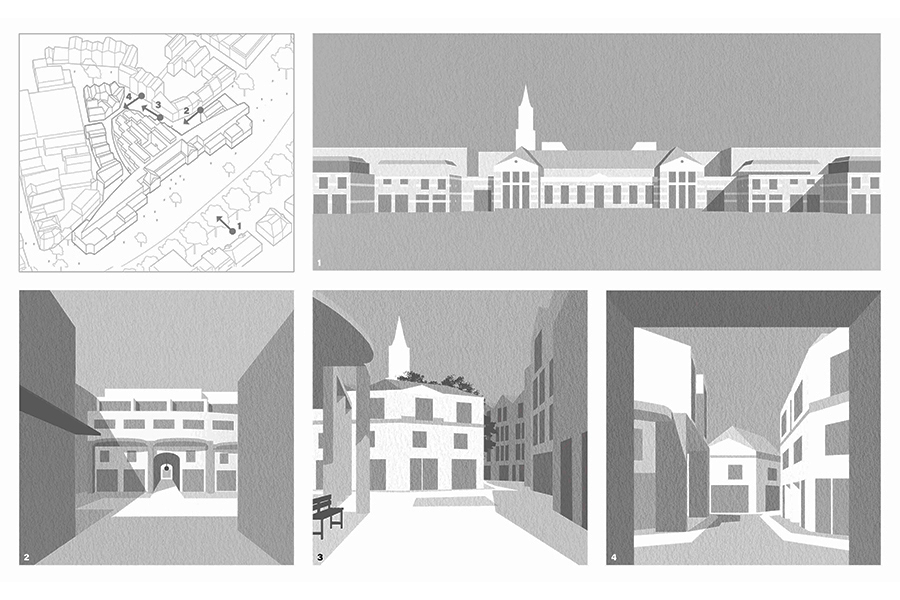
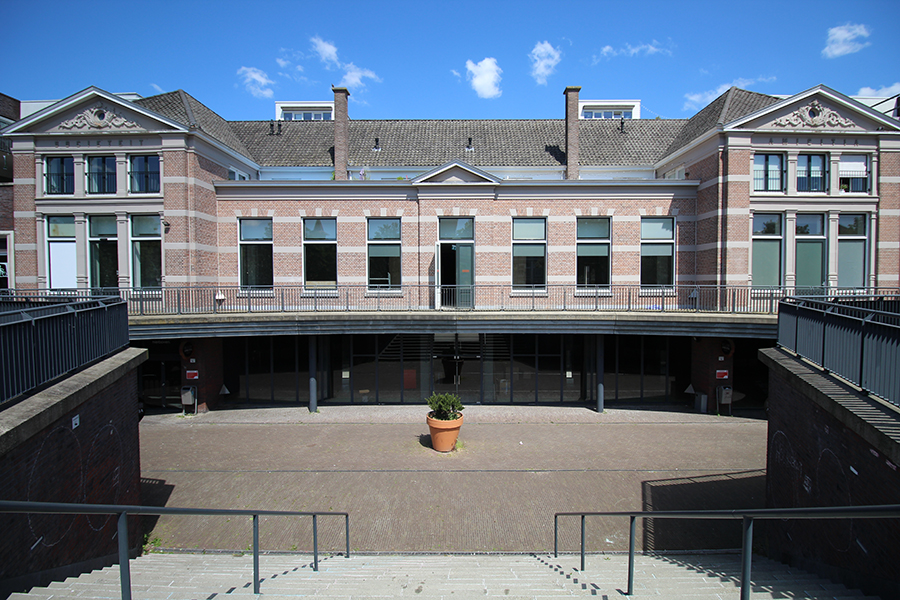
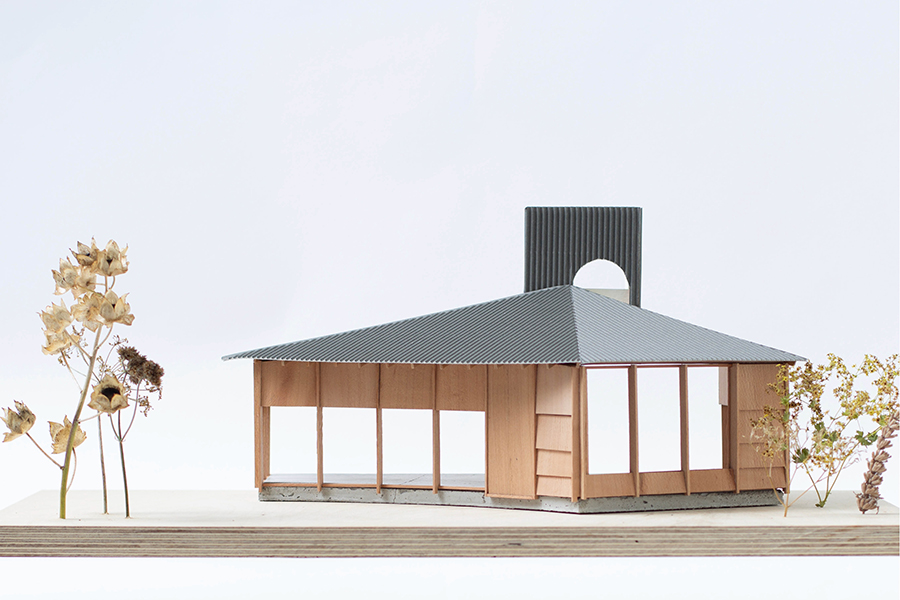
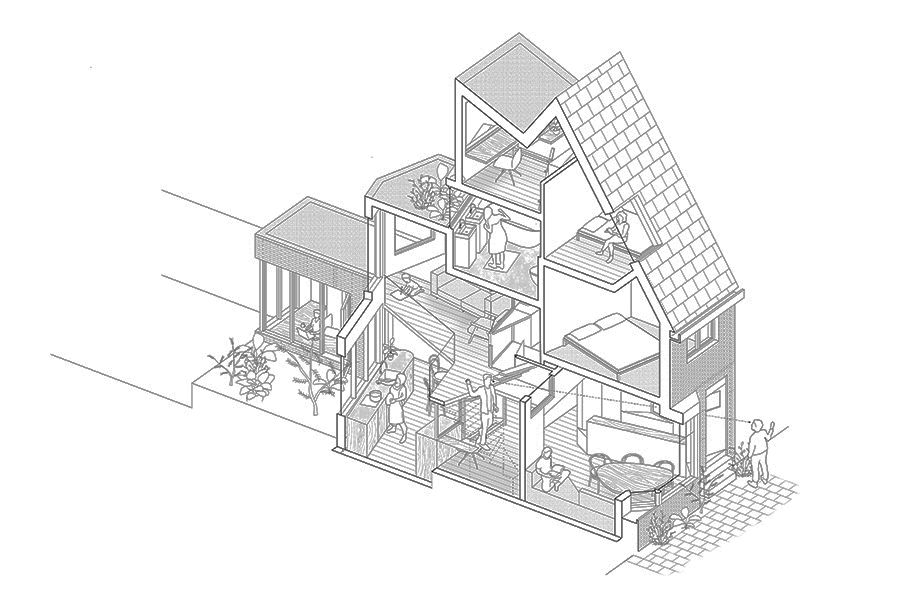
Our submission ‘Capriccio: Beyond the Analogue’ proposes a design method that works on fragments rather than conceptual abstractions, leaving room for the complexity and unpredictability of different values and perspectives, so that different ways of resourcing can come together: the existing building from 2001, the existing social structures while at the same time improving the urban situation.
2. How did the issues of your design and the questions raised by the site mutation meet?
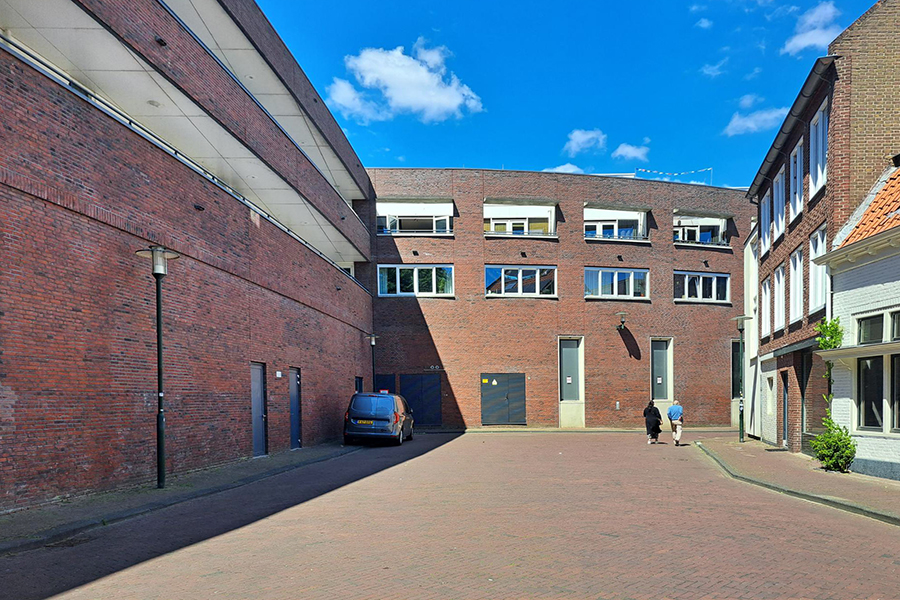
Our objective was to give a convincing answer to the issues on site, while preserving the existing building as much as possible. This resulted in a process of going back and forth to the existing situation and several solutions, bringing them together. This resulted for example in a bay-window design that preserves the inhabitants’ view over the street while defining an urban space.
PROJECT:
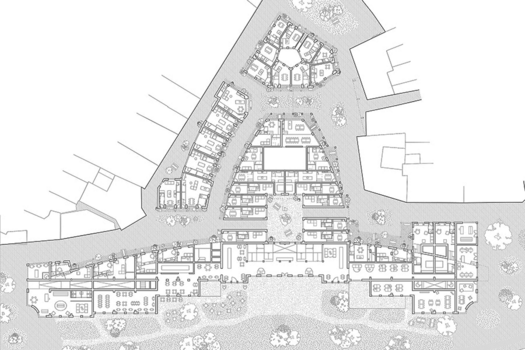
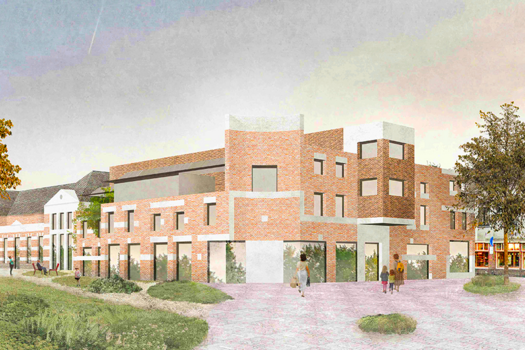
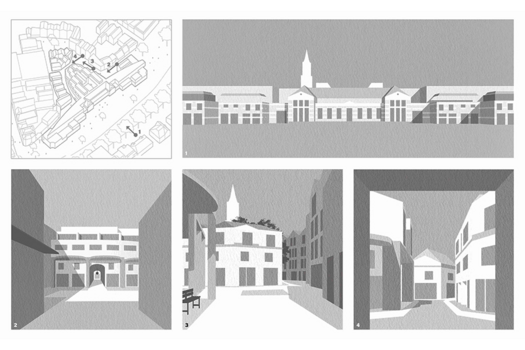
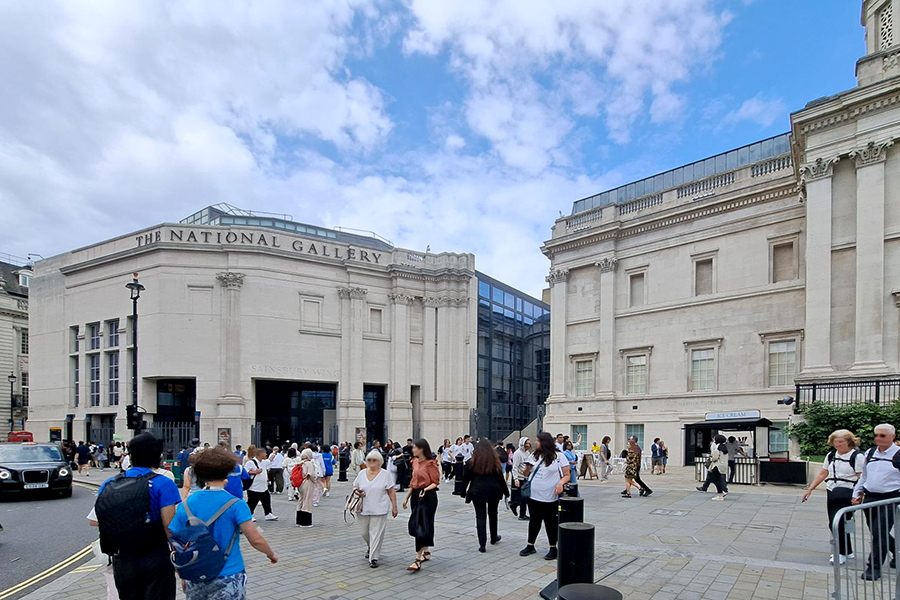
As an office, we have developed this design method and explored it in different projects before, always designing from the fragmented perspective of the experience by the user. Specifically for this project, we were inspired by a.o. the Sainsbury wing by Venturi Scott Brown, that resources the logic of the existing monument and gradually transforms this into a modern building.
SITE:
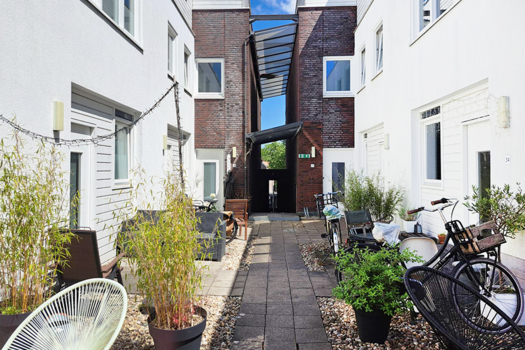
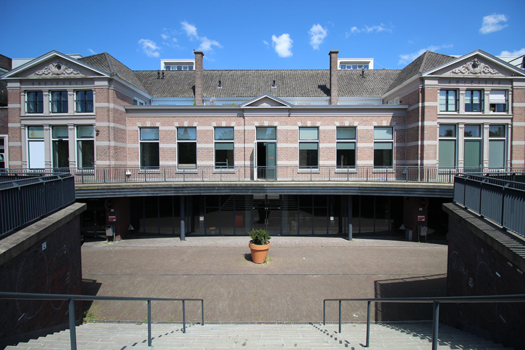
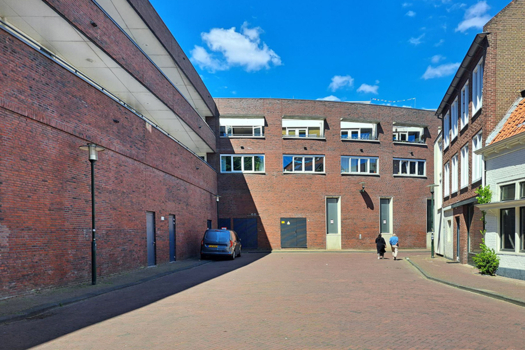
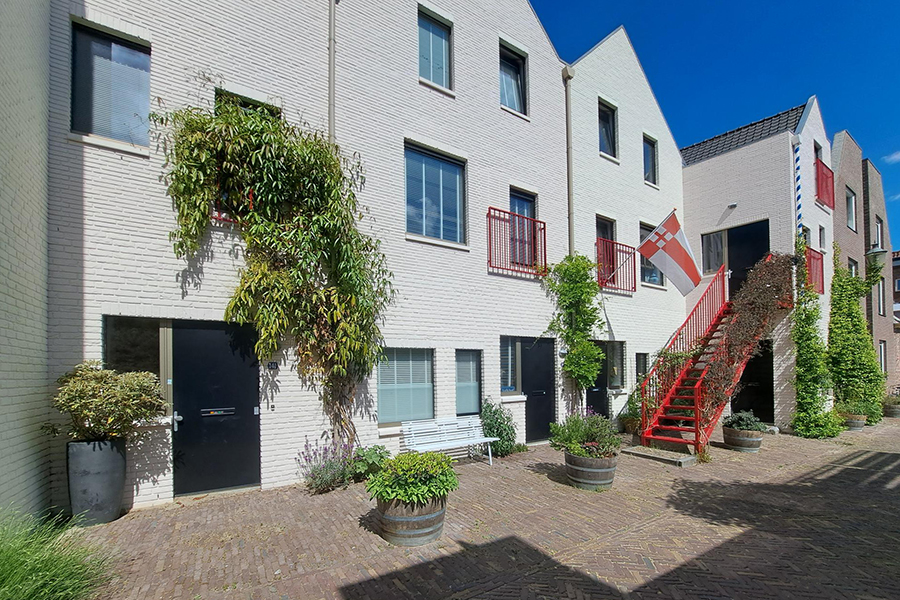
The method of designing leaves room for unpredictability in the future: it is not set in stone as we designed it now, it will be altered as new perspectives from e.g. current inhabitants, possible renters or a further specified financial frame will be added. The project was designed in such a way that the current inhabitants can all stay in their existing houses.
REFERENCES:
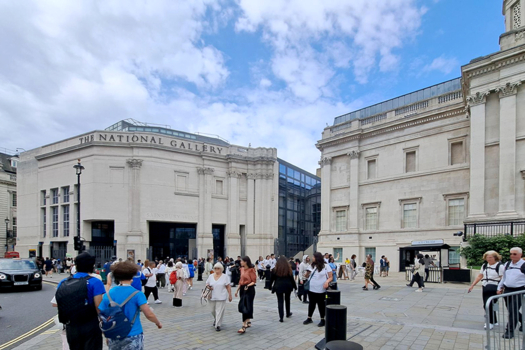
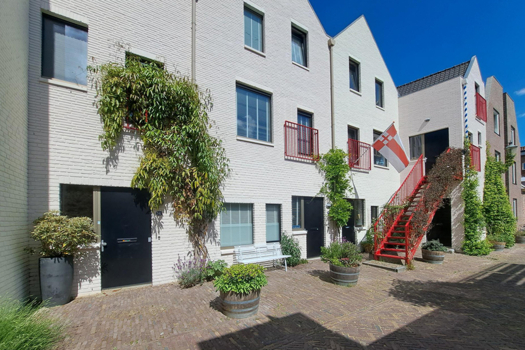
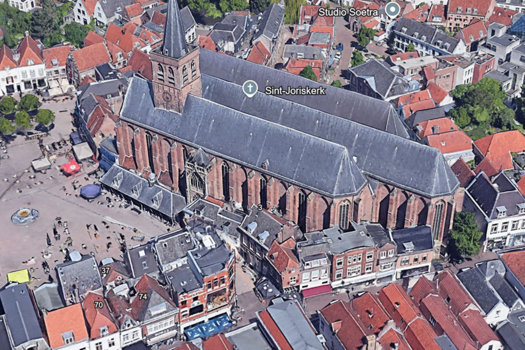
We have been working together as an office for some time now, and were happy to use the project as a further exploration of our working methods. We consciously chose a location with a limited scale, so that our skills on the architectural level could be put to good use.
6. How could this prize help you in your professional career?
Yes, we hope so! We are happy with the result, and we think it could greatly improve the situation around the current building. We are very much looking forward to meeting the owner and the municipality, to start brainstorming how we can implement these insights.
TEAM IDENTITY
Legal status: Baltussen van Schaik V.O.F.
Team name: Baltussen van Schaik
Average age of the associates: 32 years old
Has your team, together or separately, already conceived or implemented some projects and/or won any competition? if so, which ones?
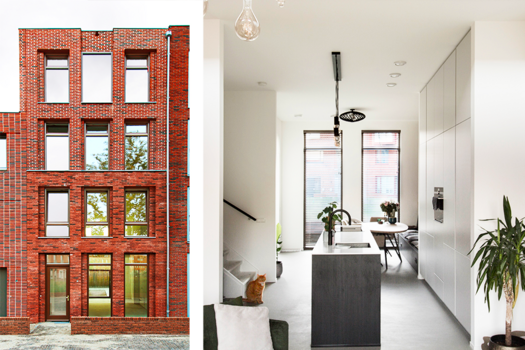
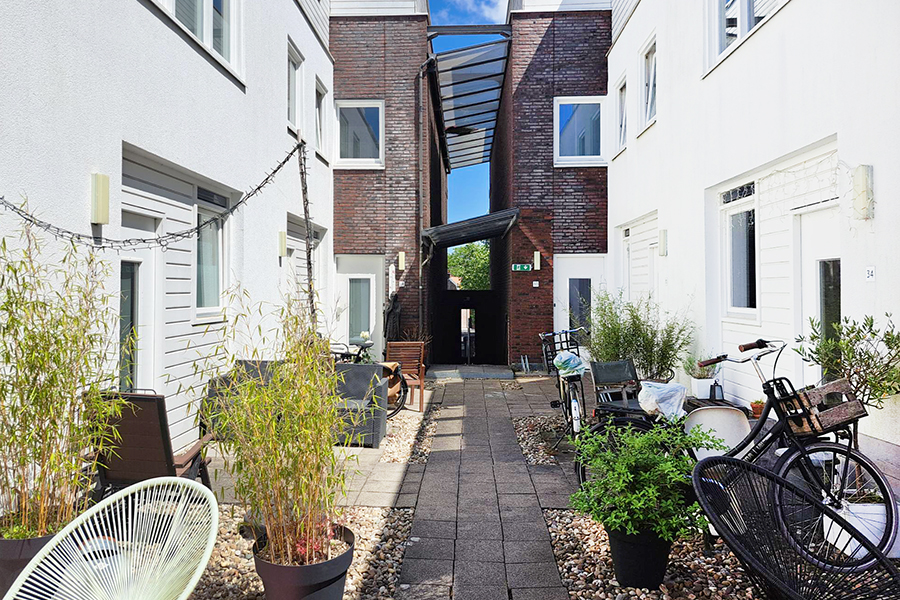
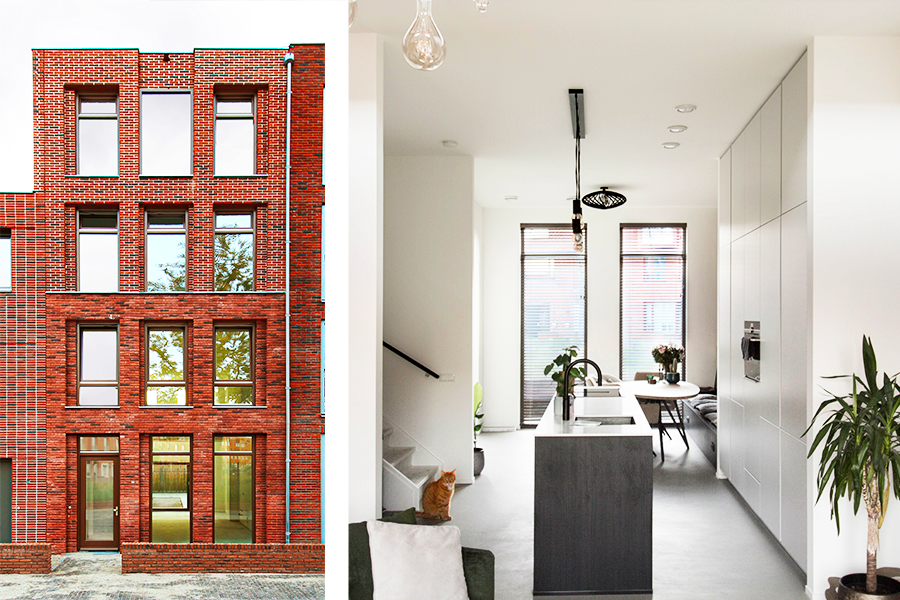
Jesper Baltussen has won the 1st prize in the Archiprix competition 2018. Furthermore, the office has designed ‘13 rowhouses in the Kruidenbuurt’, a dwelling project in Eindhoven (executed), with which it was selected as finalist in the Next Step Program 2022 (BNA). In Europan 17 the team was 2nd for location Groenewoud in Tilburg (NL).
WORKS: