The Farandole of One Thousand Saplings
Genève (CH) - Lauréat
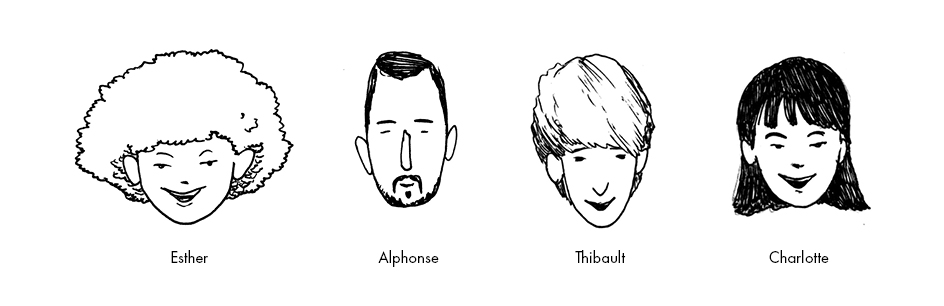
TEAM PORTRAIT
VIDEO (by the team)
INTERVIEW
Click on the images to enlarge
1. How do you define the main issues of your project in relation with the theme “Re-sourcing”? Re-sourcing thanks to nature, to social dynamics, to new materiality? In which way do you think your project can contribute to an ecological and/or social evolution? And in which way do you think your project can be called a “regenerative project”?
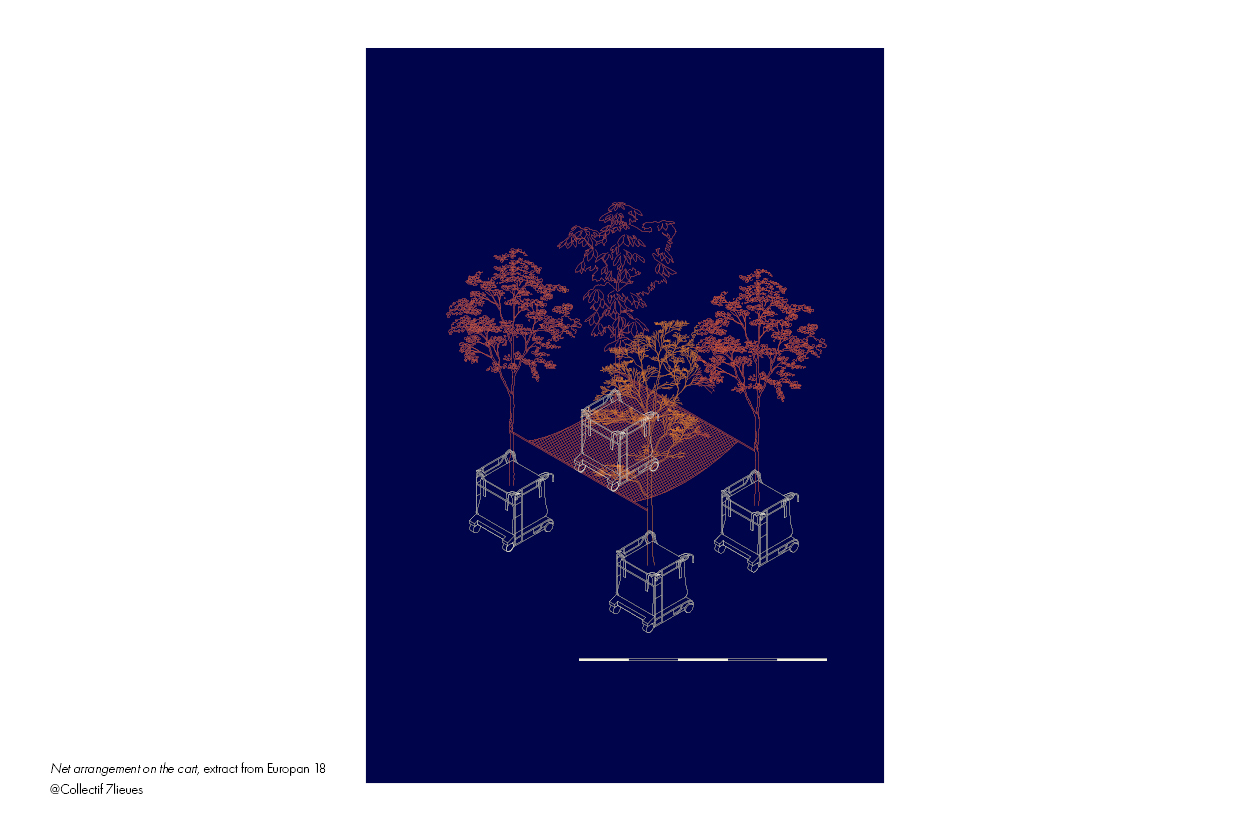
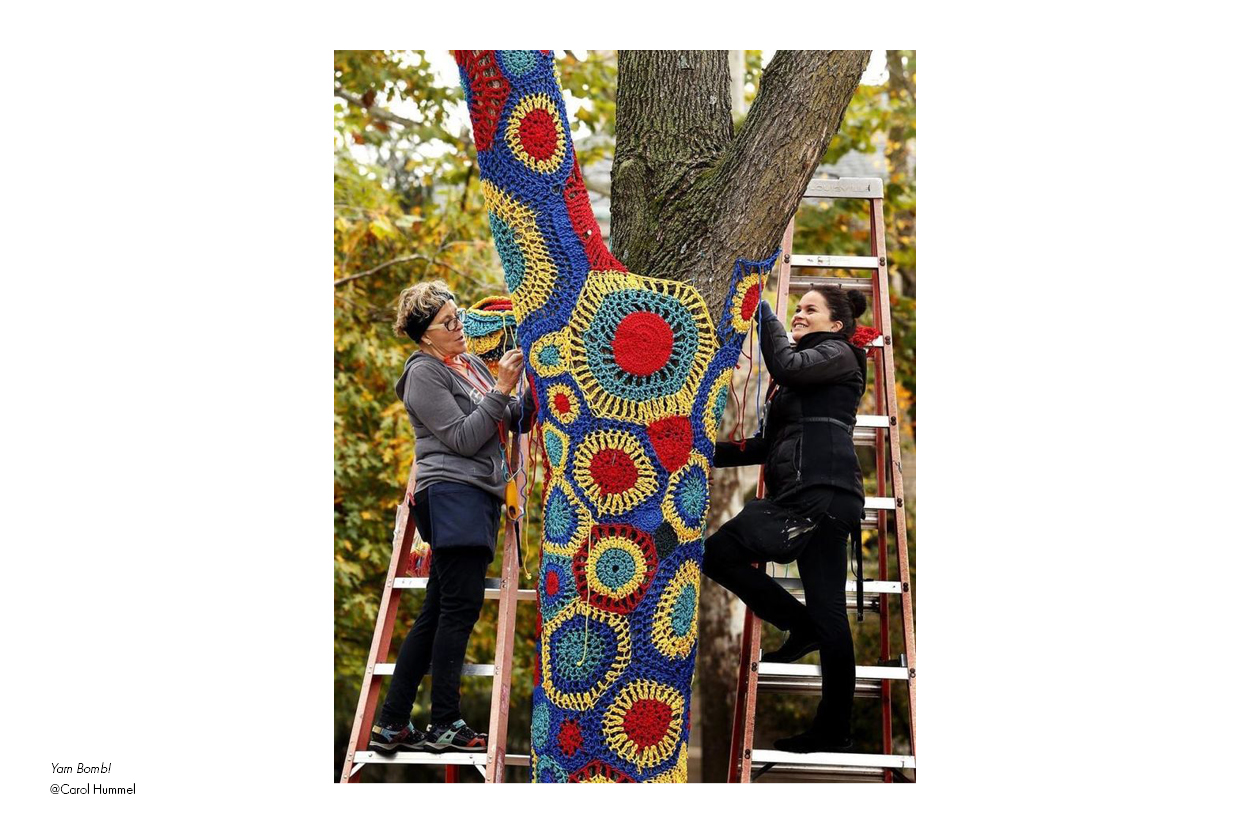
The initial brief called for Geneva to be revitalised through greening and, more specifically, reforestation. In our project the walking forest is presented as a means of tackling climate issues. Besides, temporarily transforming public spaces also revitalises the imagination and shows new ways of inhabiting the city and everyday spaces. Furthermore, our take on ‘re-sourcing’ involves paying attention to local resources. By drawing on these resources, we aim to create spaces and moments that promote urban vitality and well-being. Beyond physical transformation, we address environmental challenges by encouraging commoning and collective action. Our use of Big Bags — industrial containers made of flexible fabric —, trays and related handling equipment reflects our commitment to resource-conscious logistics. We also strive to reuse materials already present on site. The festival comes to life with urban furniture co-created alongside local residents, crafted from recycled fabrics. Through simple, hands-on weaving techniques using repurposed textiles, residents are invited to make the carts — and the festival itself — their own. Ultimately, the most valuable resource for our project is its inhabitants. They will breathe life into the festival, which we hope will become a highlight in Geneva's calendar. Therefore, our entire narrative, including speeches and visuals, is intended to be accessible to as many people as possible. In short, our project aims to regenerate the city — its air and soil — but also to regenerate the links between human and non-human populations.
2. How did the issues of your design and the questions raised by the site mutation meet?
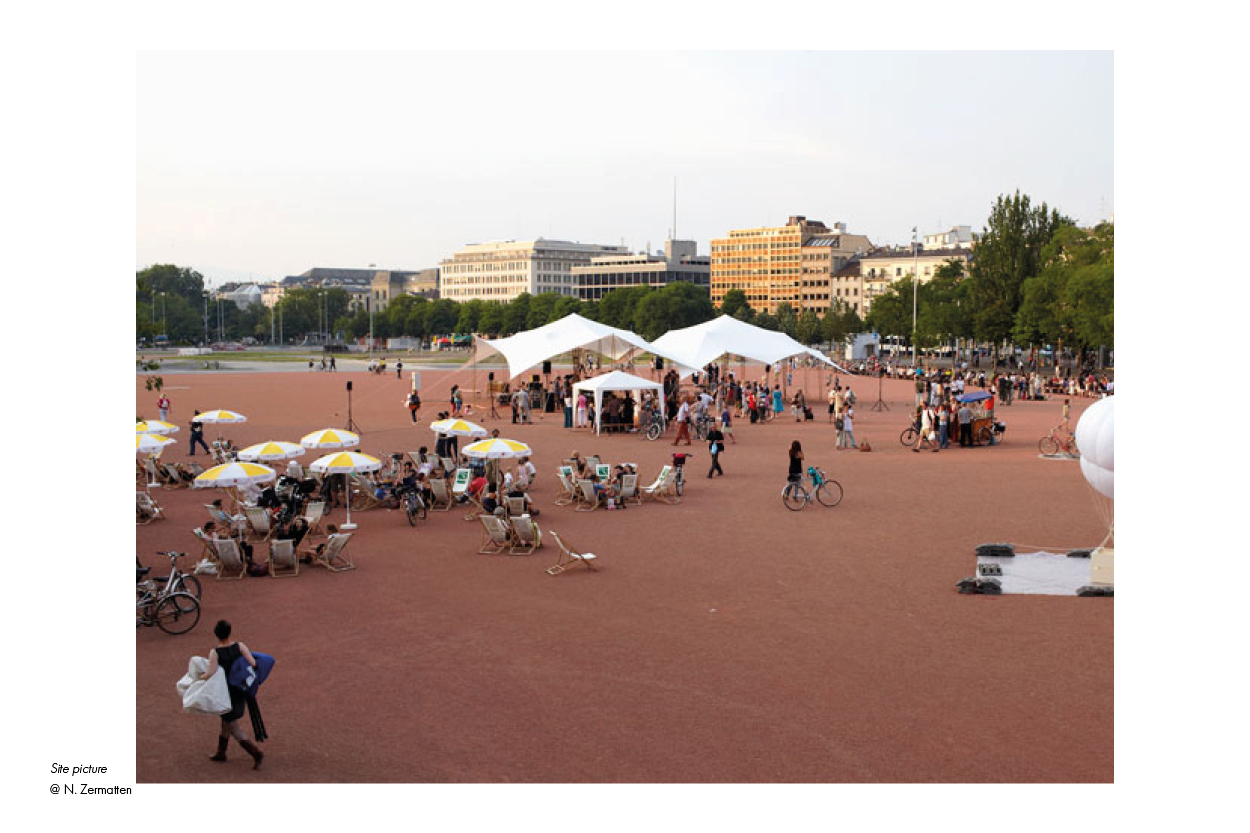
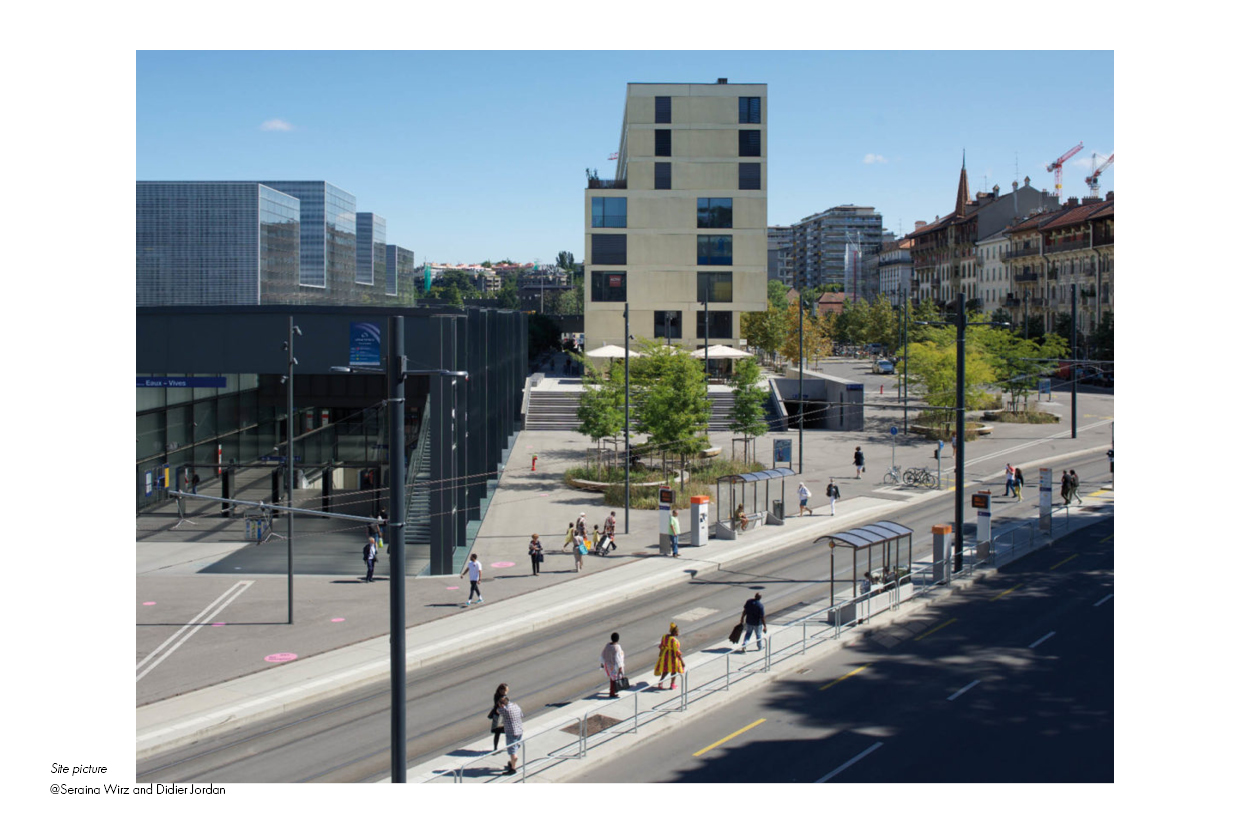
From the outset, the Braillard Foundation's request for the city of Geneva seemed quite clear. Consequently, we chose locations and itineraries that were relevant to the issues raised. Also, the project had to be event-based. As such, it necessarily relies on the participation of the local population, both in preparing for and attending the event. It was a valuable opportunity for 7lieues because we firmly believe that the success of any project depends on how the intended audience uses it. We therefore ensured that our project was sensitive and organic – in other words : human. It was designed to accommodate the individuals and associations present on site, those who are closely tied to the city's future. Furthermore, we investigated the identity of each neighbourhood in Greater Geneva (parks, places, streets). These details revealed the city's history like a palimpsest and helped us to develop our narrative.
PROJECT:
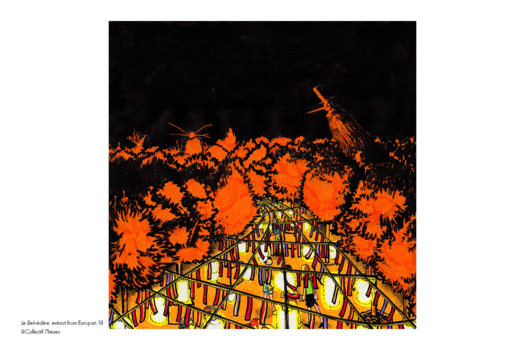
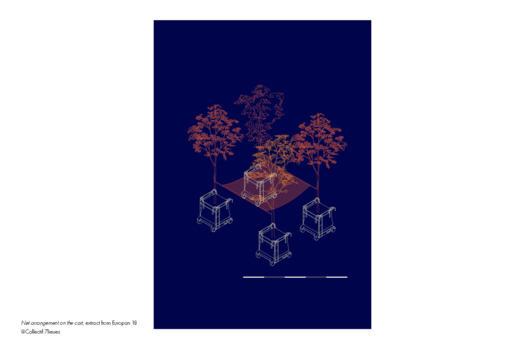
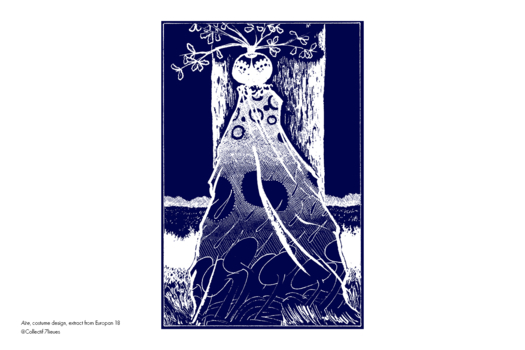
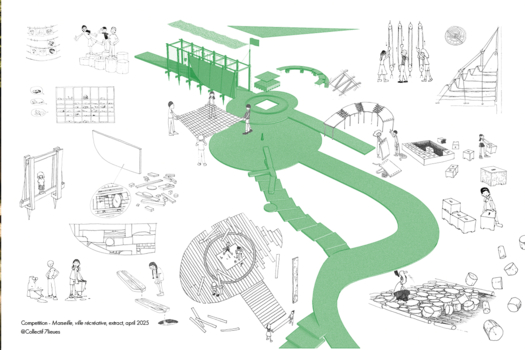
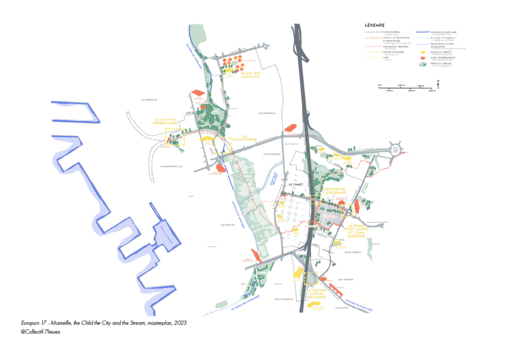
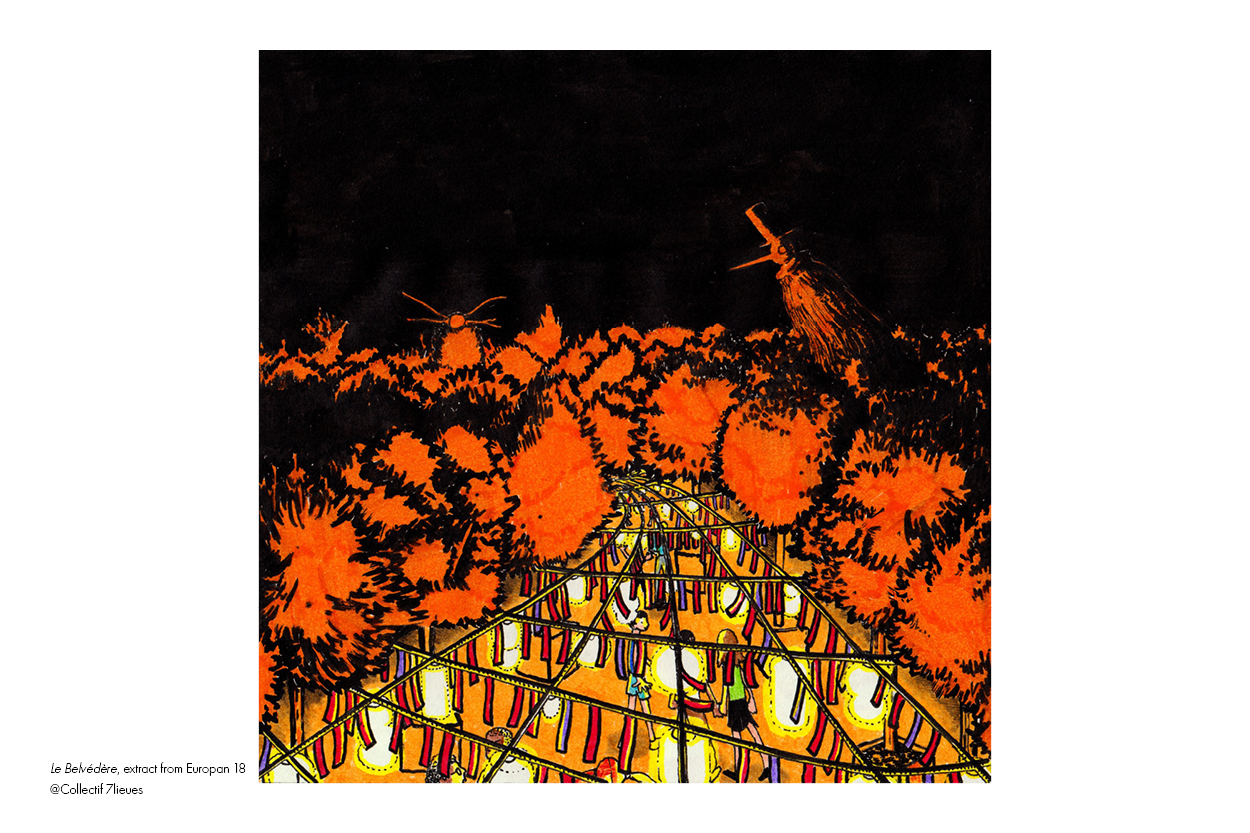
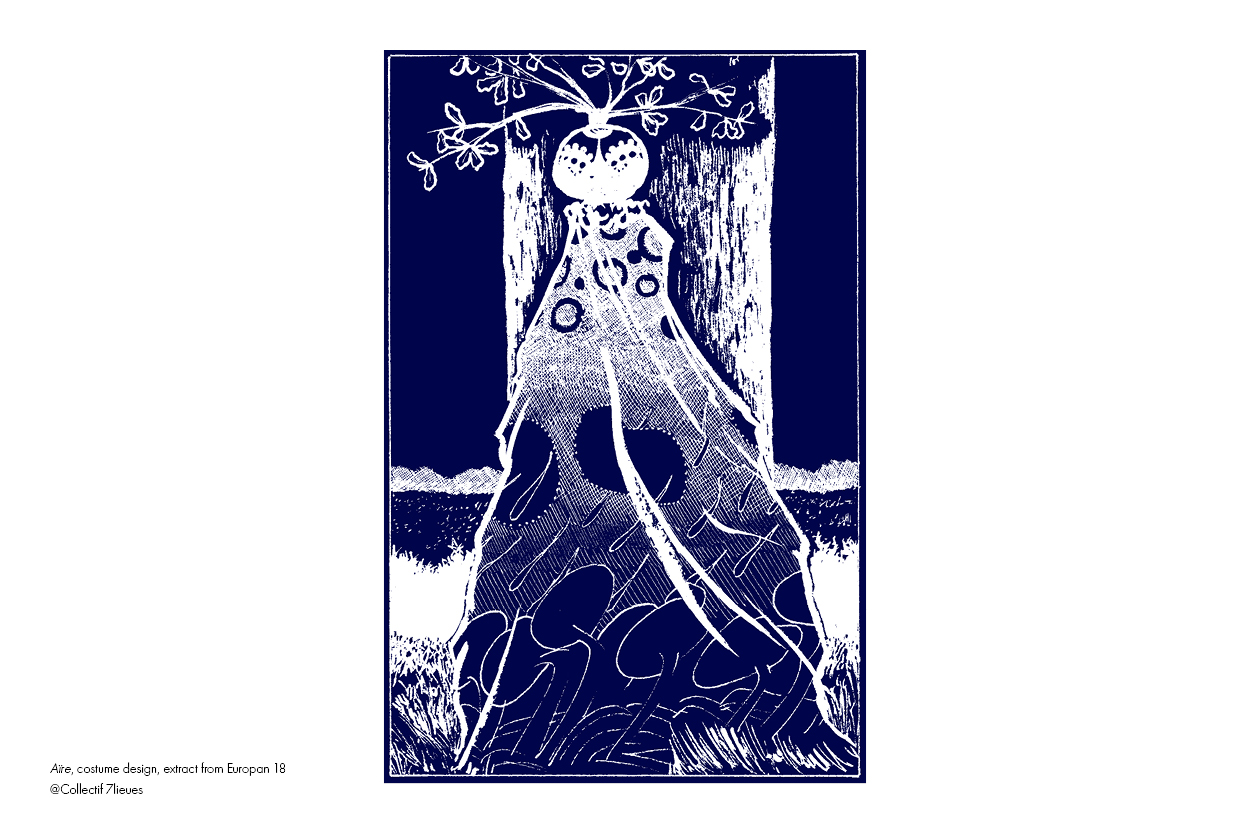
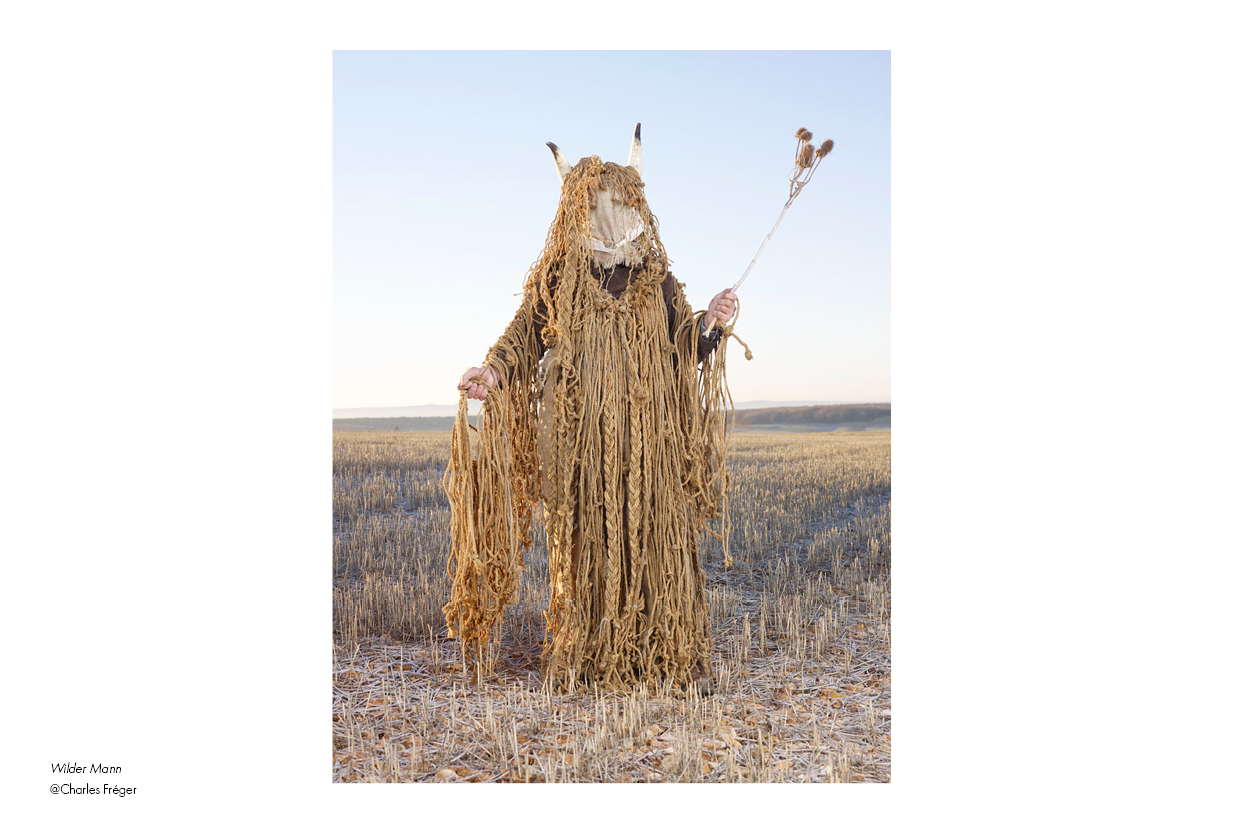
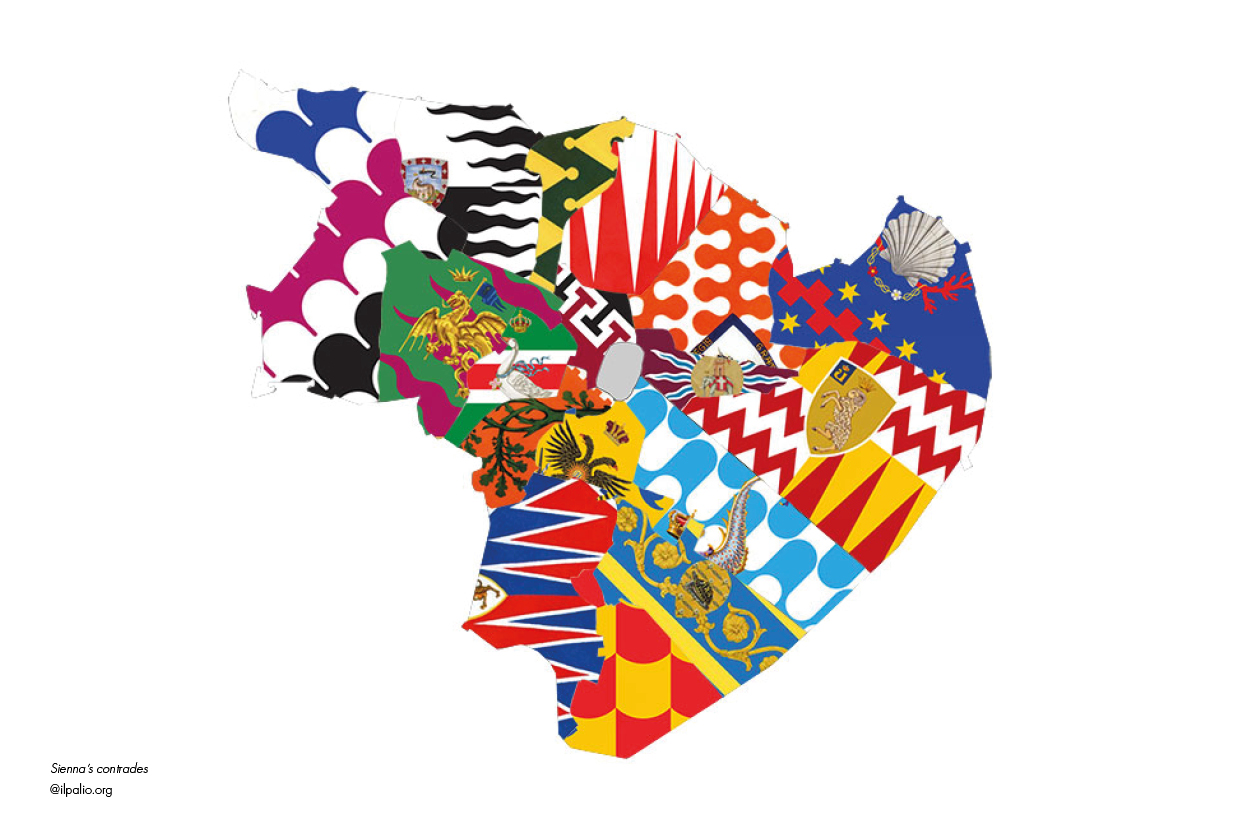
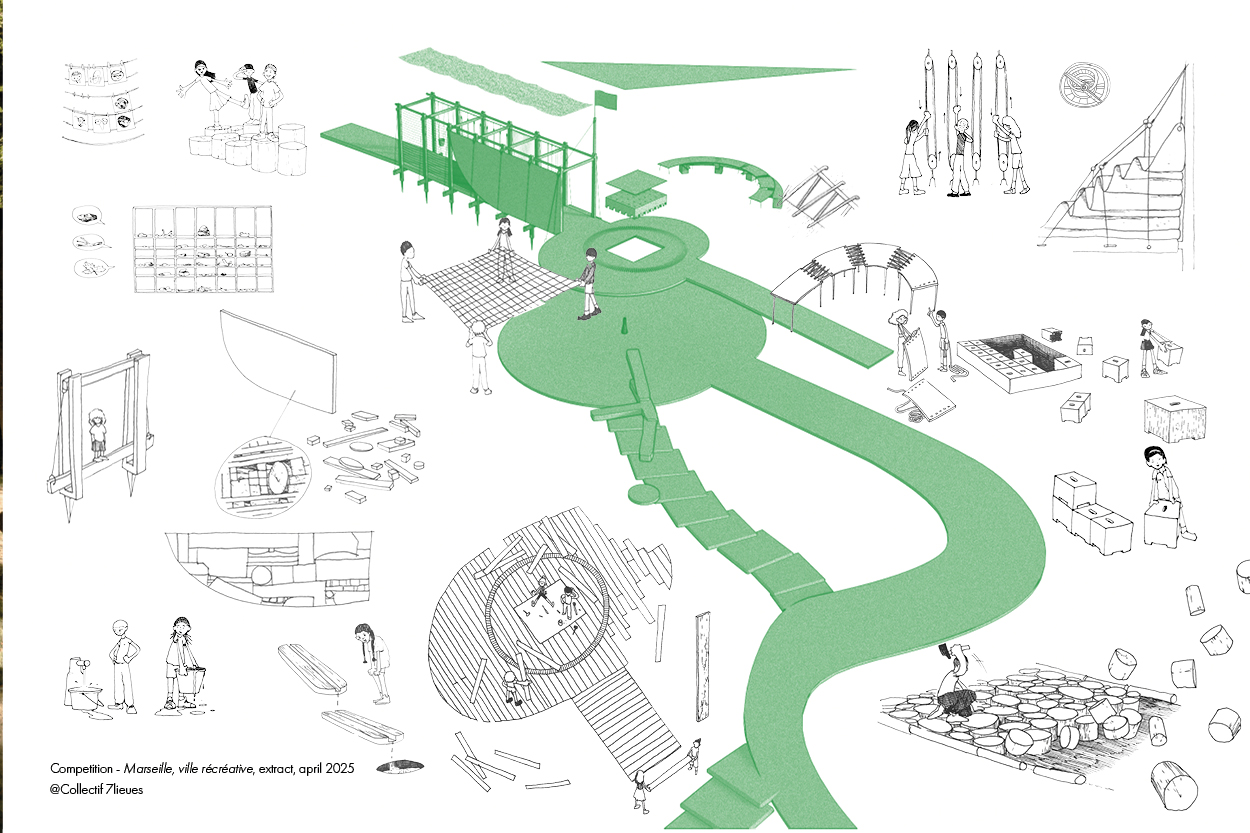
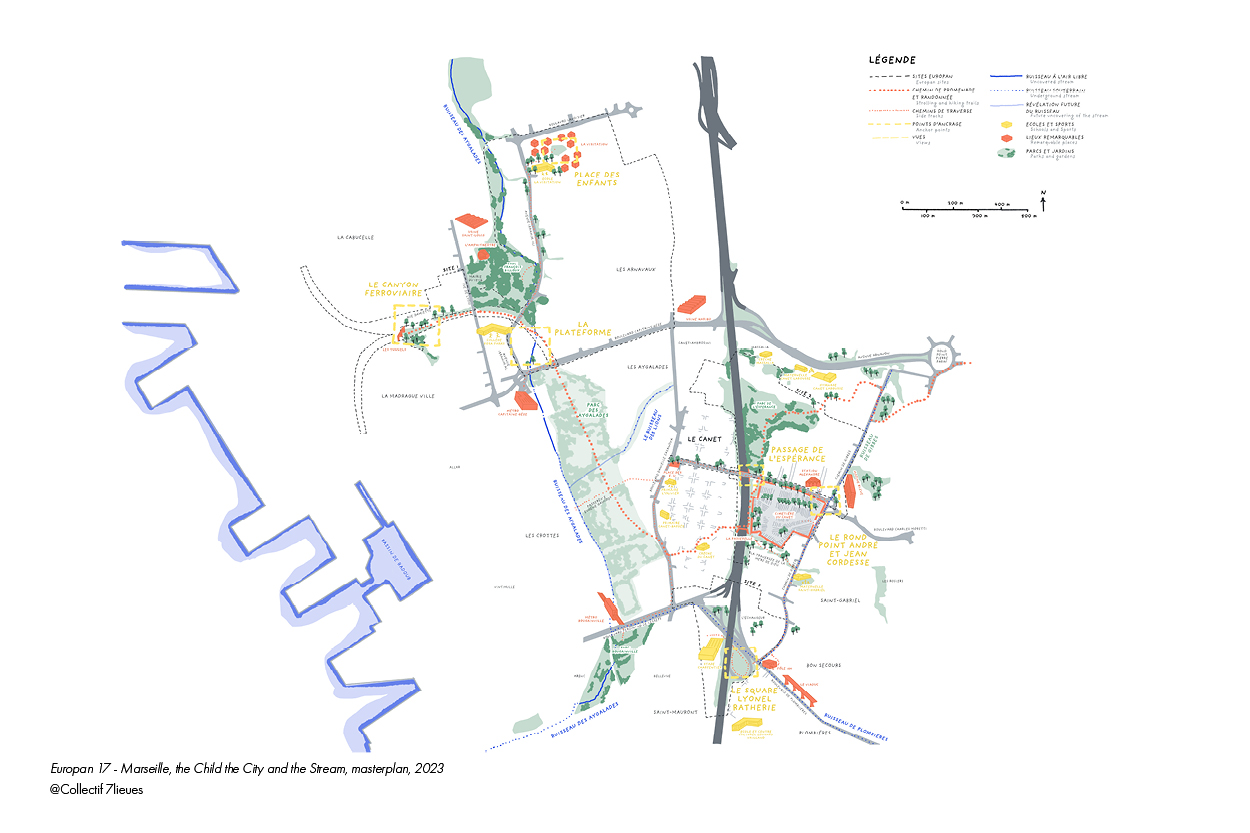
Storytelling, consultation and the production of inspiring visuals lie at the heart of 7lieues' practice. They have been a constant feature of all our work ever since our Europan 17 project on the Marseille site (L'Enfant, la Ville et le Ruisseau [The Child, the City and the Stream]). For this project, our references are both artistic and urban. Our first step was to define the artistic direction of the festival we were commissioned to design. We drew inspiration from Oklou's concert scenography, Charles Fréger's photographs of folk costumes, the Palio di Siena event and contradas, the Théâtre National Populaire's sets and costumes designed by Valentine Schlegel, Jean Vilar and Léon Gischia, or the enchanted or evil trees found in interwar cartoons (among many others). In terms of architectural and urban references, we cite the work of Lydia Bonanomi (particularly her 1990 book : Le temps des rues), Atelier OLGa's urban approach, Jean-Benoît Vétillard's axonometric projections and Laurent Matthey, Simon Gabarell and Elena Cogato Lanza's research on the importance of narrative in urban transformation.
SITE:
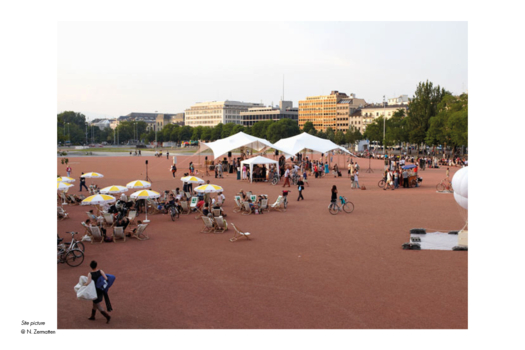
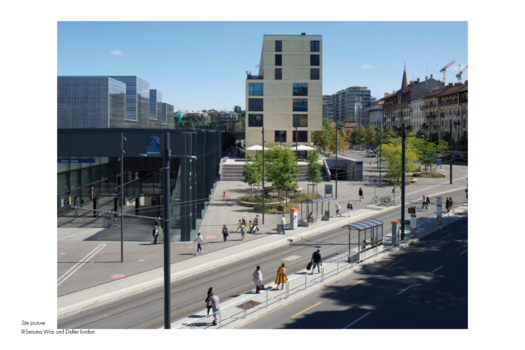
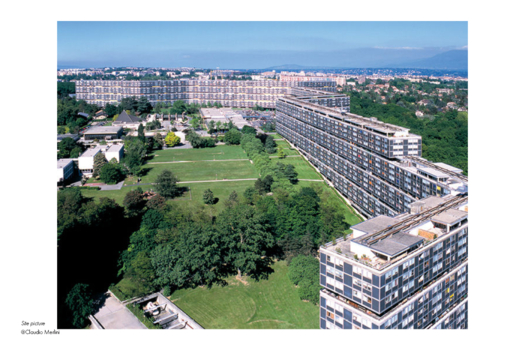
Our project is a seven-week festival. Scheduling is therefore central to its implementation. Apart from that, we are counting on the support of all Geneva-based performers and street artists — of whom there are many — but also on the cultural authorities and, more broadly, on all Geneva residents, to help us organise the festival. Beyond celebration, the festival also functions as a platform for active consultation – strengthening dialogue and amplifying existing community initiatives.
REFERENCES:
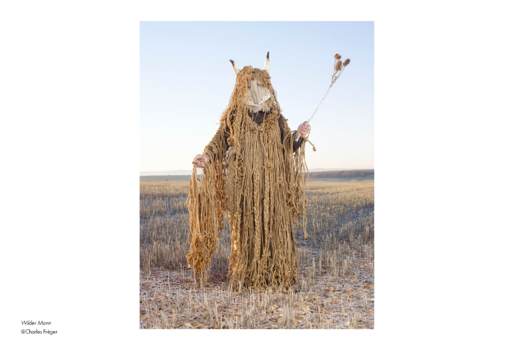
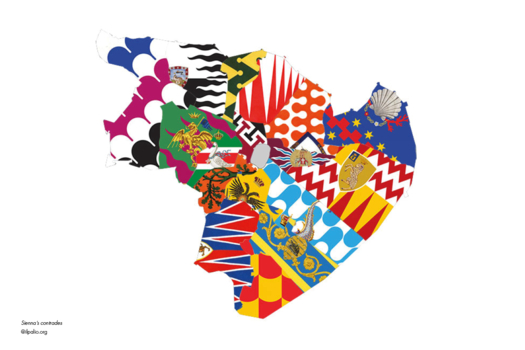
7lieues was born in the context of the Europan 17 competition, at the end of which we received a Special Mention. While it has always had a transdisciplinary vocation, our projects have reinforced our commitment to fostering connections with the artistic and cultural sectors. We believe that a project's effectiveness depends on the narrative associated with it, and that a narrative's effectiveness depends on the accessibility of the discourse and representations used. We therefore ensure that our projects are accessible to all to encourage participation. For our response to Europan 18 on the Geneva site, we even wanted artistic sensibility to be a starting point for our thinking and not just a tool for shaping the project. Combining our skills in architecture, urban planning, geography, carpentry and visual arts, we developed a project that reflects our respective practices and our desire to create synergy.
6. How could this prize help you in your professional career?
Being a Europan winner is an achievement we are immensely proud of. This is all the more significant because this project embodies the convictions that have driven us over the past couple of years. We wanted it to demonstrate our commitment. We hope it will become a standard-bearer for our approach to architecture and contribute to the recognition of narrative as a form of territorial design — or even architecture — in its own right.
TEAM IDENTITY
Legal status: Association
Team name: 7lieues
Average age of the associates: 28 years old
Has your team, together or separately, already conceived or implemented some projects and/or won any competition? if so, which ones?
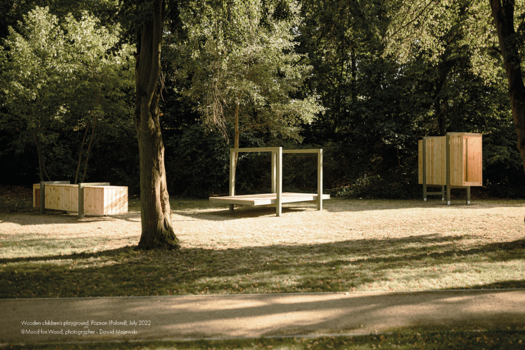
7lieues has been in existence as a collective since 2023, but the four of us have been working together since the beginning of 2025. The projects carried out before Europan 18 were mainly theoretical. These gave rise to two exhibitions, one in Gennevilliers (Toutes & Tous Greenvillois) and one travelling from Marseille to Paris (Marseille Ville Récréative).
WORKS: