Care Blanket
Vitoria-Gasteiz (ES) - Lauréat
TEAM PORTRAIT
VIDEO (by the team)
INTERVIEW
Click on the images to enlarge
1. How do you define the main issues of your project in relation with the theme “Re-sourcing”? Re-sourcing thanks to nature, to social dynamics, to new materiality? In which way do you think your project can contribute to an ecological and/or social evolution? And in which way do you think your project can be called a “regenerative project”?
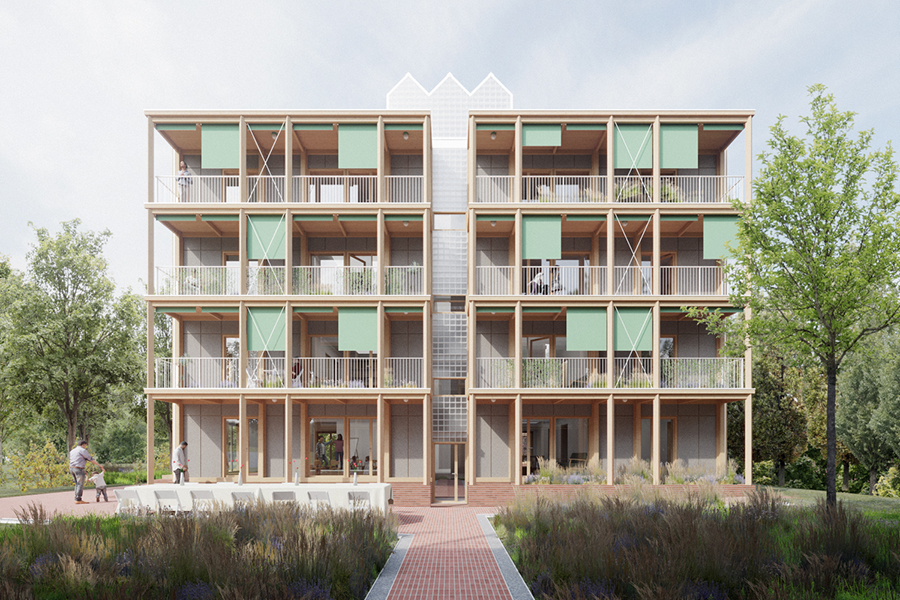
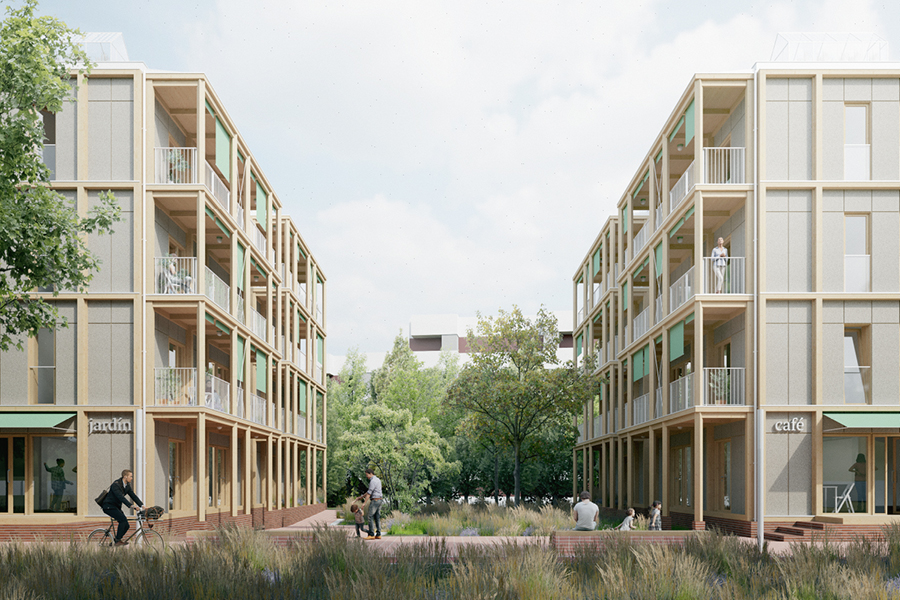
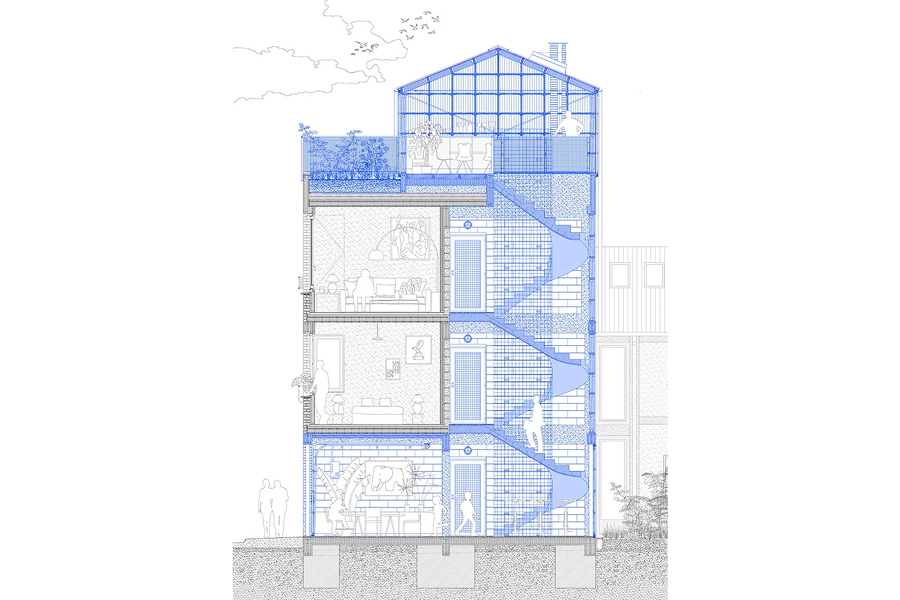
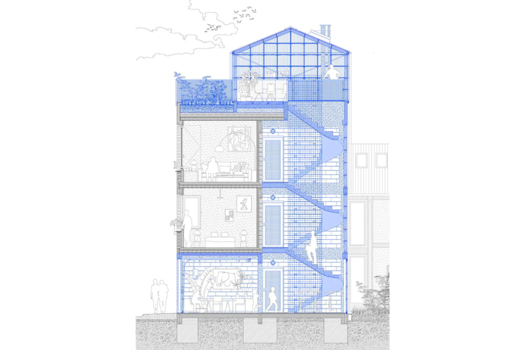
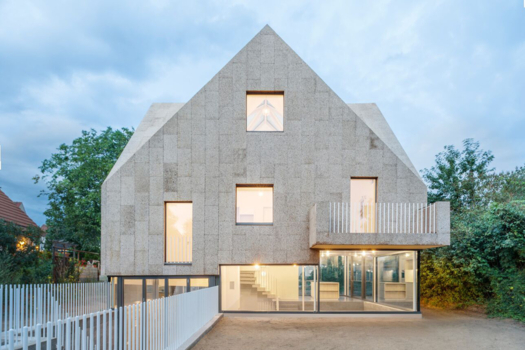
“Care Blanket” re-sources through three dimensions: nature (bio-sourced cork-timber envelope, green corridors, pollinator rooftops), social dynamics (community co-design workshops, shared ground floor infrastructure), and new materiality (dry-mounted modular system following circular economy - no adhesives, fully disassemblable). It's regenerative: transforming 1960s obsolescence into renewed urban milieu while improving thermal performance and quality of life.
2. How did the issues of your design and the questions raised by the site mutation meet?
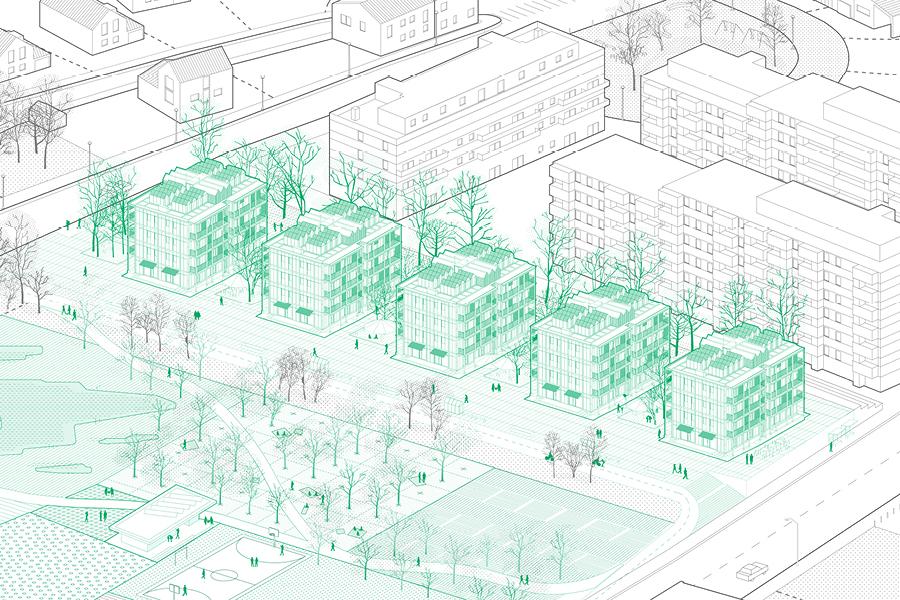
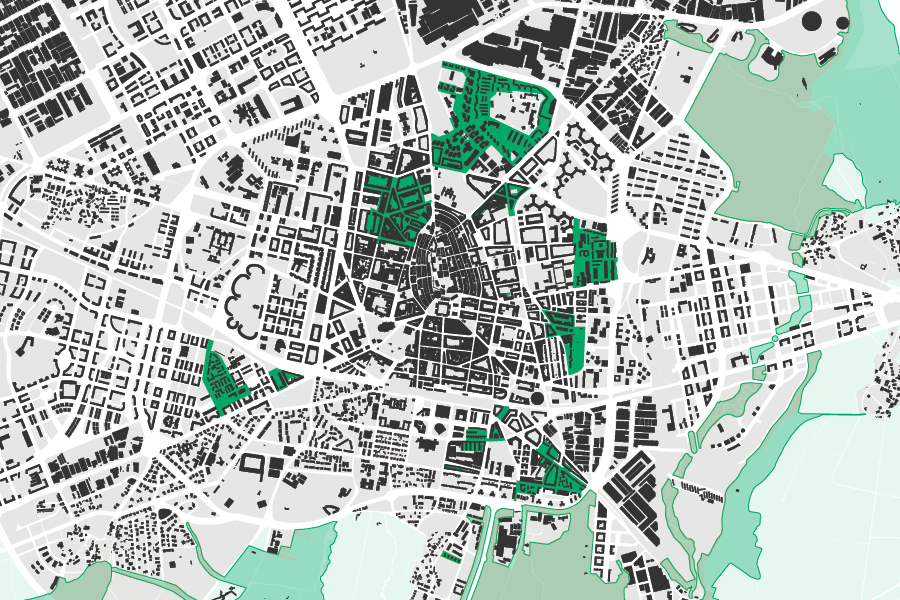
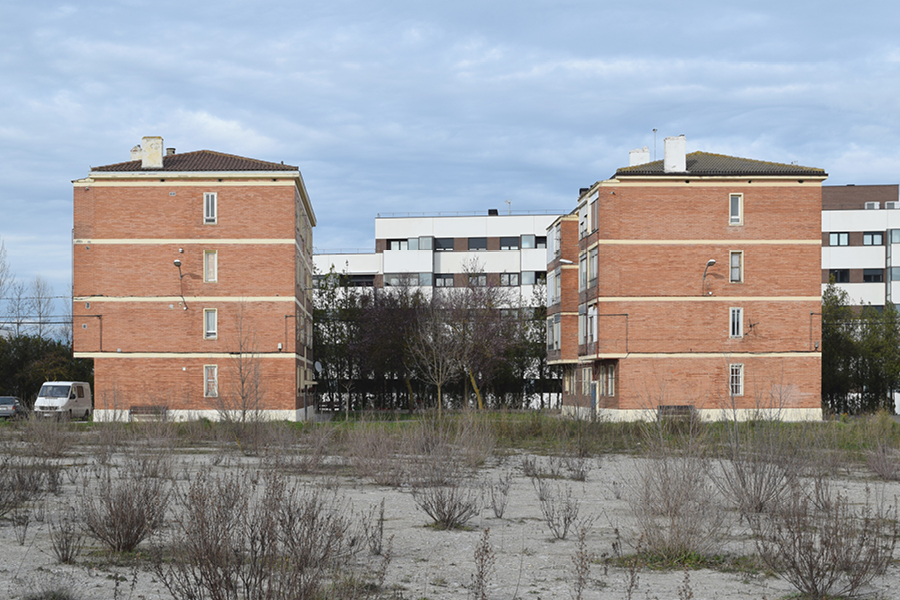
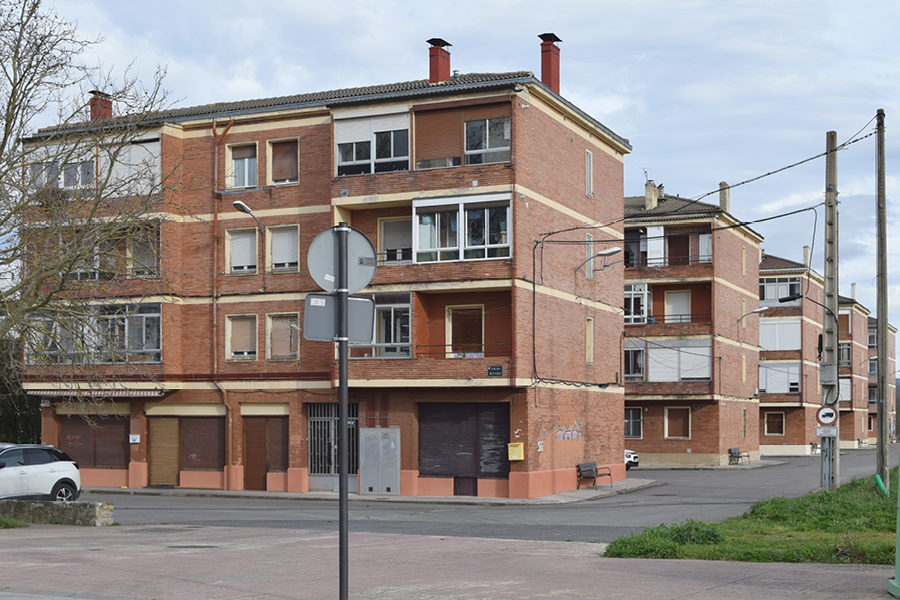
Vitoria-Gasteiz built 30% of its housing in the 1960s - now aging simultaneously. Bustaldea's blocks are structurally sound but energetically obsolete and isolated by ring road and railway. Our multi-scale framework (city to biotope) addresses this: reconnecting through pedestrian corridors, activating ground floors as community hubs, and wrapping buildings in a “Care Blanket” that repairs without demolishing.
PROJECT:
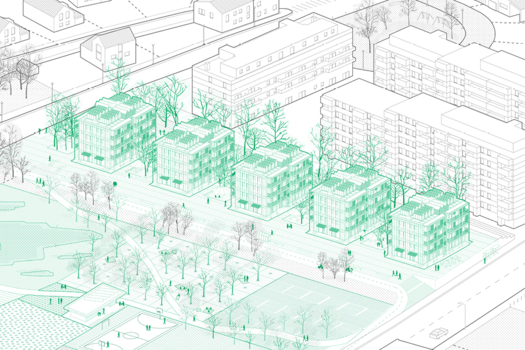
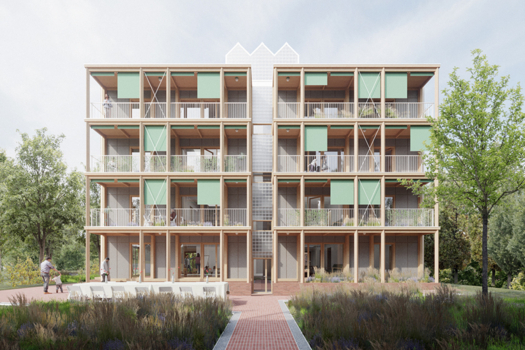
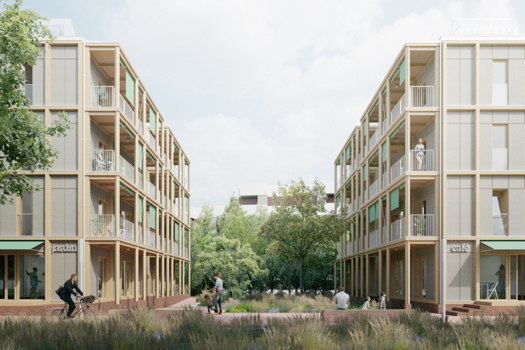
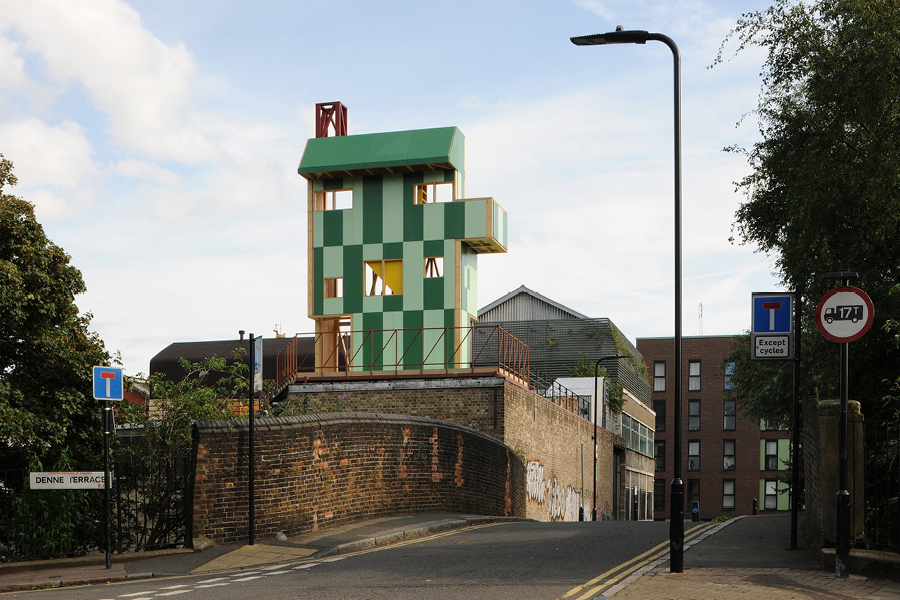
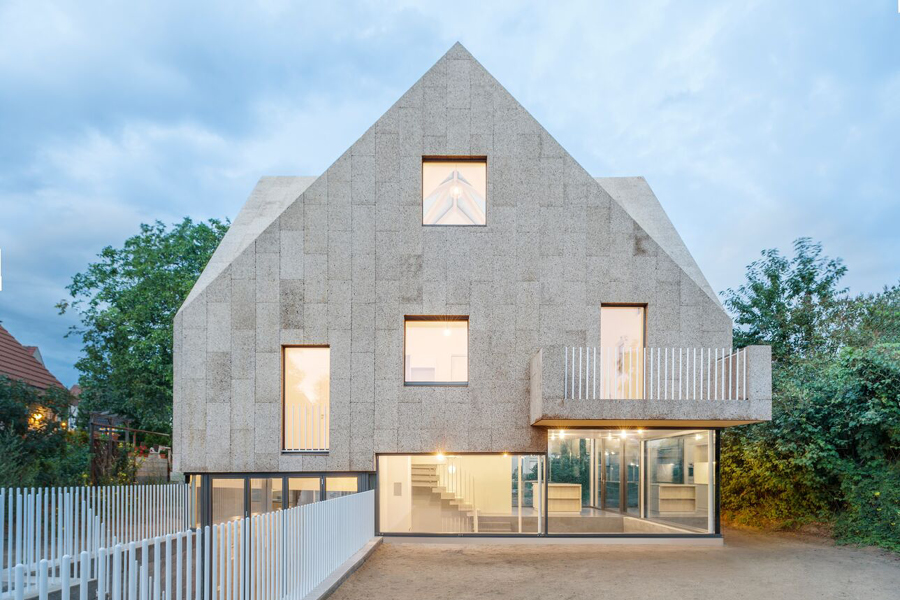
Since our university years, we have been engaged with adaptive reuse and the transformation of existing buildings as an alternative to demolition. These themes were explored through academic work and applied in previous architectural competitions, where we tested strategies of reuse, repair, and reprogramming of obsolete structures. In terms of references, we studied contemporary social housing models in Spain, particularly the work of Peris+Toral, Lacol, and H Arquitectes, for their approaches to collective living, construction logic and environmentally responsible design.
SITE:
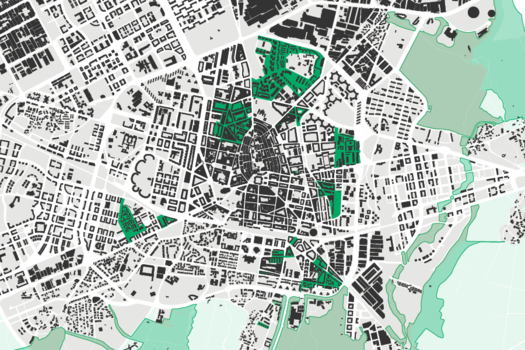
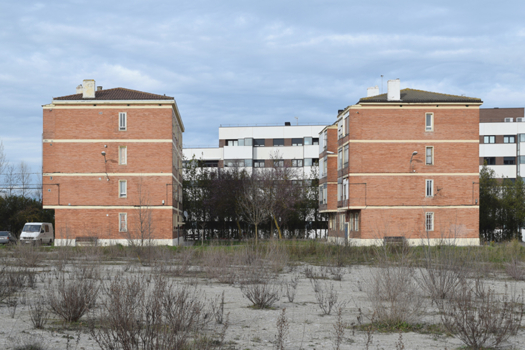
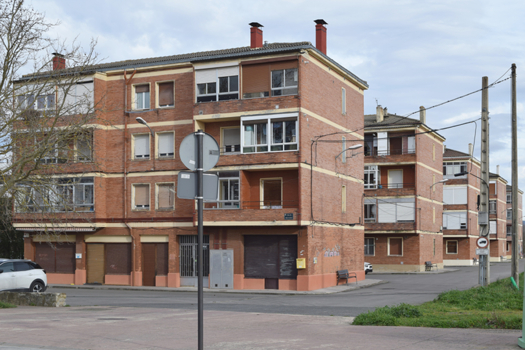
Phased transformation avoids displacement: one building becomes temporary shared housing while others are renovated. Community co-design workshops let residents choose facade materials and colors from a local palette. Prefabricated modules enable rapid crane installation - residents remain home during construction. Feedback from each phase informs the next, creating a negotiated, iterative process over time.
REFERENCES:
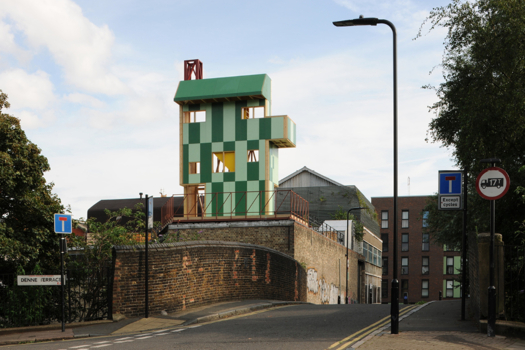
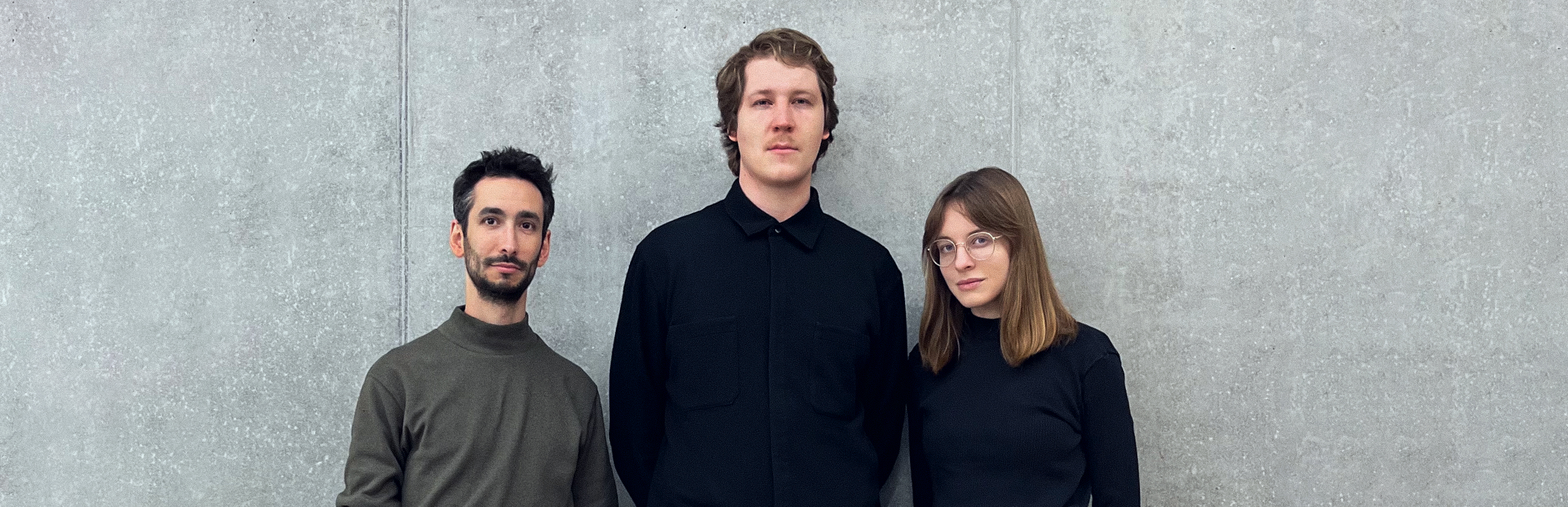
The team is composed of Agustín Azar, Egor Gaydukov, and Uliana Zohmnir, architects with complementary backgrounds in design research, computational methods, and urban transformation. We first met in Weimar, where Agustín and Egor completed the Integrated Urban Development and Design master’s programme and Uliana pursued her Master of Architecture at Bauhaus-Universität Weimar. Our shared interest in adaptive reuse, urban obsolescence, and cross-scale design thinking laid the foundation for an ongoing collaborative practice.
6. How could this prize help you in your professional career?
We see Europan as an opportunity to connect design research with concrete implementation in the context of urban regeneration. We believe “Care Blanket” could function as a transferable guide of tools for the transformation of other post-war residential buildings in Vitoria-Gasteiz, and potentially across the Basque Country, addressing shared challenges of aging housing stock, energy transition, and social cohesion. The prize would strengthen our dialogue with public institutions and local actors, supporting the development of care-based, reuse-driven architectural strategies with long-term impact.
TEAM IDENTITY
Legal status:
Team name: Altnew
Average age of the associates: 29 years old
Has your team, together or separately, already conceived or implemented some projects and/or won any competition? if so, which ones?
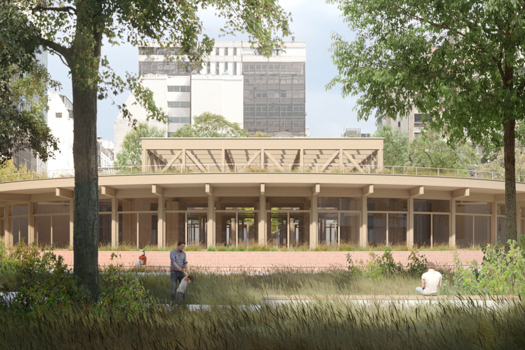
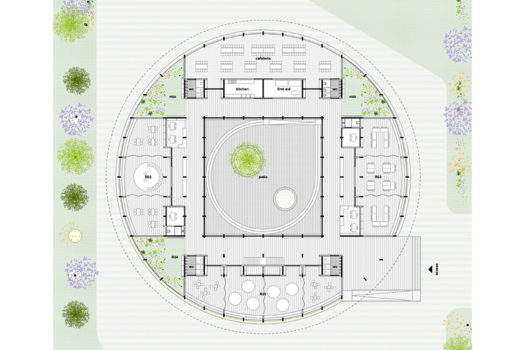
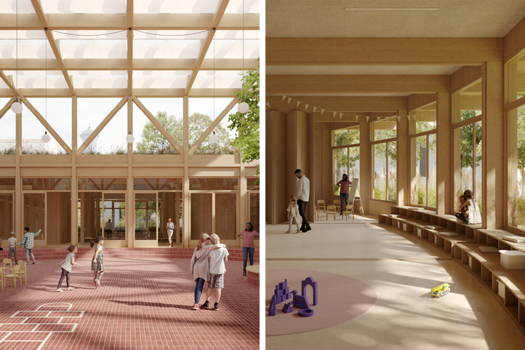
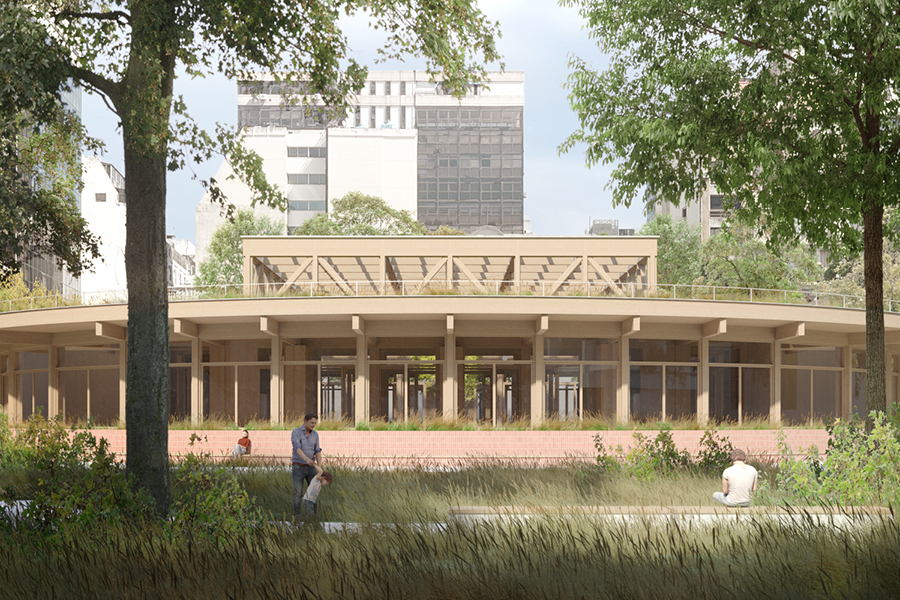
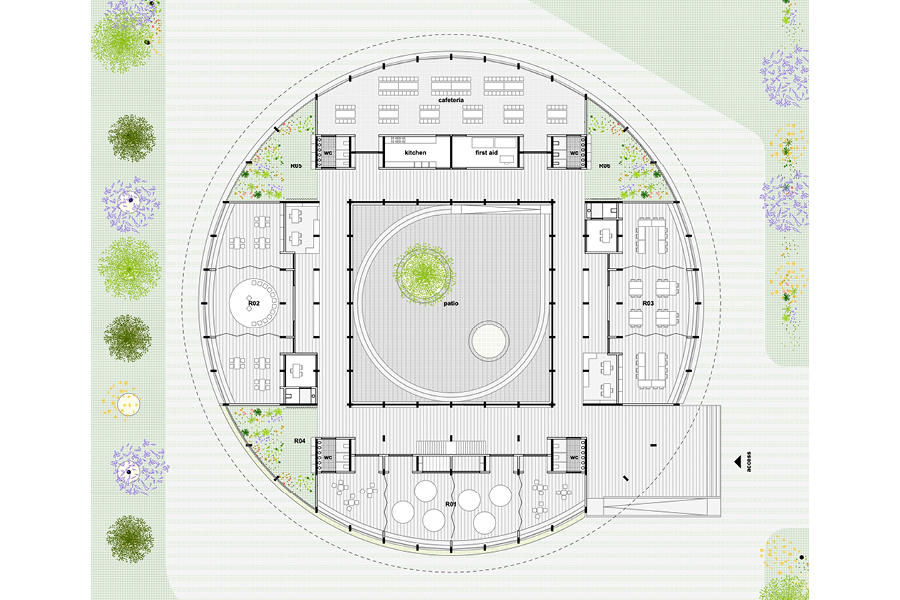
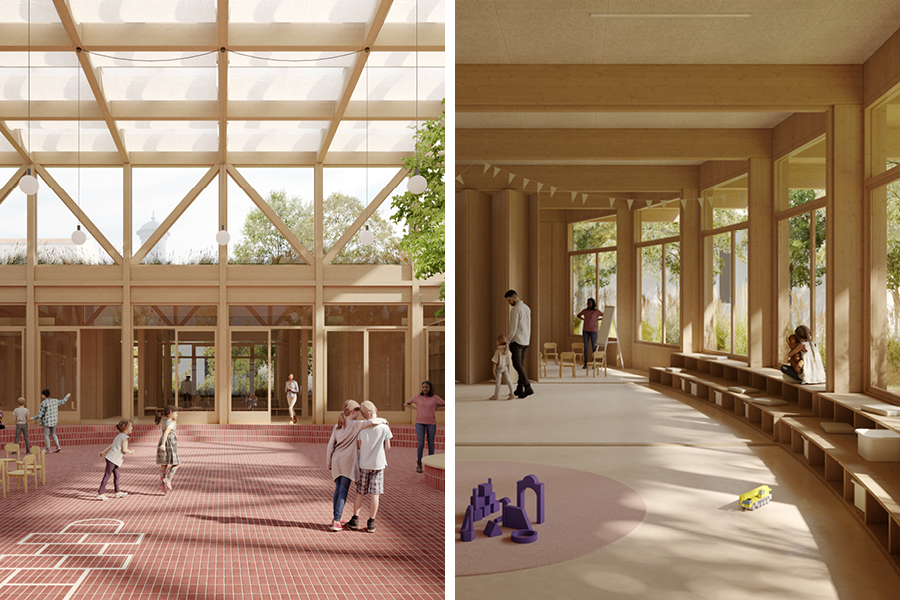
We have begun collaborating on projects that link adaptive reuse with mid-scale interventions in public space after graduation. The first joint project, Jardin Buenos Aires, reimagined an underused parking structure in Buenos Aires as a kindergarten and new public space, earning First Prize in the Buildner competition.
WORKS: