FAIRE TERRE LA NIVE
La Nive (FR) - Mentionné
TEAM PORTRAIT
VIDEO (by the team)
INTERVIEW
Click on the images to enlarge
1. How do you define the main issues of your project in relation with the theme “Re-sourcing”? Re-sourcing thanks to nature, to social dynamics, to new materiality? In which way do you think your project can contribute to an ecological and/or social evolution? And in which way do you think your project can be called a “regenerative project”?
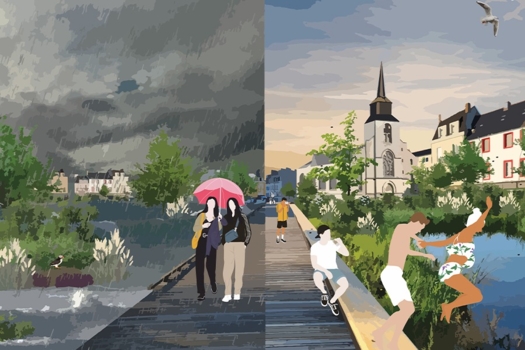
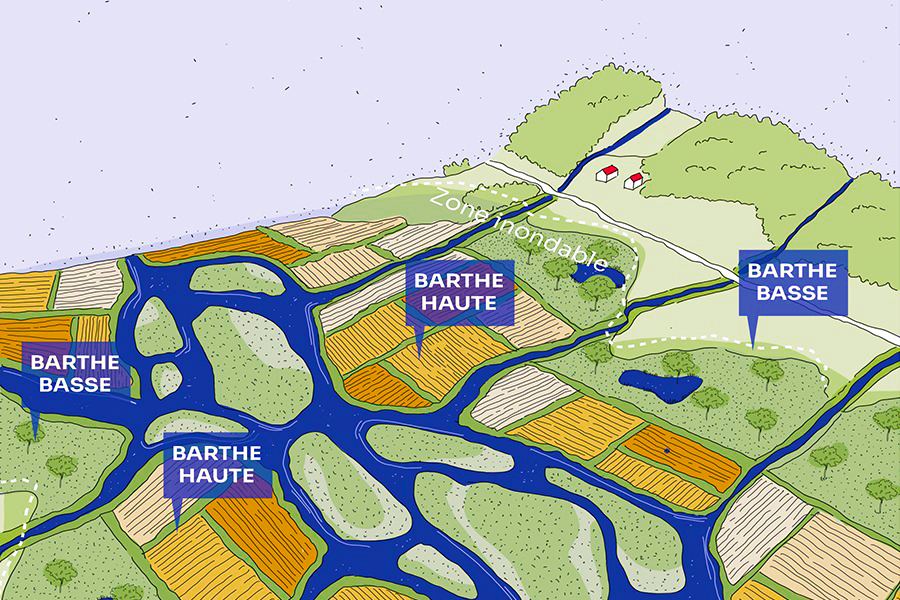
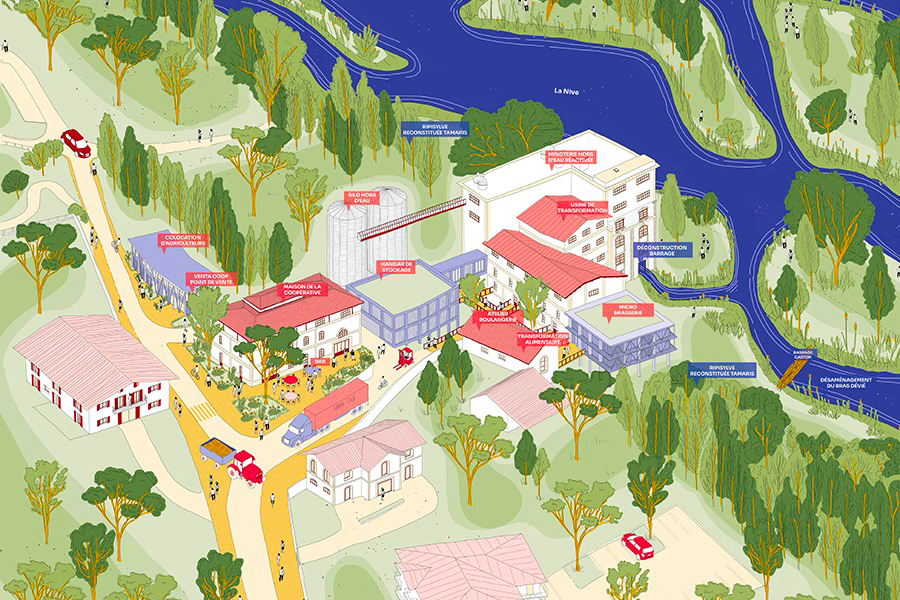
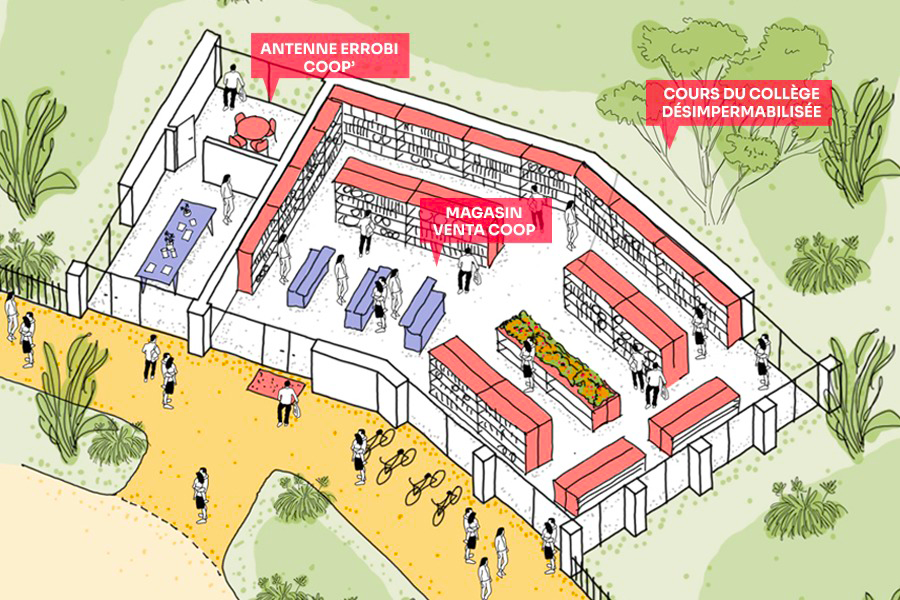
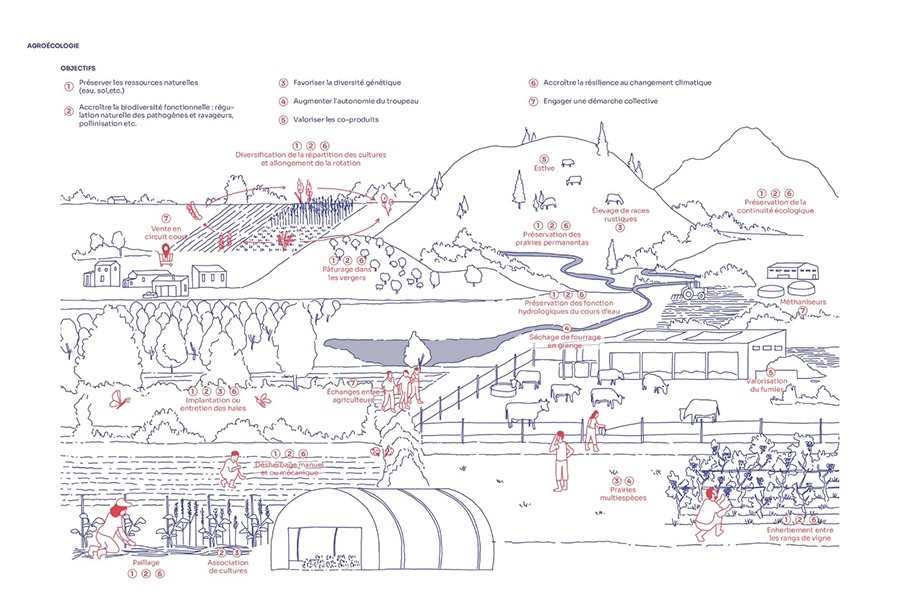
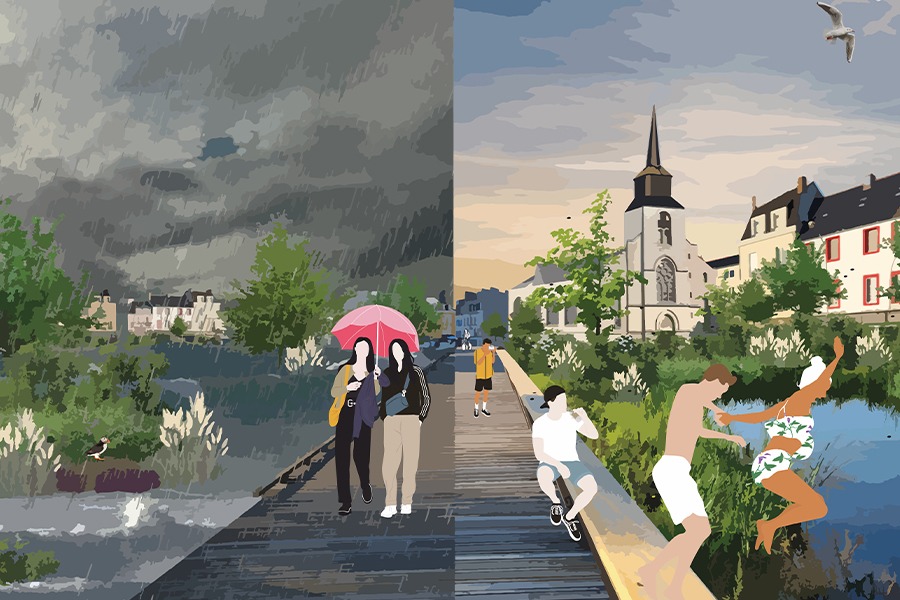
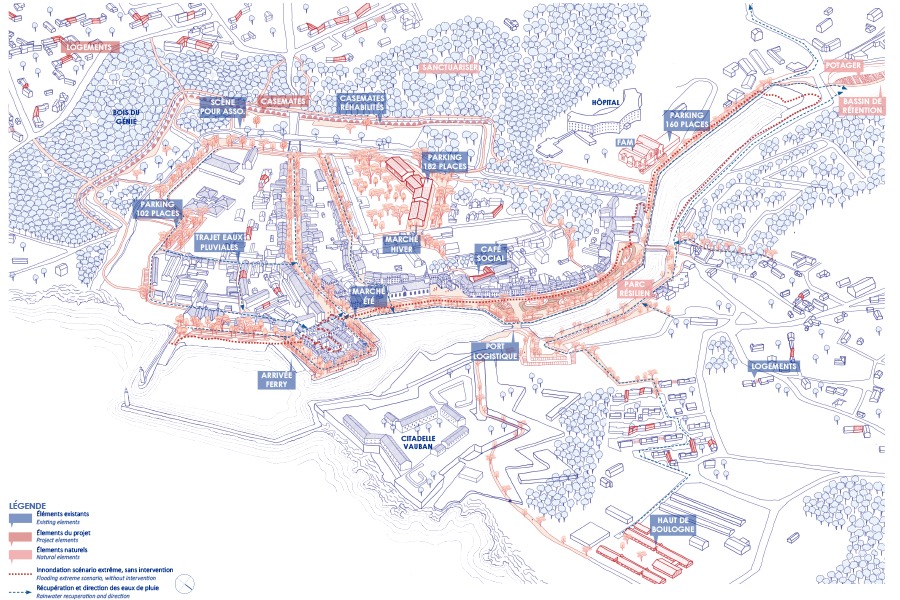
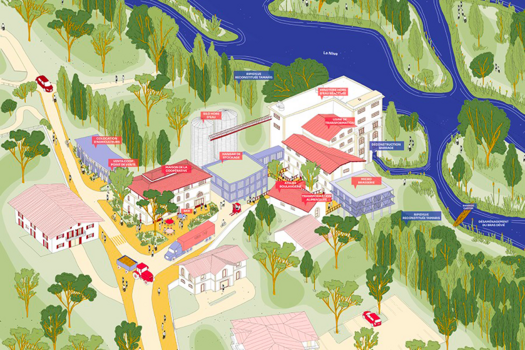
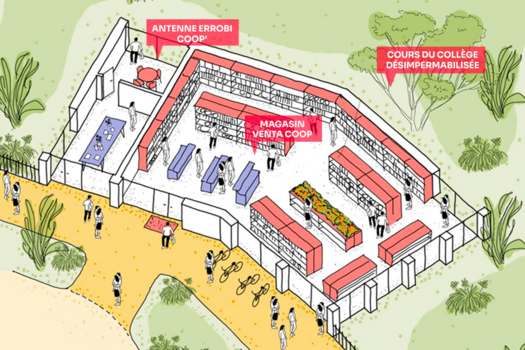
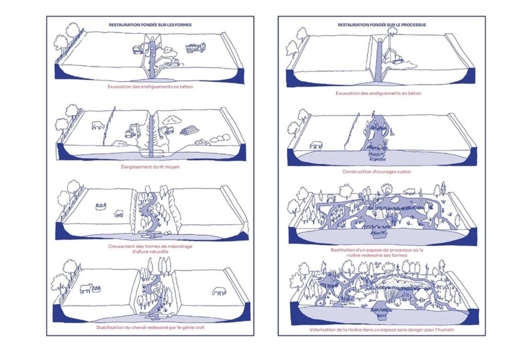
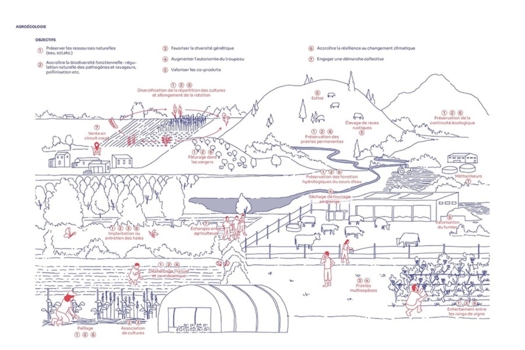
In Faire Terre la Nive, “Re-sourcing” begins with the river. The Nive is not treated as a risk to contain, but as the structuring force of the watershed. Our priority is its renaturation: restoring space for water by desurbanising and sanctuarising the major riverbed, and transforming it into a floodable, productive landscape. By reopening secondary channels, beaver’s strategy, enlarging expansion areas and rehydrating soils, we allow dangerous waters to “make ground” rather than cause damage. Flood becomes a dynamic to work with, not against, and the territory gains resilience through ecological processes. This ecological shift cannot happen without a social one. Farmers are the main designers of the landscape, yet the dominant agricultural model is reaching economic and environmental limits. The project supports a transition toward more local, diversified and water-adapted food systems at the scale of the watershed. By linking cultivation methods, transformation, distribution and lifestyles, it proposes new food cultures and social organisation, offering more stable and meaningful futures for farmers while benefiting the entire community, inhabitants and tourists. The project is therefore systemic. It reorganises land use, agricultural practices, housing and collective governance around the river’s logic. Re-sourcing, for us, means drawing from the living capacities of the watershed itself to foster ecological and social evolution, while preserving the identity of the Nive territory.
2. How did the issues of your design and the questions raised by the site mutation meet?
The issues of our design arise from the mutation of the Nive watershed, where rising flood risks, artificialised riverbanks, and a fragile agricultural system challenge traditional land use. In the spirit of our Europan 17 proposal (Defendons les Palantins), we treat this mutation as a collective, systemic driver: rather than controlling the river, we restore floodable areas and wetlands, letting its dynamics structure the territory while producing ecological and productive value. This approach also addresses social and agricultural transformation, supporting local farmers, in adopting water-adapted food systems and linking cultivation, processing, and distribution at the watershed scale. By aligning ecological adaptation with community renewal, the project turns the river’s activity and the site’s evolving conditions into opportunities for systemic, long-term resilience and regeneration.
PROJECT:
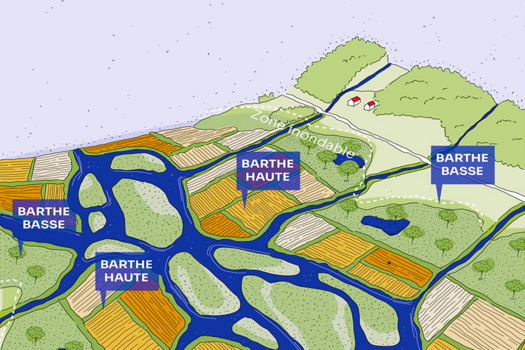
Addressing water and climate change in territorial planning is central to our approach as designers. For our two Europan entries, we therefore chose sites that maintain a strong relationship with water: Europan 17 in Le Palais on Belle-Île-en-Mer, and Europan 18 within the Nive watershed. Marine Gate specializes in major hazards management and has worked on several projects related to water issues. She notably worked on the territory of Saint-Louis in Senegal, a multi-risk area affected by sea level rise, rising groundwater levels, and river flooding, within the context of a developing country. In this setting, she studied an urban project with the aim of making it more resilient to flooding, improving living conditions and reducing water-related diseases. In France, she also worked in the Pyrenees, in Luz-Saint-Sauveur, a municipality exposed to torrential flooding and seismic risks, where she contributed to the development of an urban project addressing these hazards. In the French Planning Code, water is defined as a common good. Yet our lifestyles have turned it into a consumable resource, often overexploited and appropriated by some to the detriment of others. The Nive watershed, strongly impacted by human activities and climate change, provided an opportunity for us to engage with a number of reference projects and key publications, including:
• The Boucles de l’Isère project in Grenoble Métropole. Located upstream of Grenoble, this project reduces flood risks caused by river overflow through the creation of controlled floodplains.
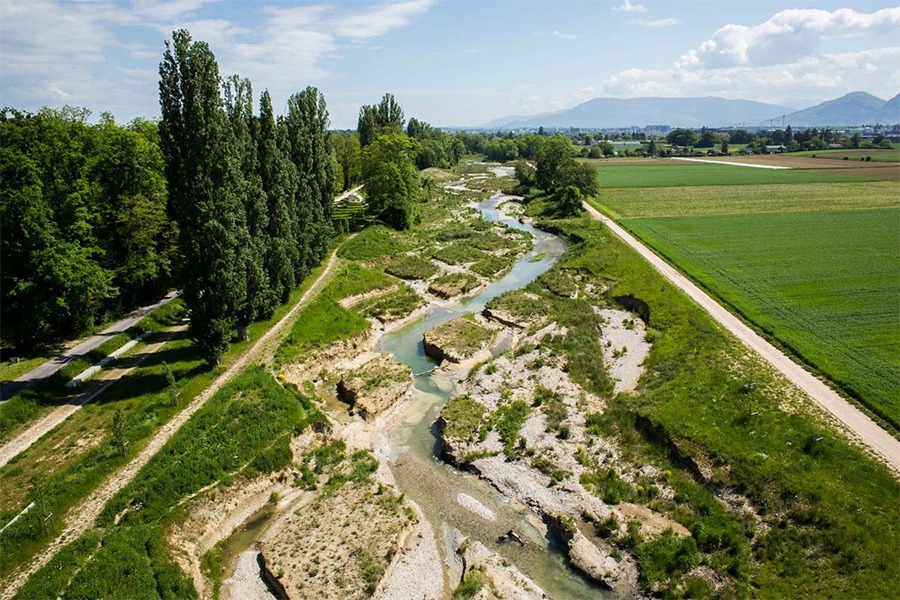
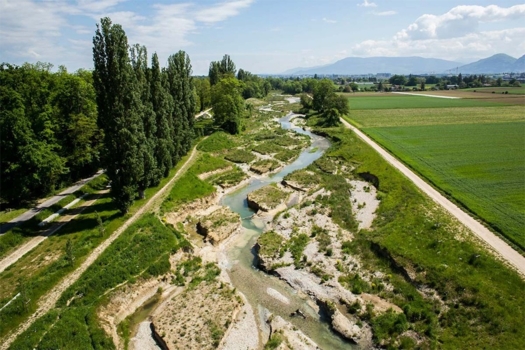
• The renaturation of the Aire River, near Geneva, designed by Atelier Descombes Rampini. This project is a landmark example of territorial and landscape reorganization at the scale of a watershed. It helped establish new balances between agriculture, urban development, leisure spaces, and natural environments.
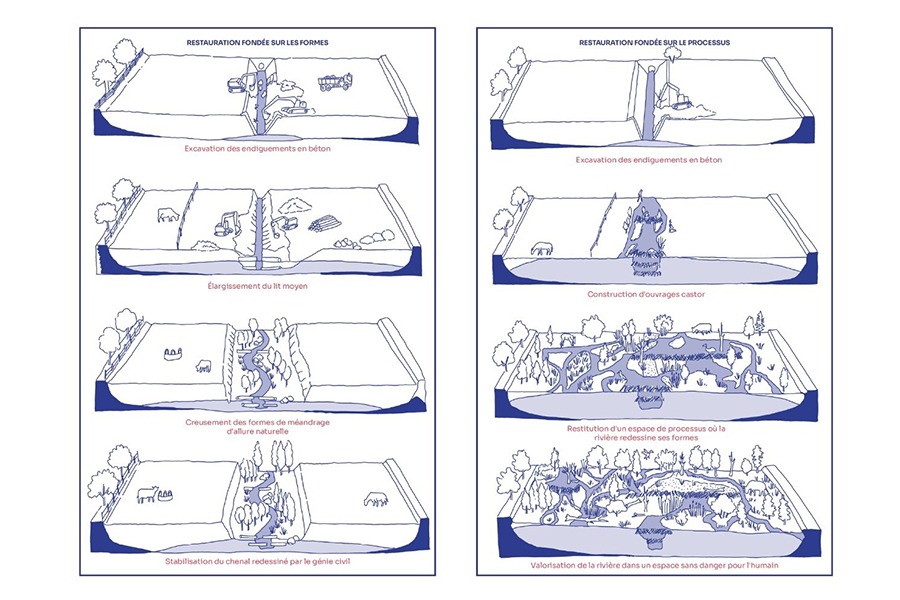
• Rendre l’eau à la Terre, by Baptiste Morizot and Suzanne Husky. In this book, the authors advocate for restoring rivers through ecological processes rather than fixed forms, notably by drawing inspiration from the “beaver effect.” This approach increases water retention in soils and helps maintain moisture during periods of drought.
• Champs de bataille, by Inès Léraud, which examines the history of land consolidation in France and its impacts on farming practices, landscapes, and biodiversity.
• Quels agriculteurs pour quelle agriculture demain?, a publication by INRAE that provides an overview of today’s farming profession while exploring future directions. It highlights forms of agriculture that can contribute to carbon storage and the preservation of water resources, particularly through agroecology.
• Several issues of the journal Relief devoted to rivers, meadows, marshes, and springs, which offer a broader understanding of the ecosystems and landscapes associated with these environments.
• Successful examples like the Parc Agrari del Baix Llobregat, or the french local agricultural cooperatives such as the Ferme de Figeac in Gers province, the Bio valley in Drôme province, or the national agricultural equipment cooperative network CUMA (coopérative d'utilisation de matériel agricole)
For us, Europan is an opportunity to explore a specific topic in depth, to engage with its theoretical foundations, and to translate this knowledge into a project, moving from research to practice.
SITE:
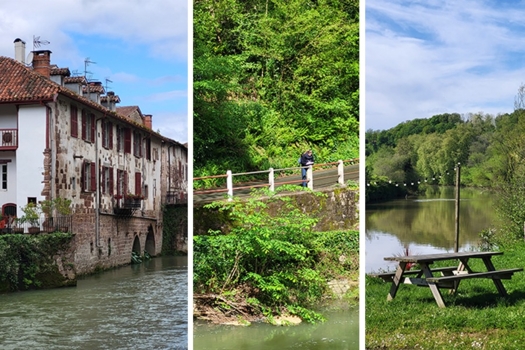
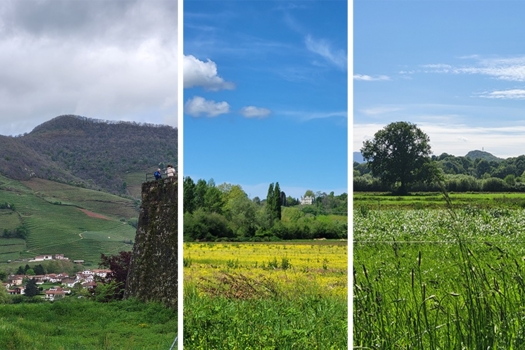
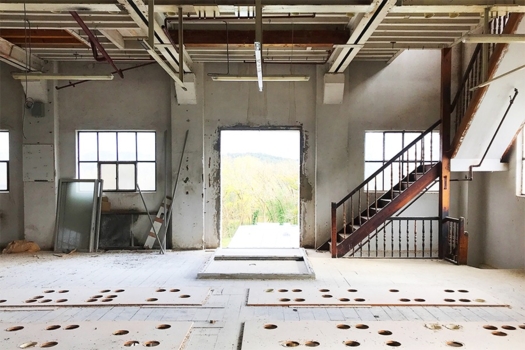
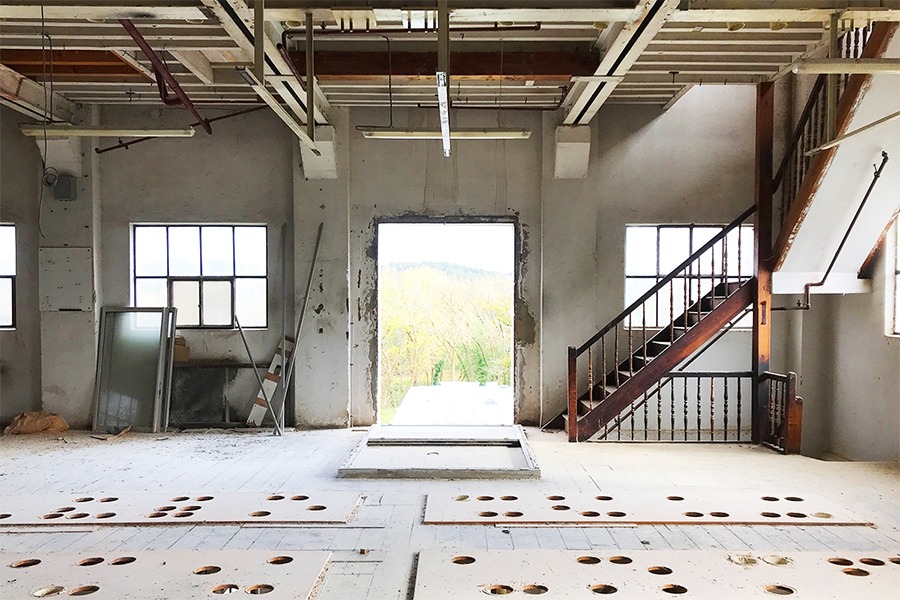
We understand that this project is not intended for immediate implementation like an architectural building. It is a strategic, territorial proposal for the Basque Country agglomeration community. Our primary objective is to initiate a comprehensive, collaborative process with all actors (Agglomeration council, Water Agency, Chamber of Agriculture, farmers networks, fishermen associations, regional natural park, inhabitants) rooted into local habits, economical and social structures, as to build guiding principles for the territory over the next 20 years. Through this process, the project could lead to the creation or reconfiguration of existing cooperatives, anchored in the prospective strategy we propose. Over time, and depending on local decisions, it could also open opportunities for the reconversion of specific spaces, such as the minoterie, into productive, ecological, or communal uses. Rather than a single pinpoint intervention, the project provides a framework for long-term territorial planning and coordination, enabling our collective to work hand-in-hand with other winning teams to guide urban, agricultural, and ecological interventions across the watershed.
REFERENCES:
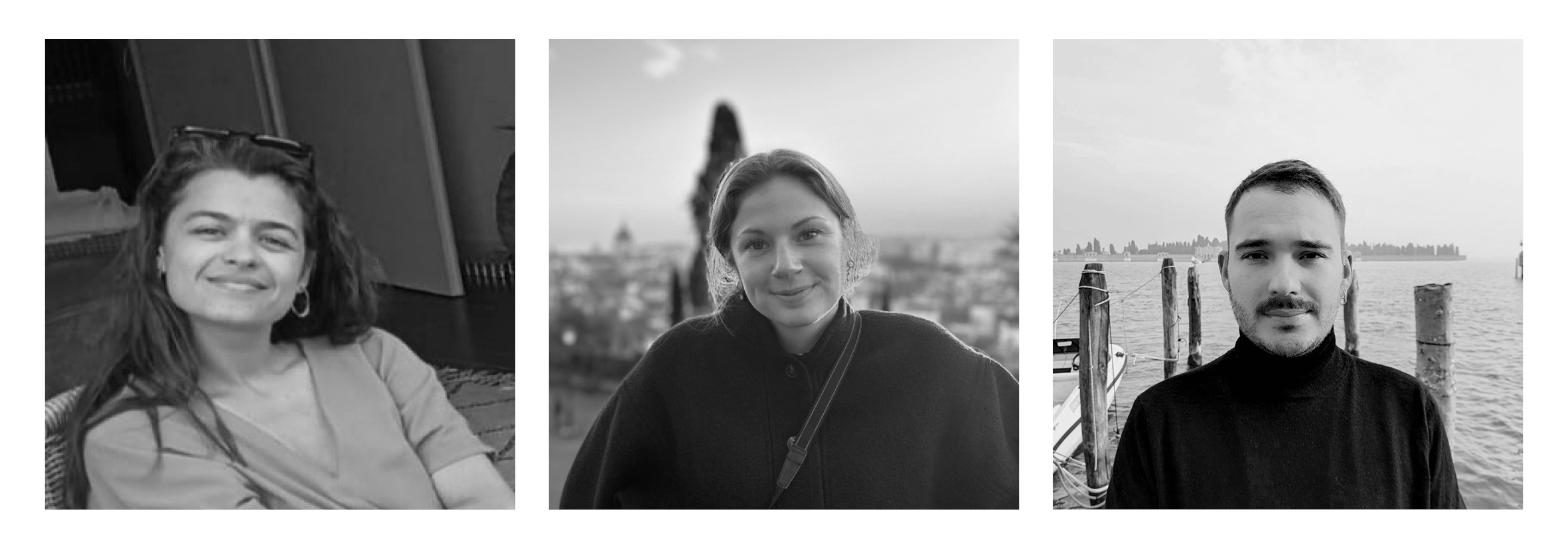
Collectif MaYa grew from our shared desire to engage in urban and territorial design while addressing complex environmental challenges. Marine brings her expertise as a major risks architect. Yann contributes with his experience in urban and architectural projects. Anouk practices urban planning and programming and supports the design with an analytic approach in governance, political organisation and operationality. Throughout the design process, we collaborated closely with agronomists, the Académie Française d’Agriculture, and other scientists to ensure the scientific and technical coherence of our proposals. This multidisciplinary collaboration allowed us to combine expertise in risk management, territorial planning, and local development to produce a project that is both grounded and forward-looking.
6. How could this prize help you in your professional career?
Yes. Although, after our participation in Europan 17, we are aware that access to public contracts through the competition is not straightforward, we recognize that Europan offers visibility and a platform to present urban and territorial approaches that are difficult to express in other contexts. Above all, it allows us to strengthen our convictions and continue developing our ideas in a concrete, professional framework.
TEAM IDENTITY
Legal status:
Team name:
Average age of the associates: 28 years old
Has your team, together or separately, already conceived or implemented some projects and/or won any competition? if so, which ones?
We have already worked together on Europan 17 in Le Palais, developing a proposal addressing sea level rise and climate change adaptation. This experience marked the beginning of our collaboration around shared concerns for environmental transition and territorial resilience throughout our Collectif MaYa. Individually, we started competitions during our architecture studies. Yann won the 1st Prize for Une nuit avec Jean-Pierre, “Construire en Pierre Structurelle – The stone never alone” (France, 2019), and received a Special Mention for Meeting Existentialism, “A House for…” (2020). Marine was awarded in the MSICS “Archibois” Contest (France, 2020). Alongside these experiences, we have developed built projects, including housing refurbishment, single-family houses, and extensions in France and Spain. For this edition, we are joined by Anouk Étienne, who has previously collaborated with Marine on housing and territorial projects on behalf of urban and landscape agencies in Paris.
WORKS: