Le Ruban, l'Eponge et les Saules
Grand Nancy (FR) - Mentionné
DONNÉES DE L’ÉQUIPE
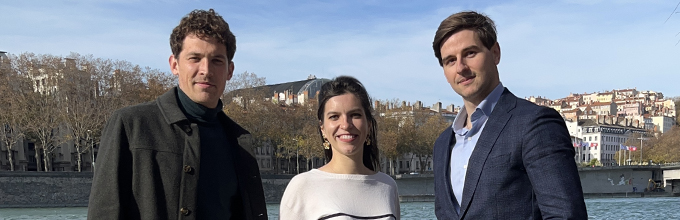
Associés: Anaïs Berthome (FR) – architecte urbaniste, Alexis Perrocheau (FR), Mathias Goutelle (FR) – architectes paysagistes
contact@agence-tellu.com / www.agence-tellu.com
TEAM PORTRAIT
VIDEO (by the team)
INTERVIEW
Click on the images to enlarge
1. How do you define the main issues of your project in relation with the theme “Re-sourcing”? Re-sourcing thanks to nature, to social dynamics, to new materiality? In which way do you think your project can contribute to an ecological and/or social evolution? And in which way do you think your project can be called a “regenerative project”?
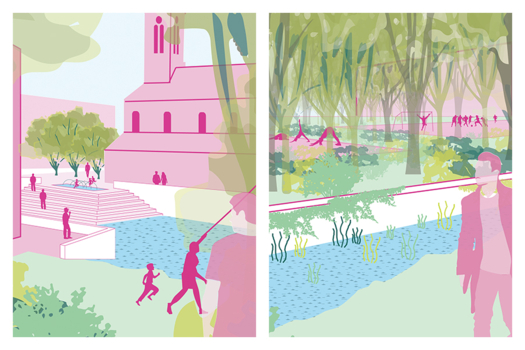
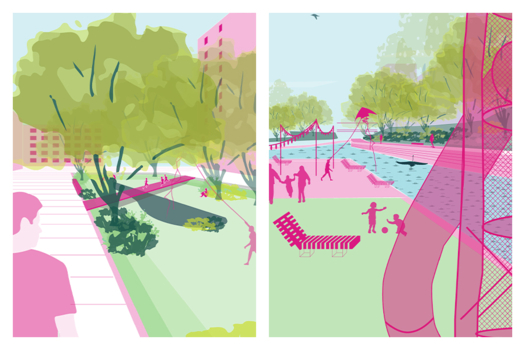
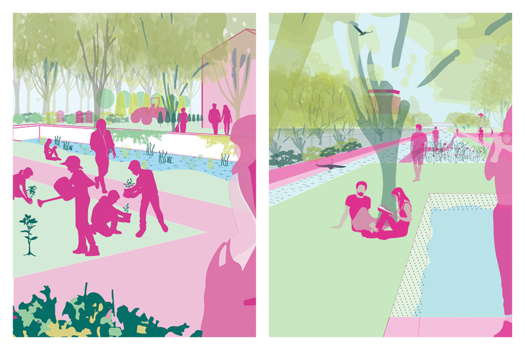
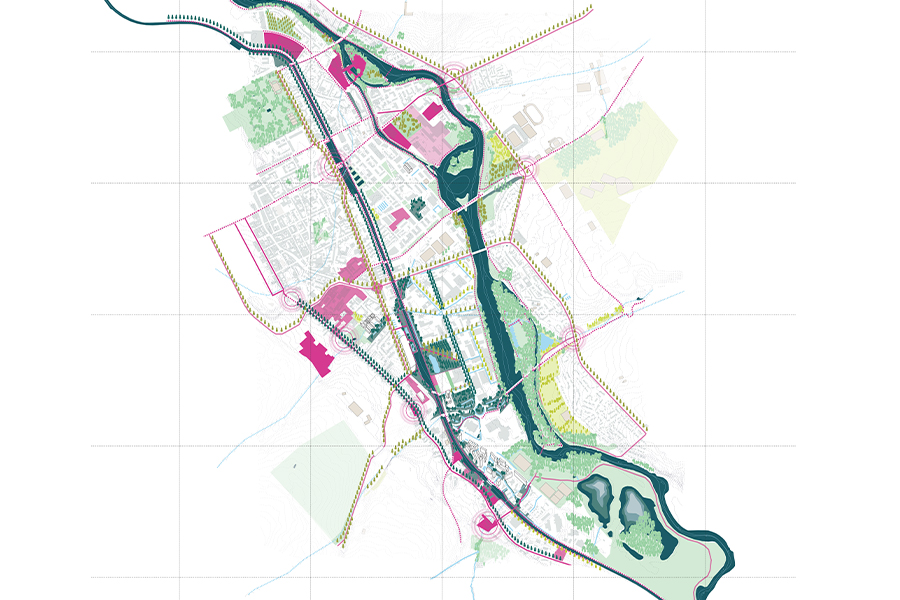
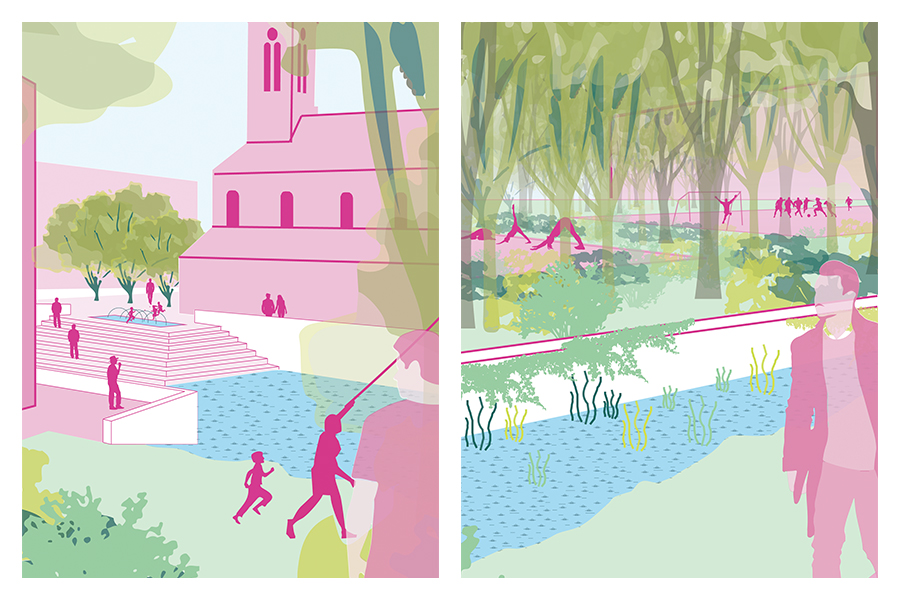
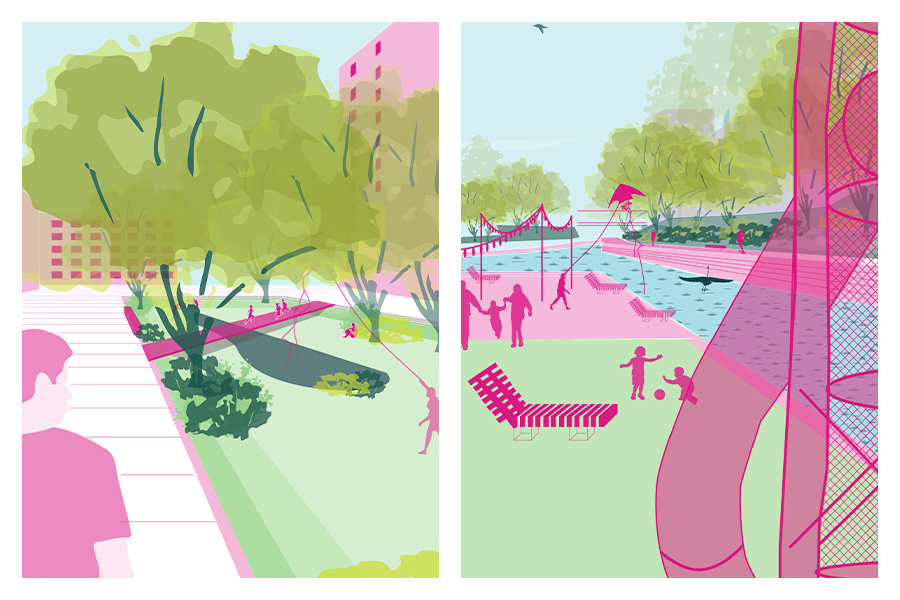
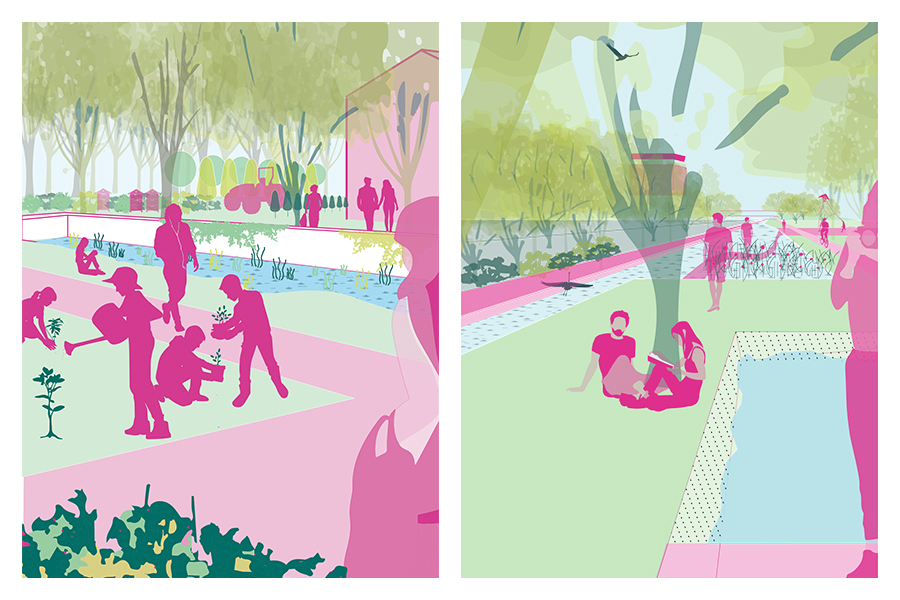
The project is a regenerative project due to its 3 axes of implementation that are related to the 3 main resources of the site which are :
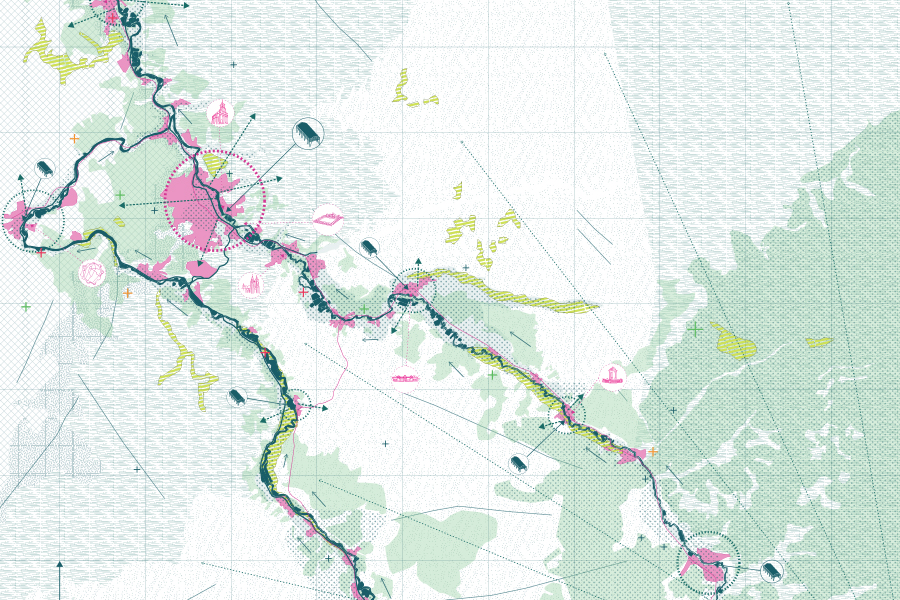
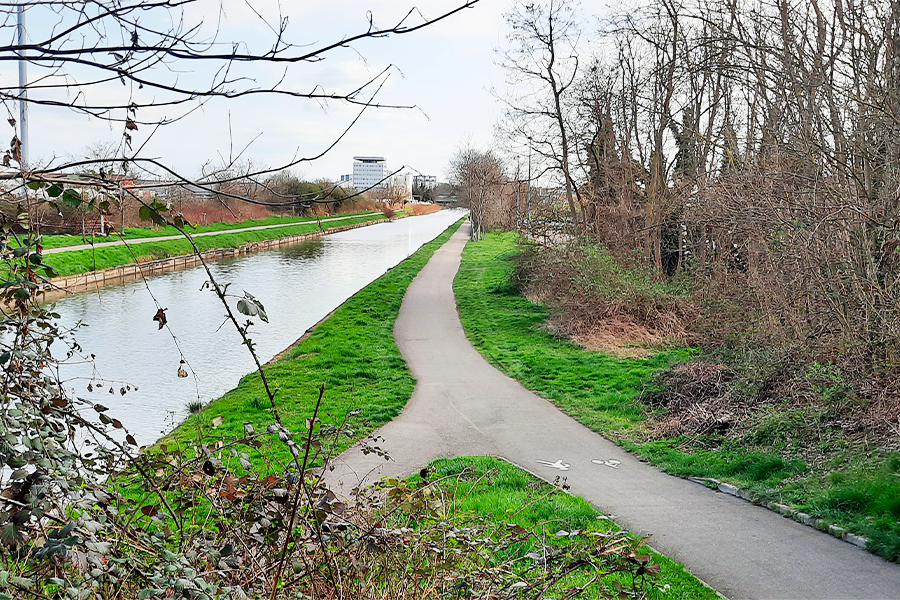
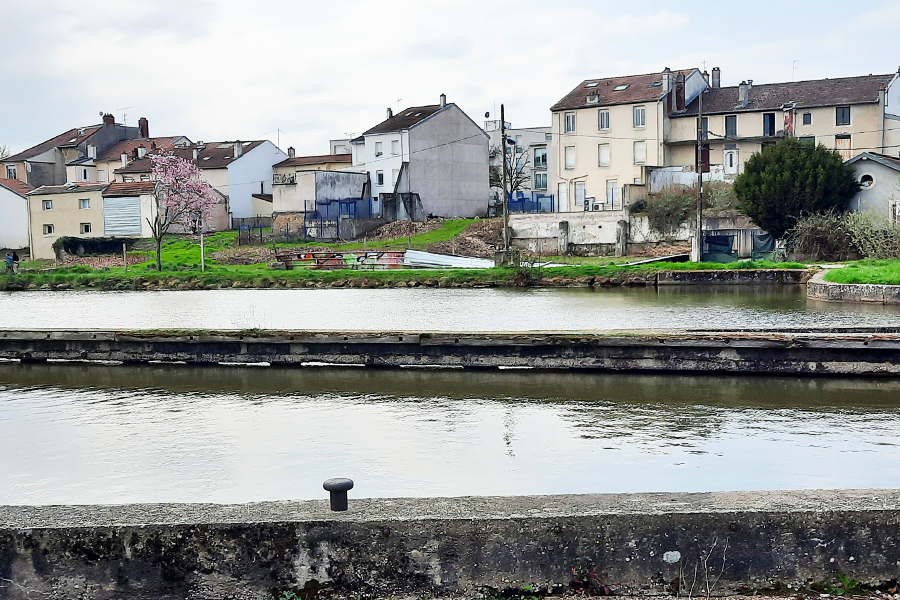
1. The water through its natural (Meurthe River and the multitude of streams) and artificial appearance (Canal Marne au Rhin)
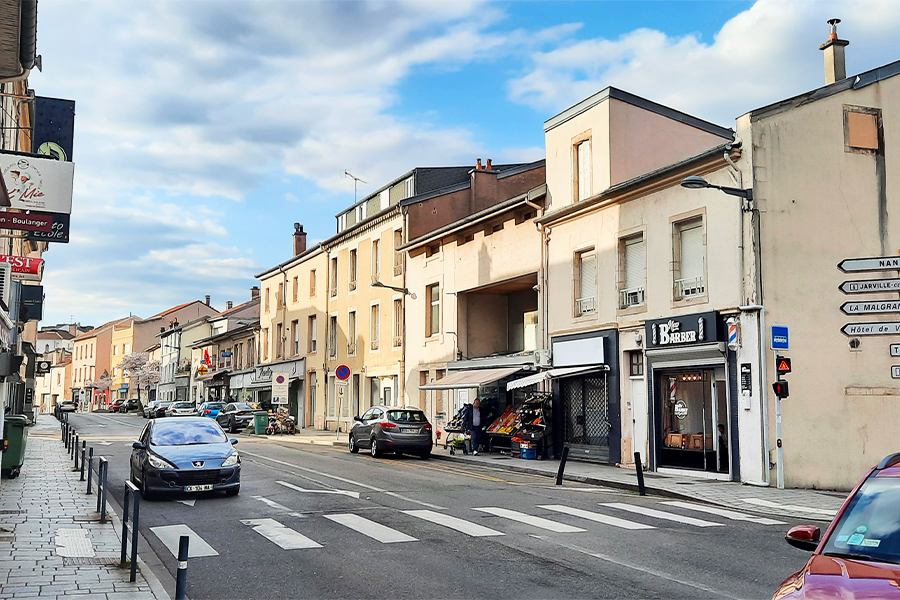
2. The actual publics spaces wich are fragmented and unwelcoming
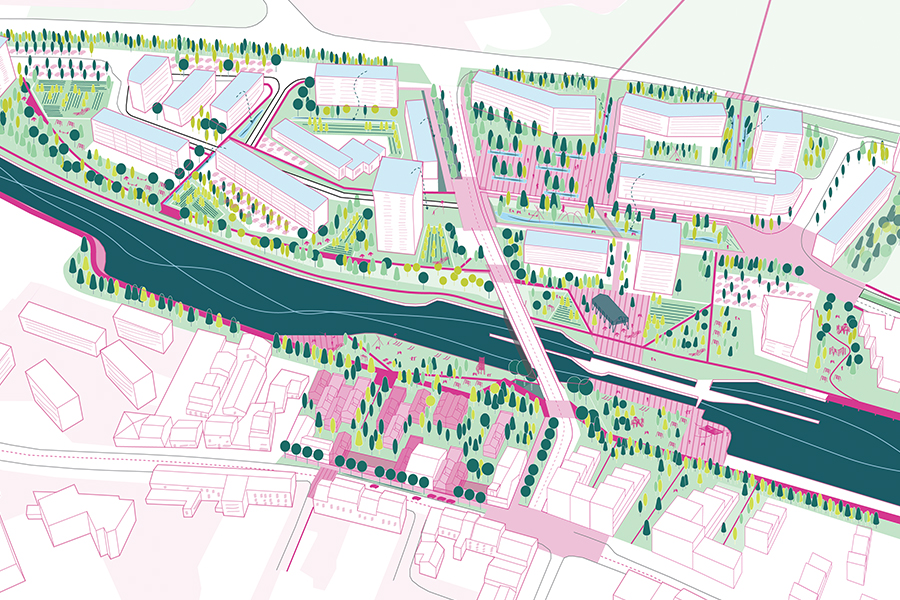
3. The “in between” spaces that represent a big amount of land Through replicable, simple but impactful actions, these “ressources” are transformed and enhanced to become the new landscape framework on which the urban fabric takes place.
2. How did the issues of your design and the questions raised by the site mutation meet?
Our territory analysis, our readings, and our professional experiences led us to define several concepts to resolve the urban issues. We quickly tested them directly on site in order to design an appropriate project for the territory and based on its specific characteristics. Starting with what was already there and the existing resources such as water, soil, vegetation, and users, the project is formulated as an agile plan action that seizes transformation opportunities while including the time dimension.
PROJECT:
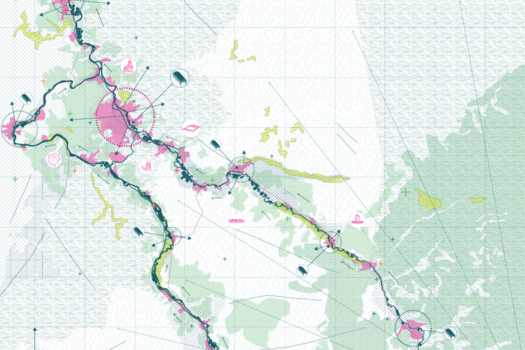
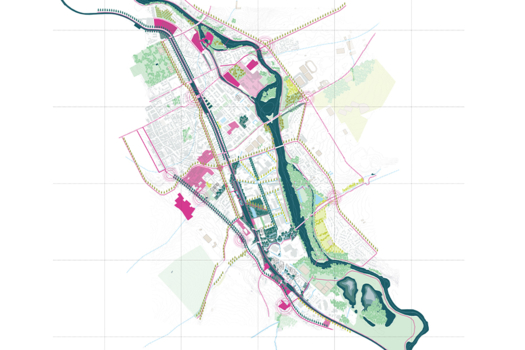
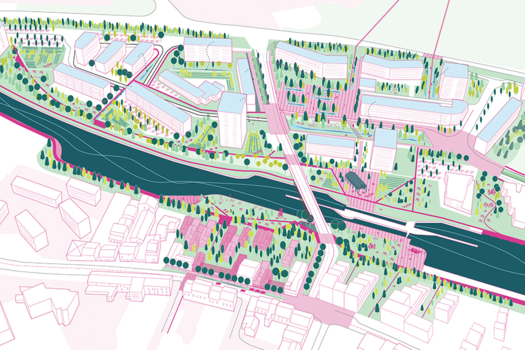
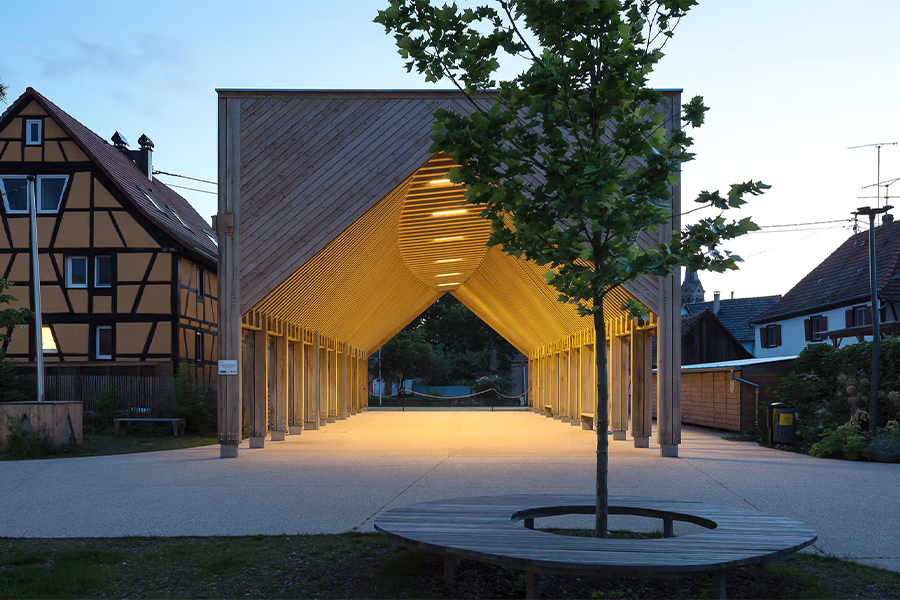
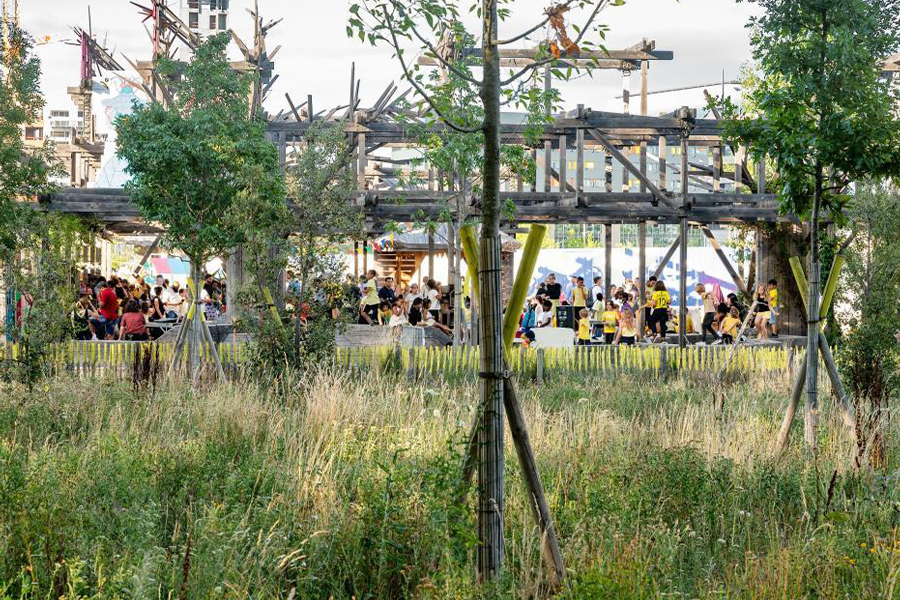
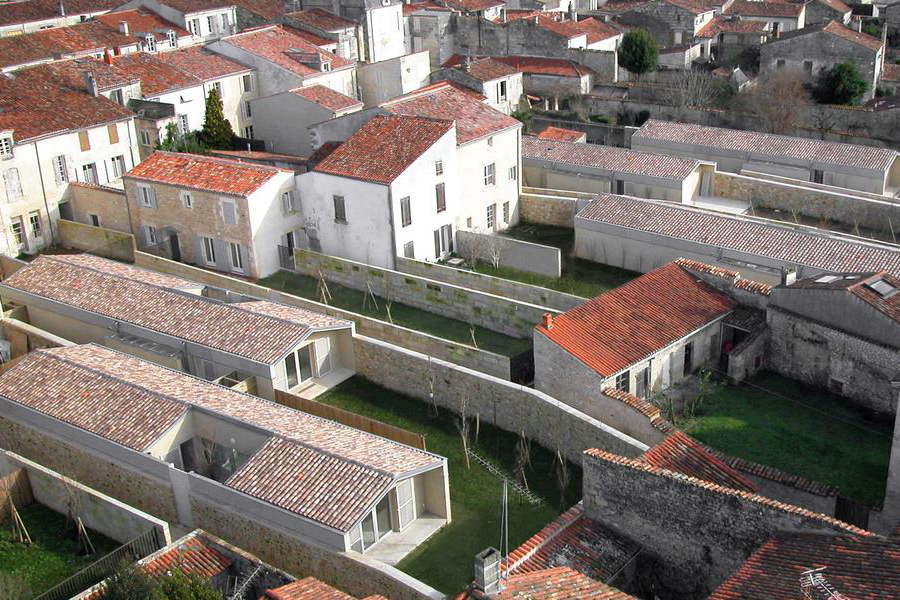
Through our professional practices, we are facing these issues every day especially in a world where landscapes face so many challenges for the amount of time and resources allocated to them. In these conditions, designing sober but resilient landscape solutions is vital and has to take shape through easy but impactful actions. The reference projects are : Vora de Girona by EMF, Romainville Montreux by Coloco, Parc du Heyritz by Villes et Paysage, Plateau de Saclay by Michel Desvignes, Champ Confluence by BASE, Systemic design approach of materiality at Studio Lada and the systemic geographical and historical approach of Fernand Braudel.
SITE:
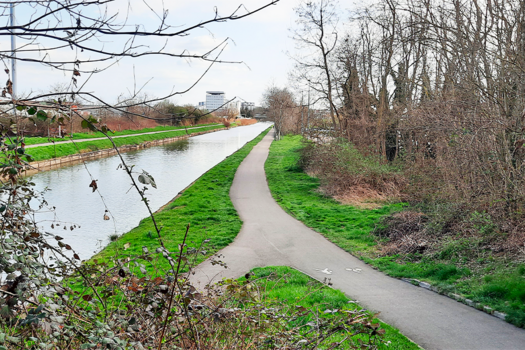
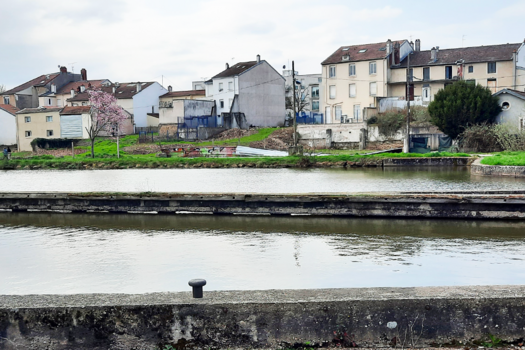
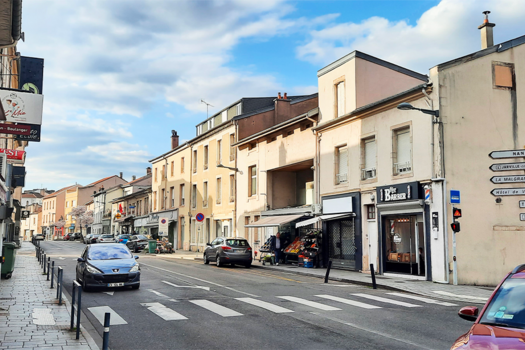
The project was imagined as an agile and responsive organism. Territorial thinking produces a panel of spatial actions anchored in the landscape that are replicable on all sites in time and space. The discussions with local actors and the dialogue with all stakeholders will now give us the opportunity to target priority places. It is thanks to the exchanges with elected representatives, technicians, residents, companies and all stakeholders that we will be able to adapt the vision of the project in order to enable concrete transformations. The project will be unifying only through a shared vision and carried by all.
REFERENCES:
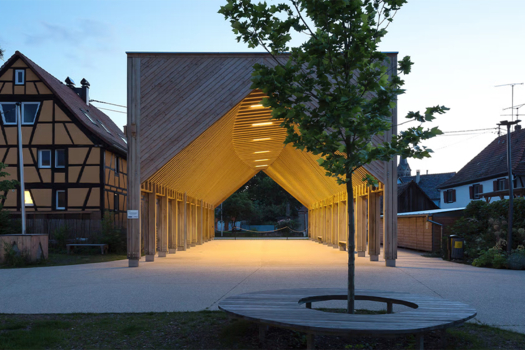
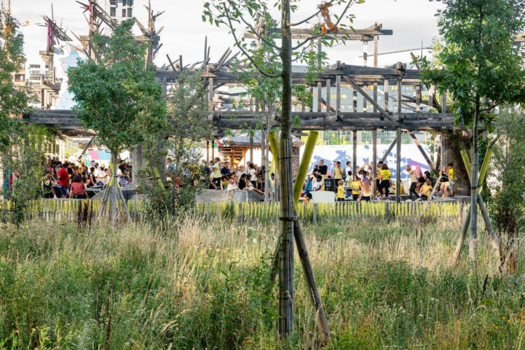
Mathias and Alexis met at L’Ecole de Paysage de Versailles. As landscape designers, we quickly felt the desire to establish our own landscape practice, an ambition realized after winning the Runner-Up prize at Europan 17 in Grenoble. Anaïs is an architect DE and urban planner (DSA) and has worked in a landscape - urbanism office for five years, where she met Mathias. Assembling a team for Europan 18 was a natural step given our shared, complementary, and intersecting perspectives on the territorial, geographical, urban, and architectural challenges we face daily in our professions and which we experienced firsthand at the Nancy site.
6. How could this prize help you in your professional career?
We are convinced that the Europan competition can be a fabulous springboard for young designers like us to access public commissions. First by offering us visibility and then by providing a potential transformation of those first ideas into a project commission. Europan allows us to prove our ability as young landscape architects and architects to work on complex and large issues of territorial transformation.
TEAM IDENTITY
Legal status:
Team name:
Average age of the associates: 29 years old
Has your team, together or separately, already conceived or implemented some projects and/or won any competition? if so, which ones?
Mathis GOUTELLE and Alexis PERROCHEAU have already won the previous EUROPAN 17 at Grenoble. Mathias GOUTELLE and Anaïs BERTHOME were working together for a well established company in Lyon before Mathias created with Alexis Agence TELLU. Through our company Agence TELLU we are building public projects in Montpellier, Cléremont-Ferrand and Marseille in relation with différents publics institutions (SA3M, SNTC, Euroméditerranée).
WORKS: