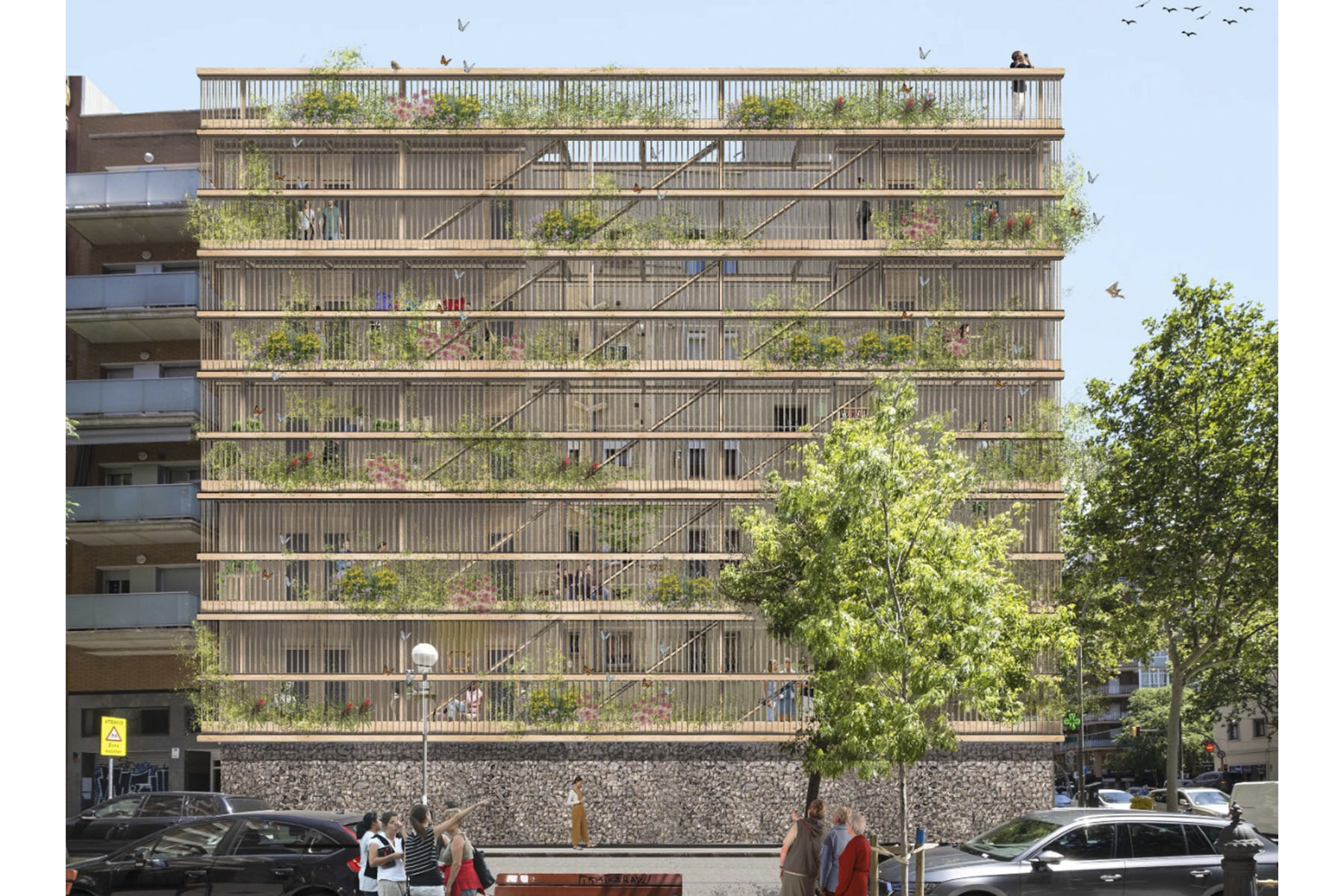
Suturing water, memory and biodiversity together
Navalmoral de la Mata (ES) - Mentionné
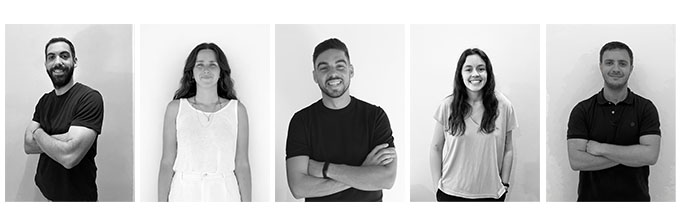
DONNÉES DE L’ÉQUIPE
Associés: Silvia Montesdeoca Cabrera (ES), Javier Herrera Rodríguez (ES), José Carlos Ramírez Ceballos (ES) – architectes, Jorge Espinosa Morales (ES), Miranda Inman (GB) – architectes paysagistes
pya.collective@gmail.com / www.pyacollective.com
TEAM PORTRAIT
VIDEO (by the team)
INTERVIEW
Click on the images to enlarge
1. How do you define the main issues of your project in relation with the theme “Re-sourcing”? Re-sourcing thanks to nature, to social dynamics, to new materiality? In which way do you think your project can contribute to an ecological and/or social evolution? And in which way do you think your project can be called a “regenerative project”?
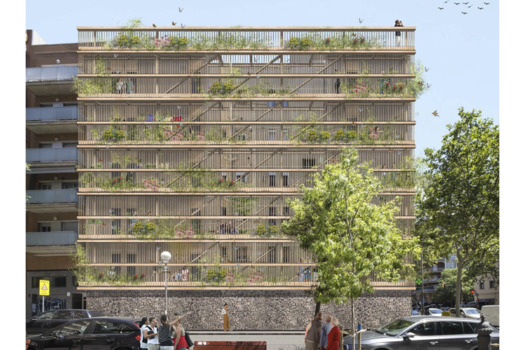
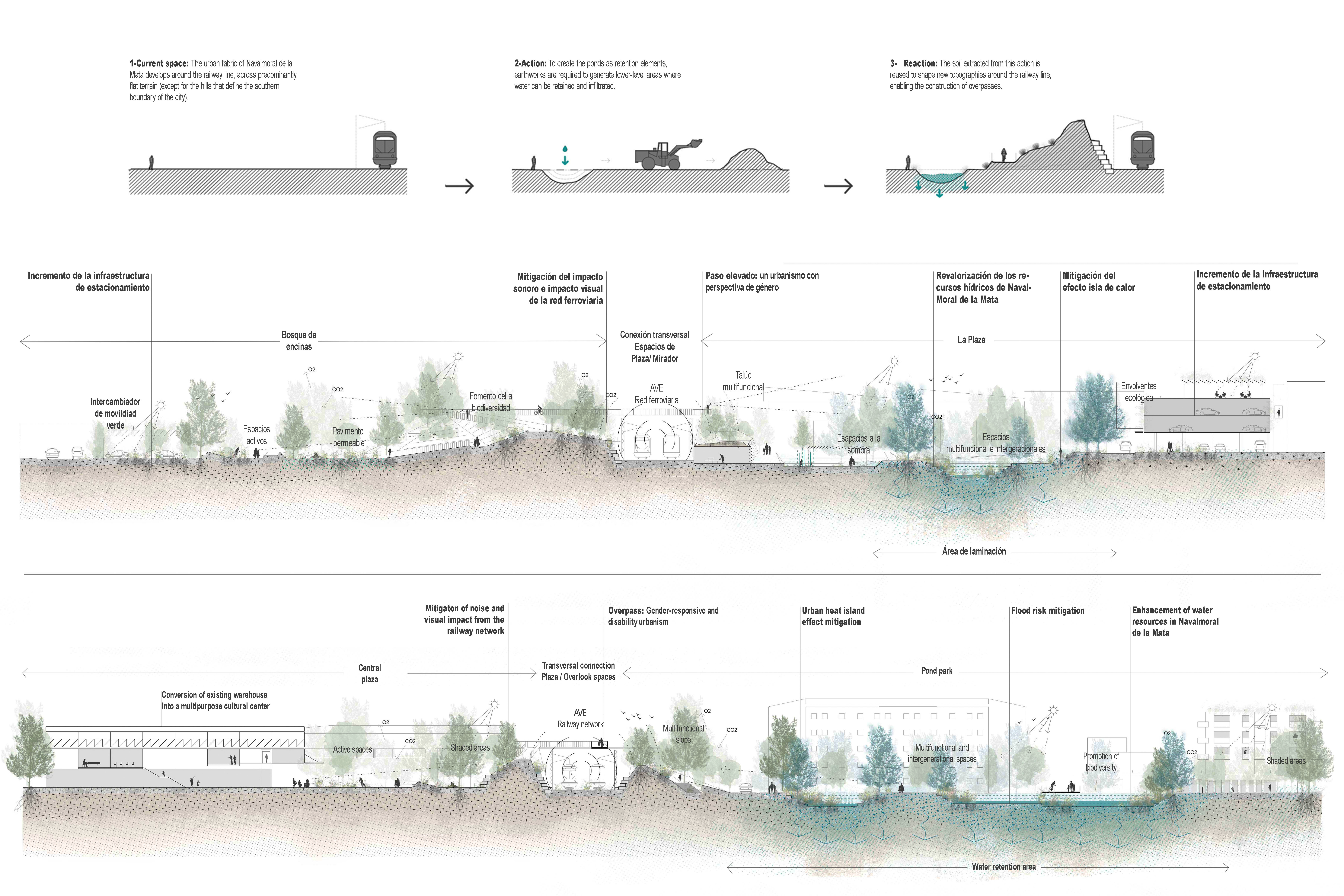
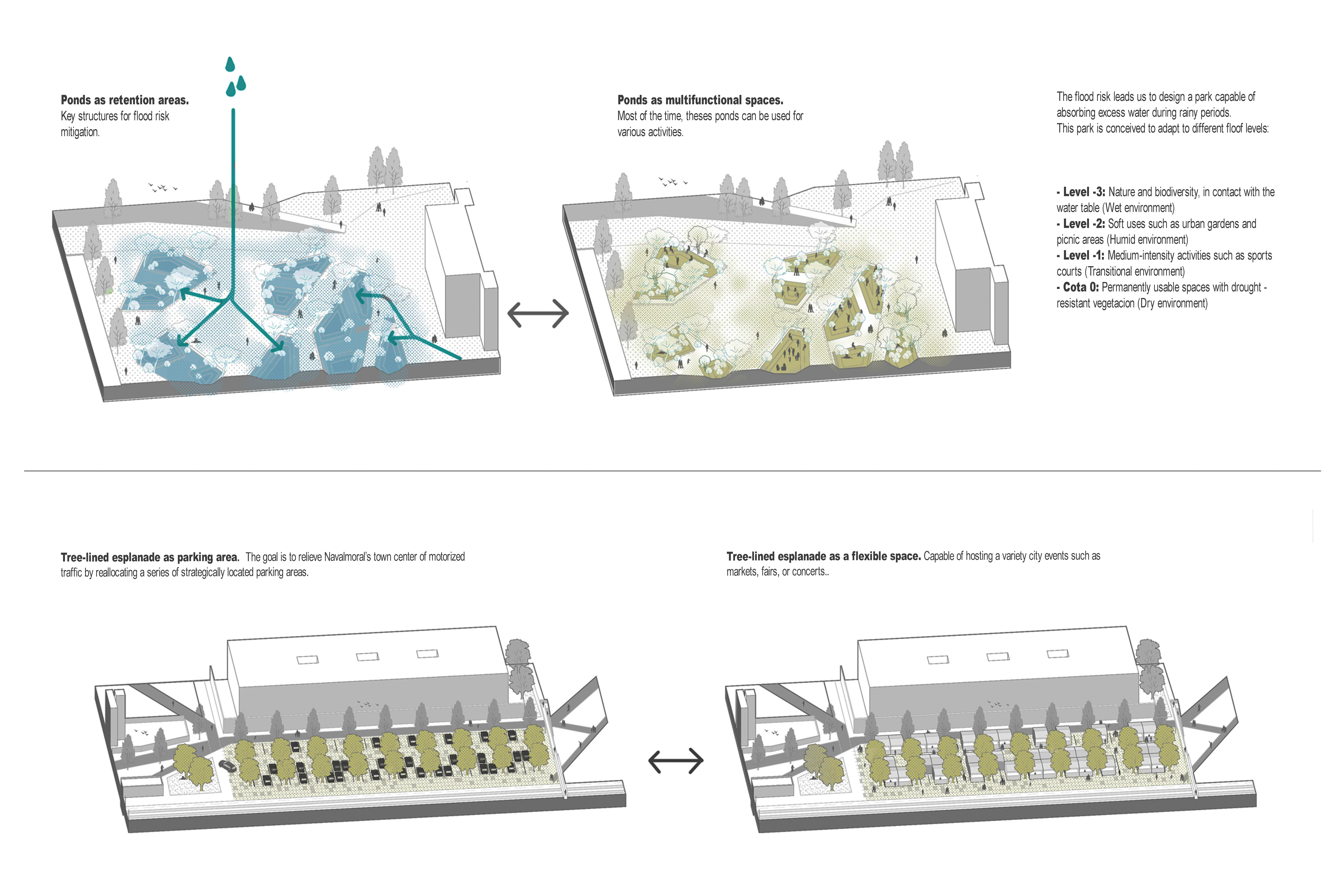
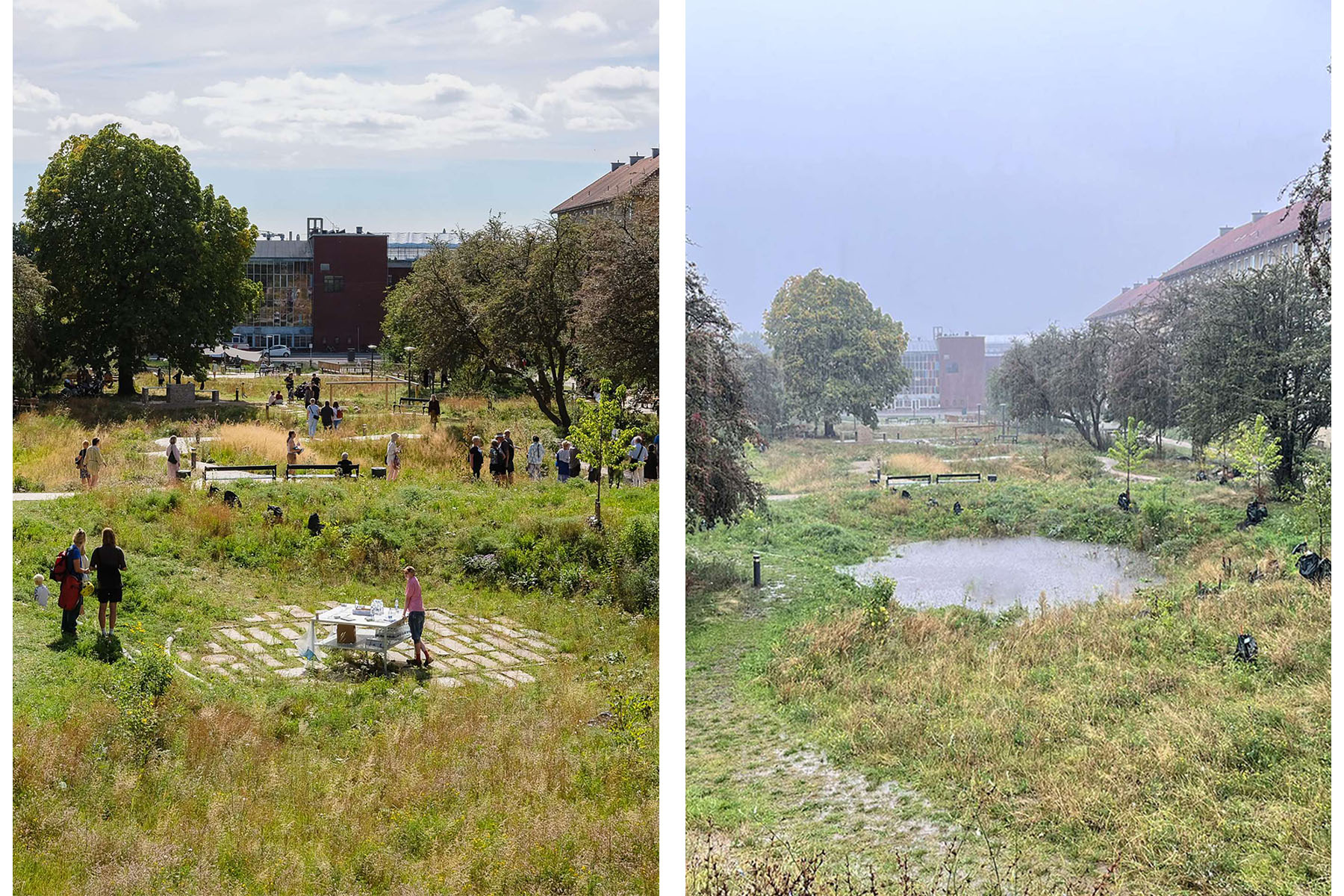
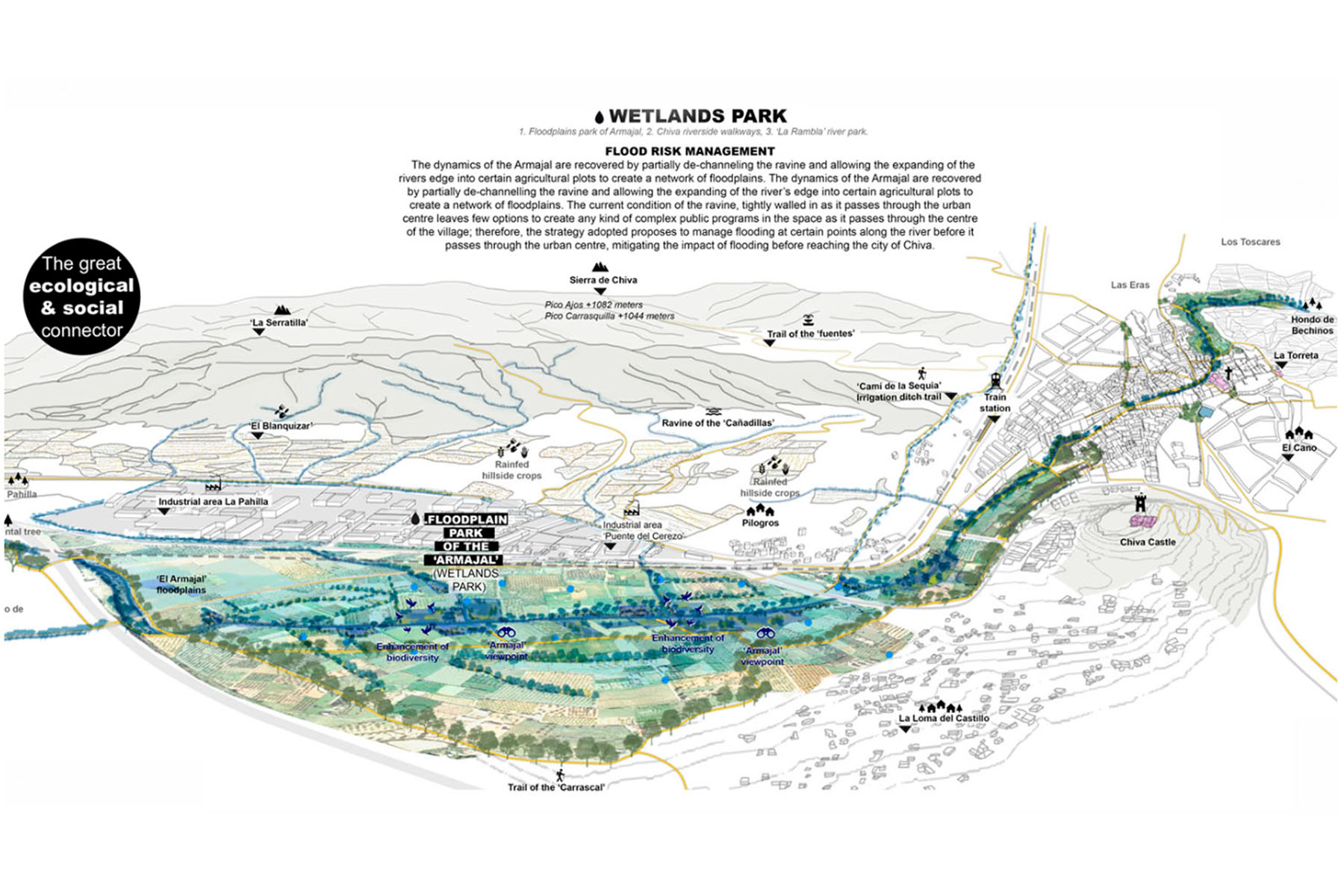
The project repositions water, biodiversity, and memory as active resources, generating a new urban model that stitches territorial heritage into everyday life. Re-sourcing operates across multiple scales, from the territorial to the experiential, linking natural systems with social uses. Regeneration is understood as a triple action: revealing, activating, and inhabiting over time.
2. How did the issues of your design and the questions raised by the site mutation meet?
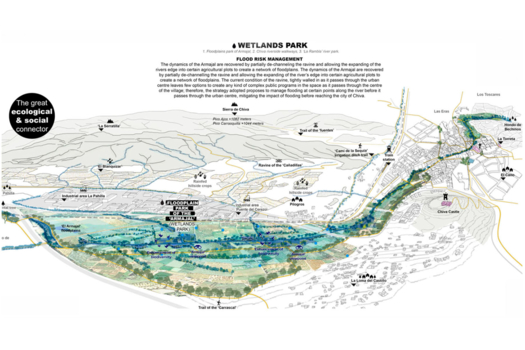
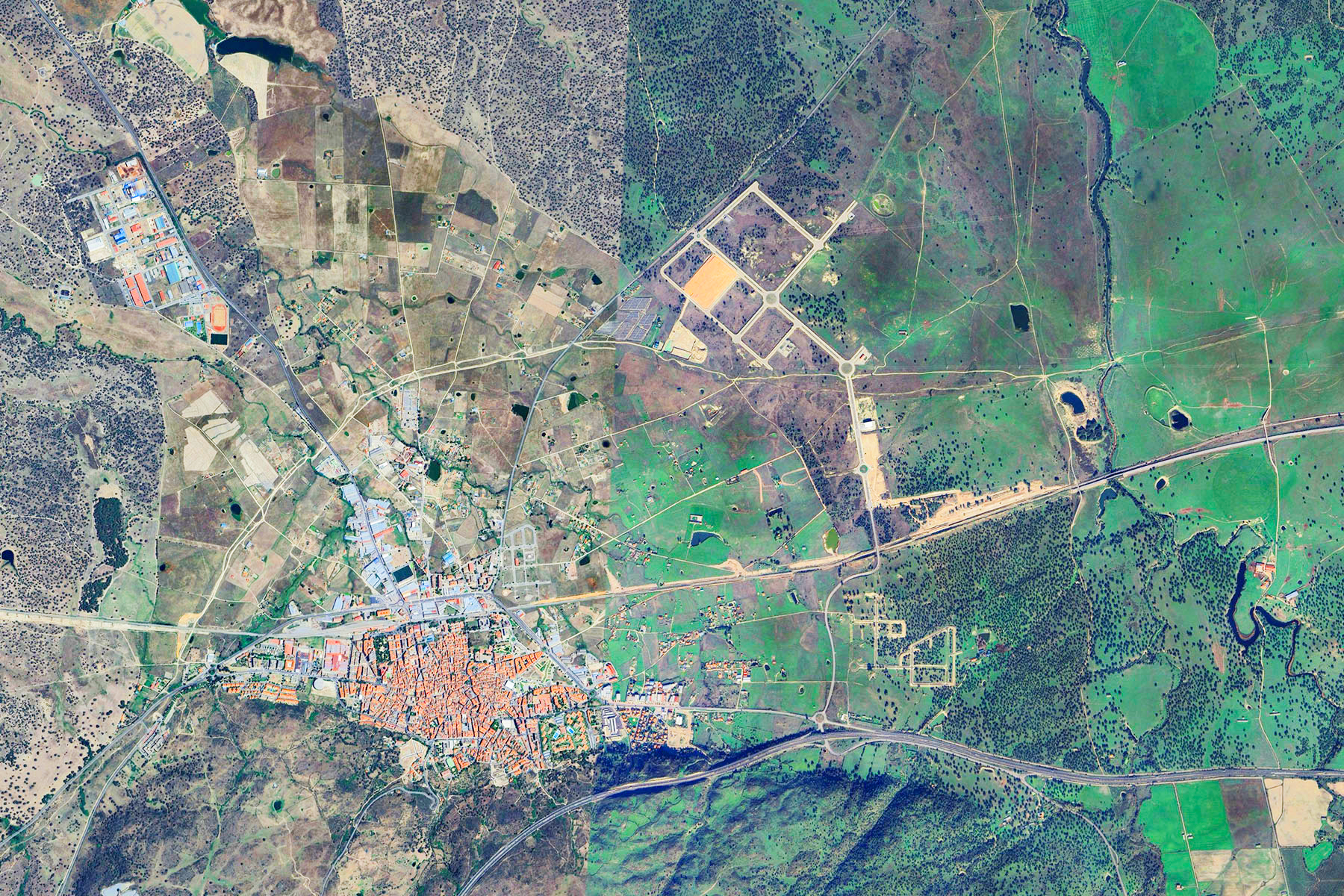
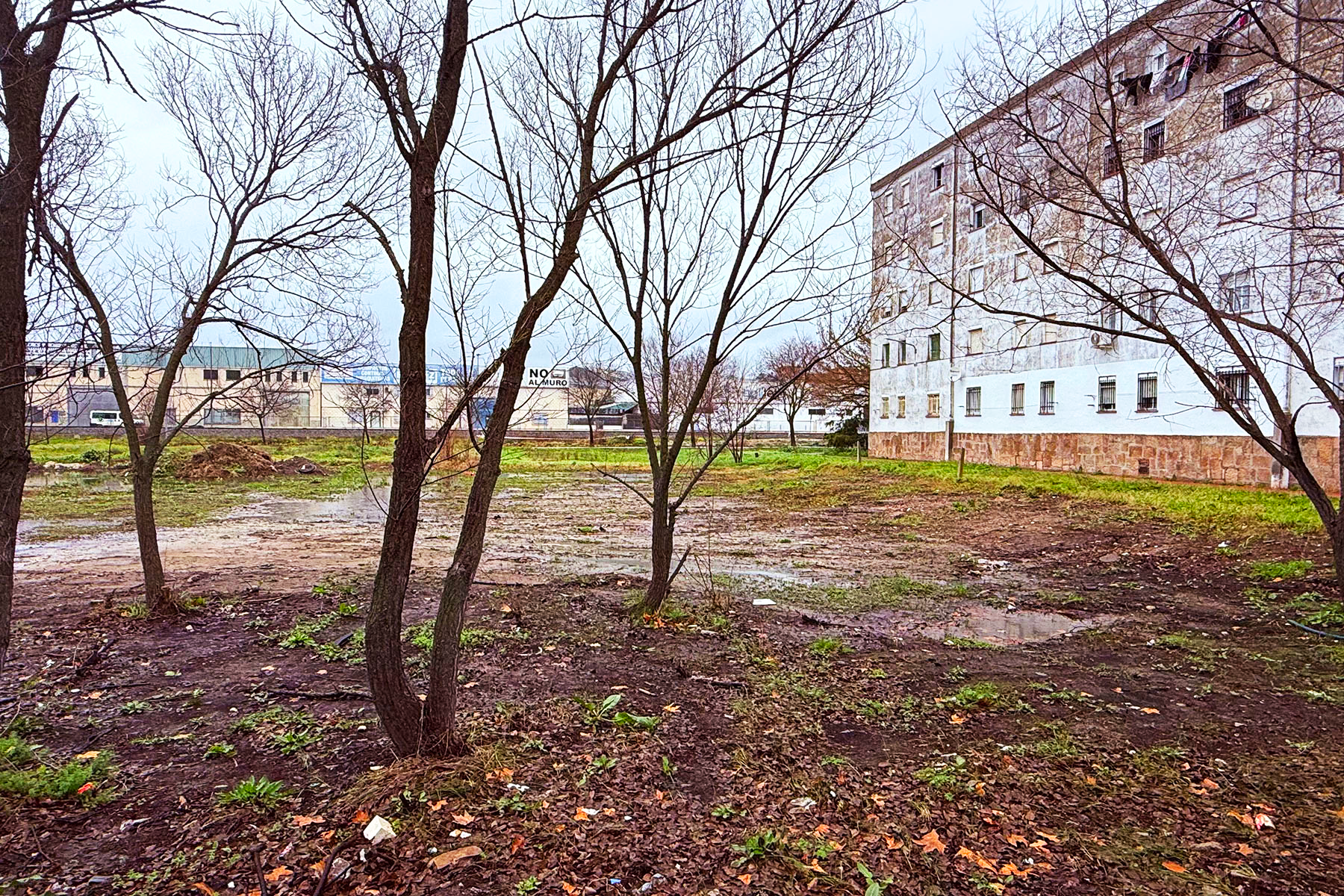
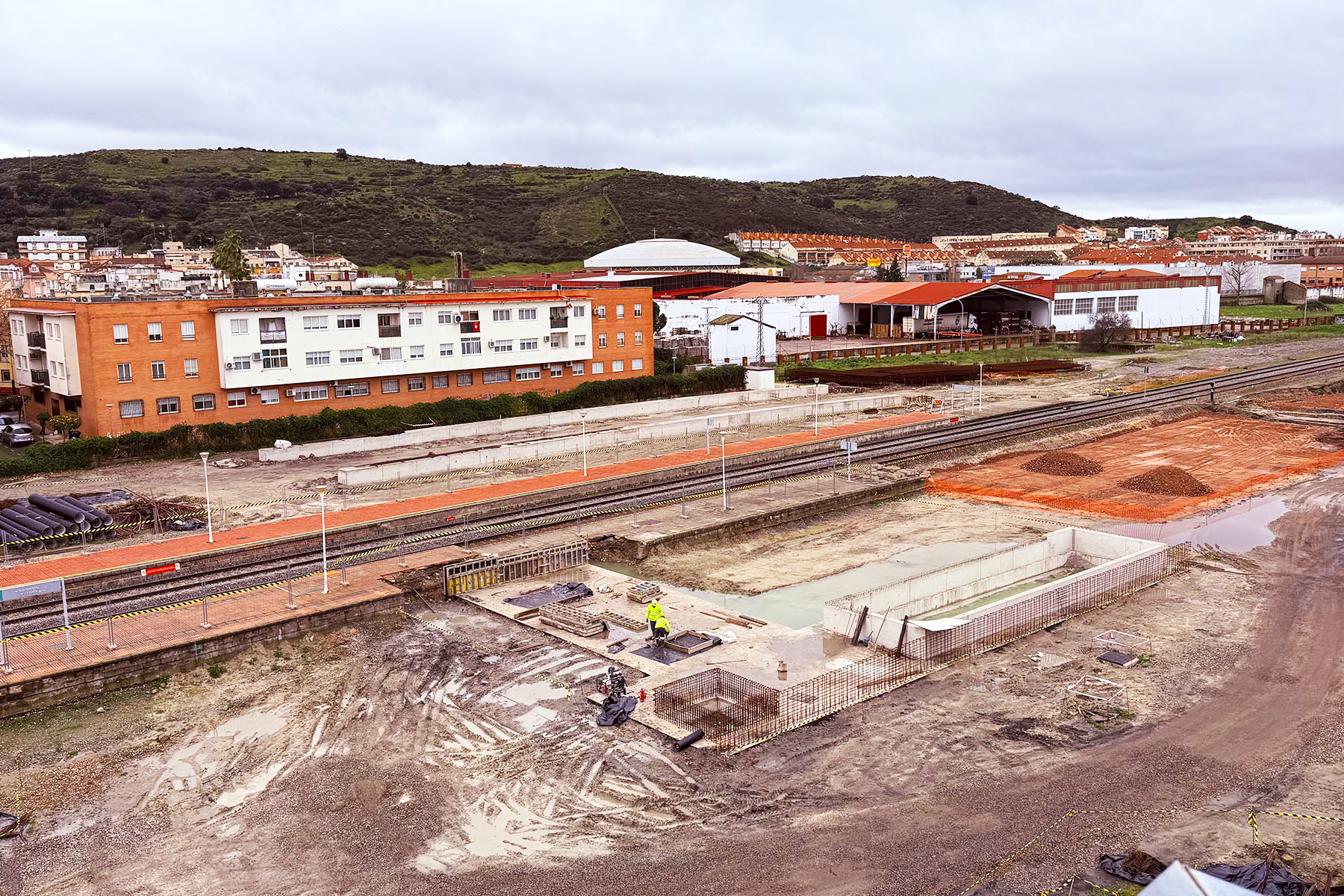
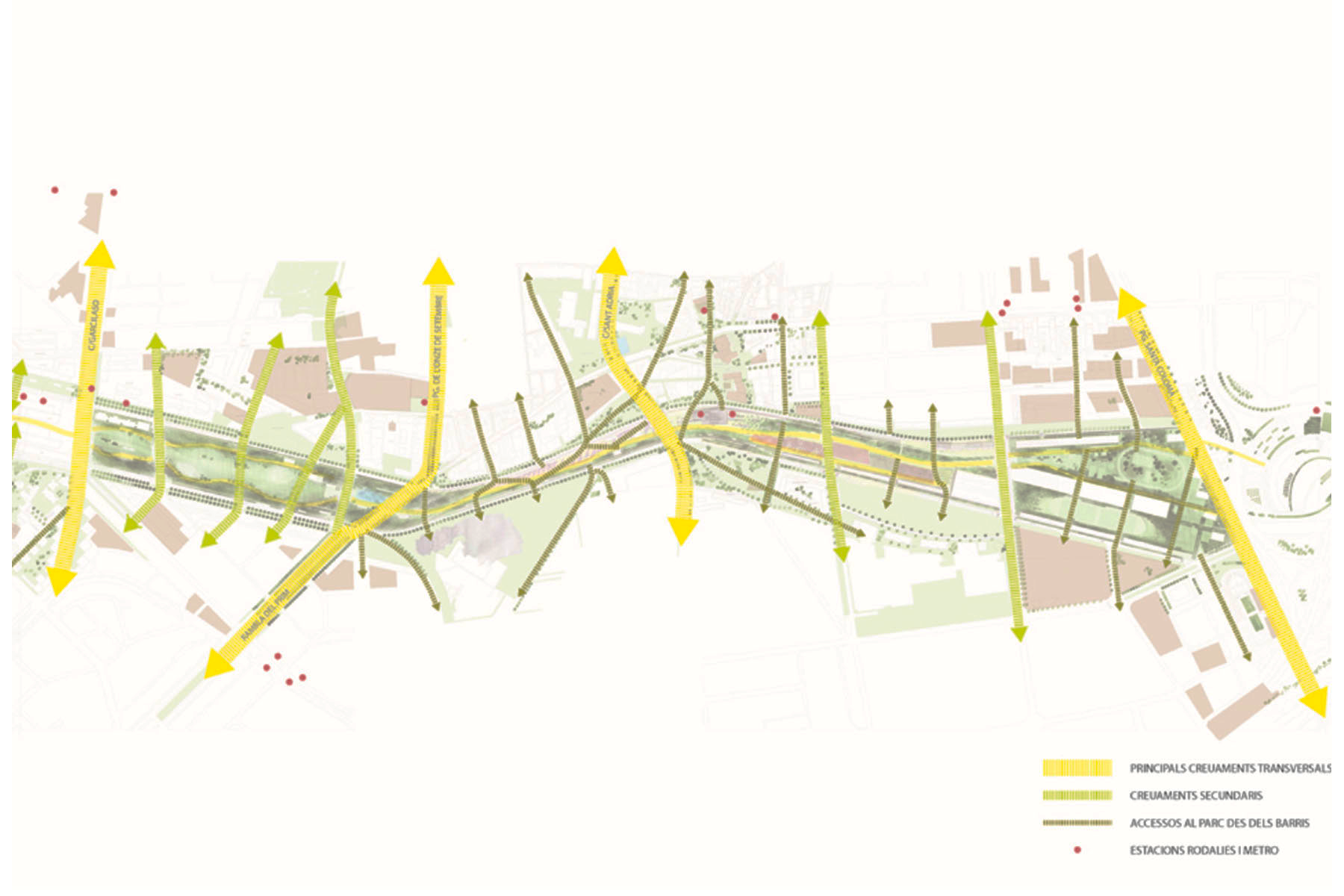
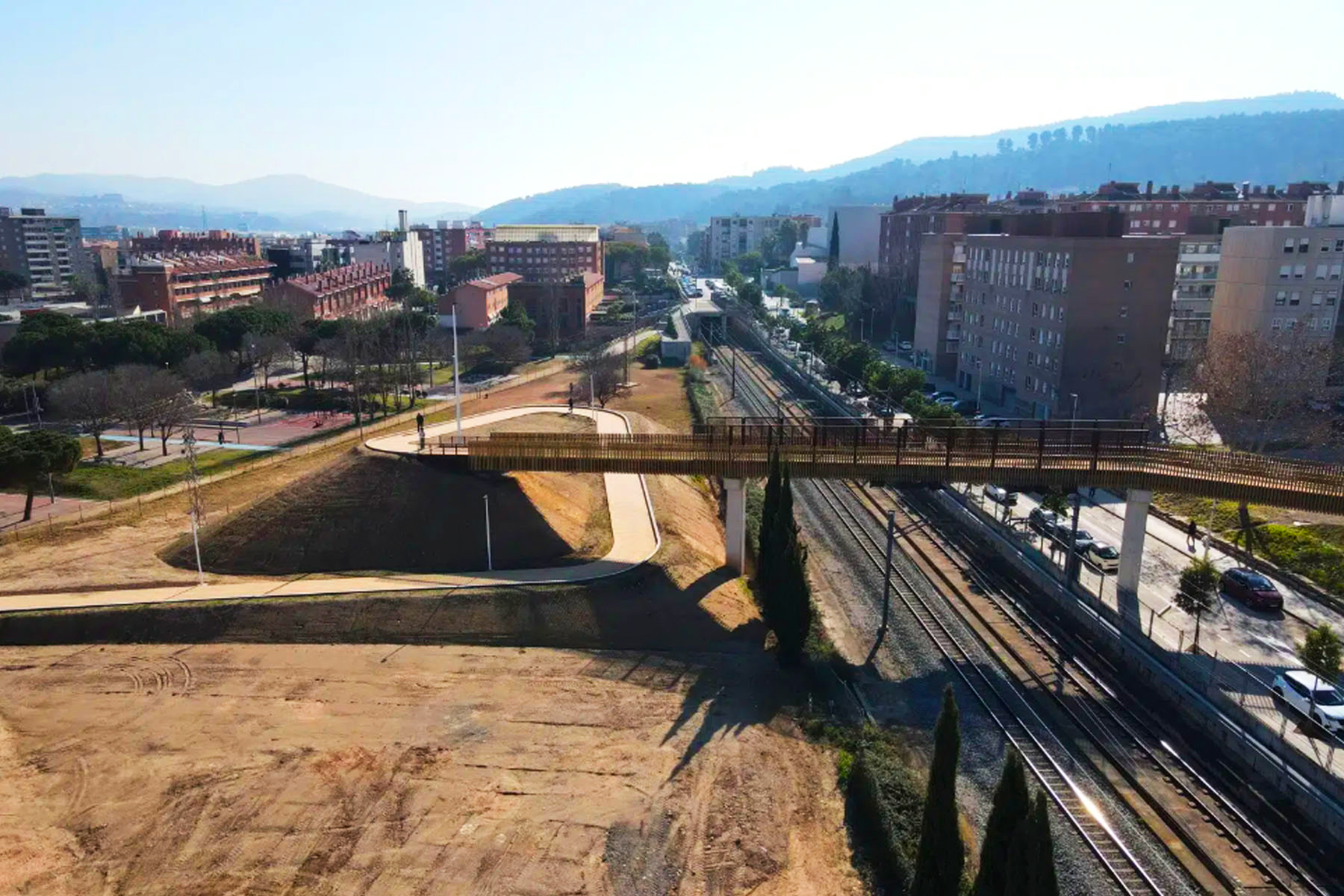
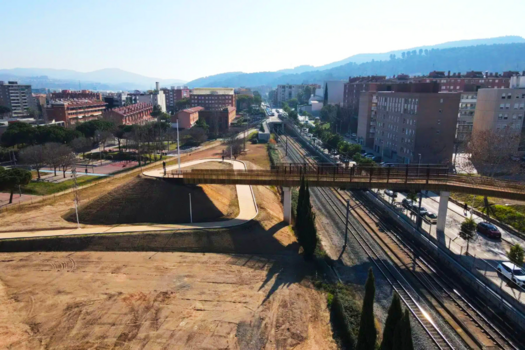
The fragmentation produced by railway infrastructure is transformed into a project opportunity. The proposal responds by using ecological, hydrological, and cultural heritage as structuring elements, restoring continuity between the urban fabric and the territory and transforming a residual infrastructure into a shared ecological and social axis.
PROJECT:
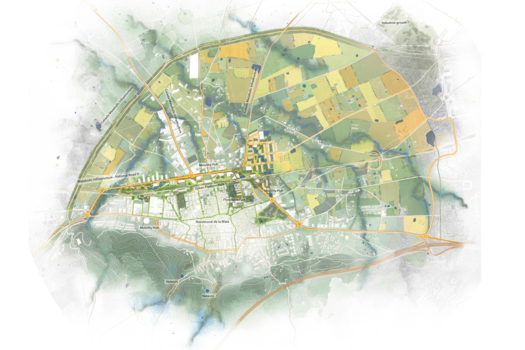
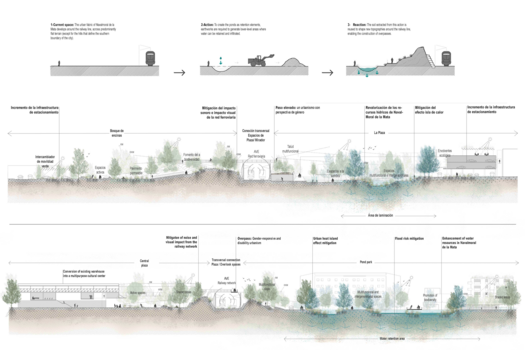
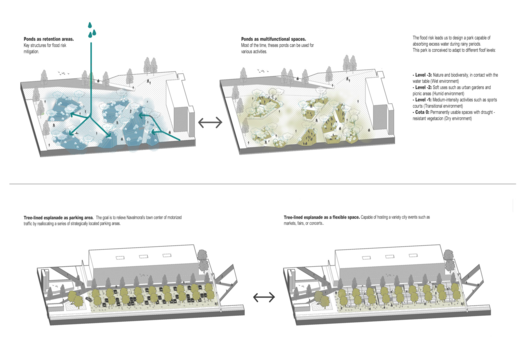
The scale and complexity of the project required multiple perspectives. As a multidisciplinary team, we build on each member’s previous experience in housing, public facilities, parks, plazas, and territorial projects. The project draws on theoretical approaches such as Charles Waldheim’s landscape urbanism, Richard Forman’s ecological connectivity, and design references related to stitching territories and designing with nature.
SITE:
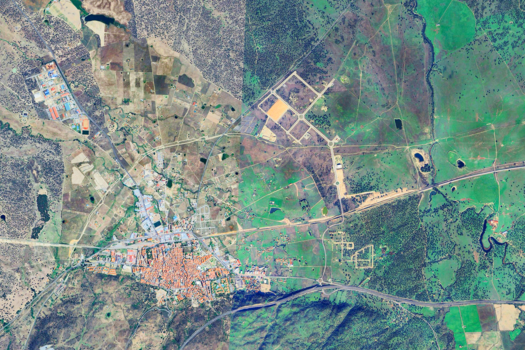
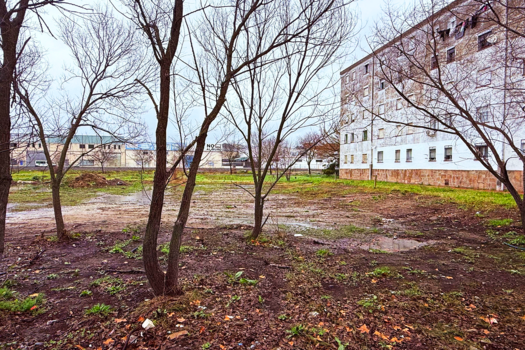
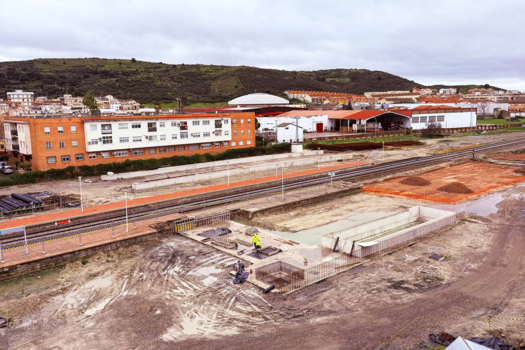
The project is conceived as a flexible, phased process. Initial stages address urgent issues such as reconnecting both sides of the railway infrastructure and mitigating flood risk, while later phases strengthen the relationship between urban growth and territorial heritage—hydrological, ecological, and cultural. This approach enables negotiation, adaptation, and progressive collective appropriation.
REFERENCES:
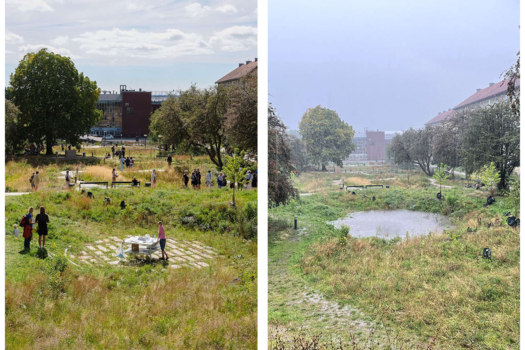
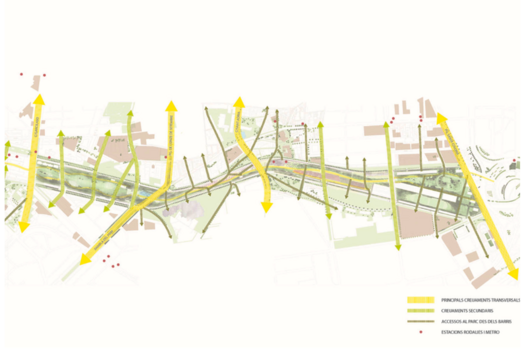
The team was formed as an interdisciplinary collaboration integrating professionals from art, architecture, landscape, and urbanism. This diversity allowed work across multiple scales, combining strategic thinking, environmental sensitivity, technical knowledge, and a cultural and spatial understanding of the territory.
6. How could this prize help you in your professional career?
What we value most about the prize is the recognition of our approach to regenerative urbanism through landscape and territory. The award also strengthens our professional trajectory and visibility, and represents an opportunity to consolidate a practice focused on sustainability, ecological transition, and territorial transformation in degraded yet high-potential environments.
TEAM IDENTITY
Legal status:
Team name:
Average age of the associates: 33 years old
Has your team, together or separately, already conceived or implemented some projects and/or won any competition? if so, which ones?
Since 2020, when the collective was founded under the name 'PYA collective', the practice has focused on projects linked to landscape and architecture, with principles of sustainability, resilience, intervention linked to place and citizenship, continuously participating in open competitions in order to develop the projects. The work of the collective has been recognised and awarded in several architectural competitions such as Special Mention in the Europan 17 Spain, on the Chivas site, with the proposal “Bringing back synergies”, Second Prize in DI-CA Design Awards of the Canary Islands (Spain 2023), Second Prize in La Valentina (Spain 2022), Second Accesit in FECONS (Spain 2022), Finalists in Concéntrico 07 in Logroño (Spain, 2021), and First Prize Garden and Menzione Speciale Legno D'ulivo in Agora Design (Italy 2021).
WORKS: