ZOOM ON A E18 MULTIDISCIPLINARY TEAM
INTERVIEW OF A E18 MULTIDISCIPLINARY TEAM
(architecture + urbanism + landscape + industrial ecology)
The Mineral Network. From extraction to regeneration - Winner, Nome (NO)
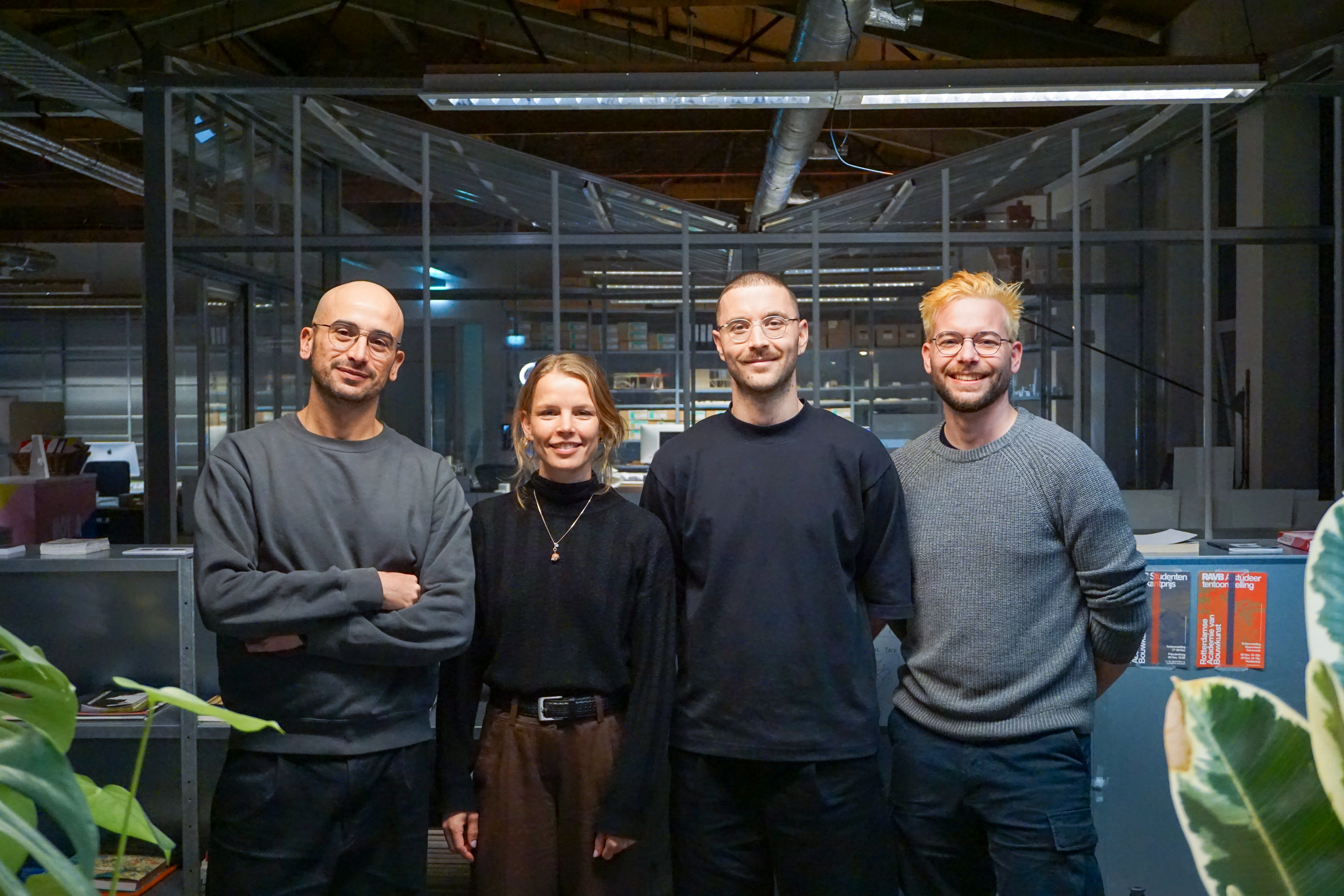
Associates:
Giacomo Gallo (IT) architect,
Robert Thomas Younger (DE) urban planner,
Tadej Gregorič (SI) student in urbanism, Karlijn Simone Besse (NL) architect, Remco Alexander van der Togt (NL) landscape architect
You chose to assemble a multidisciplinary team – why did you make this choice?
We decided to bring together a team with experience in architecture, landscape architecture, urbanism, and industrial ecology as the assignment for Nome demands a multidisciplinary approach. The challenges Nome is facing span multiple domains: geopolitical questions regarding independence in critical raw materials, the local impacts of mining on communities and ecosystems, and broader regional economic and environmental impact. To engage with these issues across all scales, from the territorial and political to the social and ecological, we believe this question needs a team with broad and complementary expertise. By integrating our different perspectives we were able to develop a proposal that responds to the complexity of the context and reflects the needs of all stakeholders and all living species involved.
How did you proceed?
Coming from the Netherlands we are all trained in systemic design approaches with landscape at its foundation. We started by understanding the context and challenges through both research and research-by-design. We mapped the key processes and material flows, such as extraction and processing, at the local scale and examined the spatial requirements of the mining activities. From there, the project evolved through an iterative workflow, where we continuously moved between local conditions and broader territorial processes. This back-and-forth approach allowed us to refine our ideas at multiple scales and translate them into landscape and spatial design strategies. By analysing the material flows, we were able to propose a design in which industrial byproducts could be meaningfully integrated into both the architectural framework and the ecological fabric. These flows also represent economic activity distributed across the region and, ultimately, throughout Europe. We took this narrative into account in our proposals for the surrounding towns such as Ulefoss and Lunde and for the routes that connect the wider region.

Had you worked together before?
Although we knew each other from the field, we had not collaborated on previous projects. Europan offered us the opportunity to combine forces on topics in which each of us already had individual experience. The competition’s focus on circularity, industrial and environmental design allowed us to combine our complementary expertise and explore how we could contribute to a circular economy, a productive landscape, and vibrant local communities. With a team bringing together professional backgrounds and perspectives from Italy, Germany, and the Netherlands, we felt confident that this collaboration could create added value and lead to an innovative proposal. This win offers our young and upcoming offices a valuable opportunity to collaborate internationally and broaden our horizons. Apart from recognition for our ideas, it gives a chance to collaborate with the local communities and try to turn our proposals into real tangible projects.
BIOS
NEW ENVIRONMENTS
NEW ENVIRONMENTS is an urban design agency from Amsterdam, active internationally. We use design to improve wellbeing by shaping a dynamic relationship between humans and the environment. Climate change, population growth, and globalisation are compromising the finite resources that the planet provides. New environments need to cater for a growing number of services and navigate the needs of human, floral, and faunal stakeholders. The agency embraces this complexity and promotes a new systemic integrality in the planning profession. We design symbiotic environments, curate transformative processes, and develop realisable futures.
Website / Instagram / Linkedin
Other Spheres
Other Spheres is a design office that integrates sustainability throughout spatial interventions, whether in architecture, landscape, or systems design. With a background in industrial ecology and (landscape) architecture, we combine scientific research with design practice to create thoughtful and resilient solutions.
BREM
BREM landscape was founded by landscape architect Remco van der Togt. With BREM landscape, he works at all scales, from courtyards and parks to rivers and regions, designing smart systems, creating attractive landscapes, and shaping beautiful places. He always collaborates with other designers and disciplines to make this possible.
You will find their complete project here
Check out the Europan 18 results here