FlintKwartier: re-value, re-use, re-connect
Amersfoort-Flint (NL) - Runner-up
TEAM PORTRAIT
VIDEO (by the team)
INTERVIEW
Click on the images to enlarge
1. How do you define the main issues of your project in relation with the theme “Re-sourcing”? Re-sourcing thanks to nature, to social dynamics, to new materiality? In which way do you think your project can contribute to an ecological and/or social evolution? And in which way do you think your project can be called a “regenerative project”?
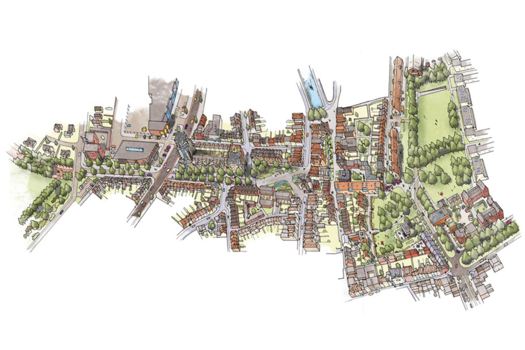
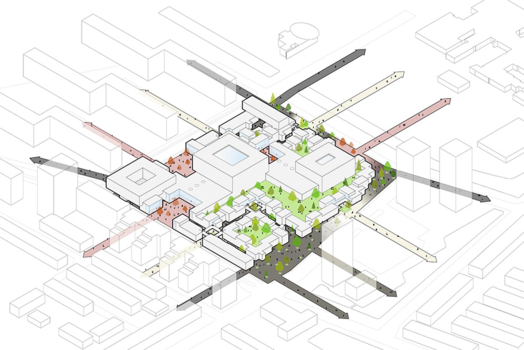
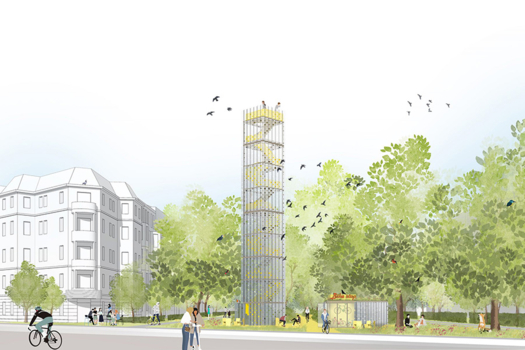
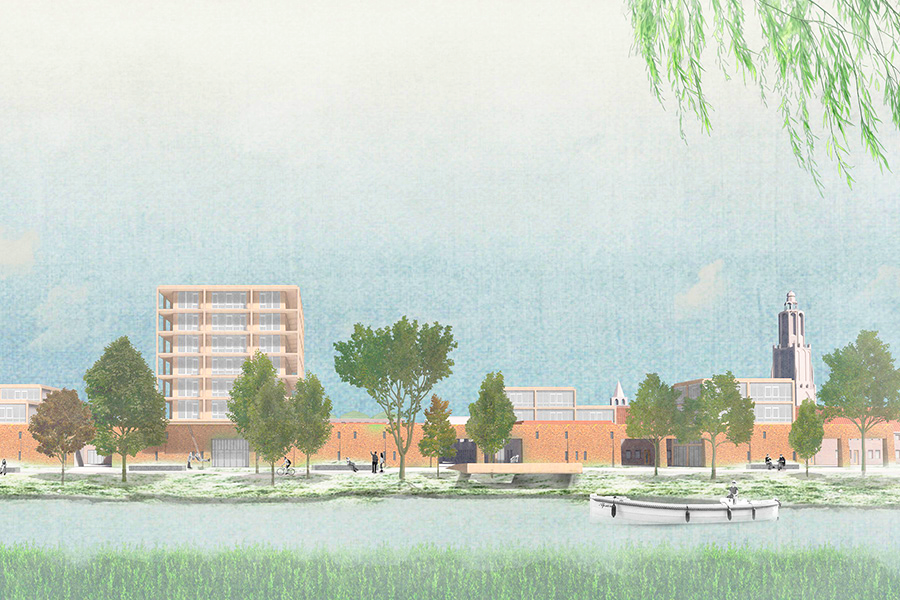
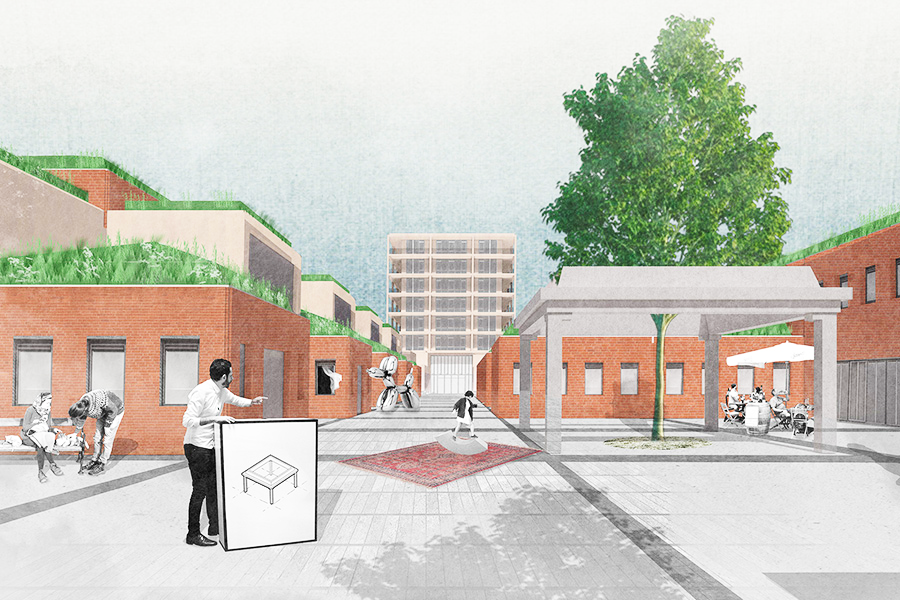
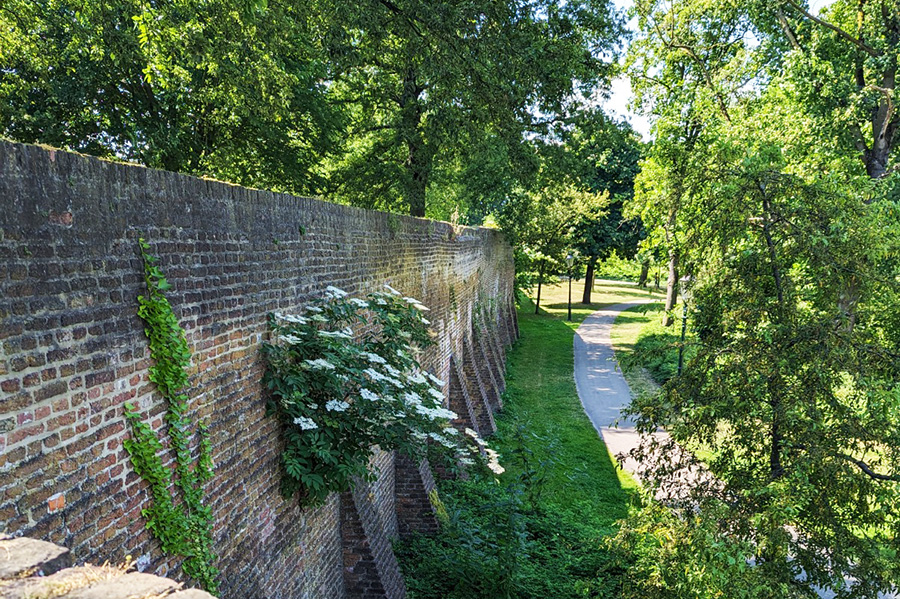
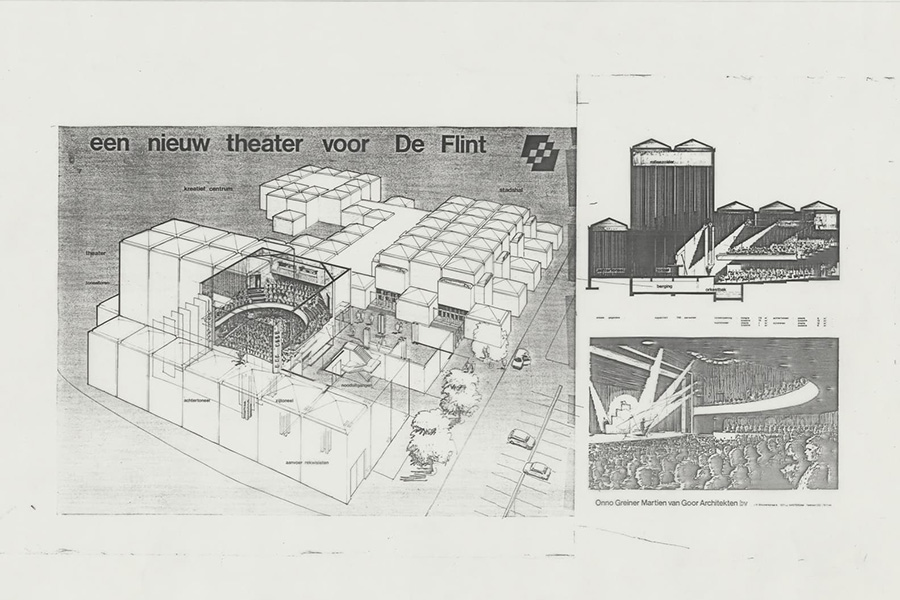
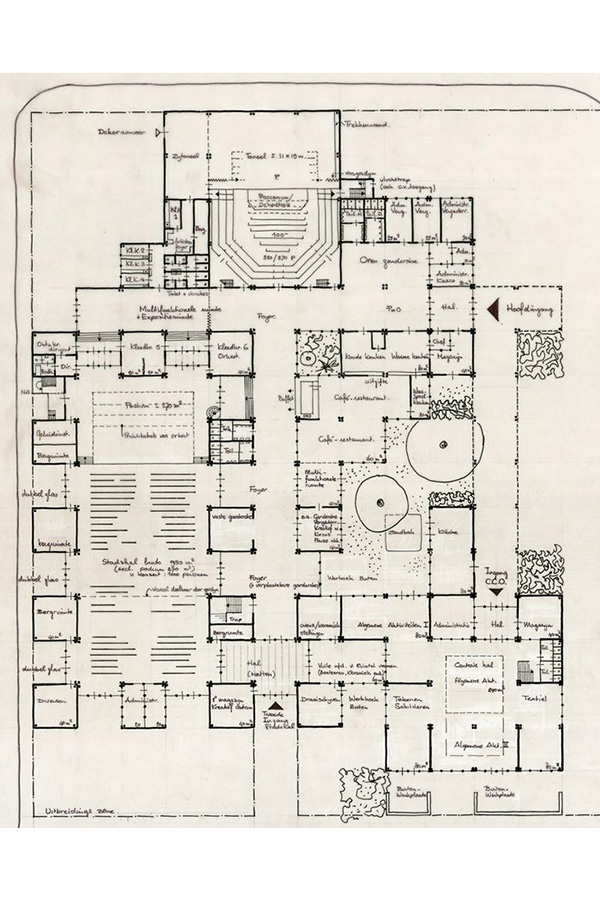
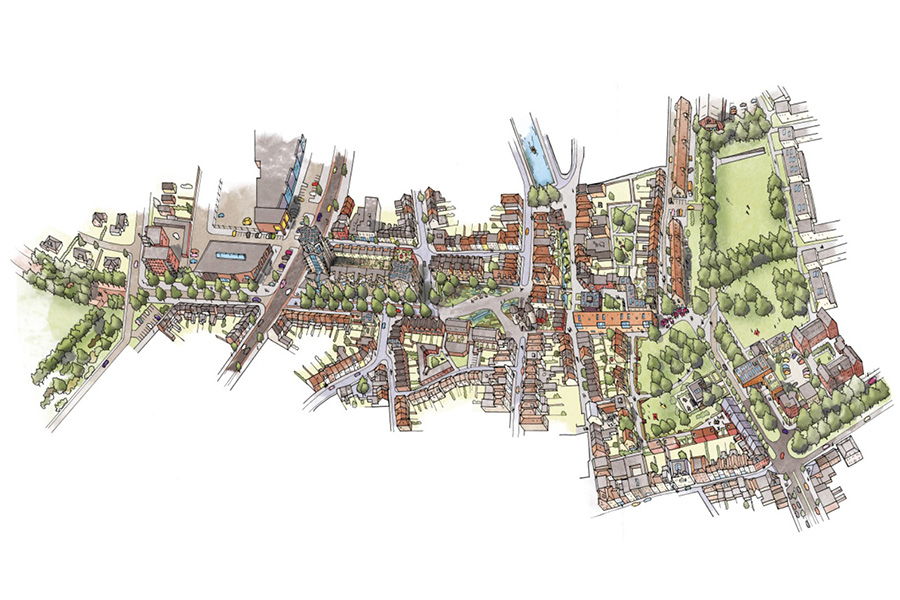
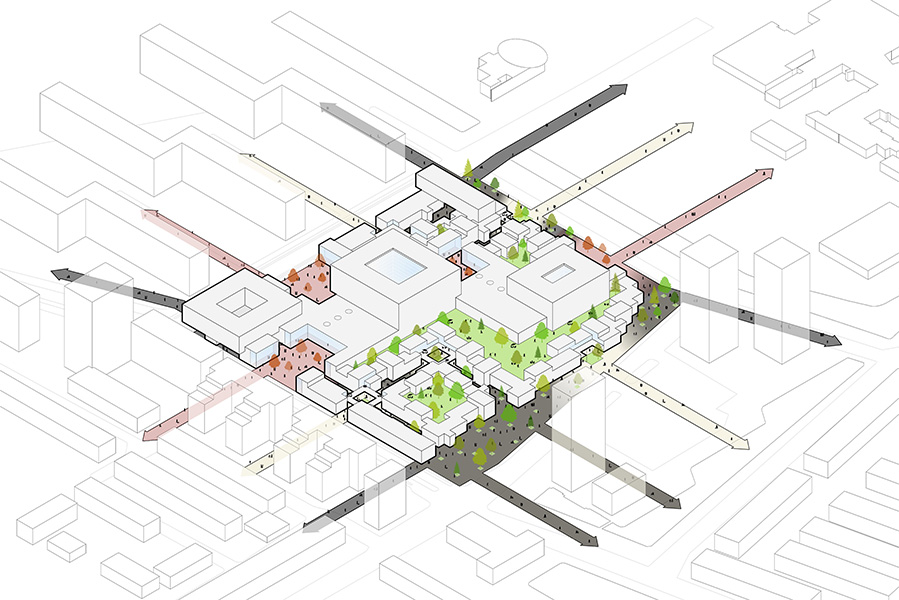
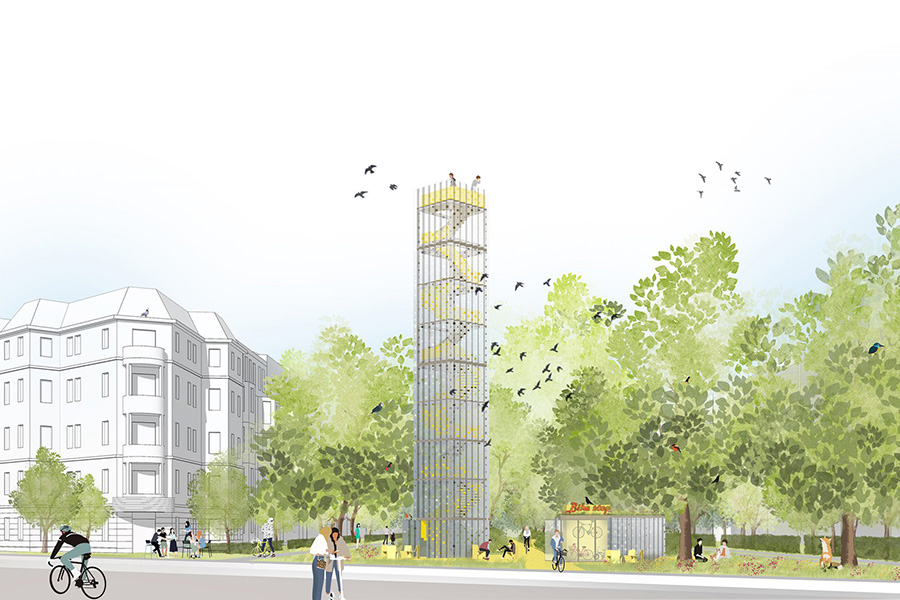
The project is regenerative because it builds on the principles of re-value, re-use and re-connect. By opening up the introverted 1970s complex, it transforms leftover space into climate-adaptive public areas and re-establishes connections with the historic city and the green belt. Greiner’s grid becomes a flexible framework in which new social programmes, workspaces and diverse housing types can be inserted, creating a mixed environment that encourages meeting, making and collaboration. Retaining and adapting the structural grid minimises material waste and energy use while preserving the cultural memory and architectural character of the original ensemble. Rather than replacing what is there, the project activates its dormant potential and turns existing structures, spaces and social dynamics into resources for contemporary needs. In doing so, it strengthens ecological performance, spatial quality and social resilience—key aspects of a regenerative approach.
2. How did the issues of your design and the questions raised by the site mutation meet?
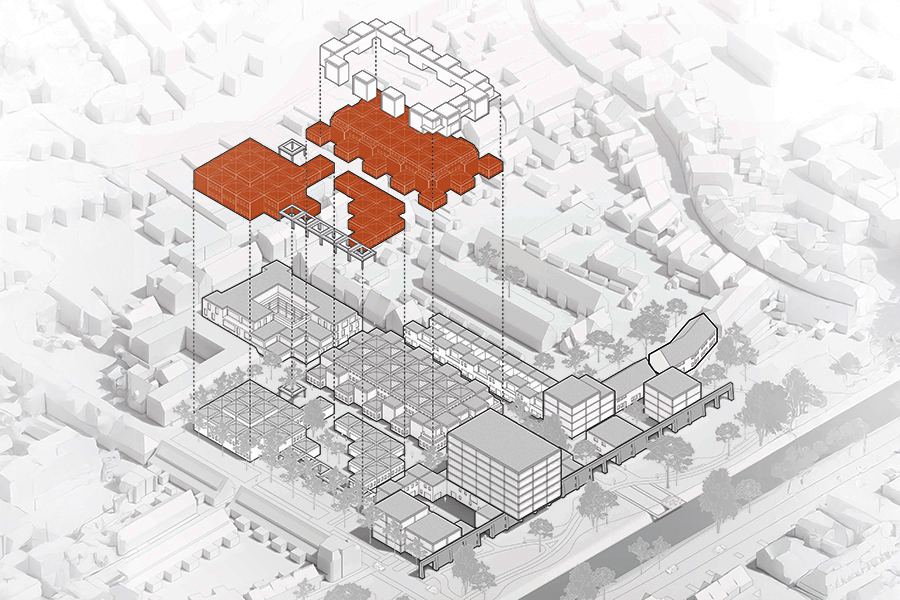
The biggest challenge of the Flint site was in the tension between a big, introverted 1970s complex and a fine-grained, historic inner city that asks for connection, openness and diversity. At the same time, Greiner’s grid provided a solution so the challenge could be taken one grid-module at a time. This approach also applied to the new functions added to the Flint site. Re-using the structural grid, only cutting and subtracting where it unlocks space, light, and connectivity. We only added new volumes as targeted infill instead of a full rebuild.
PROJECT:

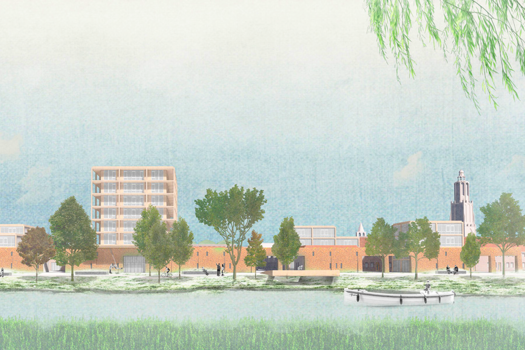
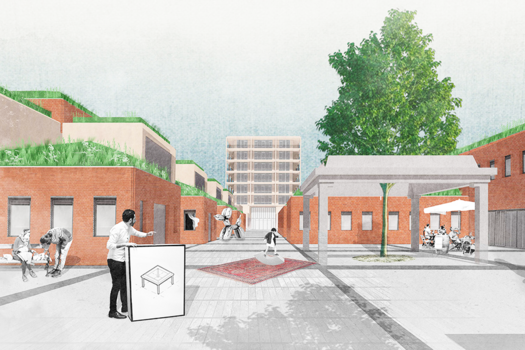
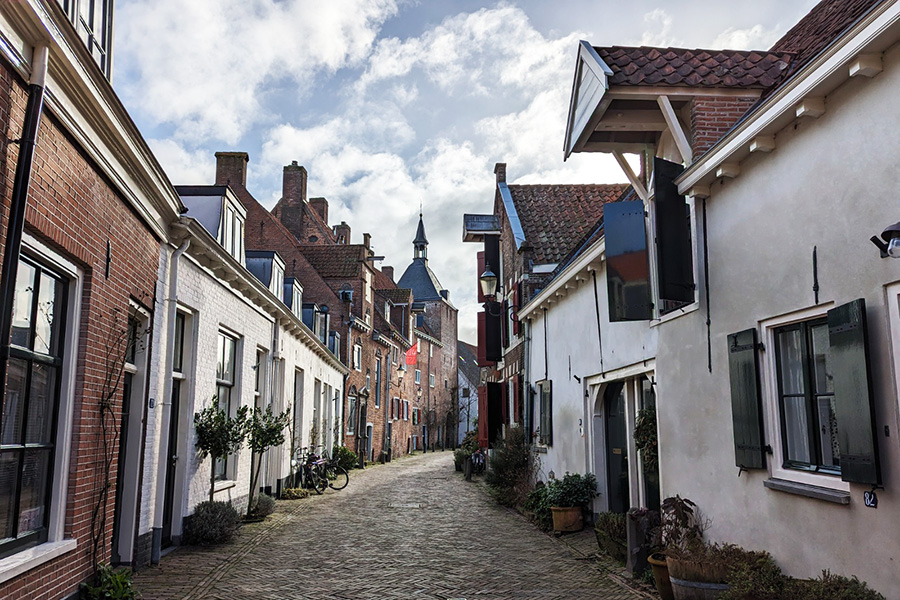
The project draws on the tradition of city repair seen in historic Dutch centres, where modernist gaps are re-stitched without restoring the past but adding a new social layer. This approach relates to work by Remon Mulder and to Thomas Rosema’s experience in transformative, diverse, housing-led reuse projects. Key references include Siza’s Carmo Convent area, Natalini’s Waagstraat, OMA’s Timmerhuis, BKK-2’s Sargfabrik, the Justus van Effen complex, and Gigon Guyer’s Löwenbräu area.
SITE:
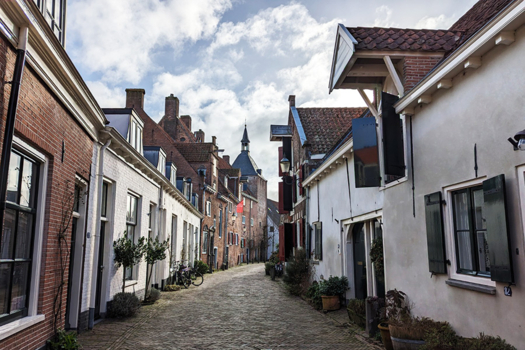
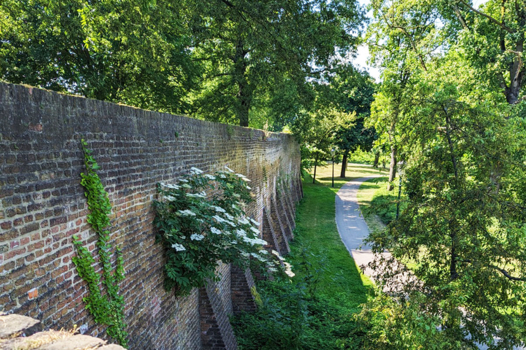
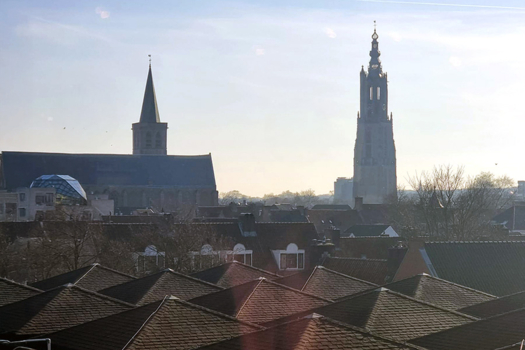
By splitting the complex into smaller parts and restoring a fine-grained urban fabric, the project allows a flexible and phased transformation. Elements of the theatre can remain in use until relocation, while new actors can join the process step by step as individual buildings are redeveloped. Greiner’s modular grid supports this negotiated approach, enabling adaptation over time and accommodating changing needs throughout the implementation.
REFERENCES:
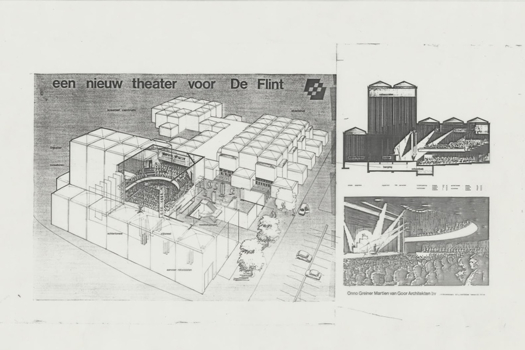
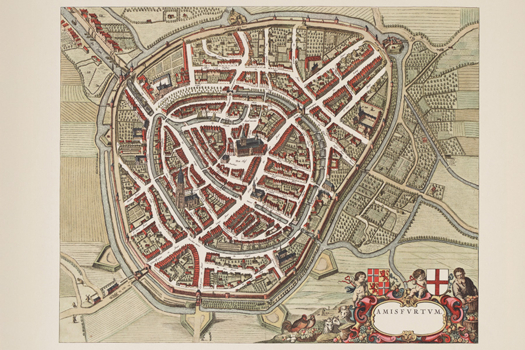
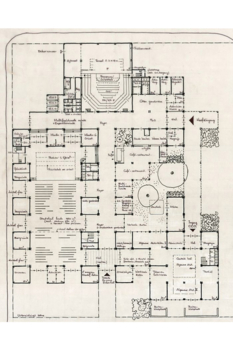
We formed our team around the ambition to work at the intersection of urban design and architecture. Across these scales, we address shared themes: creating a lively mix of building typologies, shaping strong public–private relationships, and preserving the qualities of the existing structuralist design. Our complementary skills—ranging from urban strategy to architectural transformation—allow us to refine the project from concept to buildable proposal.
6. How could this prize help you in your professional career?
We value the recognition we have received from the Europan jury for our design proposal, that is mainly meant to be a practical solution for the site instead of a conceptual proposal. During the design process of Flintkwartier, we came up with original spatial solutions which we can use in our daily work as an architect and urban planner.
TEAM IDENTITY
Legal status: Collaboration
Team name: Studio Rosema + Remon Mulder
Average age of the associates: 32 years old
Has your team, together or separately, already conceived or implemented some projects and/or won any competition? if so, which ones?
Yes, we have worked together before on several competitions, including the Peter Joseph Lenné Prize in 2020. Beyond our joint entries, both of us have contributed individually to a wide range of urban and architectural projects and competitions within different organisations. This includes work for municipalities, design offices such as KCAP, and national initiatives like the Landscape 2070 Challenge for the Dutch Council for the Environment and Infrastructure.
WORKS: