Fragments of history, threads of community
Amersfoort-Stadhuisplein (NL) - Runner-up
TEAM PORTRAIT
VIDEO (by the team)
INTERVIEW
Click on the images to enlarge
1. How do you define the main issues of your project in relation with the theme “Re-sourcing”? Re-sourcing thanks to nature, to social dynamics, to new materiality? In which way do you think your project can contribute to an ecological and/or social evolution? And in which way do you think your project can be called a “regenerative project”?
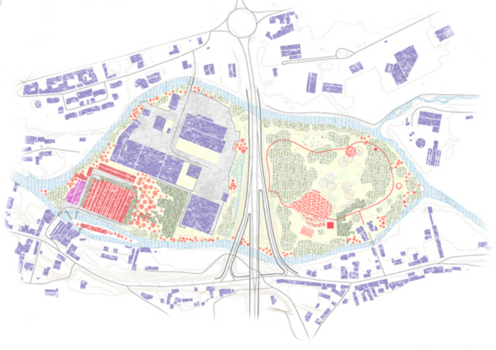
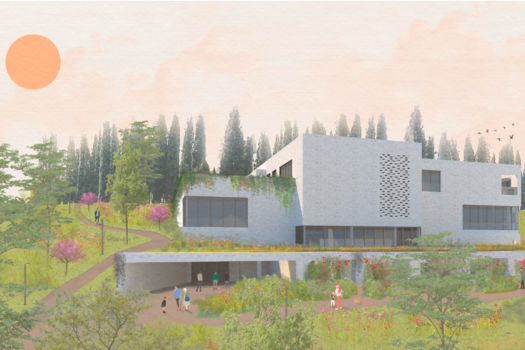
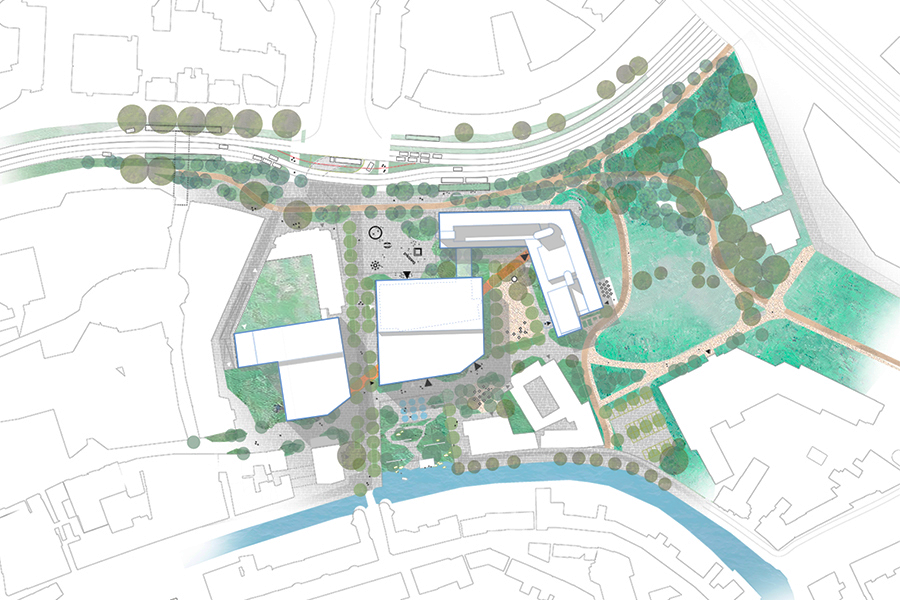
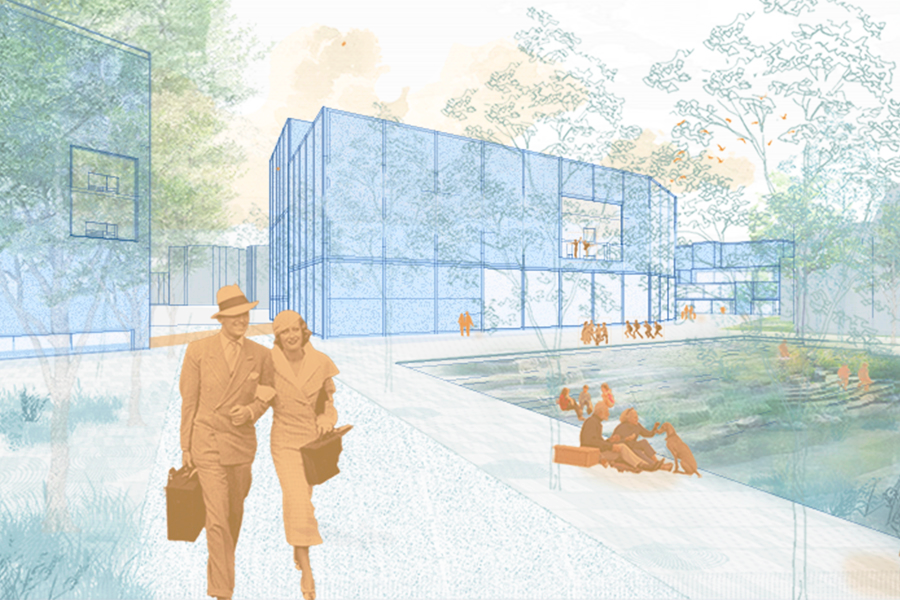
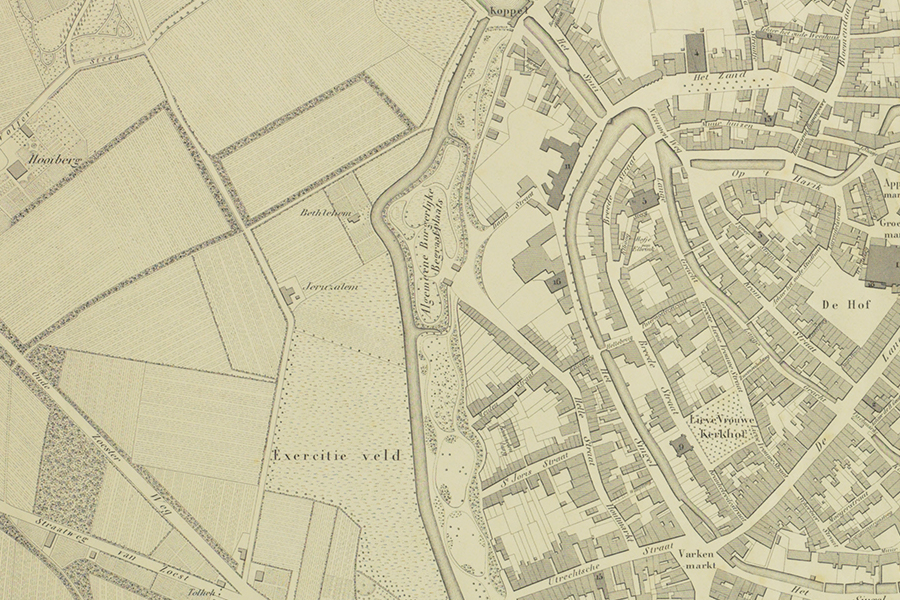
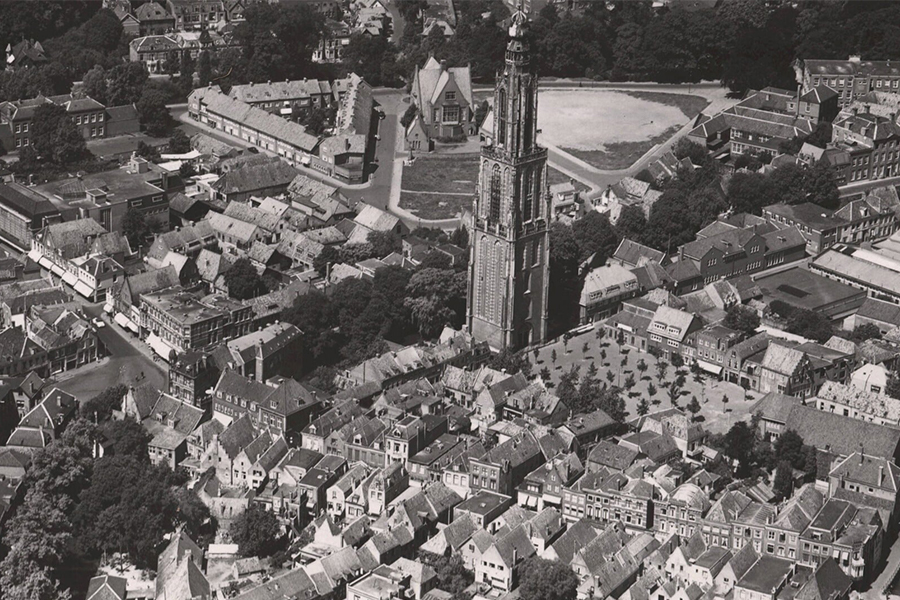
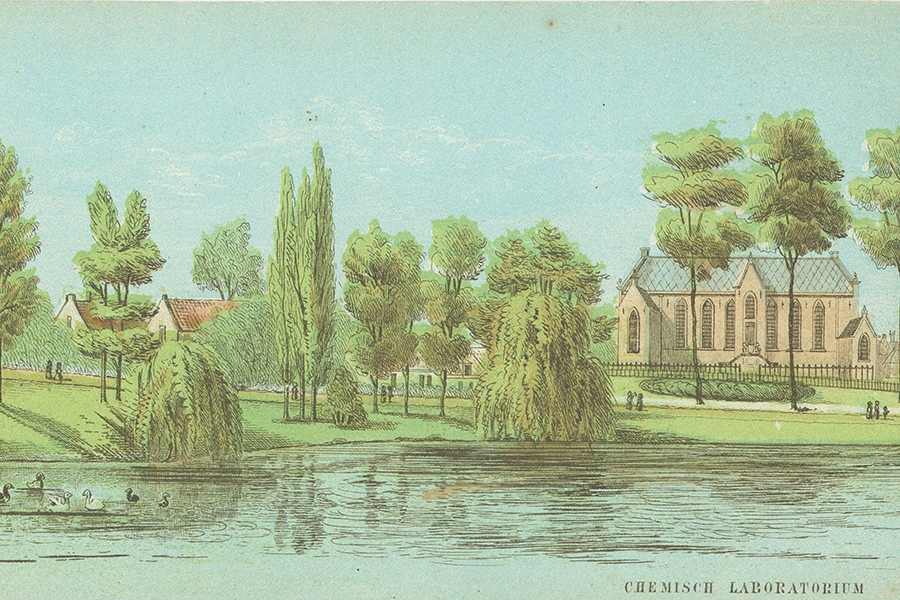
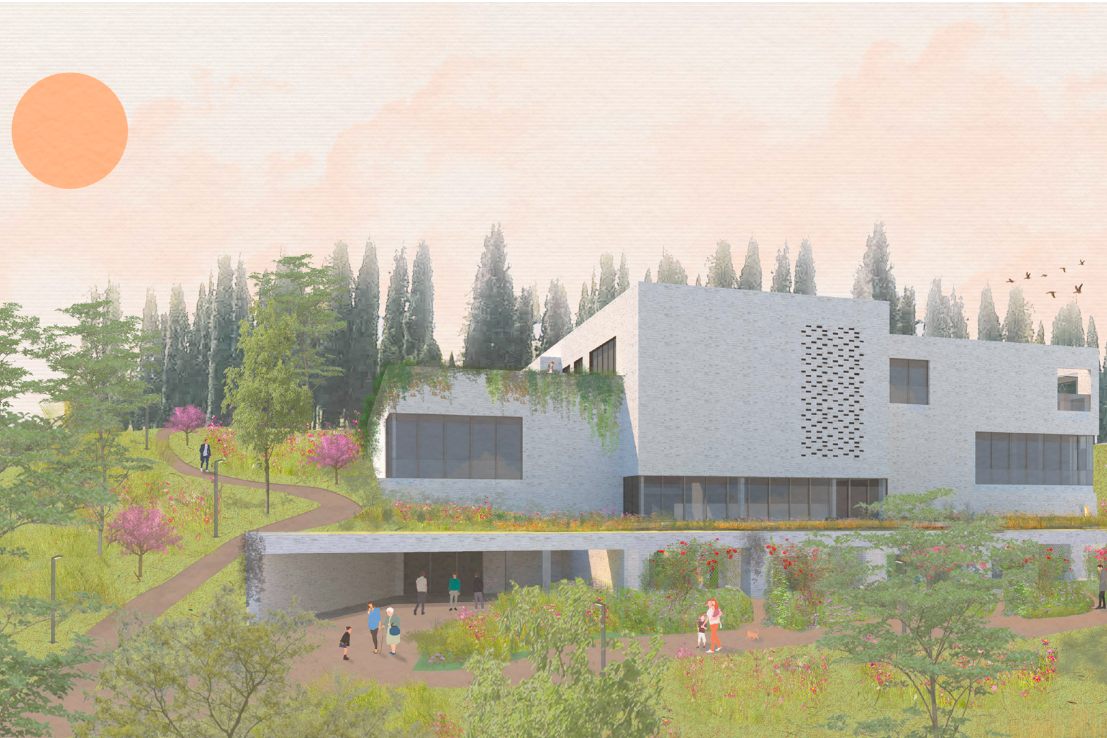
With all layers of time intersecting in the same place, re-sourcing here means listening to the land, to old infrastructures, to forgotten paths, and allowing them to guide a renewed cultural life where past, present, and future speak at once. The project restores water, soil, and vegetation, creates open cultural spaces for collective use, and reuses materials through low-impact construction, transforming a car-dominated site into a porous, resilient public realm.
2. How did the issues of your design and the questions raised by the site mutation meet?
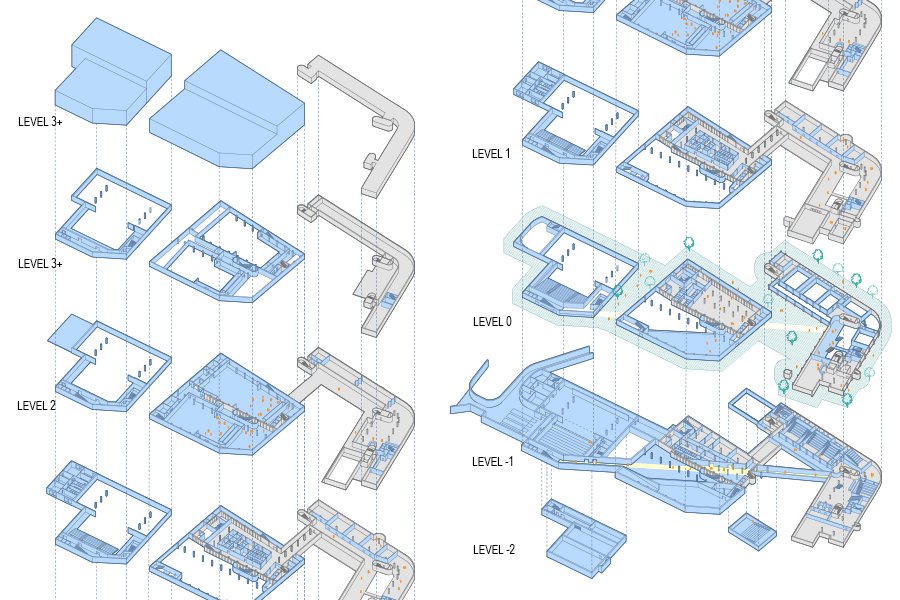
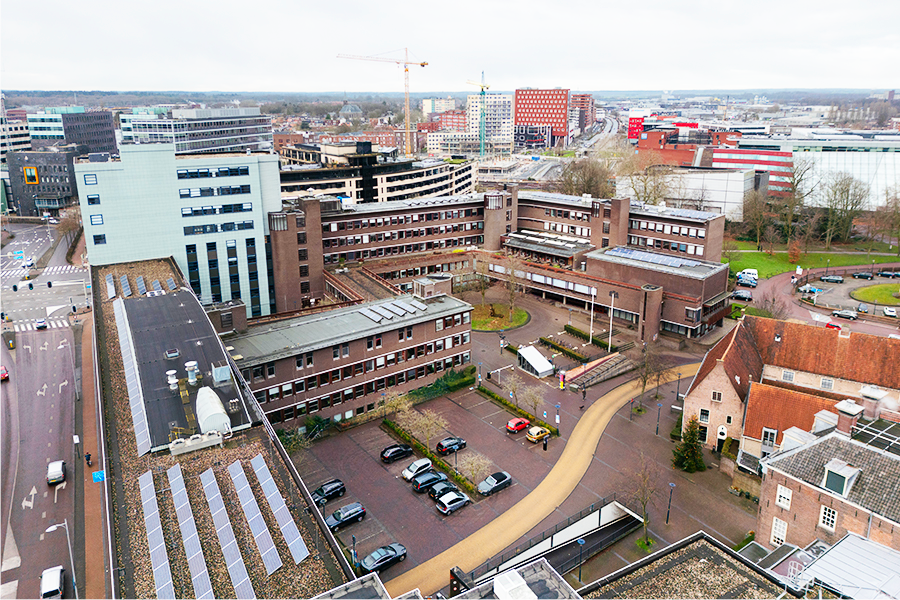
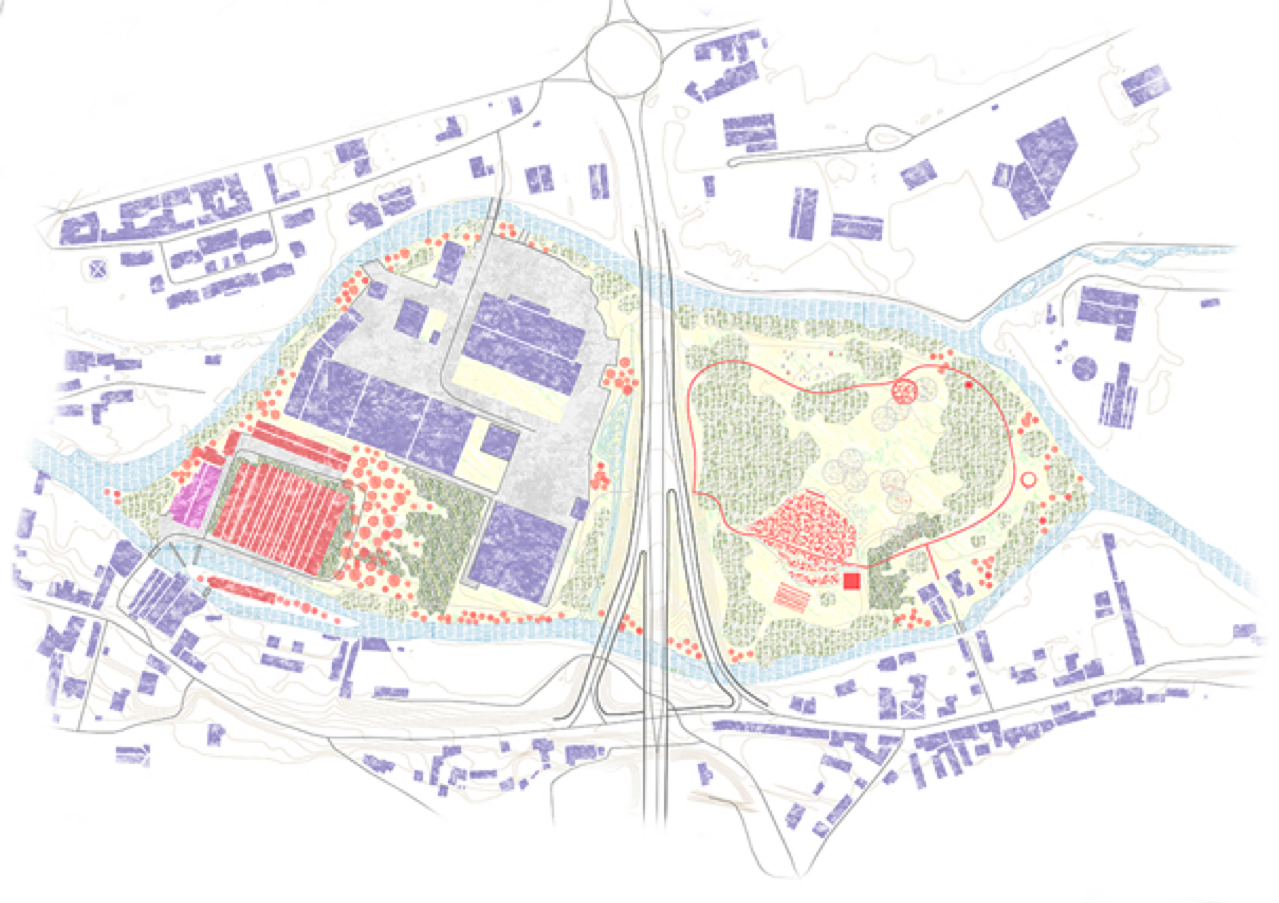
The site’s shift from a mixed urban fabric to a cultural district creates friction in logistics, scale, and historical continuity due to the presence of several protected buildings. Our response rethinks neighborhood flows, fragments the program into three buildings linked by an underground inner street, and applies differentiated strategies toward the existing: inside, around, or instead of.
PROJECT:
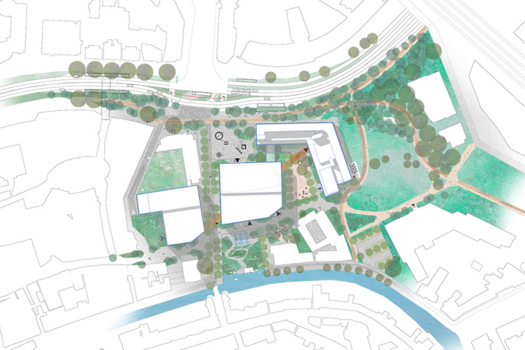
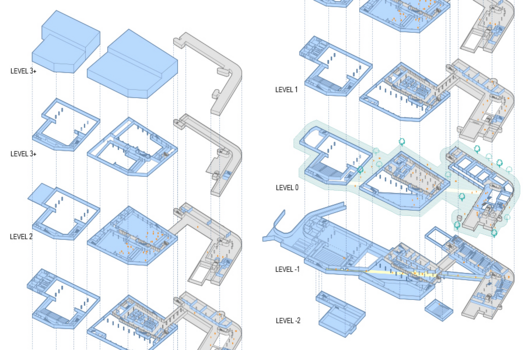
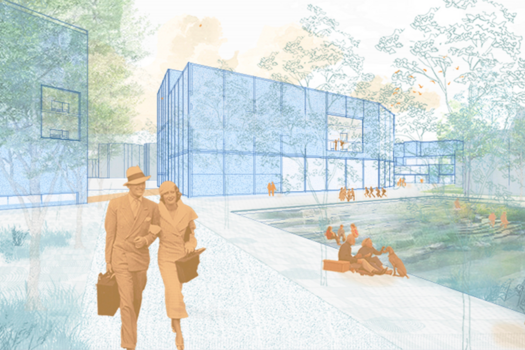
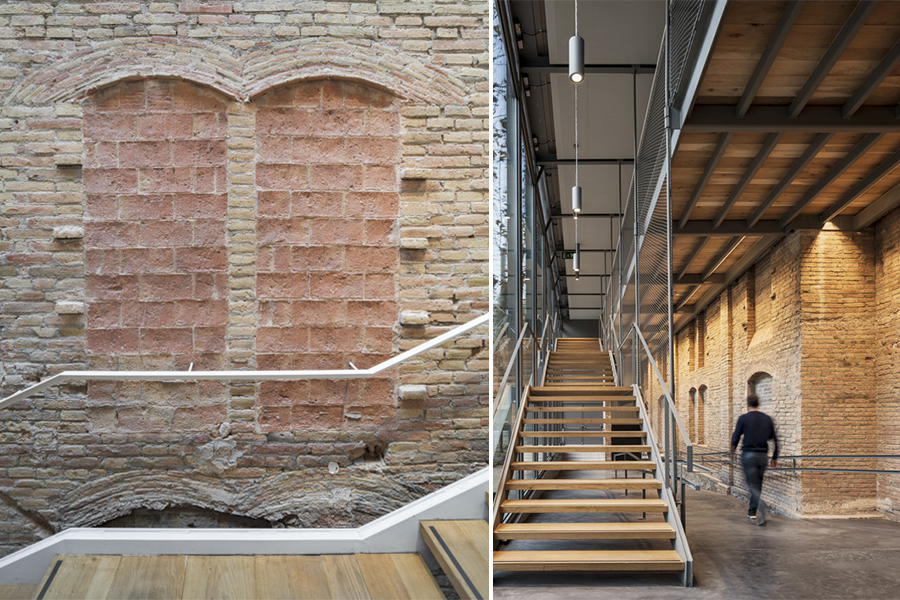
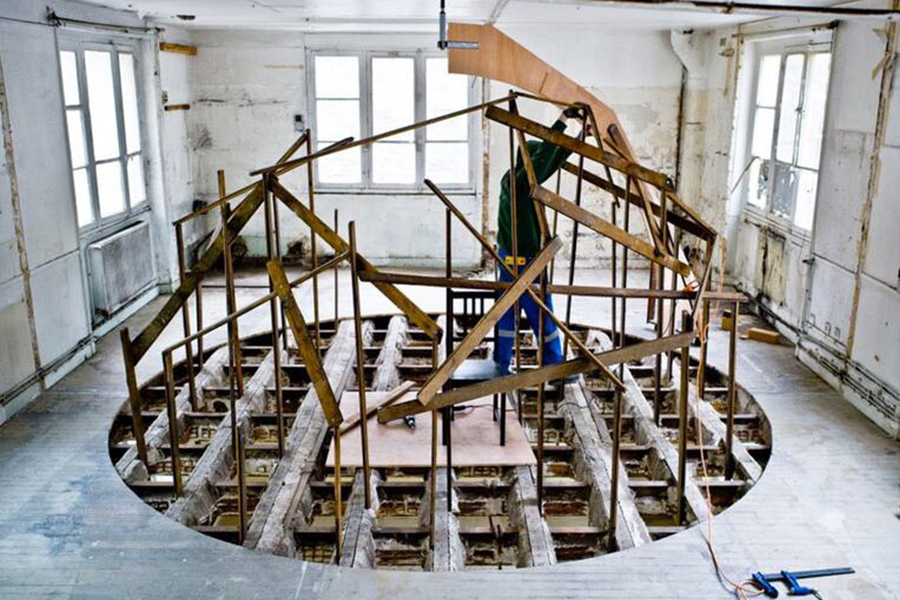
Europan offered a space for exploration, bringing together our academic and professional perspectives. The project combines inputs on adaptive reuse, landscape-led urbanism, temporary uses, and urban heritage. Inspired by L’Artesà Theatre, we propose a contemporary yet sensitive approach to heritage, reconnecting historical layers and enabling existing structures to support future uses.
SITE:
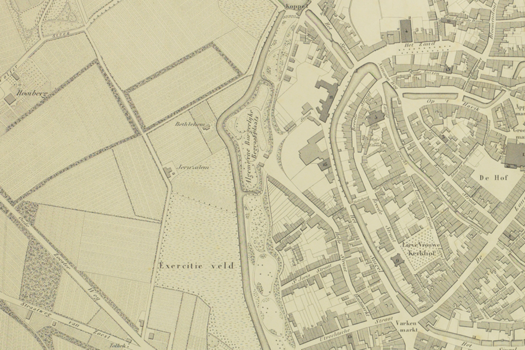
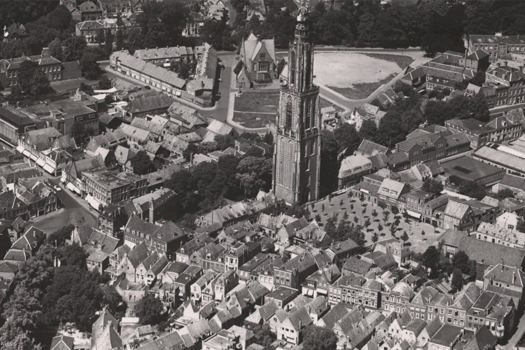
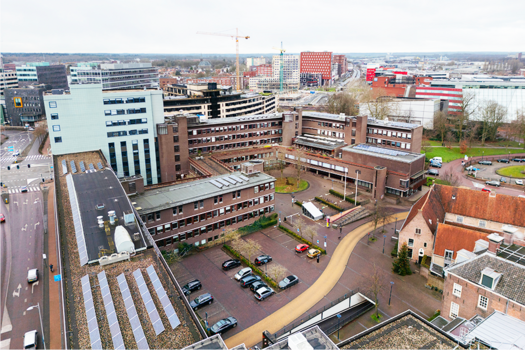
The project is conceived as a phased, negotiable process grounded in user-centred design. Local stakeholders are involved through co-design and consultations, while temporary uses activate the site early as a living laboratory. A fragmented program allows adaptability over time, turning the project into a shared urban process rather than a fixed object.
REFERENCES:
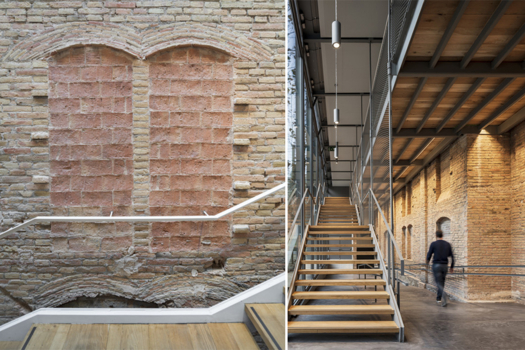
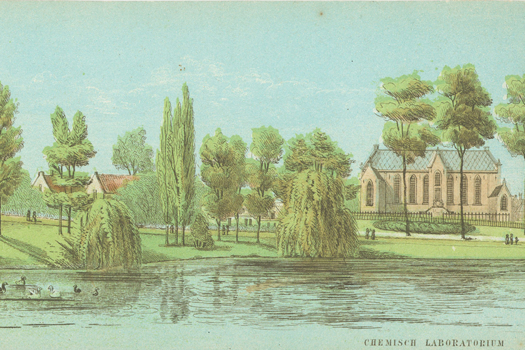
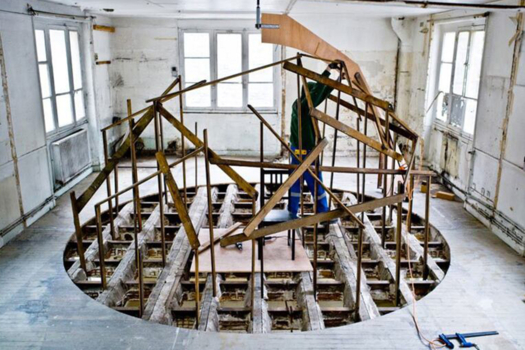
The team was formed through a shared academic background at the University of Liège and brings together complementary skills. Nathan contributes expertise in urbanism and landscape, Mathilde combines architecture with research on urban systems, and Justine adds a pragmatic approach from large-scale projects. Together, we link research, design, and implementation across scales.
6. How could this prize help you in your professional career?
This prize represents a strong international recognition of our work, both on this site and across our broader practice. It strengthens the visibility of our approach and opens the door to new collaborations, partnerships and professional opportunities. It also encourages us to continue working on and researching urbanity, our relationship to the past, environmental responsibility, and collective design.
TEAM IDENTITY
Legal status:
Team name:
Average age of the associates: 30 years old
Has your team, together or separately, already conceived or implemented some projects and/or won any competition? if so, which ones?
Individually or in sub-groups, each member has been actively involved in architectural competitions, research-driven projects, and professional practice :
Competitions
- MIPIM Challengers 2025 - Justine Noulin
- HERA Awards - Nominee, Sustainable Architect Category - Justine Noulin
- Finalists, Prix Van Hove 2021 and EAP31 - Final year project - Nathan Guillaume, Justine Noulin, Meray Nassimos
- Finalists, ConstruirAcier “Turbulences” 2020 (Project NOA) – Nathan Guillaume, Justine Noulin
Professional Experience / Realisations
- 2021–2025: Rehabilitation of a tertiary office building, Bonne-Nouvelle district, Paris (FR), 17,000 m², PCA-STREAM (Architect involved: Justine Noulin)
- 2024: Stationsomgeving Noord, Lier (BE) - Masterplan and landscape design for a 5 ha mixed-use urban district, including a 1.5 ha flood-sensitive park, a2o Field (Architect involved: Nathan Guillaume)
- 2023: Reference Guide on the Sustainable Management of Rainwater for the Public Service of Wallonia, LEMA & HECE, University of Liège (Architect involved: Mathilde Flas)
- 2023: ZIR IV, Brussels (BE) - Landscape design for a public space, 3 ha, Bureau Bas Smets (Architect involved: Nathan Guillaume
- 2022: Reference Guide on Construction and Development in Flood-Prone Areas for the Public Service of Wallonia, LEMA & HECE, University of Liège (Architect involved: Mathilde Flas)
- 2022: SMK Thy, Thy (DK) - Reuse of heritage buildings to integrate a branch of the Royal Danish National Museum, 1,800 m², Dorte Mandrup A/S (Architect involved: Nathan Guillaume)
WORKS: