LE CLIMATORIUM DES POSSIBLES
Jullouville (FR) - Runner-up
TEAM DATA
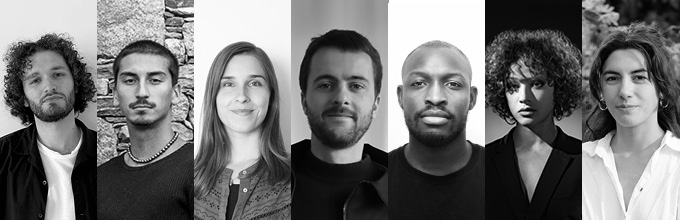
Associates: Gaspard Basnier (FR), Ronan Le Cornec (FR) – architect urbanists, Louise Gluntz (FR) – landscape architect, Lawan-Kila Toe (FR), Léo Diehl-Carboni (FR) – architects
Contributors: Kenza Ambraisse (FR) – artist, Clementine Genet (FR) – spatial planner
contact@bureauinvisible.com
https://bureauinvisible.com/
See the complete listing of portraits here
See the site here
TEAM PORTRAIT
VIDEO (by the team)
INTERVIEW
Click on the images to enlarge
1. How do you define the main issues of your project in relation with the theme “Re-sourcing”? Re-sourcing thanks to nature, to social dynamics, to new materiality? In which way do you think your project can contribute to an ecological and/or social evolution? And in which way do you think your project can be called a “regenerative project”?
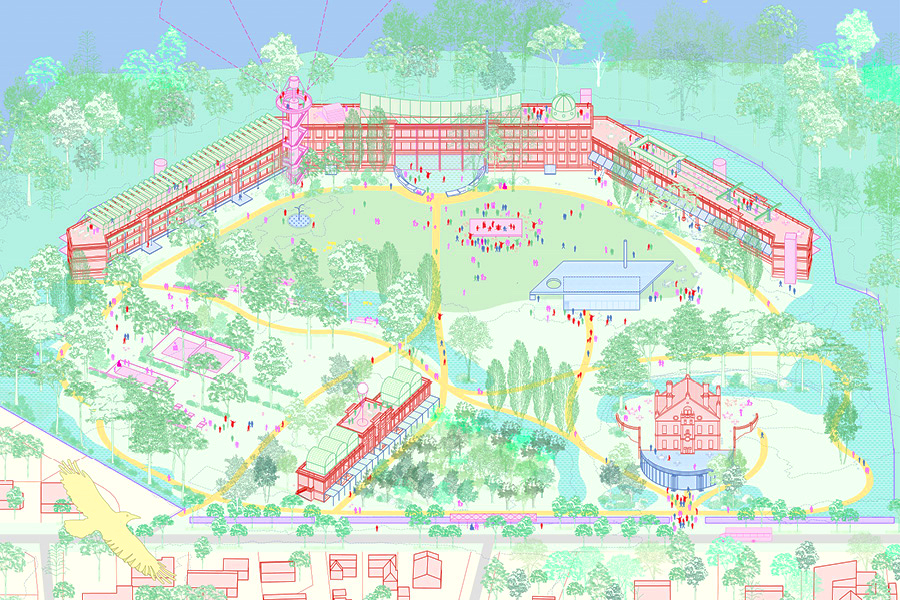
The main challenge of the project is to make an attractive site that faces a threefold threat: rising sea levels, an ageing population, and a lack of year-round stable jobs. The transformation and regeneration of the former Saint-Ouen holiday camp therefore relies on a trans-scalar strategy that connects the territory, the town, and the site. In this way, the project reveals new alliances between natural environments, local stakeholders, and evolving ways of living and working. We do not conceive the project as a solution but rather as a tool, a prototype of what tomorrow’s climate-resilient world could be.
2. How did the issues of your design and the questions raised by the site mutation meet?
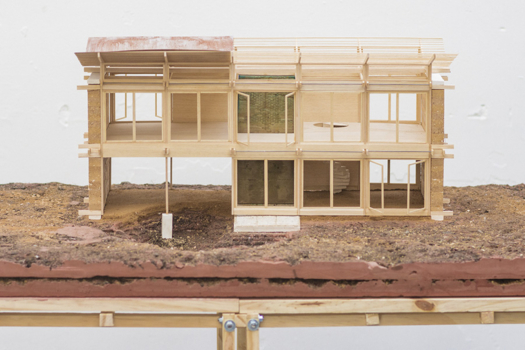
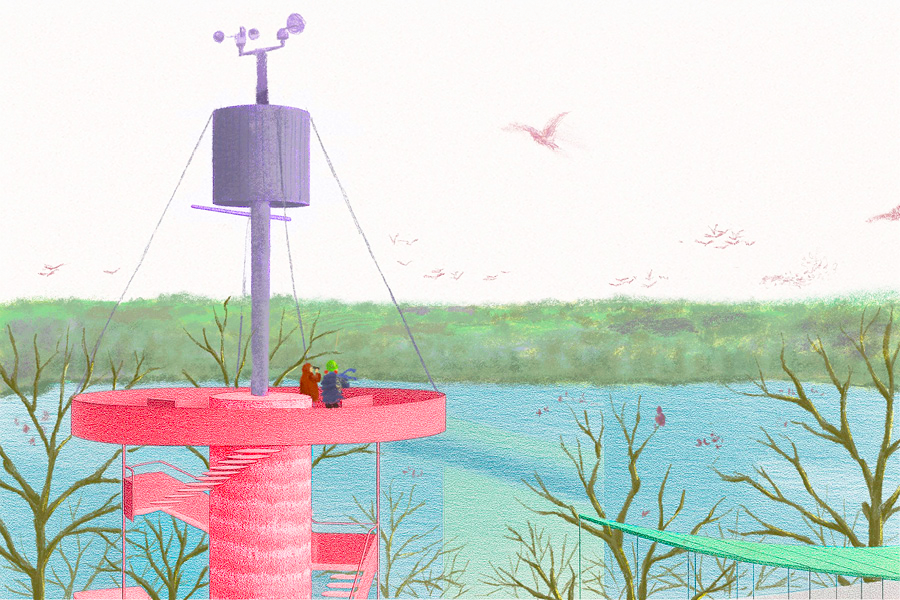
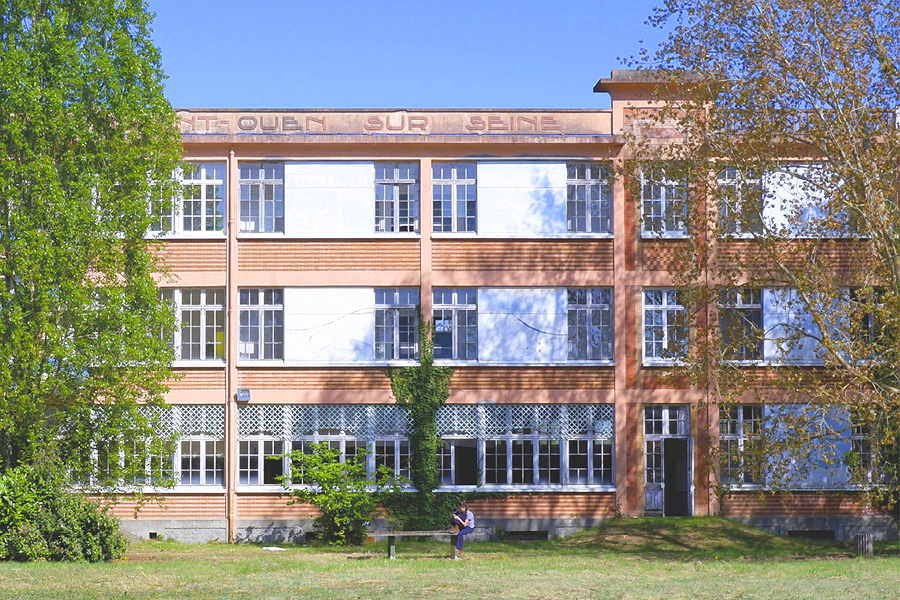
The attractiveness and regeneration of an architectural site of such scale depends on its ability to radiate and interact across multiple levels. In the specific case of the former Saint-Ouen holiday camp, we have envisioned architectural principles capable of supporting socio-economic intentions that enliven the site through adaptive and reversible processes. The major existing framework shaping the project is a given — the built structures, the existing trees, the geography — onto which amplifying devices are grafted, ready to evolve both in form and in function: sponge-like ground levels, productive roofs, a unique biodiversity observatory… Narrating this transformation requires the creation of a specific imaginary and vocabulary, as well as the development of a transdisciplinary toolbox. The aim is to cultivate “eventualities” in a climatic context that allows for no certainties.
PROJECT:
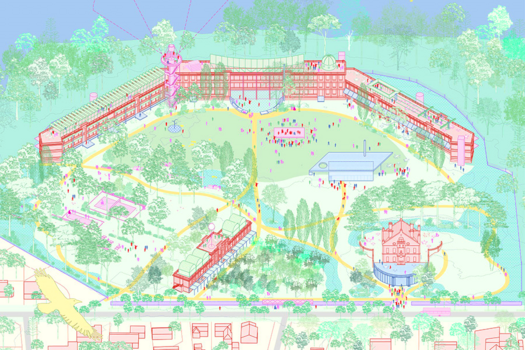
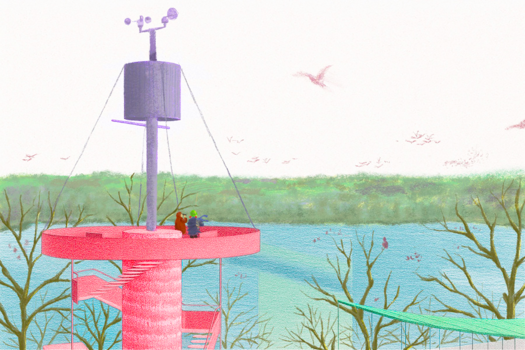
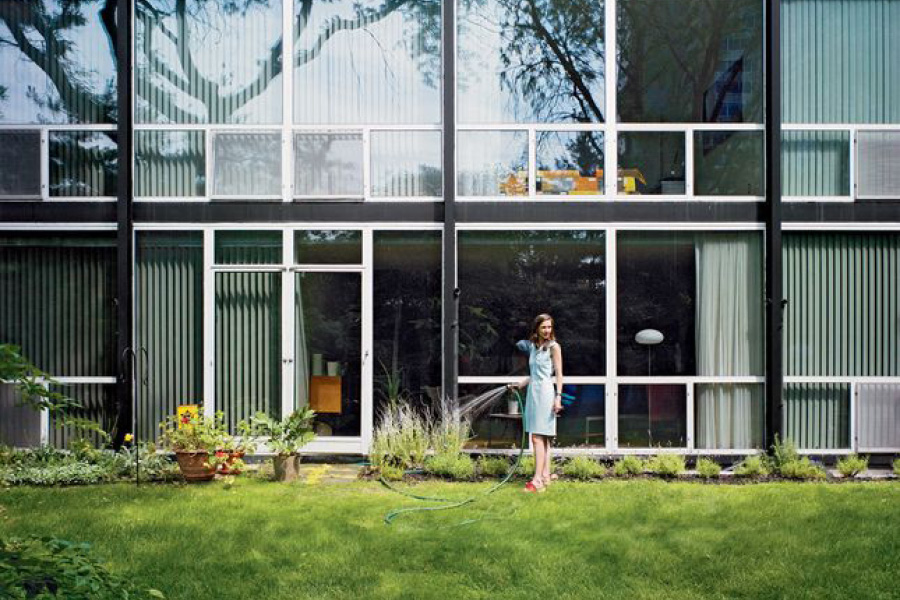
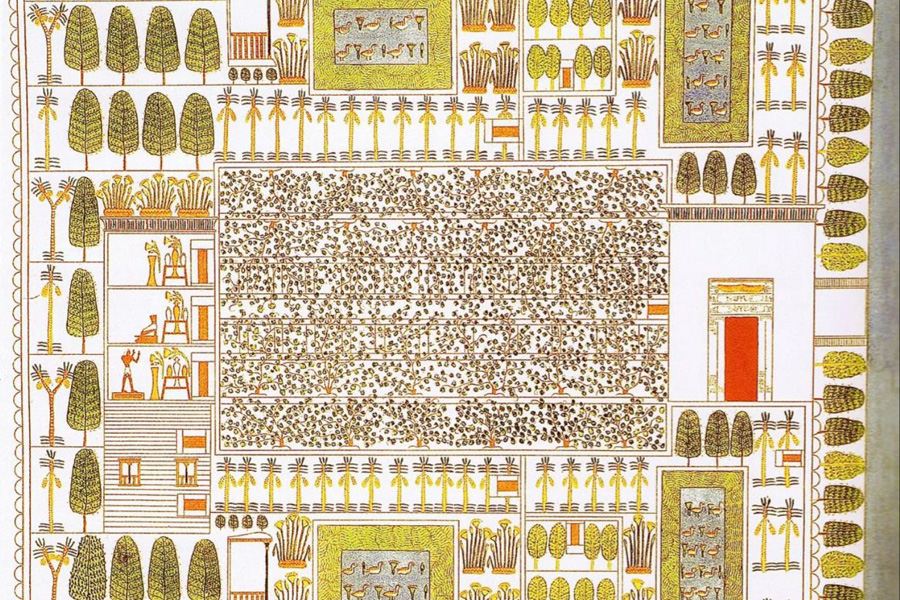
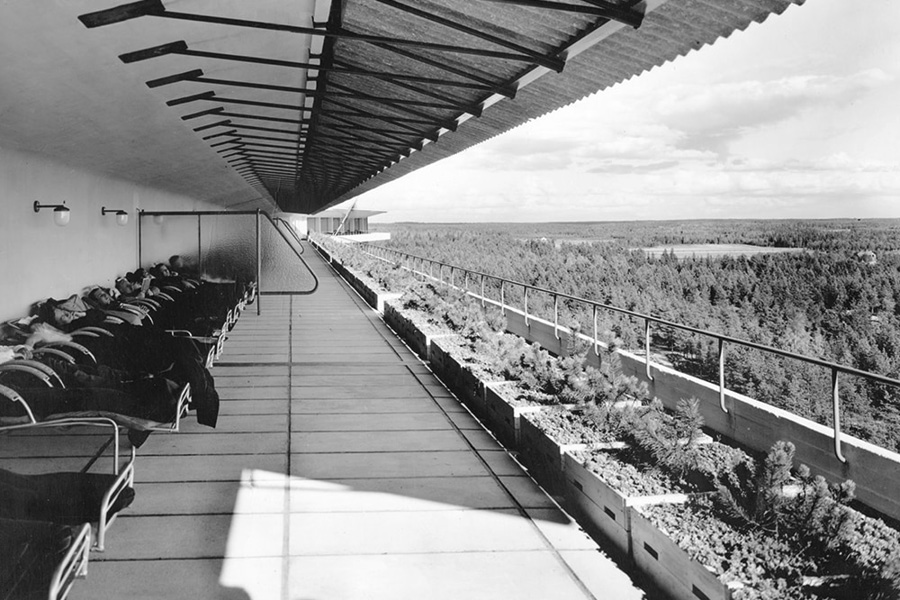
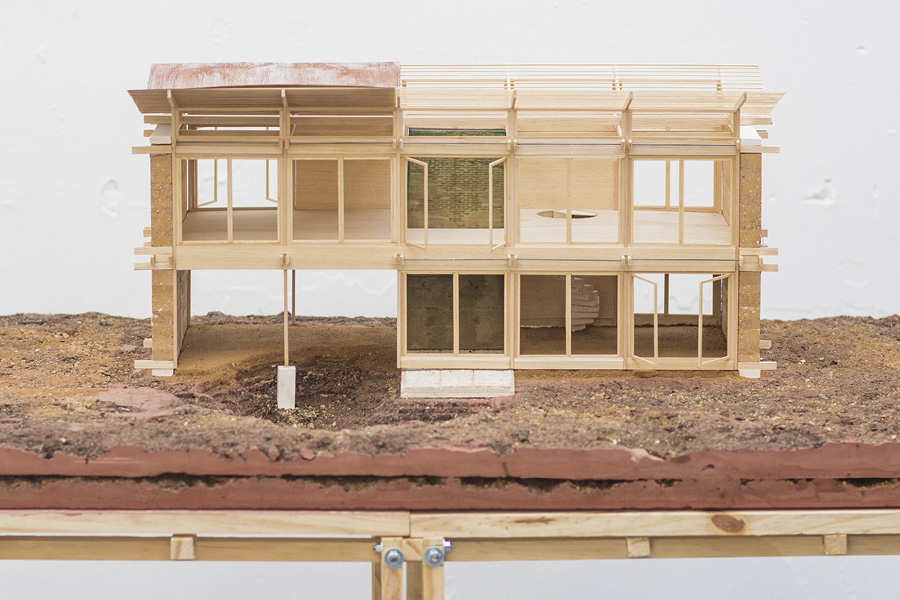
From diverse backgrounds and trajectories, we have been able to work on related subjects and issues. The question of how territories adapt to climatic, economic, and societal shifts first took shape in our doctoral projects, conducted on similar coastal areas and on the study of resources and constructive know-how in the Aquitaine region. The completion of various award-winning projects in prospective competitions or residencies with local authorities (Vers Paris 2050, Basse Vallée de la Touques 2040, Laboratoire du littoral…), alongside professional collaborations with European urban planning and architecture offices (l’AUC, Michel Desvigne Paysagiste, Les Marneurs, Acadie, DATA…), enabled us to develop our own architectural, urban, and landscape approach. Our references for this project aim to define architecture as a way of connecting ecosystems through a rigorously designed spatial organisation. More than images, we drew inspiration from individuals and their writings: Cynthia Fleury for caring for places, Françoise Choay for keeping heritage alive, Eric Lenoir for envisioning a spontaneous landscape…
SITE:
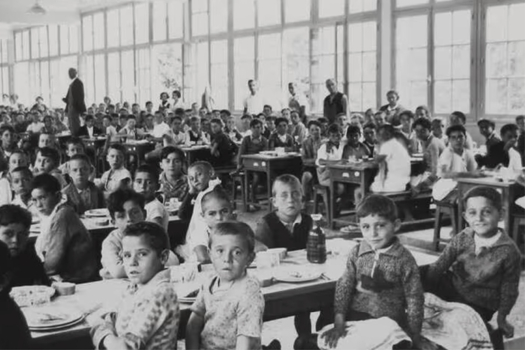
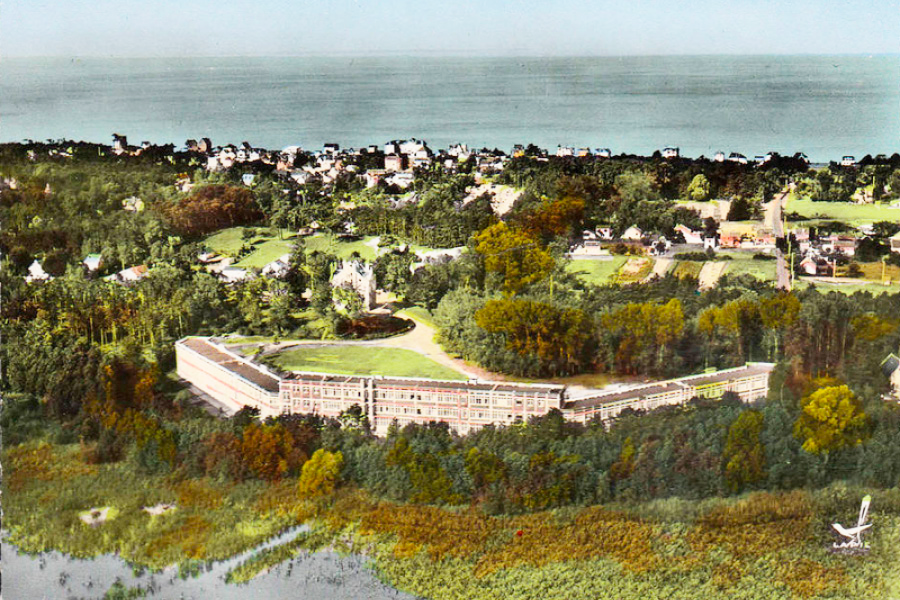
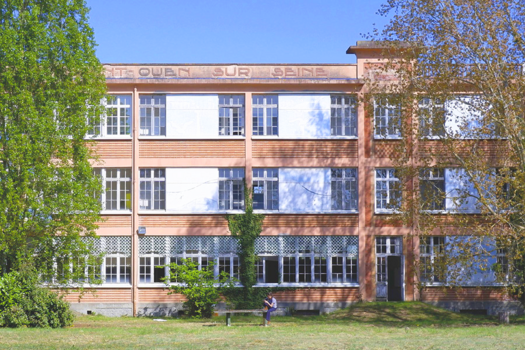
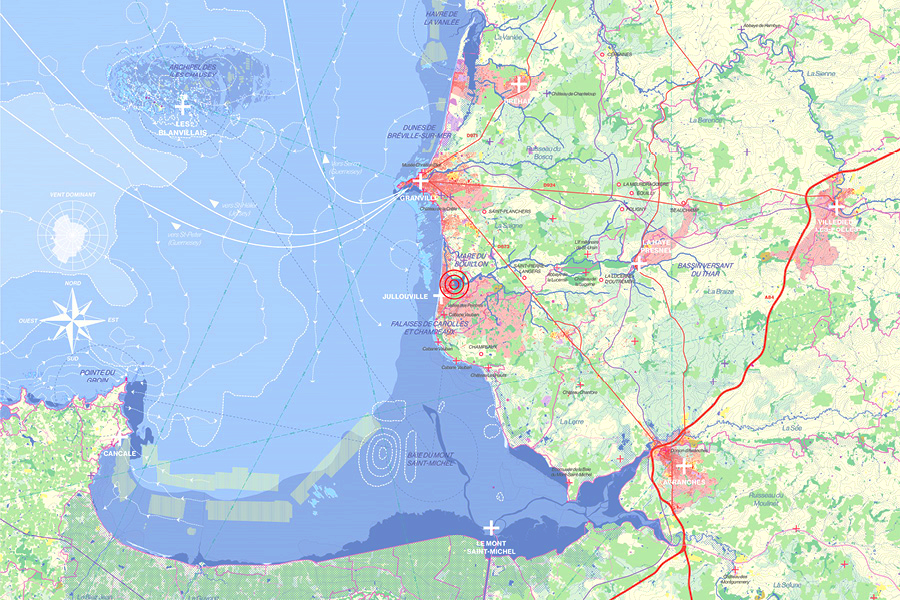
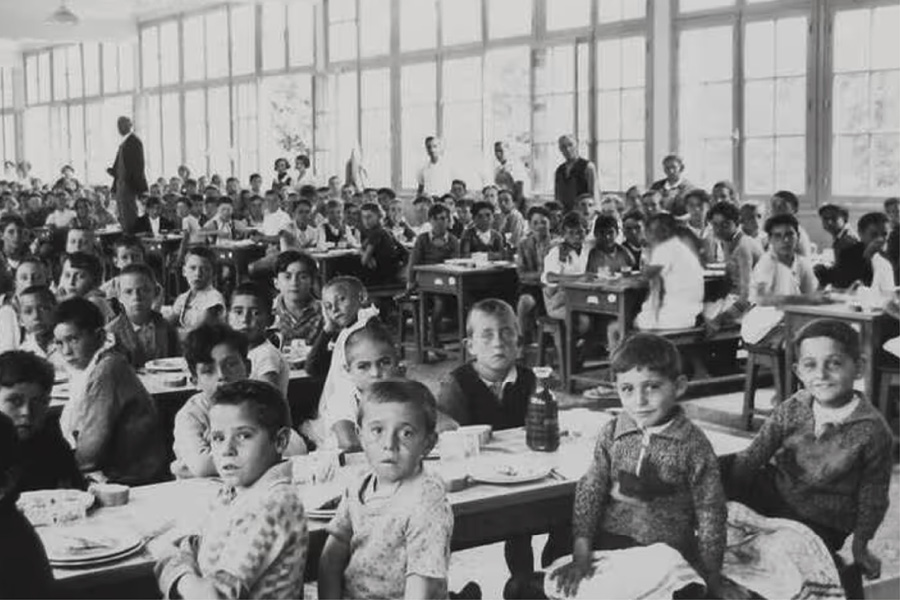
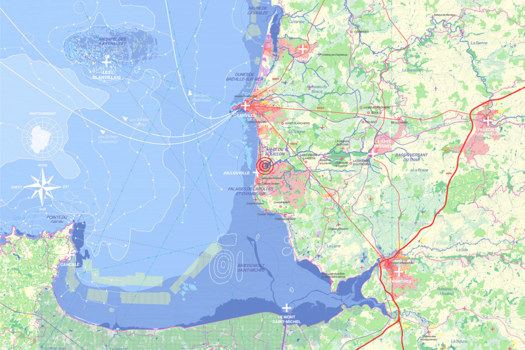
The making of the site draws on all the dynamics already at play. By turning water-related risk into an asset, leveraging the proximity of nearby urban centres (Granville, Avranches, Coutances), articulating the agricultural and productive landscapes of La Manche, and revealing the territory’s unique heritage (the Bay of Mont Saint-Michel, the Chausey Islands archipelago, the Thar Valley), the project brings together a group of institutions, users, and both public and private investors essential to the site’s transformation in the short, medium, and long term. The objective: to weave cooperation and virtuous territorial partnerships. This collaborative process unfolds through a series of activations of the site, beginning with the opening of the park to users and continuing with the transformation of three objects of remarkable architectural quality: the Château de la Mare, the cultural and memorial showcase of the site; the infirmary, the future laboratory for studying the living world; and the Colony, the place where these new territorial collaborations take shape. Each type of space is conceived as adaptable, reversible, and capable of shifting toward other forms of habitability and use according to evolving needs and desires.
REFERENCES:
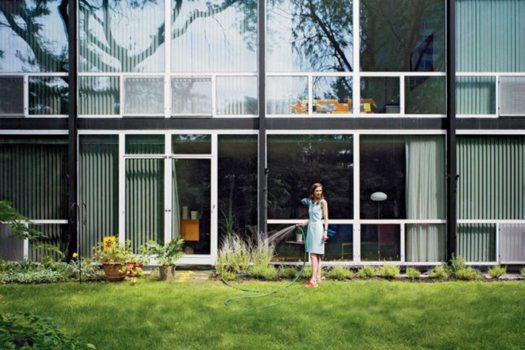
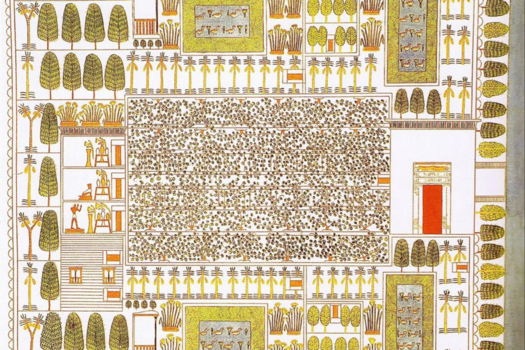
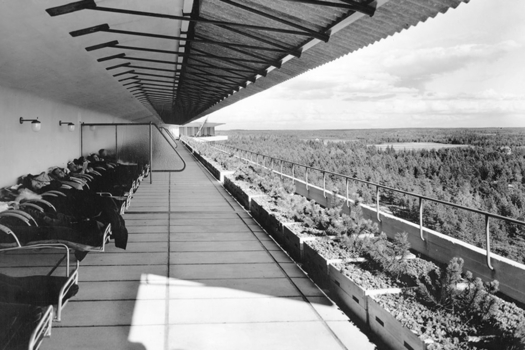
Part of the team is composed of the COLLECTIF (IN)VISIBLE, founded by Gaspard Basnier, Léo Diehl-Carboni, and Lawan-Kila Toe. Having worked together regularly since their early years at ENSA Versailles, this group initiated the creation of a tailored team for Europan in order to combine multiple areas of expertise. This allowed us to position ourselves more effectively in response to the site’s specific challenges. Skills related to large-scale planning (Gaspard Basnier), heritage (Léo Diehl-Carboni), and construction techniques (Lawan-Kila Toe) were enriched by landscape expertise (Louise Gluntz), coastal-region adaptation to natural risks (Ronan Le Cornec), and an operational urban approach (Clémentine Genet), complemented by project drawing and representation (Kenza Ambraisse). This diversity of backgrounds is anchored by a shared foundation in architectural education.
6. How could this prize help you in your professional career?
Europan represents a unique opportunity both to work together outside established professional conventions and to allow young architects to propose alternative approaches within a system that offers limited space for emerging practices. Its European reach and operational purpose provide a genuine lever for accessing commissions and a broad network of public and private stakeholders.
TEAM IDENTITY
Legal status:
Team name:
Average age of the associates: 27 years old
Has your team, together or separately, already conceived or implemented some projects and/or won any competition? if so, which ones?
The whole team has already contributed to the development of several award-winning projects, both together and individually:
• Winner. Grand Prix. CAUE 14 ideas competition, Touques 2040, Lower Touques Valley, Deauville. With Les Marneurs and François Morelle, 2021 – (Ronan Le Cornec)
• First Prize. Lisbon Triennale Millennium bcp, “Universities Competition Award, Master Category”, 2022 – (Collectif (in)visible)
• Winner. 2nd Prize. CAUE de Paris – City of Paris. Vers Paris 2050, facing together the challenges of our century, resilience and forward-planning programme. With Oscar Basnier, 2023 – (Collectif (in)visible + Kenza Ambraisse)
• Le Laboratoire du littoral. Six-week architecture residency on the theme of coastal risks, Asnelles-sur-mer, 2024. With Camille Le Gac – (Ronan Le Cornec)
• Winner. Diploma Prize, Maison de l’architecture d’Île-de-France, 2022 – (Collectif (in)visible)
• Winner. Dissertation Prize, Maison de l’architecture d’Île-de-France, 2021 – (Louise Gluntz)
WORKS: