LUEURS CONTAGIEUSES
Mantes-la-Jolie (FR) - Runner-up
TEAM DATA
Associates: Lucas Darcy (FR),
Léo Pauvarel (FR),
Jean Montagne (FR), – architects,
Theo Seguin Näsström (FR) – architect urbanist,
Yann Ninot (FR) – engineer architect
Contributors:
Axelle Bourguignon (FR) – drawing technician,
Marceau Bariou (FR) – urban planner
lucasdarcy13@gmail.com
See the complete listing of portraits here
See the site here
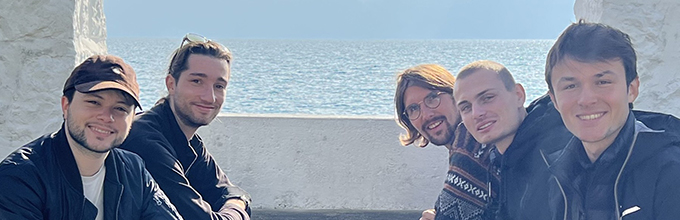
TEAM PORTRAIT
VIDEO (by the team)
INTERVIEW
Click on the images to enlarge
1. How do you define the main issues of your project in relation with the theme “Re-sourcing”? Re-sourcing thanks to nature, to social dynamics, to new materiality? In which way do you think your project can contribute to an ecological and/or social evolution? And in which way do you think your project can be called a “regenerative project”?
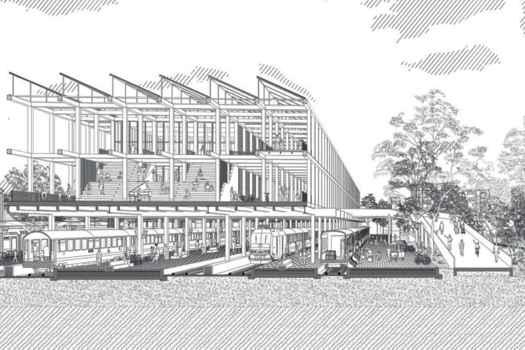
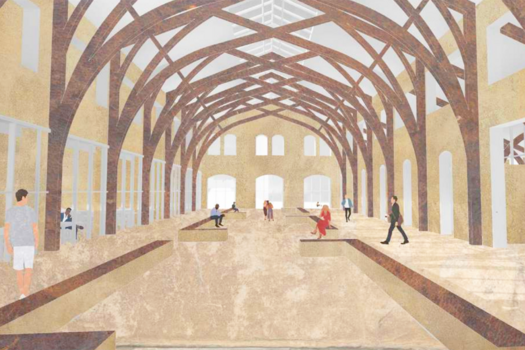
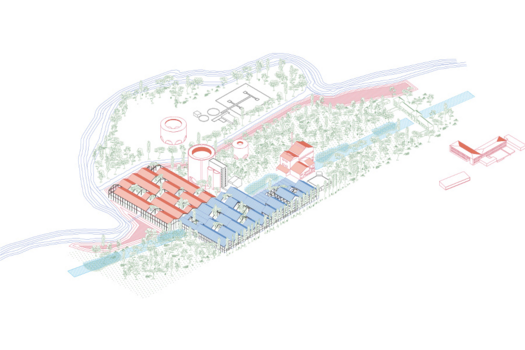
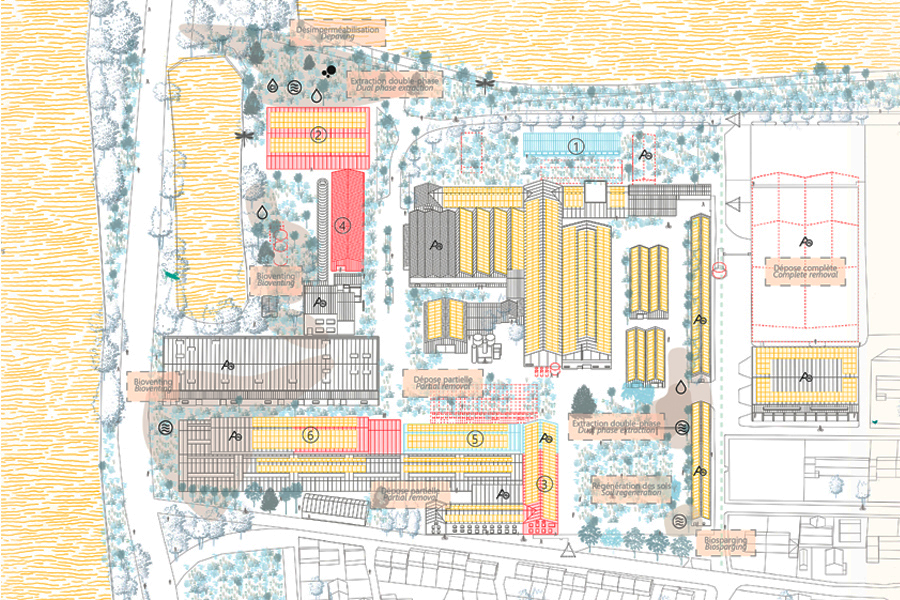
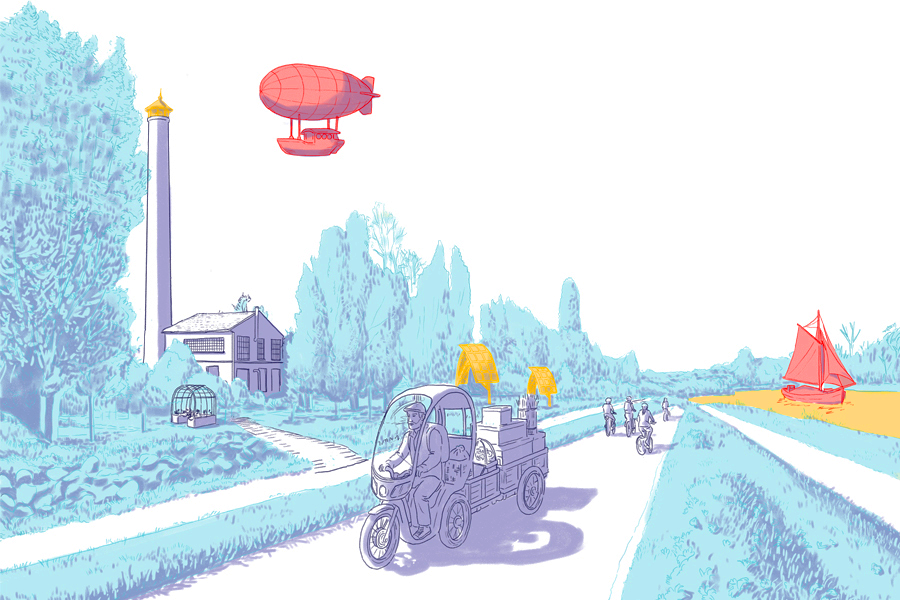
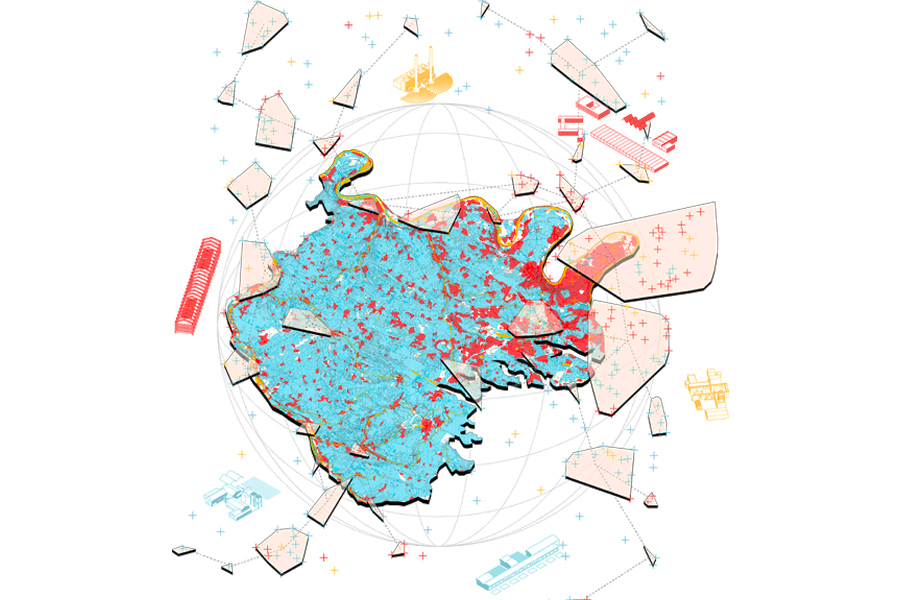
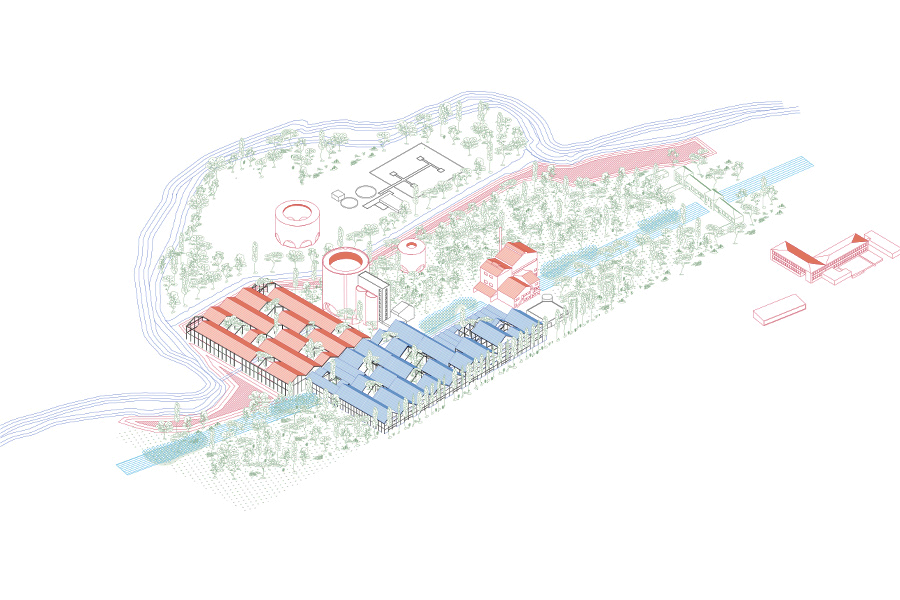
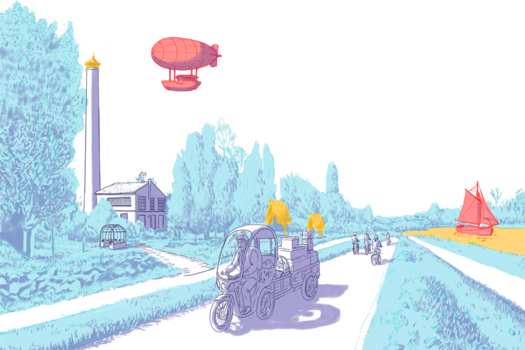
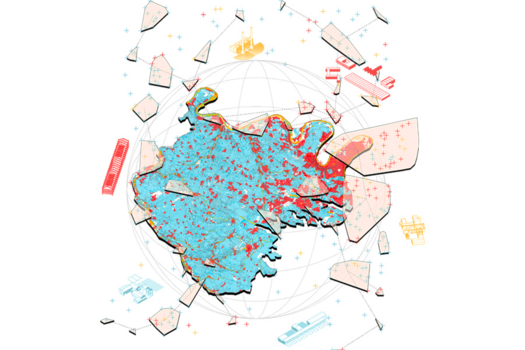
The project redefines the site’s relationship with its territory through a careful and iterative process that interweaves social initiatives, low-tech industries, and artisanal production. By activating the site’s material, energetic, and social resources, Entre-Lacs becomes a renewed source of value for the entire bioregion. This transformation supports ecological evolution through frugal remediation, circular material flows, and nature-led regeneration, while fostering social evolution by empowering local actors, establishing shared governance, and rebuilding productive solidarities. In this sense, the project is regenerative: it does not merely repair a place, but generates new ecological and social capacities that continue to grow over time. We define Re-sourcing as the activation of the site’s natural, social, and material resources to regenerate its relationship with the wider territory. Structured around three pillars (matter, energy, and life) the project forms an integrated and self-sustaining ecosystem, resilient both ecologically and socially.
2. How did the issues of your design and the questions raised by the site mutation meet?
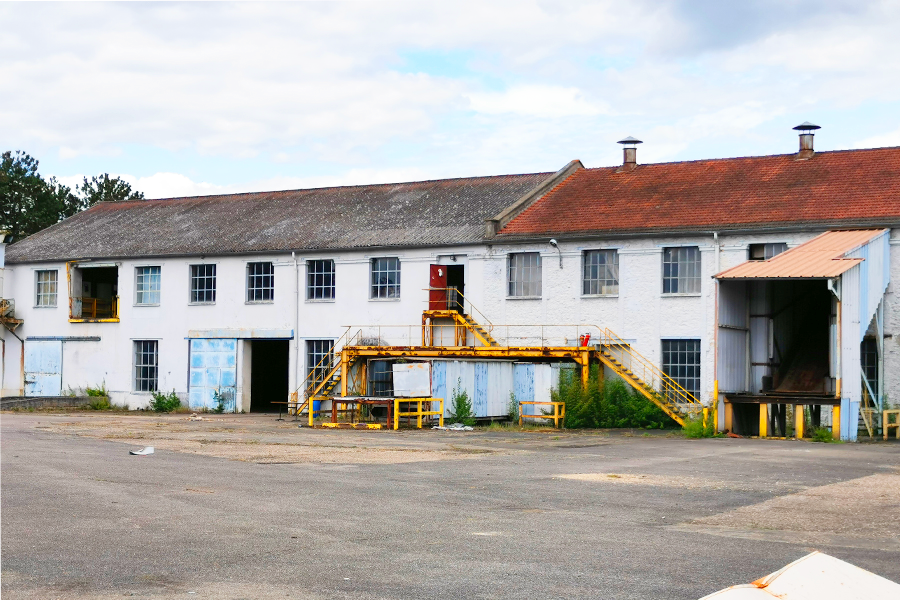
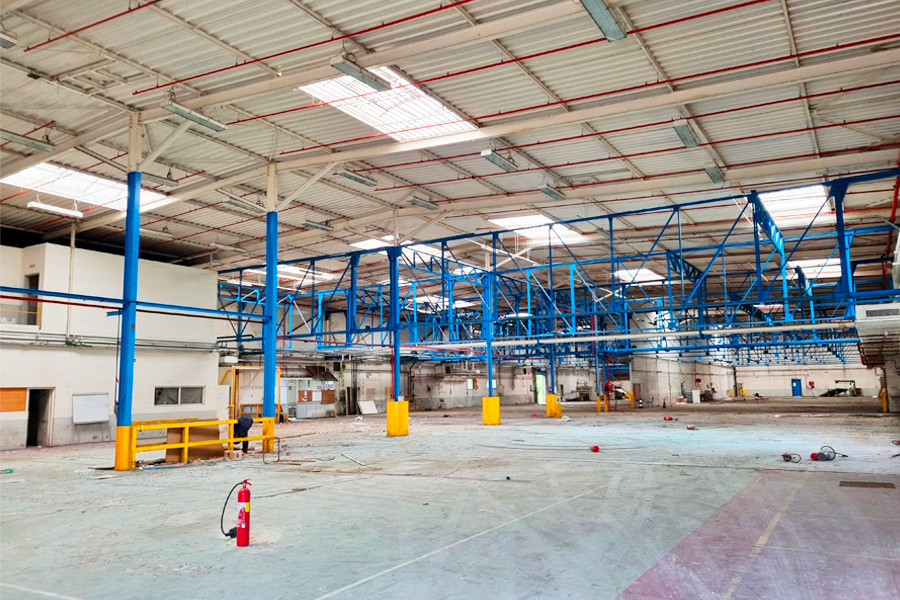
Located at the meeting point of several contrasting districts of Mantes la Jolie, the site lies within a territory marked by sharp social divides, between the historic center, the recently renewed riverside areas, and the neighbourhood of Val Fourré, long affected by segregation and limited access to shared urban spaces. This fragmentation positions the site as a sensitive threshold where existing boundaries risk being reinforced if not carefully addressed. Its ecological condition adds another layer of complexity. Degraded soils, fragmented ecosystems, and the disappearance of former productive activities create both uncertainty and potential. These elements shift the site’s role from a simple parcel to be redeveloped to a possible interface between communities within a wider bioregional network. The design issues therefore emerged directly from the site’s transformation. The need for ecological repair, the site’s ambiguous identity after industrial decline, and the social tensions surrounding it collectively shaped the project’s foundations. The approach focuses on creating permeability between districts, establishing shared productive activities, and allowing ecological processes to structure the site’s redefinition. In this way, the site’s mutation and contested context became the driving forces of the project.
PROJECT:
Yes, several of our previous projects have addressed similar issues, especially the challenge of transforming abandoned or underused sites into places that reconnect with a larger territorial scale and accommodate new forms of use for diverse populations. The Brise-Vent du Havre (Léo and Lucas) explored how an overlooked infrastructural fringe could be reimagined as an ecological and social corridor, reconnecting fragmented landscapes while opening new public uses to local communities. The Cherbourg seafront project (Léo, Lucas, Action Coeur de Ville) similarly aimed to weave the city back into its coastal territory by creating accessible, inclusive spaces where different populations such as residents, visitors, and workers could interact with renewed ecological environments. The Paris Bercy train station proposal (Léo and Lucas, Prix Tony Garnier) questioned the future of a major vacant infrastructure at a metropolitan scale, imagining how such a site could host new mobilities, productive programs, and shared public spaces that serve a wide range of users. Jean worked on the Former Mira Lanza project, the rehabilitation of a former industrial site in central Rome, through a careful process of site remediation, valorization of existing industrial heritage, and the integration of social housing as part of the European Housing First program, aimed at addressing the rise of homelessness in European metropolitan areas. Yann worked on the previous Europan session in Bernay, a (multi)site that had a similar scope. The answer was centered around the same principles as the present project. It weaved together new forms of productivity as well as new forms of living through the reactivation of the flax industry in the Risle valley. Similarly, a territorial project in the heart of the Chartreuse aimed for a large-scale ecology of material flows to handle the slow decline of the industries. Radical scenarios were proposed: abandoned sites were deconstructed and reconfigured into a series of structures that were of public usefulness. Across these projects, a common ambition guided our approach: to treat each site not as an isolated object but as a strategic catalyst capable of reconnecting broader ecological and social systems, while offering flexible, inclusive spaces for multiple ways of inhabiting. This perspective strongly inspired the Entre-Lacs project, where we continue to explore how a deserted site can become a regenerative hub for its entire bioregion and for the communities who will inhabit it. Our references are diverse; here are a few that inspired us:
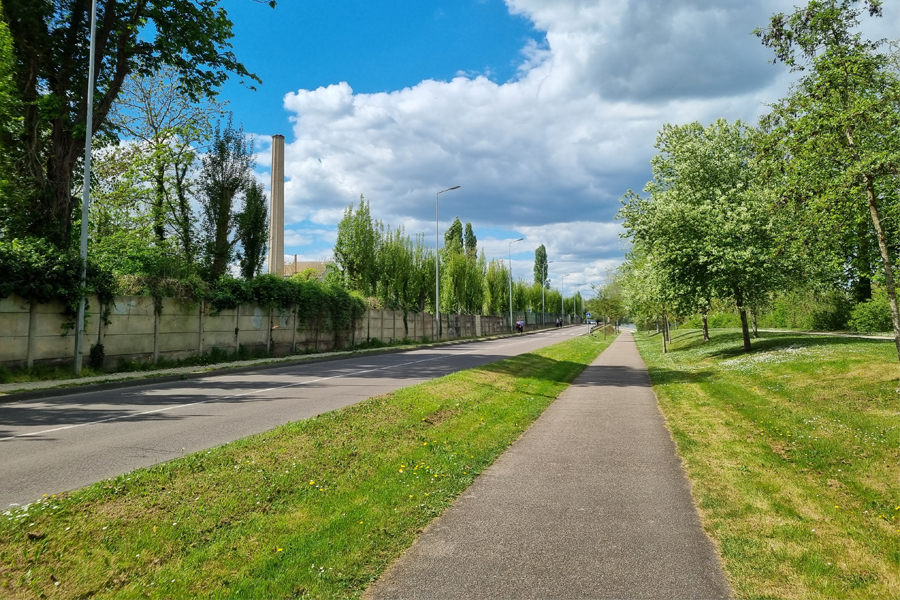
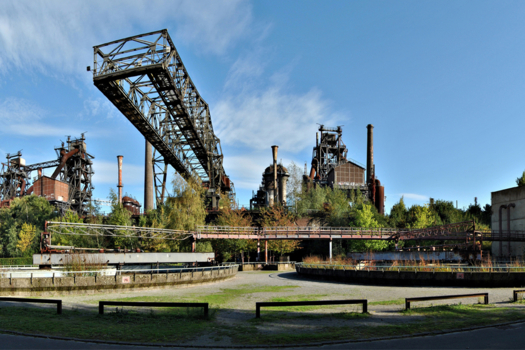
1- Duisburg North Landscape, park Latz + Partner, Latz-Riehl, Lipkowsly
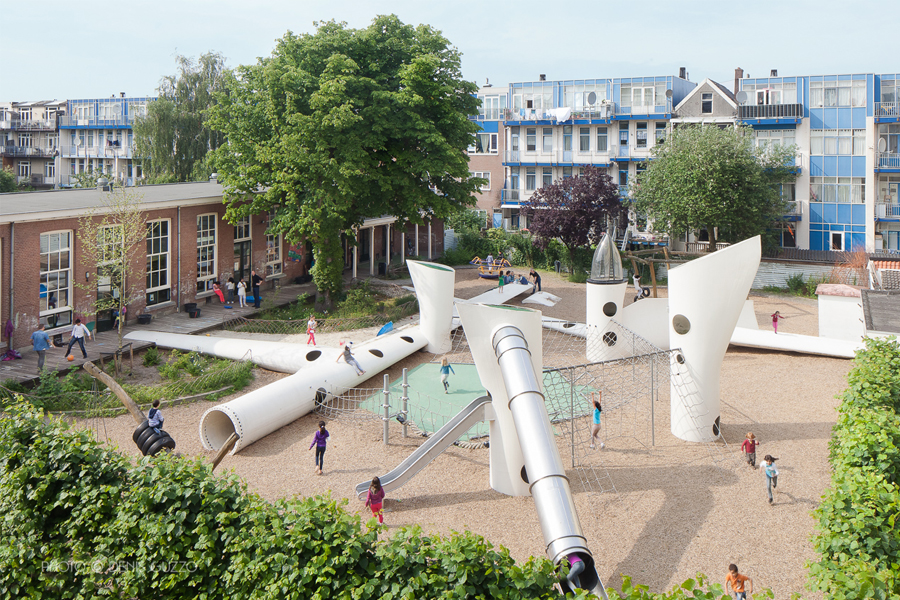
2- Blade-made Playrounds, Superuse Studios
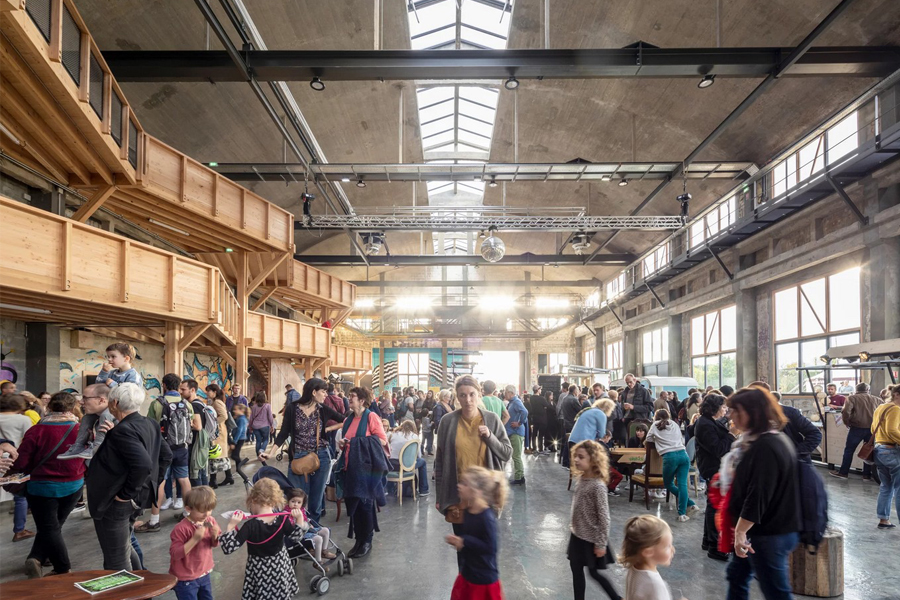
3- Rehabilitation of a market hall into a third place for the circular economy, Encore Heureux architectes
SITE:
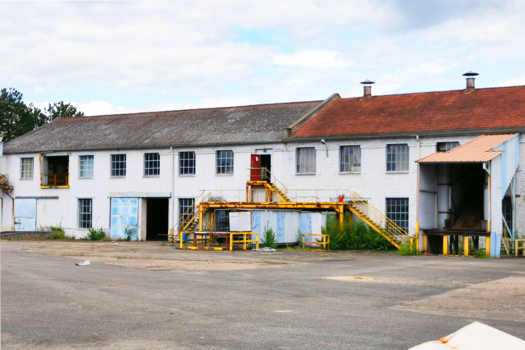
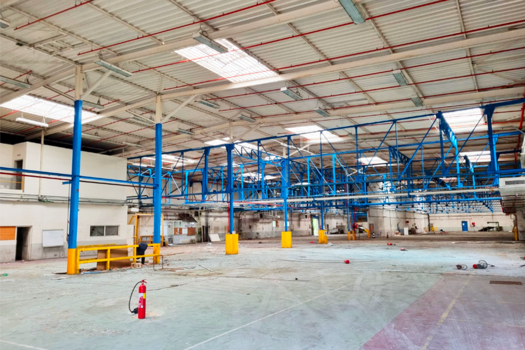
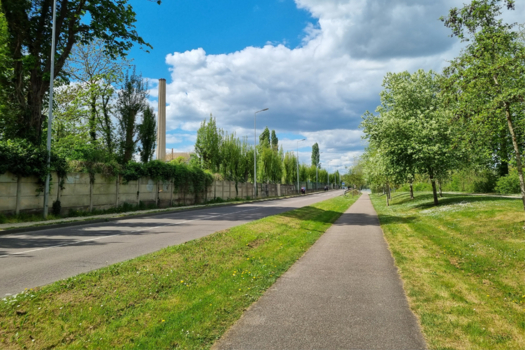
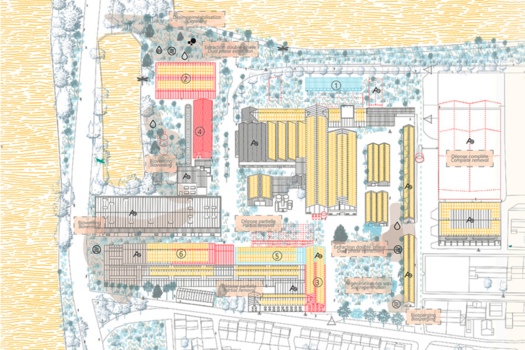
The project plans to integrate existing stakeholders: political, economic, and community actors through occupation, initially on a temporary basis and then on a permanent basis through the gradual purchase of land, allowing for a permanent and autonomous presence on the site. In concrete terms, this means integrating local actors from the outset and enabling them to develop and structure themselves by taking part in the project to transform the Entre-deux Lac site. This structuring is done gradually, taking into account the variable solvency and financing capacity of the actors. For stakeholders with limited financing capacity, long-term commitment and possible pooling of resources should enable the long time development of the activity.
The creation of a legal structure, the SCIC (Société des Communs), aims to create a governing and structure for the site that fulfills several objectives:
- ensuring democratic governance that is representative of all types of stakeholders,
- enabling the gradual purchase of land from the operator in charge of rehabilitation and limiting land speculation in order to offer low-cost spaces for the development of economic and community activities for the inhabitants.
This long-term negotiated process is not an addition to the project — it is the project’s core operating method.
REFERENCES:
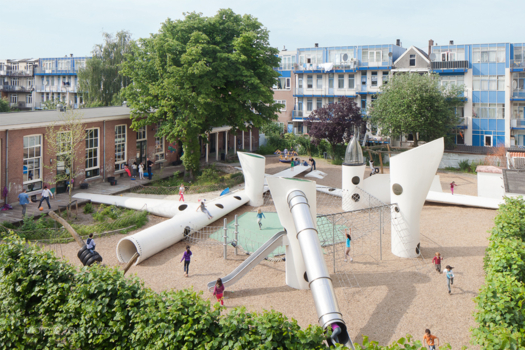
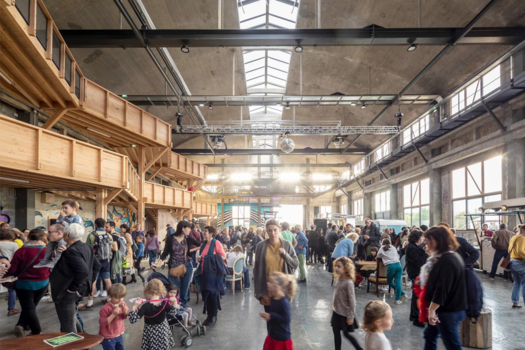
The formation of our team was directly shaped by the thematic and conceptual demands of the competition. Beyond bringing together people who share a common vision and set of values, our primary ambition was to assemble a truly complementary team capable of addressing the project across multiple scales and disciplines. Although the five of us are architects, each member brings a distinct educational and professional background: project management, urbanism and operational development, civil engineering, circular economy and specializations in post-carbon strategies and historical architecture. This diversity allowed us to approach the site's challenges in a holistic way, combining territorial thinking, technical expertise, and ecological sensibilities. The support of friends who contributed to the project, including an urban planner and an illustrator added an additional layer of depth, enriching our proposal. By the end of the process, we all felt proud to have produced a project that none of us could have created alone. It is precisely the convergence of our individual capacities, together with these external contributions, that made the proposal richer, more coherent, and more ambitious.
6. How could this prize help you in your professional career?
This prize gives credibility to the urban and architectural vision and method deployed through this project standing on the belief that frugality and integration of users stand beyond in the designing process. It constitutes a serious reference for the members willing to develop their architecture firm and a purpose to continue in our respective field of personnel interest. The award is a recognition of a collective work where complementary skills were needed to address the complexity, diversity and scale of the site. For future collaborations, it stresses the importance of implementing diverse expertises permitting to challenge our vision as architects.
TEAM IDENTITY
Legal status:
Team name:
Average age of the associates: 27 years old
Has your team, together or separately, already conceived or implemented some projects and/or won any competition? if so, which ones?
Yes we worked collectively on the 2025 edition of the Kaira Looro Competition. Léo and Lucas has received the first mention of the French Academy of Architecture competition Tony Garnier, and were finalists on the Terraviva competition “Brise-Vents” du Havre. Yann worked on the previous Europan session with another team. Theo worked on Designing Resilience in Asia (DRIA) 2019 competition and workshop, on the construction of a small scale mushroom growing space for Catfarm association.
WORKS: