Recode the road
Bregenz-Hard-Fussach-Höchst (AT) - Winner
TEAM DATA
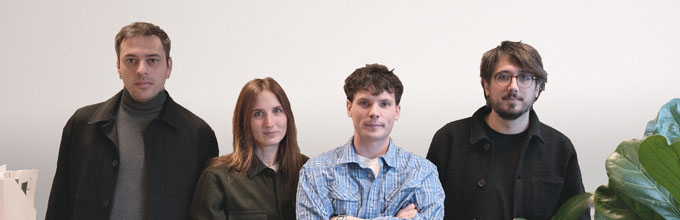
Associates: Lorenza Sartori (IT), Luca Luini (IT) – architects, Riccardo Masiero (IT) – urbanist
Contributor:
Andrea Curti (IT) – student in architecture
info@llumaa.com / www.llumaa.com
See the complete listing of portraits here
See the site here
TEAM PORTRAIT
VIDEO (by the team)
INTERVIEW
Click on the images to enlarge
1. How do you define the main issues of your project in relation with the theme “Re-sourcing”? Re-sourcing thanks to nature, to social dynamics, to new materiality? In which way do you think your project can contribute to an ecological and/or social evolution? And in which way do you think your project can be called a “regenerative project”?
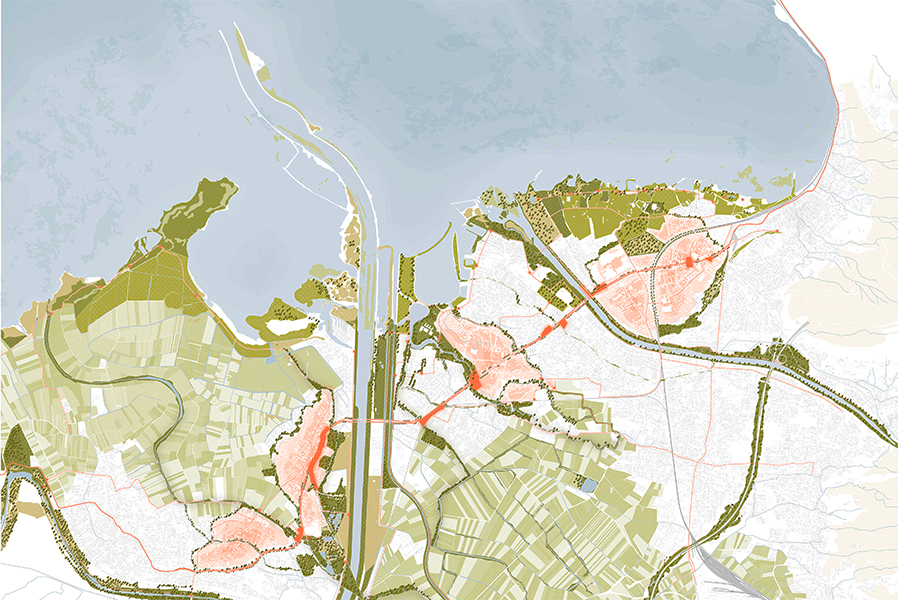
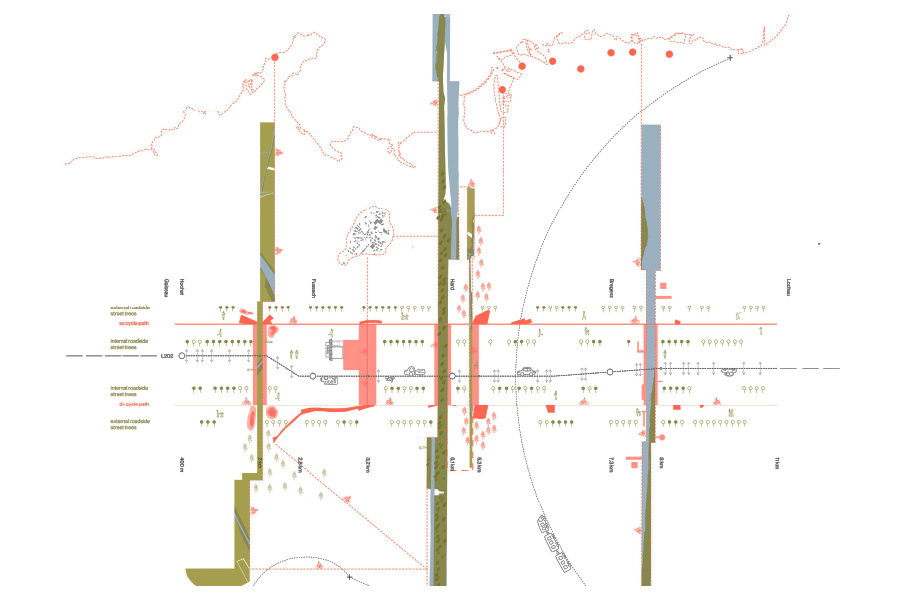
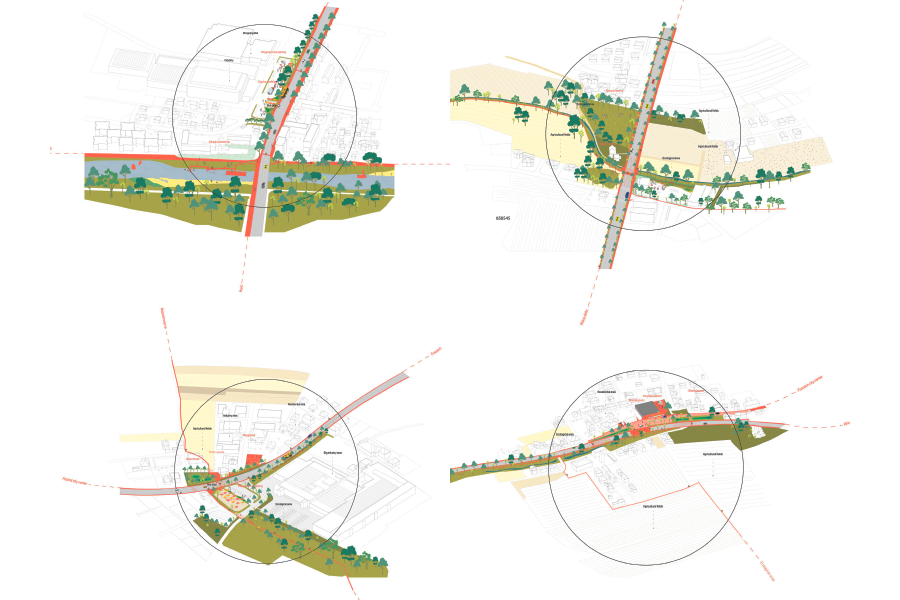
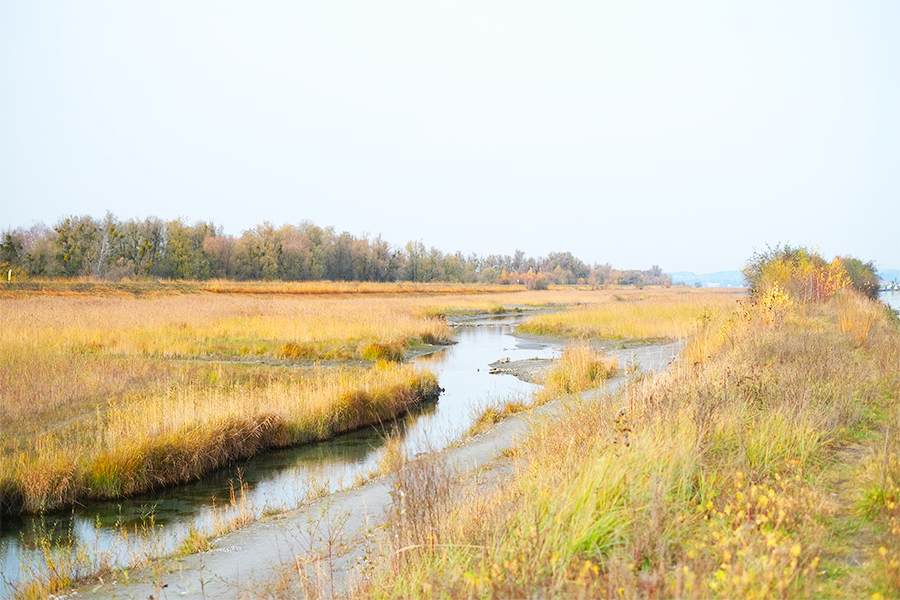
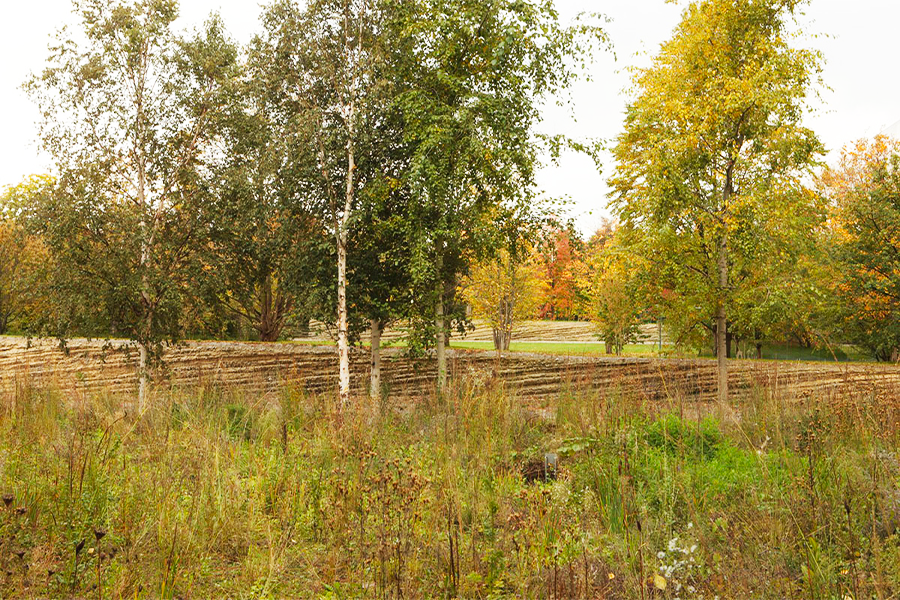
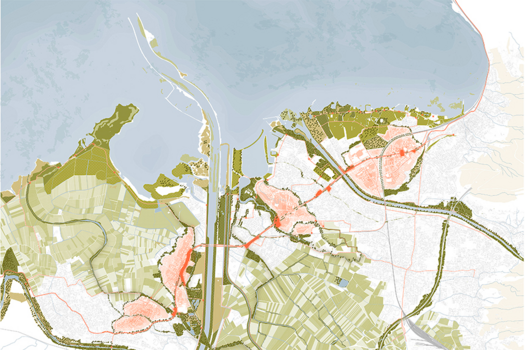
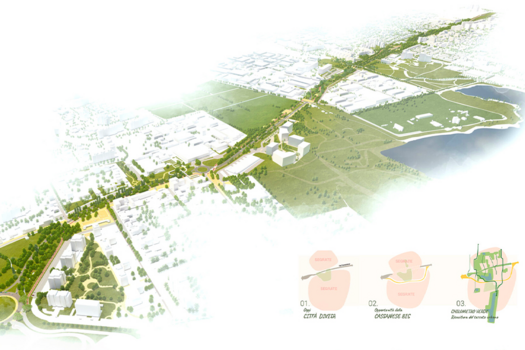
In “Recode the Road”, Re-sourcing means going back to the territorial systems that were there before the infrastructure: soils, water lines, habitats and agricultural landscapes. The Rhine delta is treated as the primary resource, and the L202 is understood as just one layer within it. Rather than proposing a new road or a parallel bypass, the project focuses on the existing corridor and its edges, working with the road as a technical and spatial opportunity to reconnect what it currently separates. The contribution to ecological and social evolution lies in a series of very concrete territorial operations: rebuilding soil depth and permeability along the road, reopening and reconnecting watercourses, shaping water-absorbing topographies, and defining continuous habitat corridors that accompany the L202. These measures directly influence runoff, micro-climate and biodiversity, while at the same time creating more comfortable and legible spaces for walking, cycling and staying along the route. We consider the project regenerative because it acts on the underlying conditions that support life in the long term—ground, water, vegetation and everyday access—rather than simply mitigating the negative effects of traffic. By using the existing road as a catalyst for territorial repair, *Recode the Road* aims to restore ecological continuity and offer a more generous shared landscape for both human and non-human actors.
2. How did the issues of your design and the questions raised by the site mutation meet?
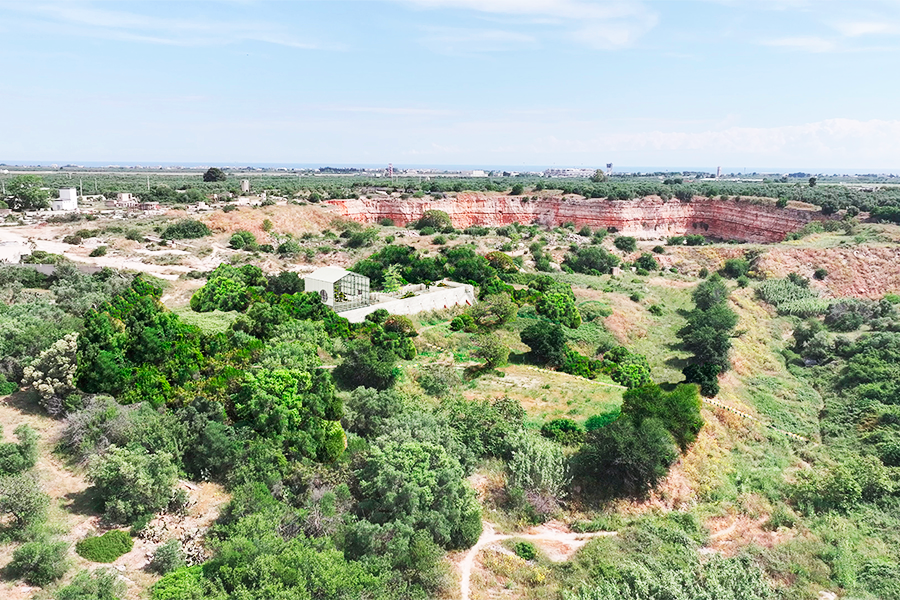
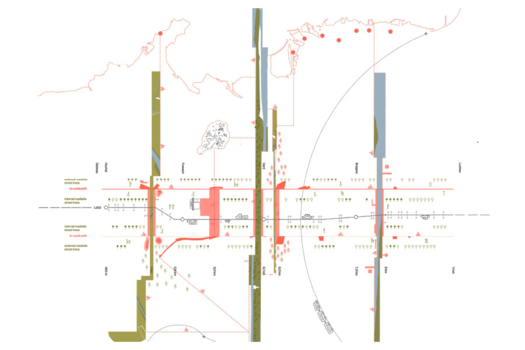
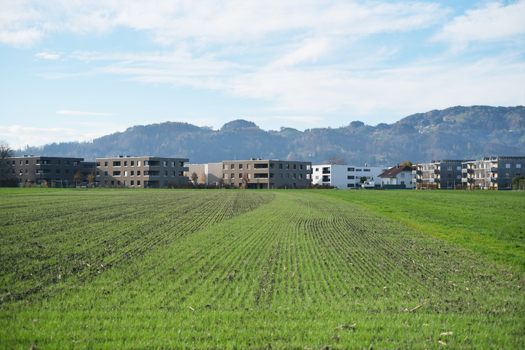
In the L202 corridor, the “site mutation” is already visible: increasing traffic and logistics pressure, more frequent climatic stresses and gradual changes in agricultural and settlement patterns. Our design questions met these mutations by treating them not as separate problems, but as different expressions of the same territorial condition. The analytical framework of solid / fluid / biotic allowed us to translate traffic growth into questions of soil sealing and safety, climate risks into hydrological continuity and storage capacity, and land-use change into the need for robust ecological corridors.
PROJECT:
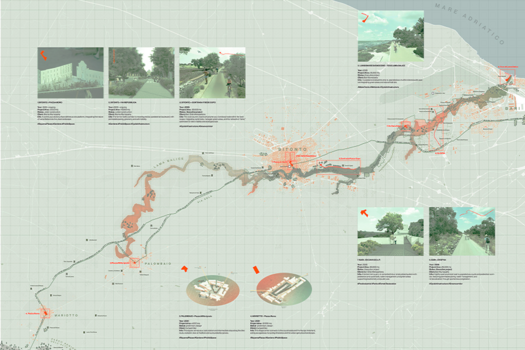
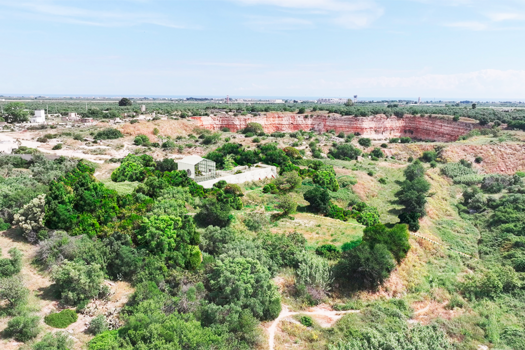
Yes, we have been dealing with these issues for several years, mainly through projects where infrastructure, fragile ecologies and everyday landscapes overlap. Our work on Puglia’s Lame (geological linear formations) has been particularly important. Similar questions reappeared in studies for coastal corridors and riverfronts, where we had to connect regional-scale systems (hydrology, ecology, mobility) with very concrete public spaces and crossings. On the conceptual side, the project is indebted to the tradition of the territorial project, especially the work of Secchi & Viganò on infrastructures and metropolitan landscapes, and to landscape practices that read infrastructure as habitat instead of neutral ground. The tripartite lens of “solid, fluid, biotic” also echoes research by Gunther Vogt on Alpine and fluvial territories where ground, water and living systems are understood as interdependent design layers.
SITE:
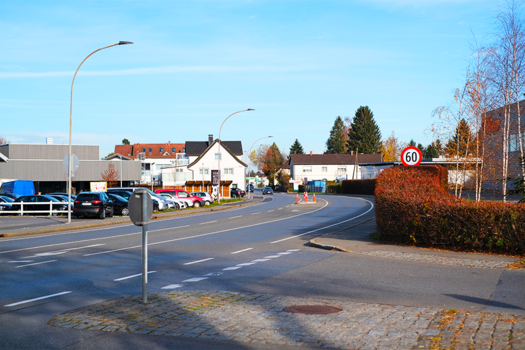
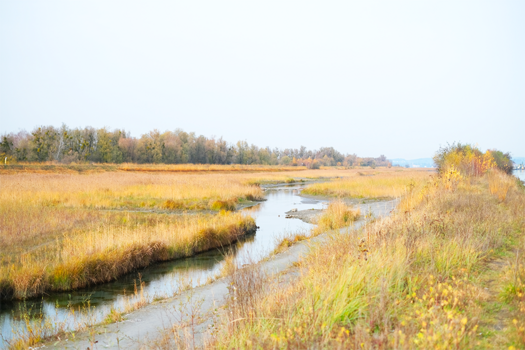
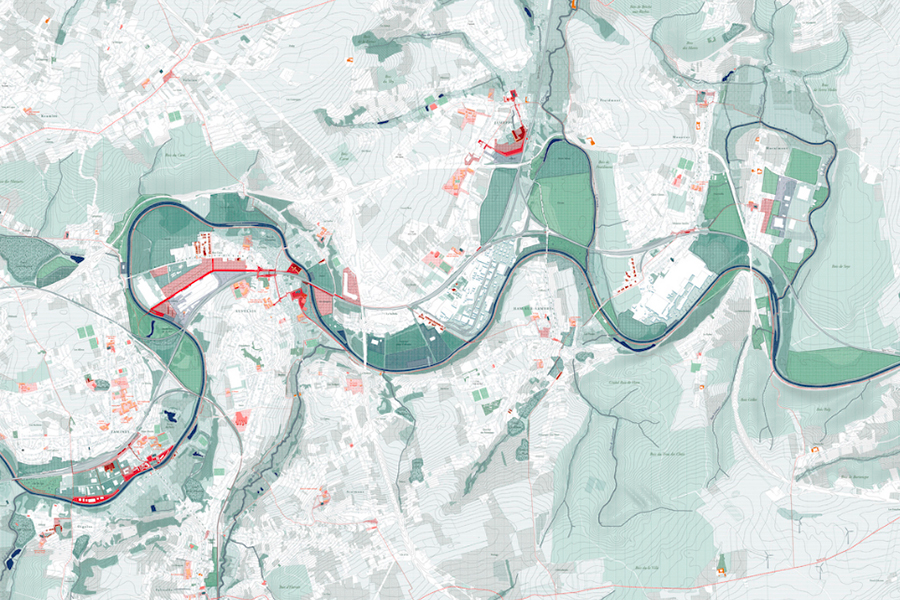
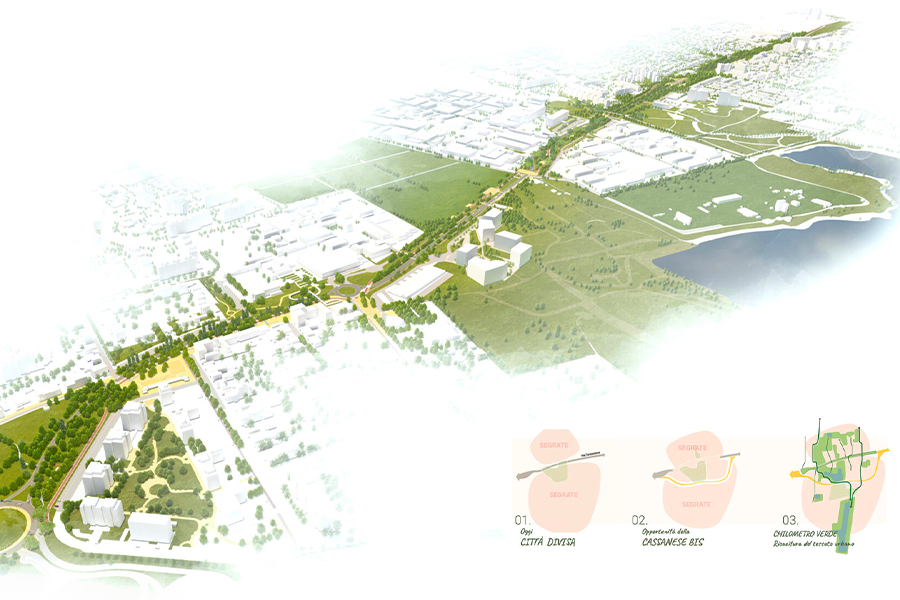
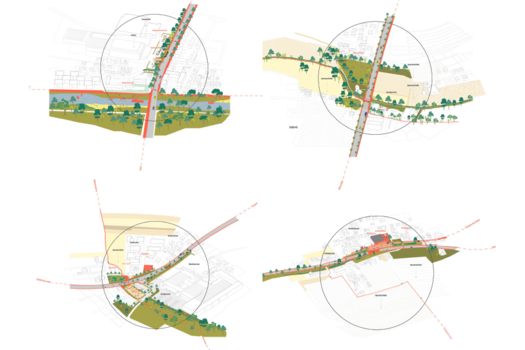
From the beginning, Recode the Road was conceived less as a finished design and more as a framework that different actors can negotiate around. The territorial map and the L202 is reduced to an abstract line and unfolded into a matrix of situations rather than a fixed design. In this way, becomes an open planning tool: instead of prescribing one final form, it offers a catalogue of configurations that municipalities and actors can adapt and negotiate along the corridor.
REFERENCES:
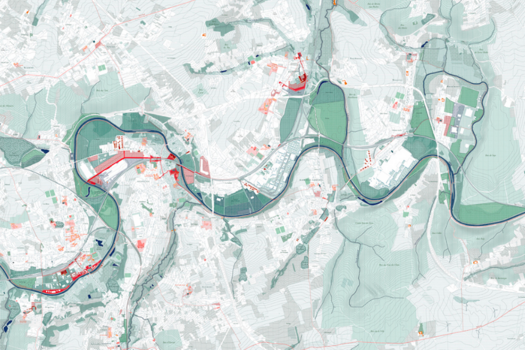
The team is nowadays a consolidated group of architects and urbanists who form a studio in 2021 that works on territorial and landscape-based projects. Within the team, some members focused more on cartography, data analysis and multi-scalar mapping, others on section design, soil and water management, and the spatial quality of the nodes.
6. How could this prize help you in your professional career?
Yes, we do. Europan is one of the few platforms where experimental ideas on territory and infrastructure can actually enter the public agenda, so this prize is very meaningful for us. Winning with *Recode the Road* helps to consolidate a line of work we have been pursuing for years on infrastructural landscapes, soil and water systems, and ecological repair at different scales but in a context abroad our everyday practice.
TEAM IDENTITY
Legal status: Group of architects
Team name: LLUMAA
Average age of the associates: 33 years old
Has your team, together or separately, already conceived or implemented some projects and/or won any competition? if so, which ones?
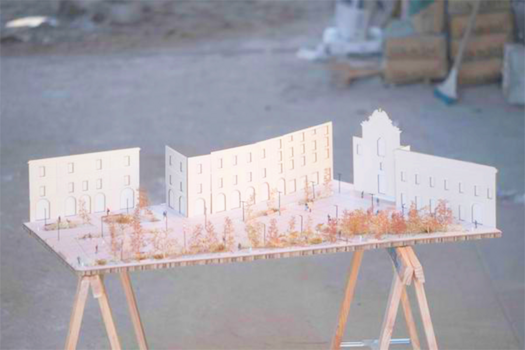
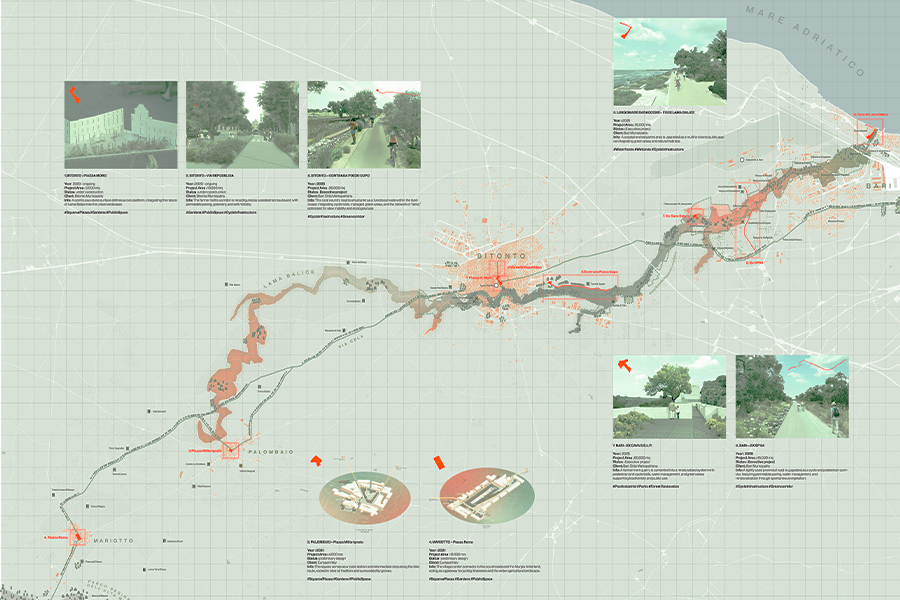
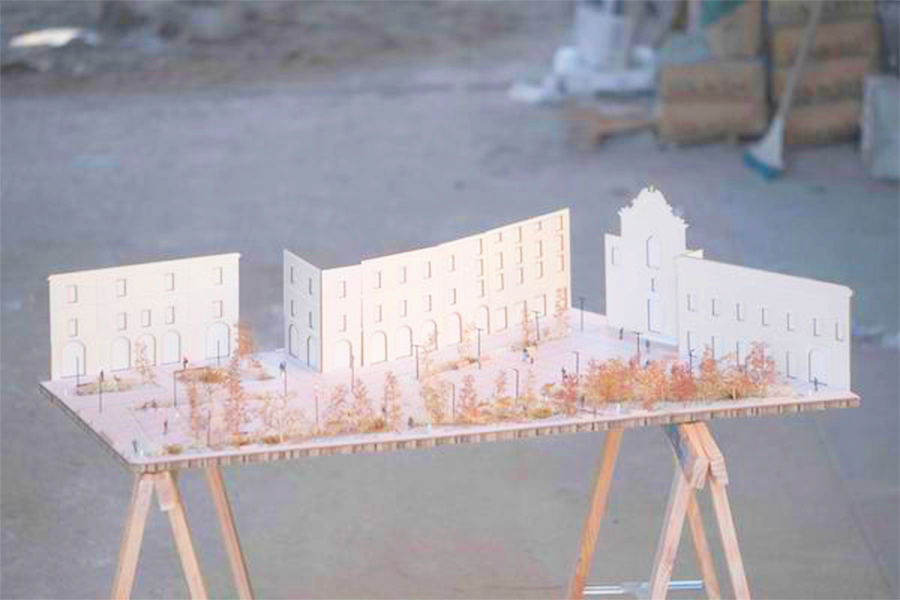
Yes. Within Europan, our team won Europan 16 in Bitonto (IT) That experience became the starting point for developing a series of projects in that region based on our initial framework starting a process developed through different degrees of design, starting from the Europan sites and then extending to other areas beyond the competition perimeter.
WORKS: