From ideas to process-projects
Europan 12 - Vichy Val d'Allier (FR)
« Franges pionnières »
Project strategy family:
- Ecological connections
- Inclusive morphologies
- Inventive typologies
- Reinterpreted heritage
- Urban articulations
Process category:
- Direct order processes
- Competitive processes
- Co-creative processes
- Collaborative processes
- Participative processes
- Participation of the Living processes
- Adaptative legal framework processes
Authors: Lalu, La forme et l'usage - landscape office (Léa Hommage , Mathieu Delmas, FR) + Anne-Laure Marchal, FR
Client(s): Vichy Communauté
Dates: 2013 / 2021-2023
Driving forces: Team + Client
Site
Vichy Val d'Allier (FR)
FLEXIBLE STRATEGIES
SCALE XL/L SIZE 400ha / 125ha
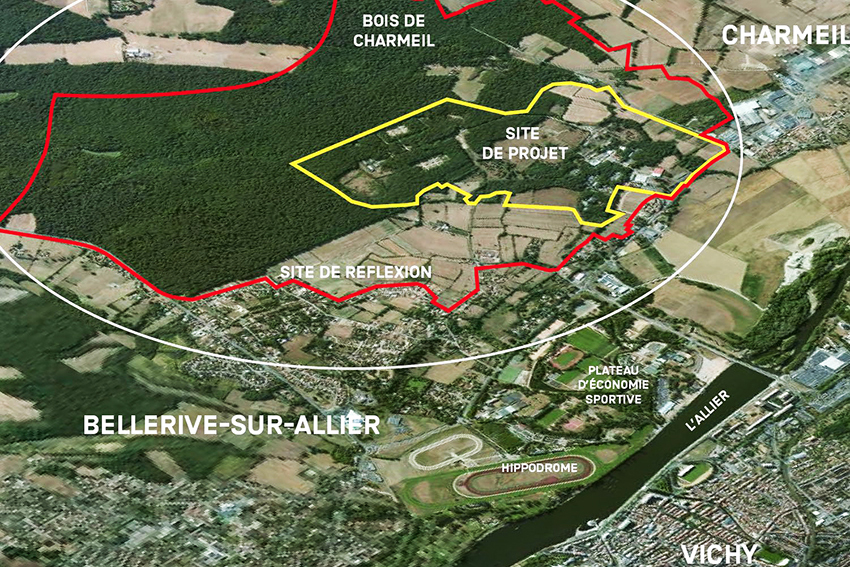
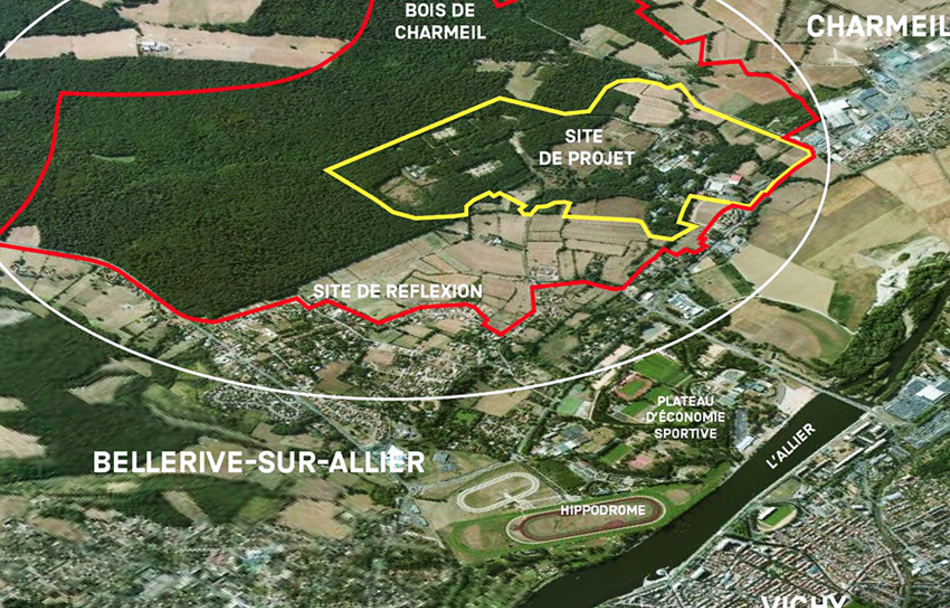
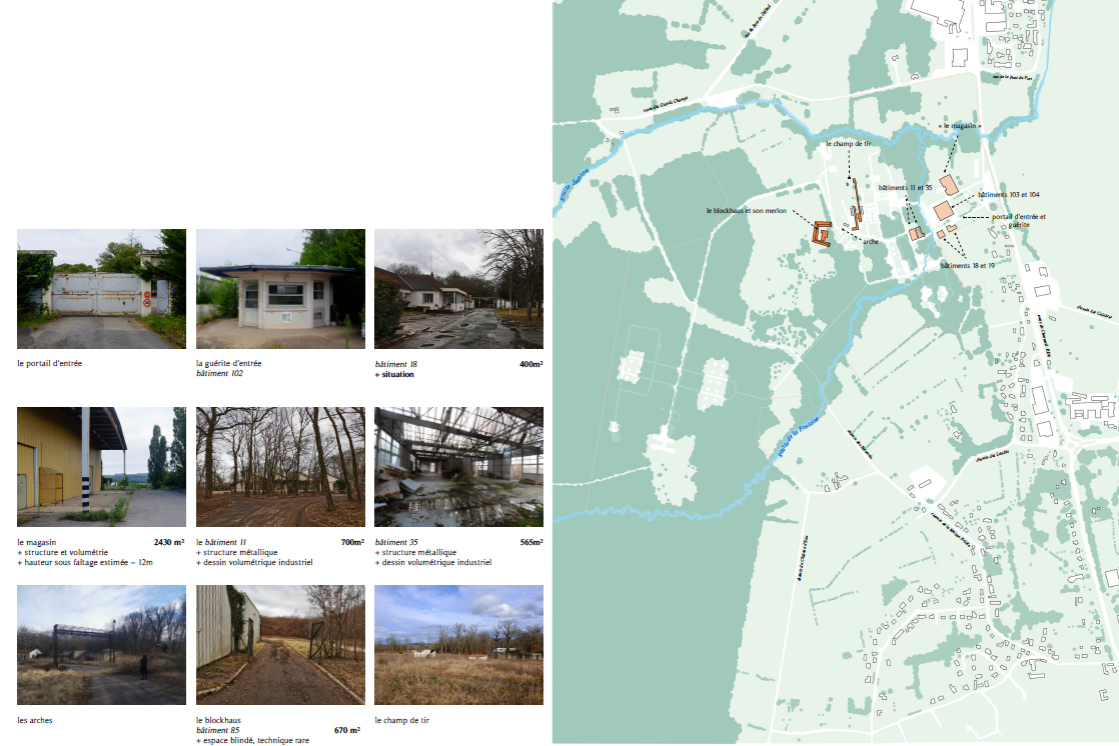
The Montpertuis Palazol site, near Vichy, is a former SEVESO-classified site long dedicated to the manufacture of munitions for the army. The site's depollution took 8 years before to start its transformation.
The local authority's ambition is to reindustrialize the site, which involves defining the conditions for establishing these new production activities (layout, dimensions, access, etc.) in a largely wooded area, as well as identifying the actions to be taken to preserve, enhance, and even restore the existing milieus.
Awarded Idea
Project - Ideas
Franges pionnières
PRESERVATION + NEW ACTIVITES
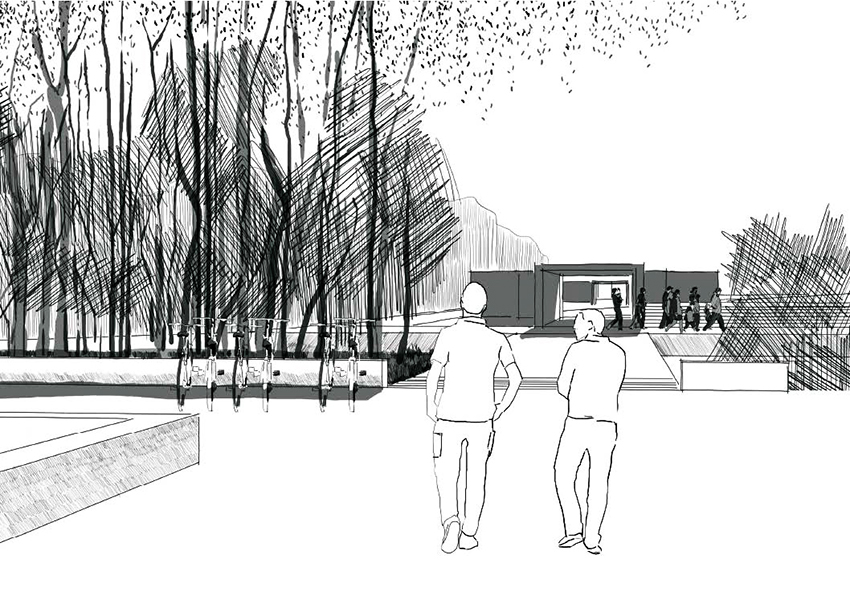
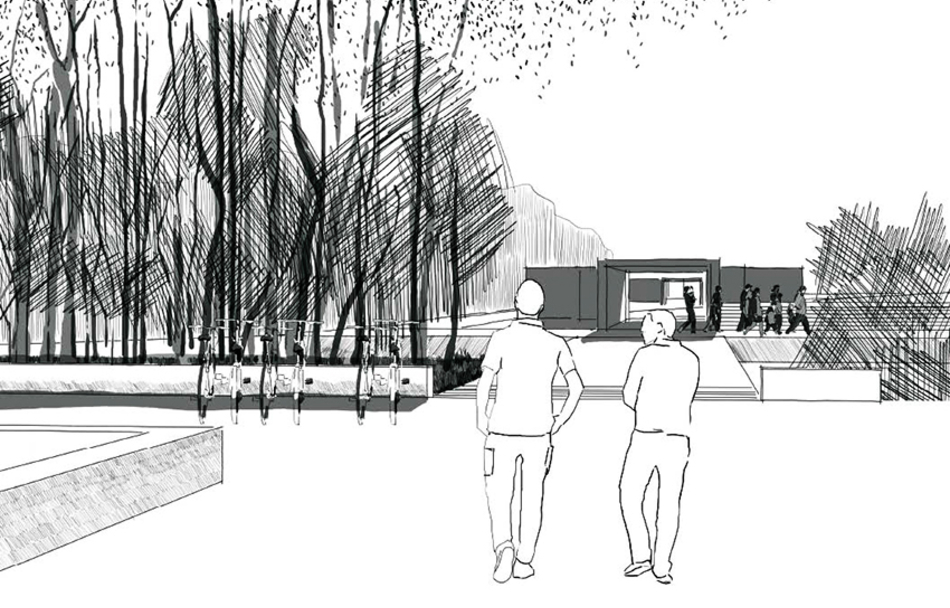
"Our project seeks to re-open the site to its territory while preserving its unique features. The project is organised from the fringes combining: (1) a spatial composition based on the site’s assets and constraints; (2) conditions for the installation of new economic activities; (3) welcoming users into a constantly evolving and lively landscape.”
Project Strategy
Family: Ecological connections
OPENING UP AN OBSOLETE INDUSTRIAL SITE AND ADAPTING IT TO A NEW USE WITHIN ITS TERRITORY
The site presents the challenges of repurposing an industrial site (a former arms and ammunition factory), adapting this site to new economic activities, and transforming an area long closed to the public. The size of the project site (over 100 hectares) necessitates a flexible transformation strategy, adaptable in terms of both the process and the space, and flexible in terms of timeframe, allowing for implementation across different timeframes.
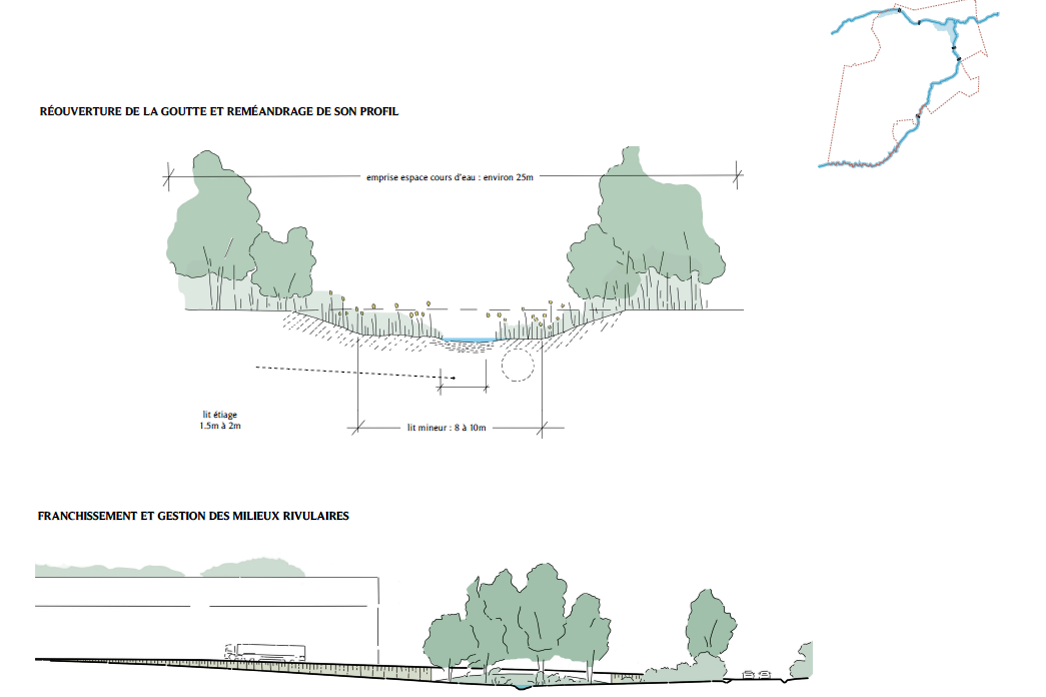
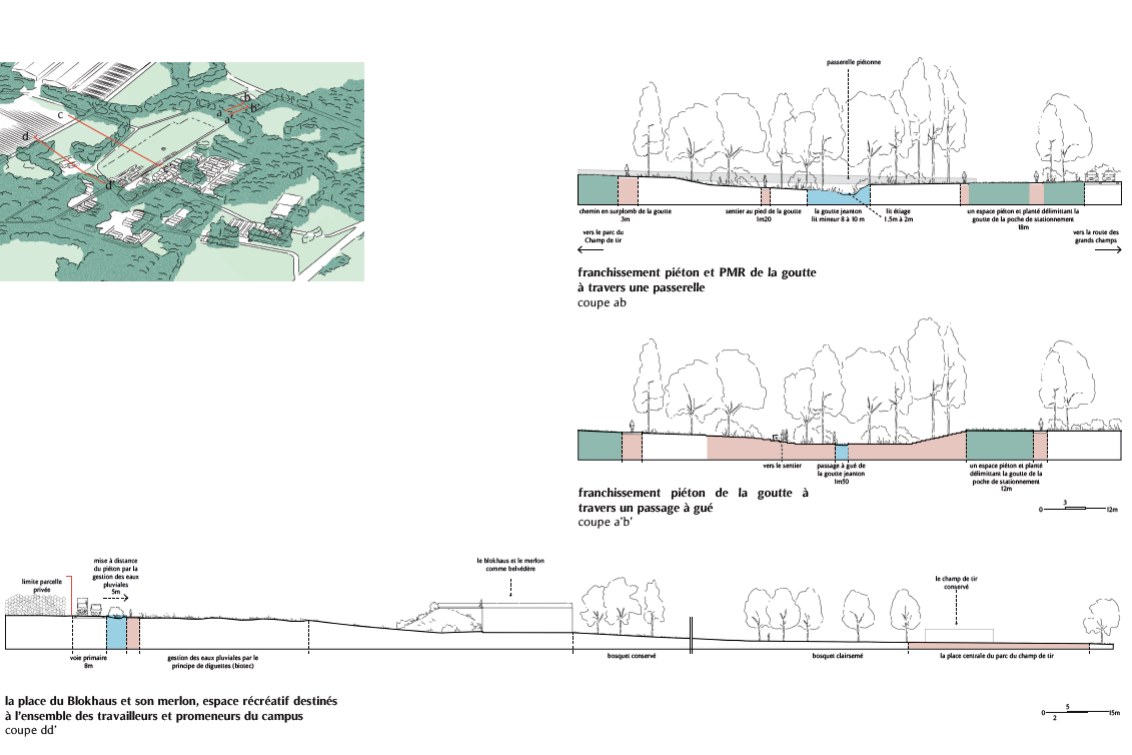
The winning project “Franges pionnières” seeks to re-open the site to its territory while preserving its unique features. The site’s occupation begins and is organised from the fringes. The project implementation process establishes a geometry, paths and allocations that outline specific places that will flourish and gain density over time.
The proposal combines:
- a considered spatial composition based on the site’s assets and constraints;
- spatial and functional conditions that both enable the installation of new economic activities and create a multiplicity of ambiences;
- a permanent location that welcomes users into a constantly evolving and lively landscape.
Each step has an objective and is self-sufficient. The final step completes a long-term vision without restricting the inherent value of those before.
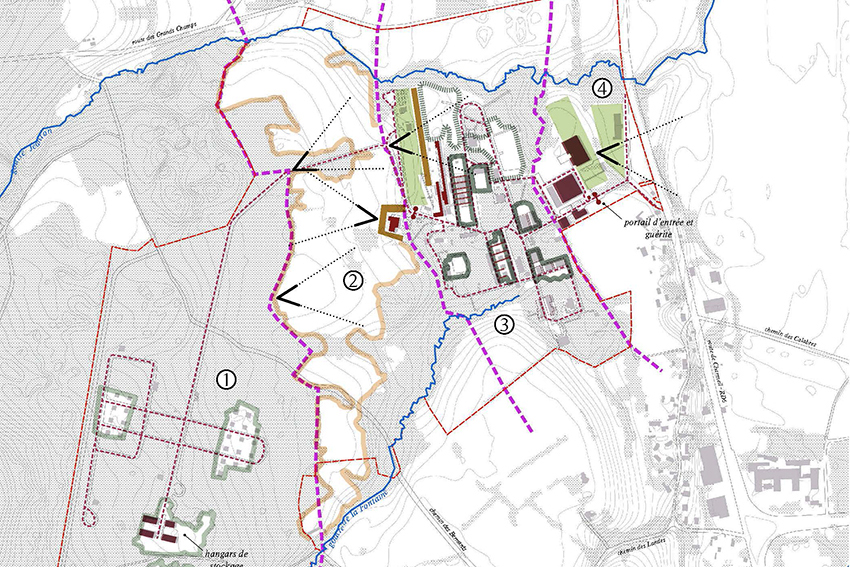
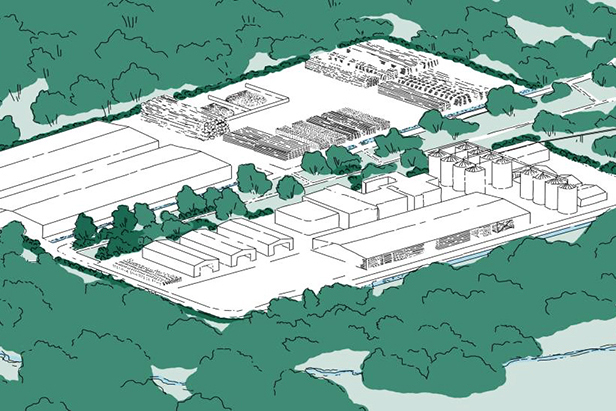
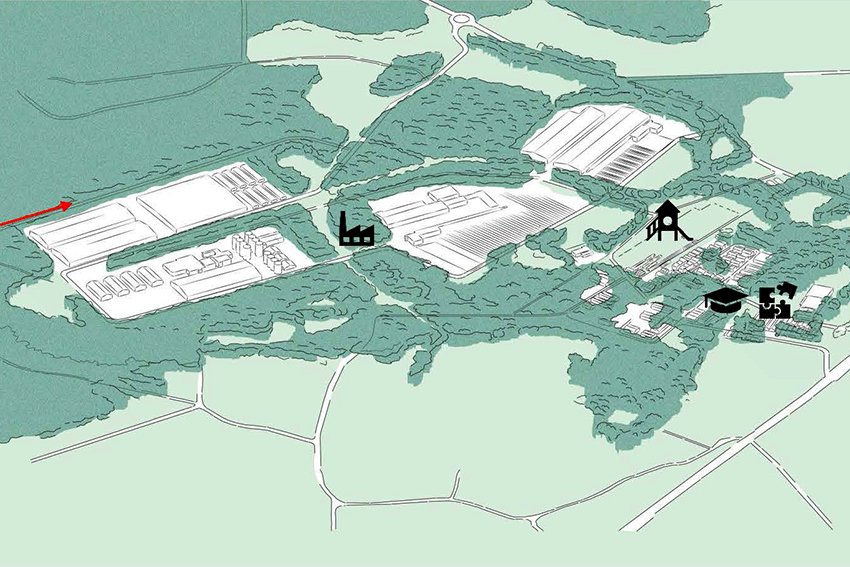
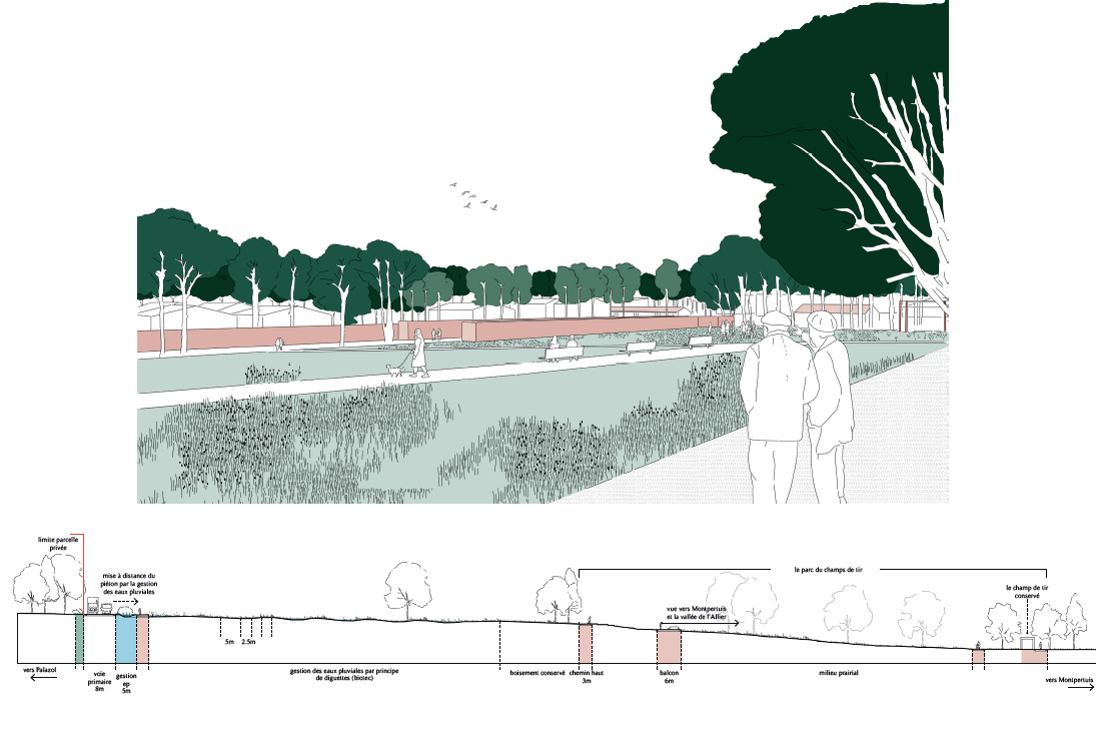
The ambitions of the project are to re-establish an industrial activity that creates value-added employment, while also creating a model site in terms of development, protection, and renaturation of natural milieus. In other words, a productive activity within an environmental approach. It is proposed to transform the site into a campus where industry, innovation and training would be brought together within a single site and to organize this campus around common spaces opened to residents.
PROJECT IN PROGRESS
Process
Category(ies): Competitive processes, Collaborative processes, Participation of the Living processes
Competitive processes
Following the competition, it took eight years to decontaminate the site (a munition factory); in 2021 Vichy Communité then launched a restricted call for tenders to the 3 Europan rewarded teams for the development of a masterplan for the Montpertuis-Palazol site — a call won by the Europan winning team.
In 2024, Vichy Communauté launched a second restricted call for tenders to the 3 Europan rewarded teams for an urban and landscape project management contract for the entire Montpertuis-Palazol site — a contract once again won by the Europan winning team, Lalu. In progress
Collaborative processes
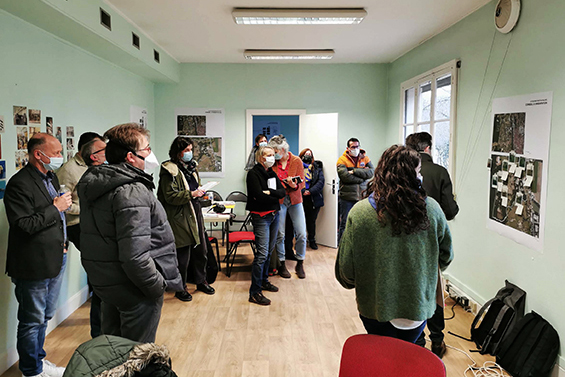
The team chose to work with around fifteen local stakeholders from various backgrounds, constituted as a Advisory Committee, to consider the future of the site and develop their masterplan after the initial tender.
Participation of the Living processes
The project considers the ecological and landscape issues, natural environments and the site’s plant heritage. The team proposes the creation of a model site in terms of development, protection and renaturation of natural environments.