From ideas to process-projects
Europan 14 - Besançon (FR)
« Jurassic Parks »
Project strategy family:
- Ecological connections
- Inclusive morphologies
- Inventive typologies
- Reinterpreted heritage
- Urban articulations
Process category:
- Direct order processes
- Competitive processes
- Co-creative processes
- Collaborative processes
- Participative processes
- Participation of the Living processes
- Adaptative legal framework processes
Authors: Altitude 35 (Clara Loukkal, Benoît Barnoud, FR)
Client(s): City Besançon, Grand Besançon Metropolitan area, University of Franche-Comté, Syndicat mixte of the scientific and industrial park
Dates: 2017-2024
Driving forces: Client + Team
Site
Besançon (FR)
SCALE L/S SIZE 190ha / 4ha
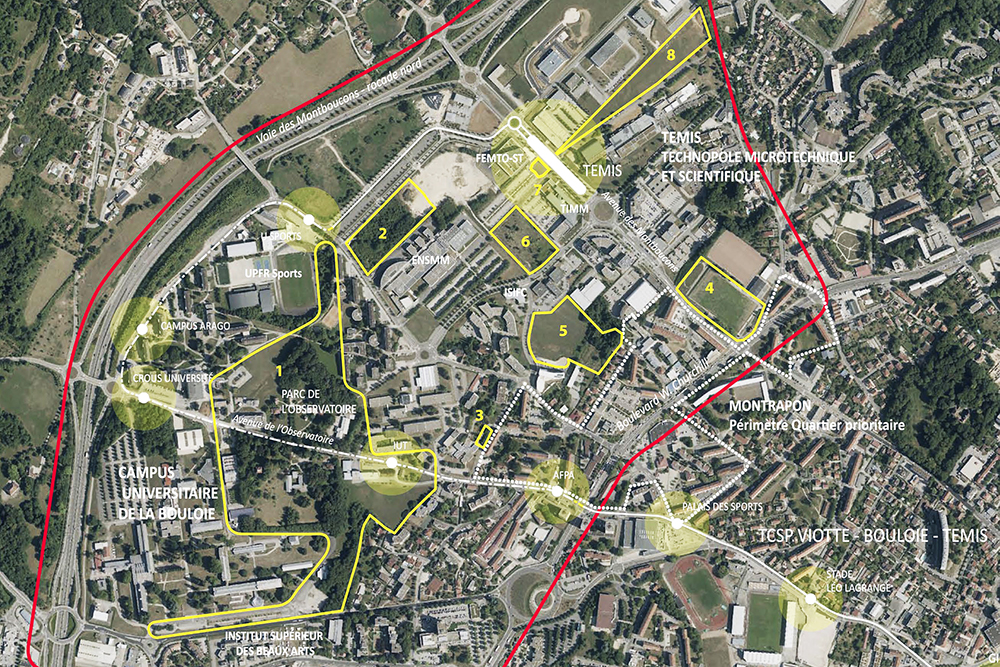
The site raises the question of spatial interactions and new mixed-uses to link mono-functional entities, hybridize the urban models, combining urban and architectural forms. There is a need to develop places of sharing and production that combine housing, artisan workshops, local services, shops and agriculture in order to open up the campus, bringing the city into the university and diversifying areas of related activities.
Awarded Idea
Project - Ideas
Jurassic Parks
MULTI-SCALES
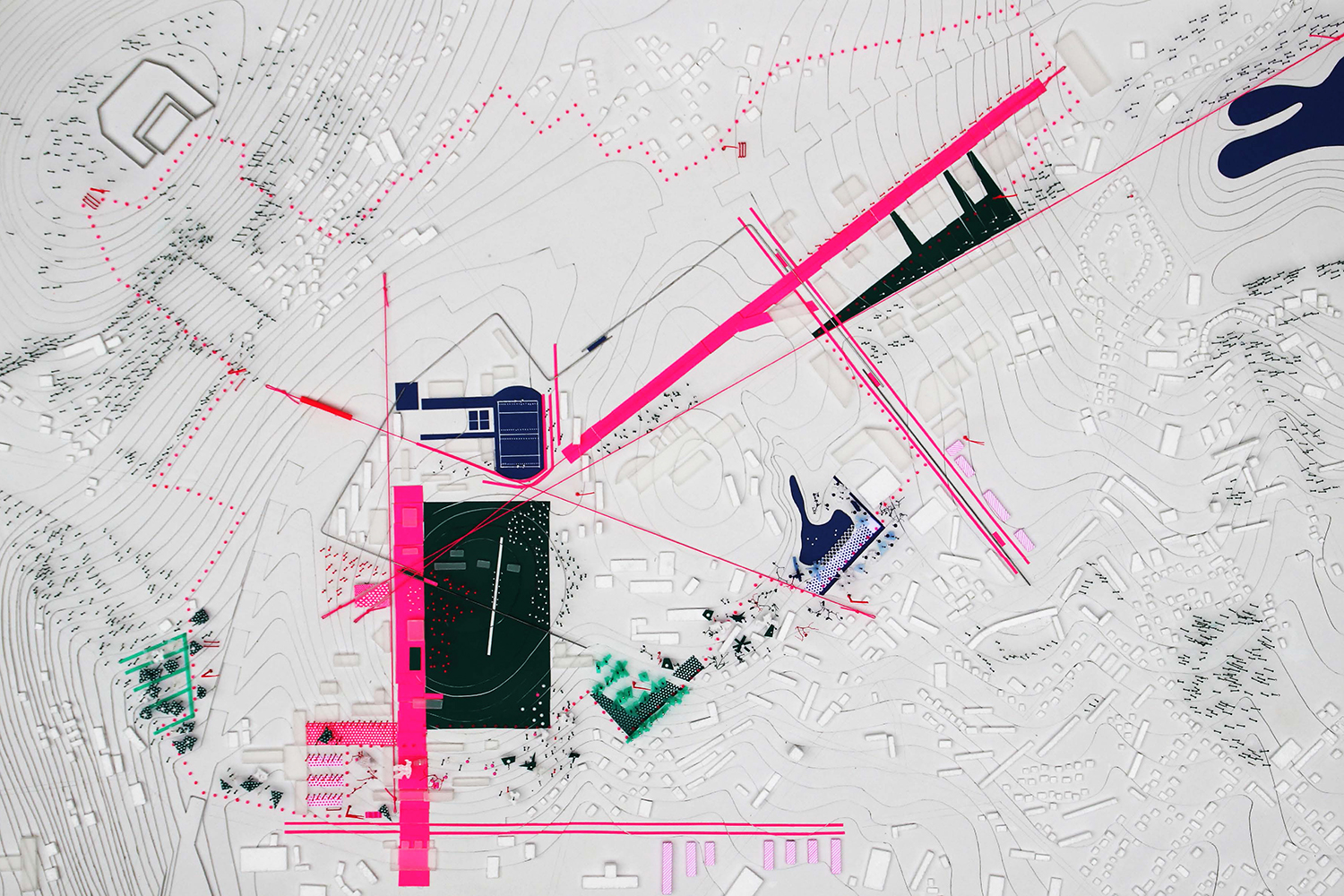
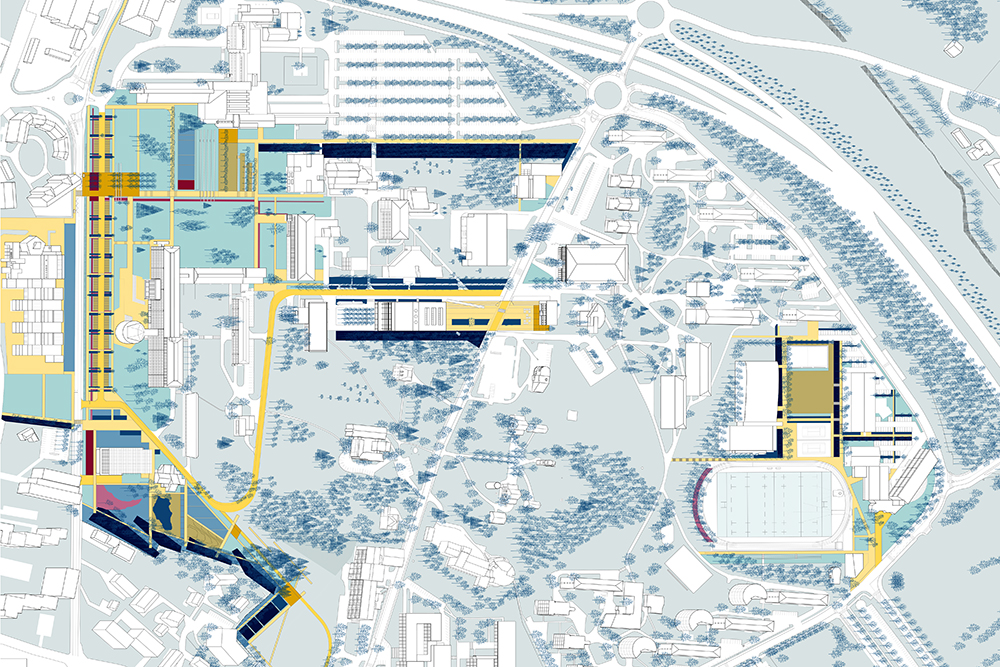
At the regional scale, the project strengthens Besançon's links with the Jura ecosystem. The natural park and a dynamic industrial park (Swiss watch industry, Basel pharmaceutical industry) both resonate with the campus. On the urban scale, an identity of peripheral neighbourhoods around three landscape figures is asserted. At the local scale, the strategy of transforming public spaces is based on the specificities of karst topography to articulate la Bouloie Campus with the Technopole Temis.
Project Strategy
Family: Ecological connections
OPENING UP THE GEOGRAPHICAL AND LANDSCAPE ISOLATION OF A CAMPUS, RECONNECTING IT TO THE CITY, TO A TECHNOLOGY HUB AND ADJACENT NEIGHBOURHOODS
A “plan of urban coherence principle" reflecting the shared issues of the Campus urban project: urban and landscape orientations, identification and coherence of the programmed interventions and the potential densification sites, and diversification of functions".
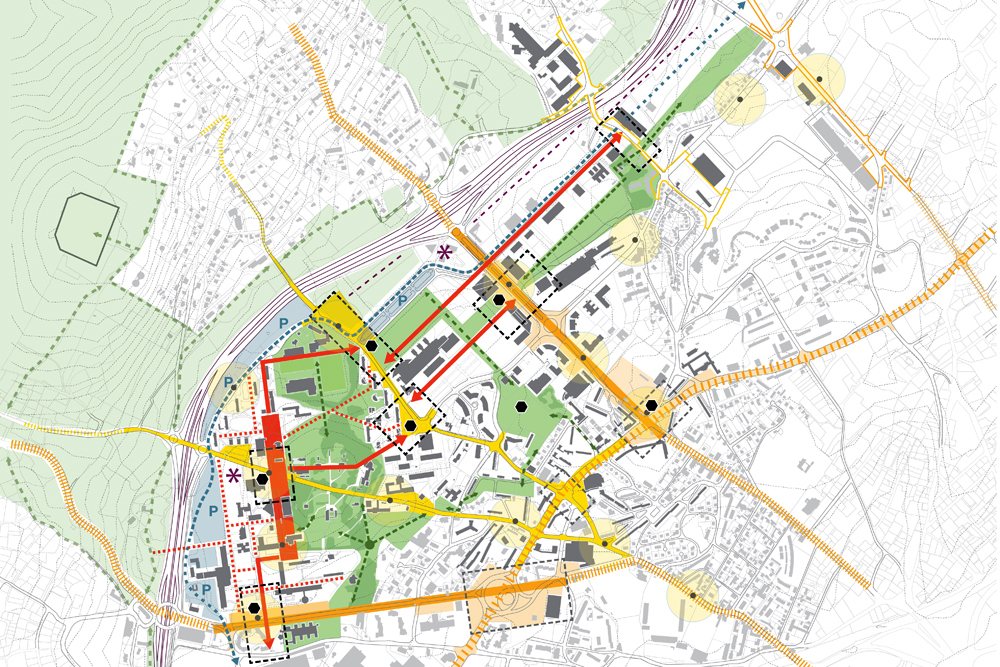
A study of urban design and programming of the campus was carried on. The pre-operational phase is part of a contract signed between the agglomeration and the Region for a short-term investment of 40 M € on the campus.
The study was divided into three stages:
- at the urban scale, identify main development directions and integrate the connections between the campus and the city centre and between the different campuses;
- at the scale of the campus, the technology park and the adjacent districts, development of a masterplan specifying each of the future operations of project;
- at the scale of the land units, drafting of programs and briefs for the future consultation of project management.
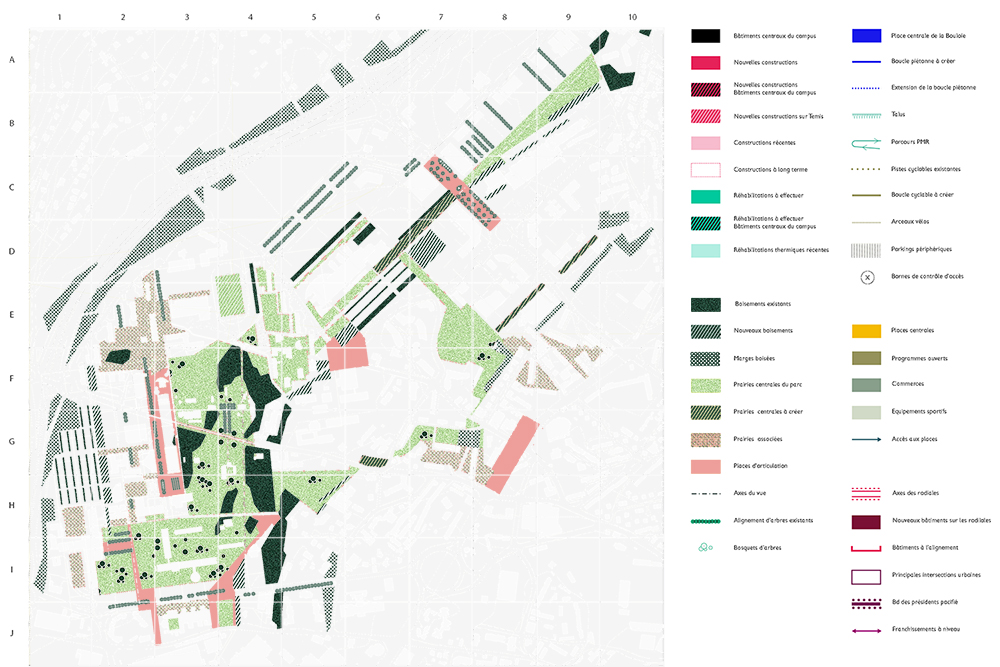
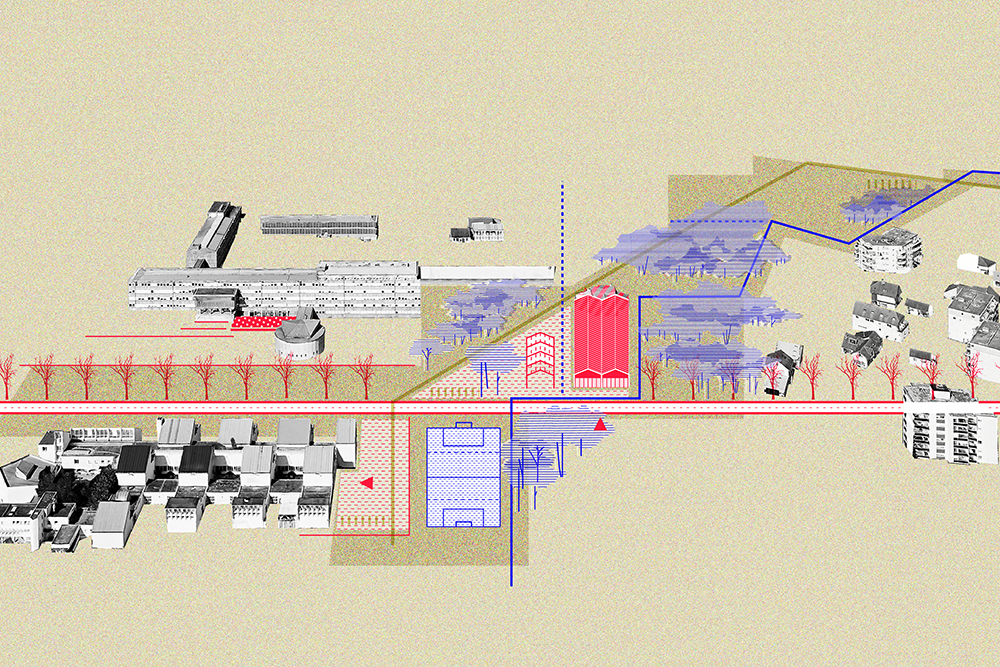
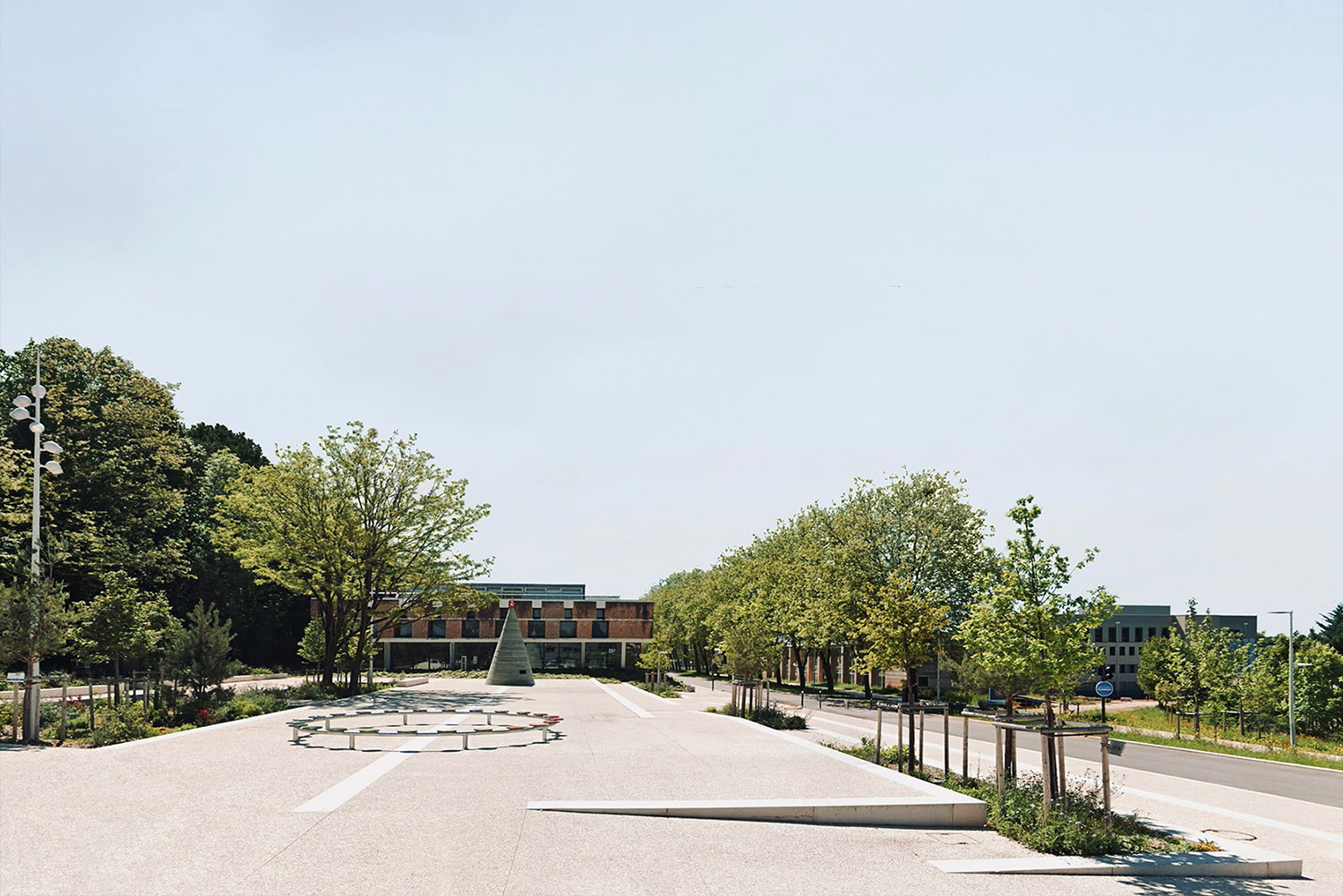
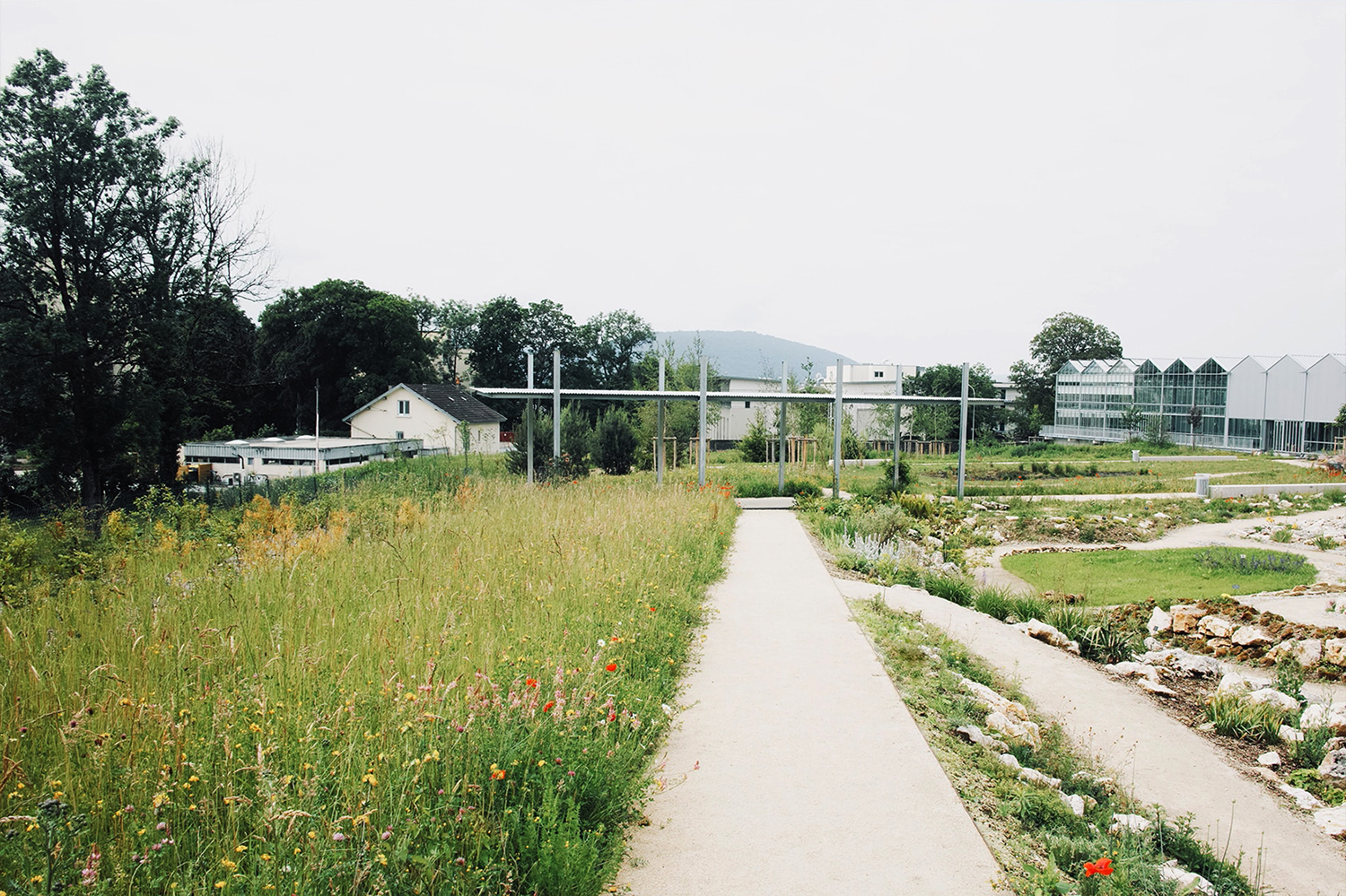
For the public spaces design project at the Bouloie Temis Campus, covering an area of 148 hectares, the principles of the strategy defined for the competition are being used again, based on four key lines: Play on the complementarity of the milieus / Anticipate climate changes / Work on the materiality of soils and their continuity / The campus as a showcase of the university's know-how and a place of experimentation.
A charter for public spaces has been developed to ensure coherence and unity of the various facilities as well as to promote local resources for the implementation of a first phase of public spaces.
PROJECT COMPLETED
Process
Category(ies): Co-creative processes, Competitive processes, Participation of the Living processes
Co-creative processes
CO-CREATIVE PROCESS + COLLABORATIVE PROCESS
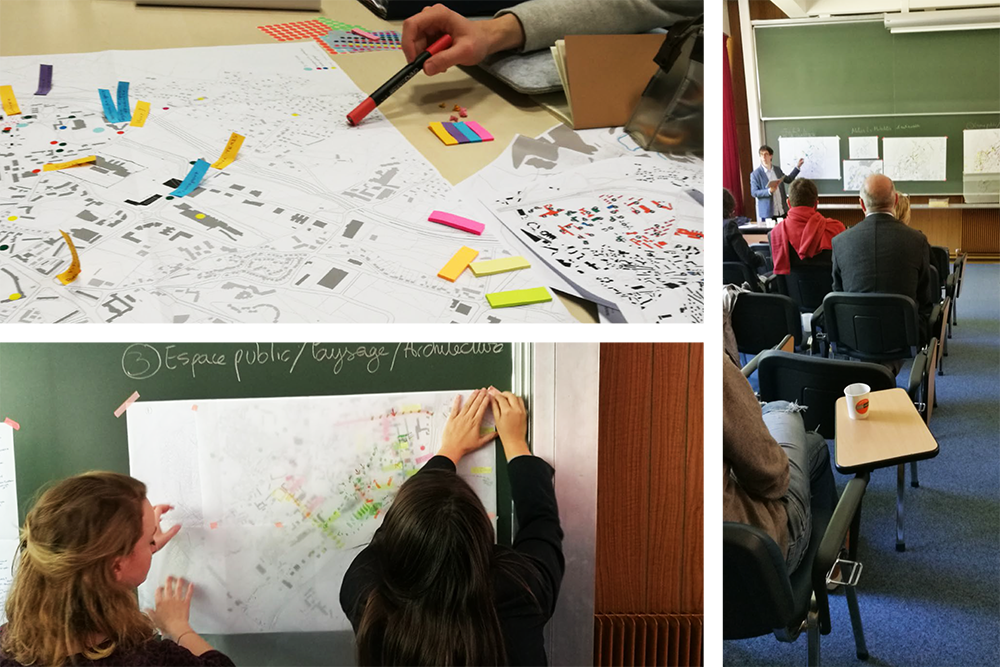
Following the competition, the 3 rewarded teams worked together during two workshops with various local stakeholders involved on the site to develop a shared urban strategy for the entire competition site, which served as the basis for further studies.
Competitive processes
A restricted tender for the 3 Europan rewarded teams was then launched by the Grand Besançon Metropolis for the development of an urban coherence masterplan. The contract was awarded to the Europan winning team. A second call for tenders was launched for the project management of the public spaces at the Bouloie Temis Campus, which was again won by the Europan winning team, Altitude 35.
Participation of the Living processes
The project capitalises on the complementary nature of the milieus, takes climate change into account, works on soil materiality and continuity, and strengthens ecological networks.