From ideas to process-projects
Europan 16 - La Porte du Hainaut (FR)
« Raismes Eco-hub »
Project strategy family:
- Ecological connections
- Inclusive morphologies
- Inventive typologies
- Reinterpreted heritage
- Urban articulations
Process category:
- Direct order processes
- Competitive processes
- Co-creative processes
- Collaborative processes
- Participative processes
- Participation of the Living processes
- Adaptative legal framework processes
Authors: Kollektif (Björn Bracke, Maële Joekevande, BE)
Client(s): Porte du Hainaut Agglomeration Community
Dates: 2021-...
Driving forces: Teams
Site
La Porte du Hainaut (FR)
SCALE L/S SIZE from 3ha to 60ha
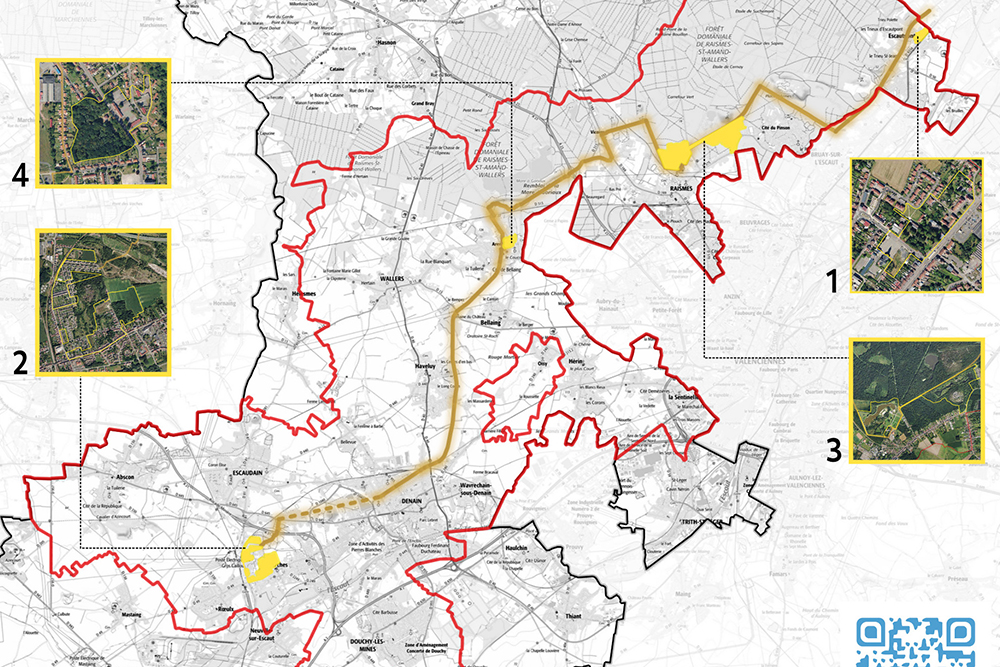
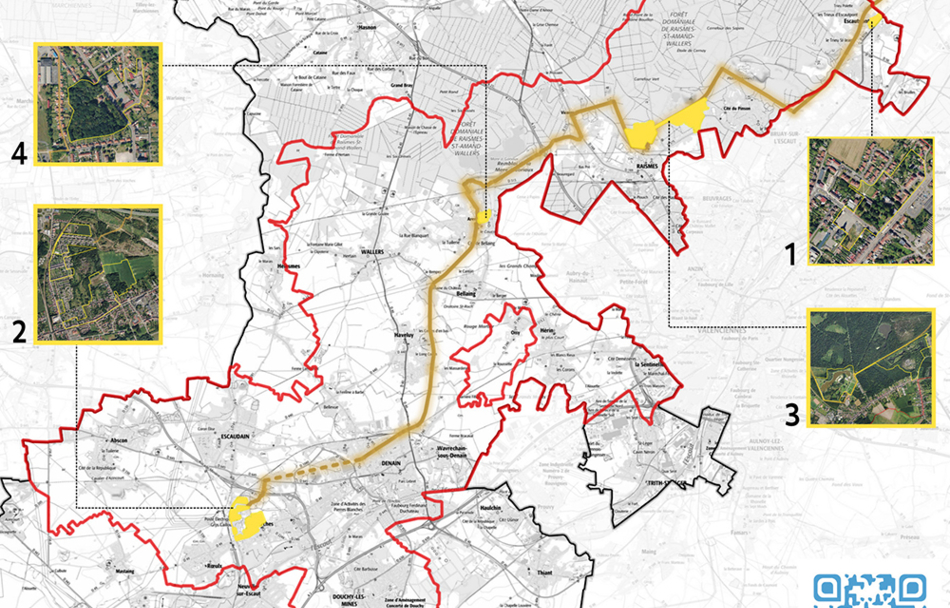
The four project sites are located along a potentially structuring itinerary of mines.
The sites have different opportunities for transformation districts. Two of them require reflection on "alternative" types of housing to current real estate products, while the other two involve the innovative design of public spaces and facilities.
Awarded Idea
Project - Ideas
Raismes Eco-hub
SUPRA-REGIONAL VISION FOR NATURE DEVELOPMENT
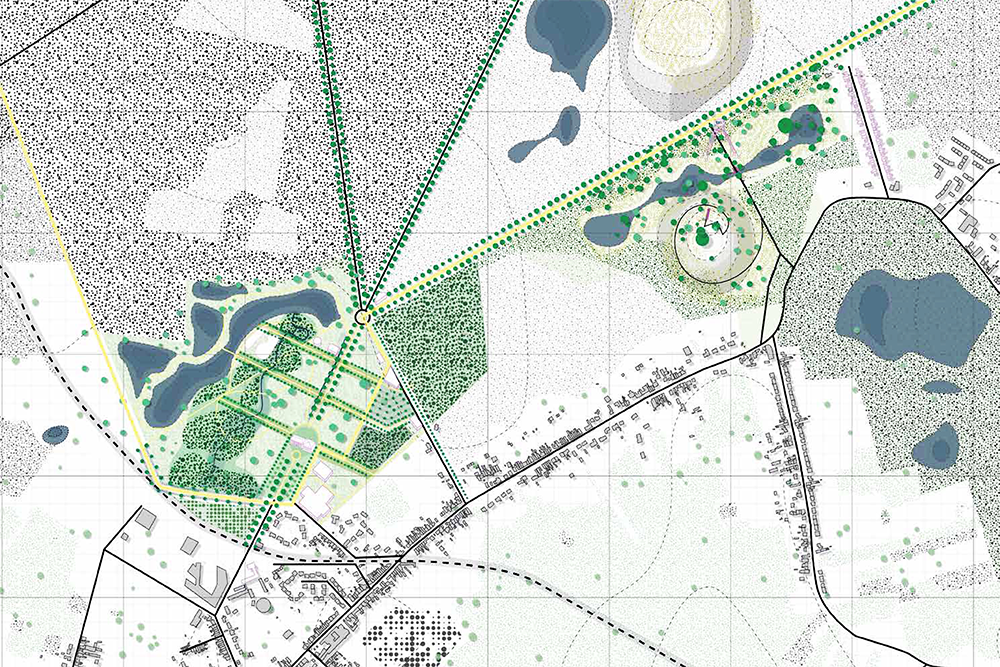
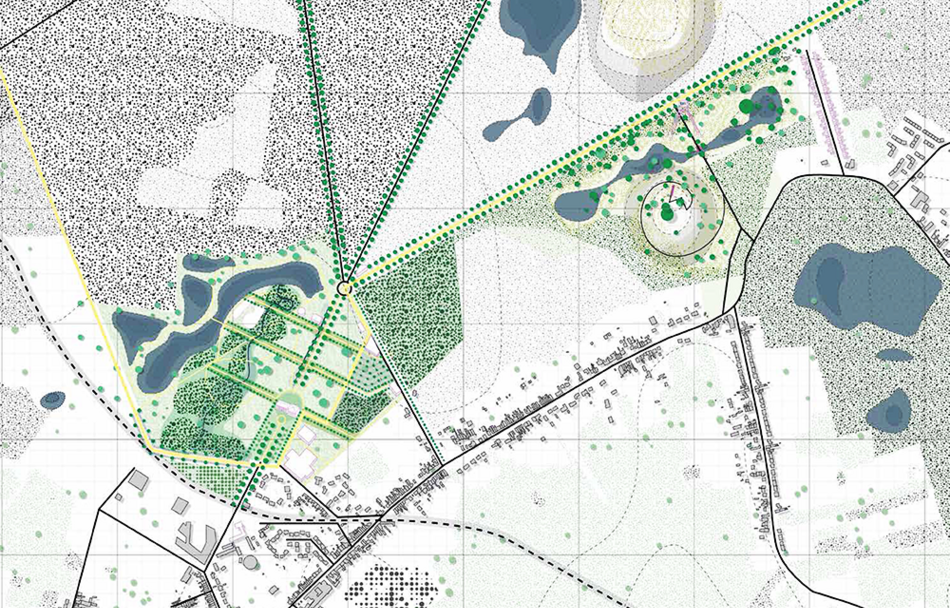
The project propose that the Raismes becomes an important hotspot to experience nature and a laboratory for new, nature-inclusive, templates for recreation, food, nature management, education, research, etc. Nature becomes a catalyst for new activities and opportunities for the region in which the unique mining history can also take up a new role.
Project Strategy
Family: Ecological connections
RUNNER-UP TEAMED-UP WITH THE WINNING TEAM "SHORT STORIES": see competition project here
During the various post-competition meetings, the winning French team (Vis-à-Vis) and the Belgian team (Kollektif) discussed their projects extensively and noted a strong complementarity between their two proposals. Vis-à-Vis proposed starting with local initiatives and specific situations to develop a comprehensive strategy. Kollektif's proposal sought to integrate the Raismes-St Amand-Wallers forest into a regional vision to create a gateway to the forest. Both proposals contribute to creating connections and opening up situations at multiple scales. They then decided to join forces to address the challenges of transforming the former Arenberg mining site.
The project builds upon the approaches developed by the two award-winning teams by examining the role of the mining site at multiple scales. The project engages with both transnational and highly local dynamics. It seeks to combine a very practical project management approach with a broader territorial survey to determine how developments can be integrated into the specific dynamics of the mining region and to identify the resources upon which the project can be based.
This project is being carried out in close partnership between the 2 winning teams and the client. Preliminary studies have enabled the establishment of a collaborative approach to define the project's direction and discuss initial spatial arrangements. The teams also organised a consultation process to incorporate the users' and residents' detailed knowledge of the spaces, understand their desires for the future of the site, and identify any problems that have arisen, integrating these into the project design process.
This collaborative approach to project development has resulted in project directions supported by all project stakeholders.
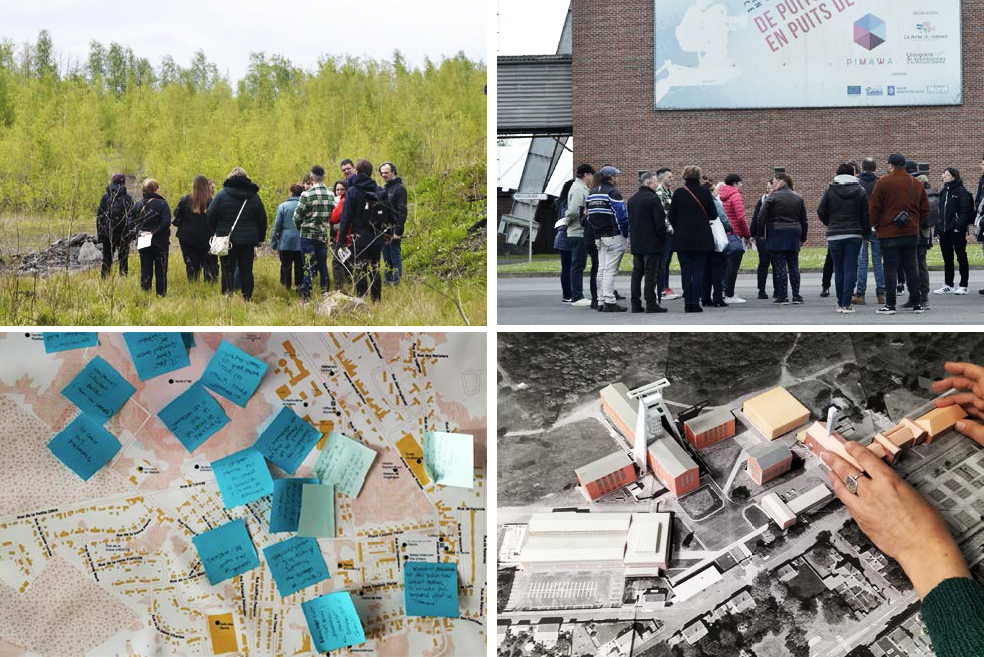
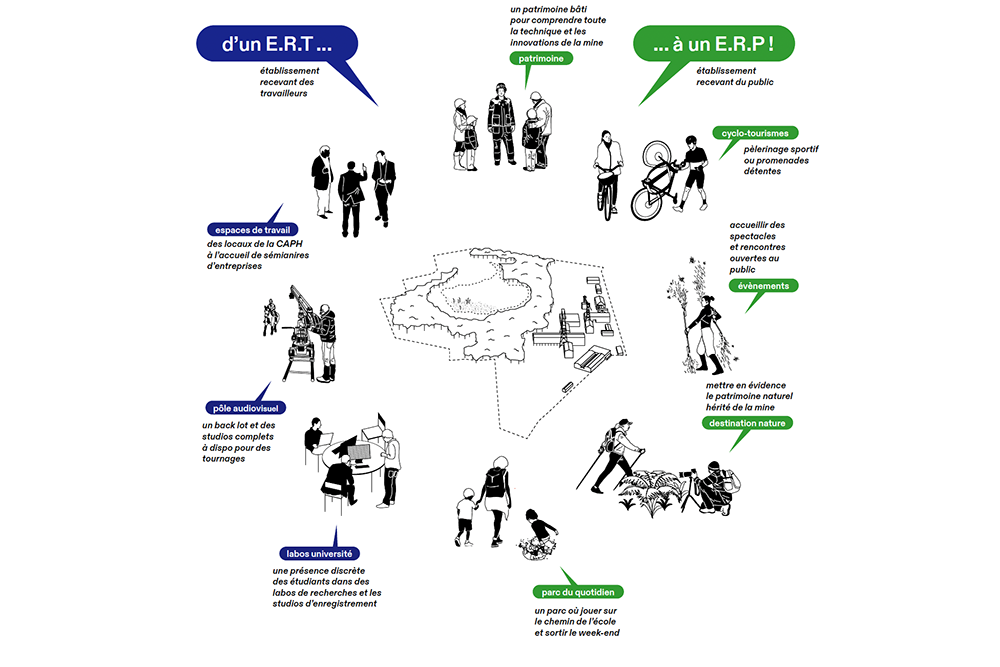
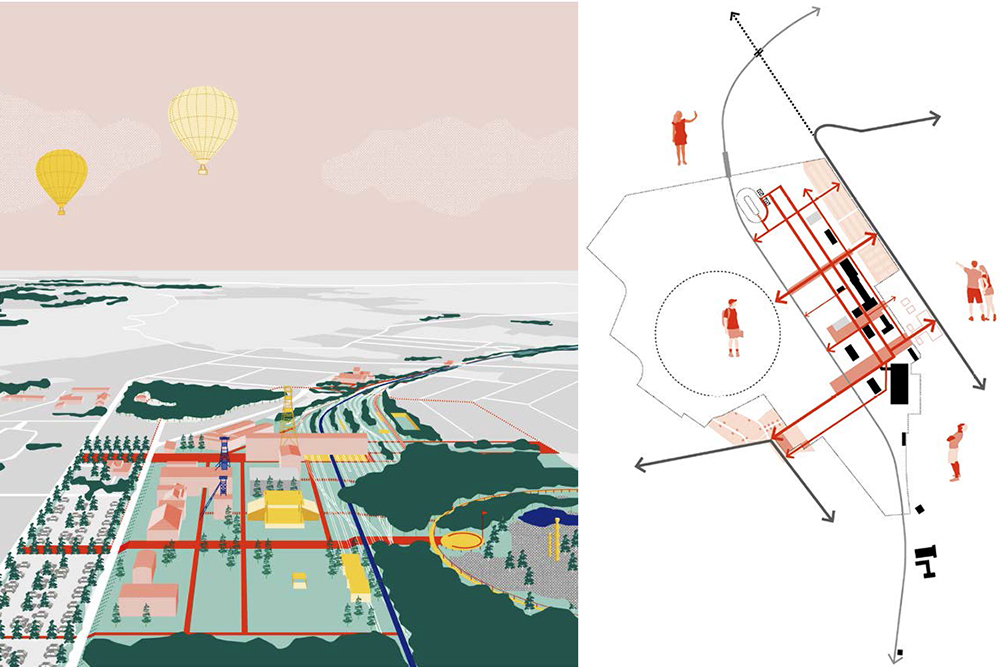
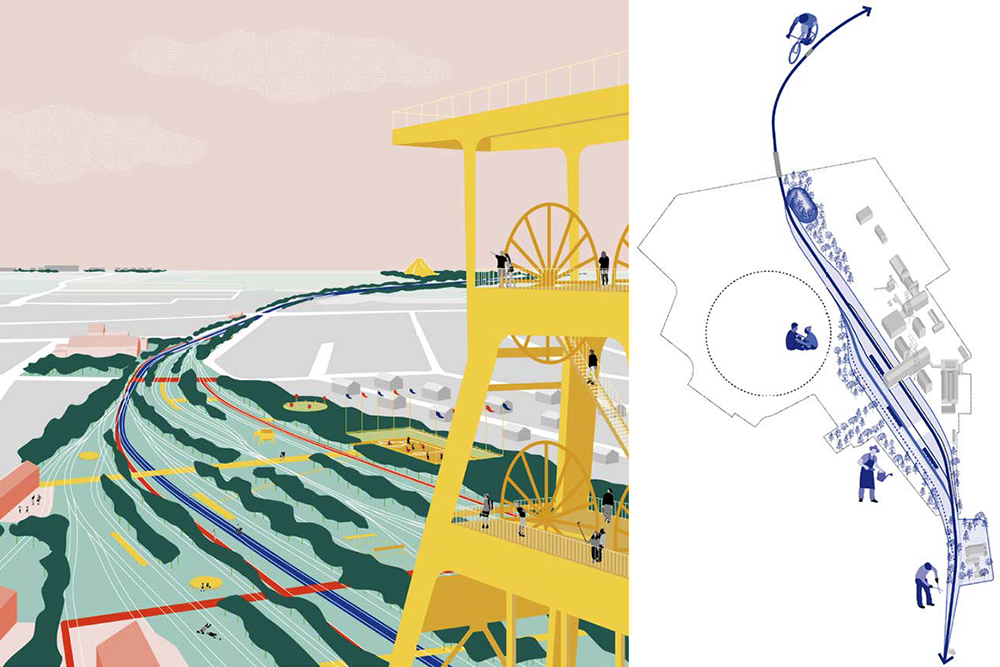
The transformation of the mining site is based on four complementary development principles.
- 1. The framework: The heritage park. The framework connects all points of the site and allows movement throughout the park. It integrates movement at the neighbourhood level and positions the site within the city by facilitating east/west and north/south crossings. It also provides new access points. The framework brings together all the built heritage of the site and opens onto its natural heritage.
- 2. The railway embankment: The railway park .The railway park crosses the mining site from north to south. It follows the path of the now-vanished railway embankment and reveals the scale of the mining site, allowing to understand its operation. It runs alongside the cycle route, which follows the path of the former mining embankment and provides numerous north-south crossings. The railway park accommodates everyday uses and offers a new facade for the site on the scale of the entire mining basin via the cycle route.
- 3. The Slag Heap Ring: The Post-Industrial Eco-Park. The Arenberg slag heap has disappeared, and its once vast footprint is now largely forgotten. However, it constitutes a very specific environment and a major nature reserve within the city. The slag heap park makes this part of the site accessible, bringing it back into the public consciousness. Paths criss-cross the wooded perimeter of the slag heap and radiate outwards towards a central ring that marks the outline of the former heap, offering a one-kilometre walking route.
- 4. Programmatic confetti: Attractors. These are targeted interventions in small spaces that offer uses to all users, whether residents or tourists. They add a new layer and reveal points of interest by providing support for various uses. Parks develop the site through their surfaces, while confetti creates points of attraction visible from afar and accompanies pedestrian traffic through the mining site.
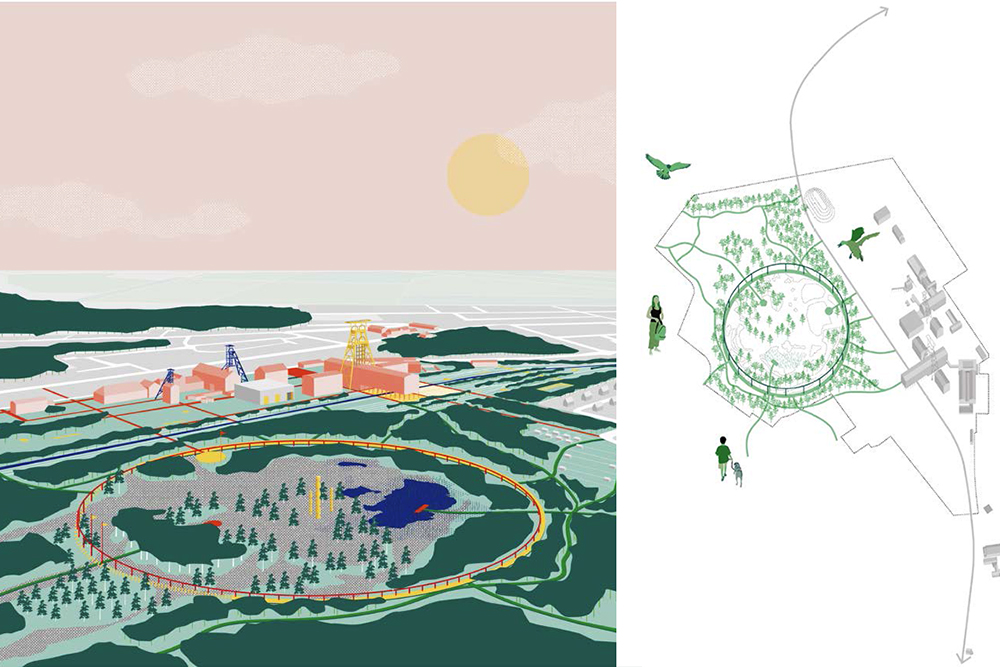
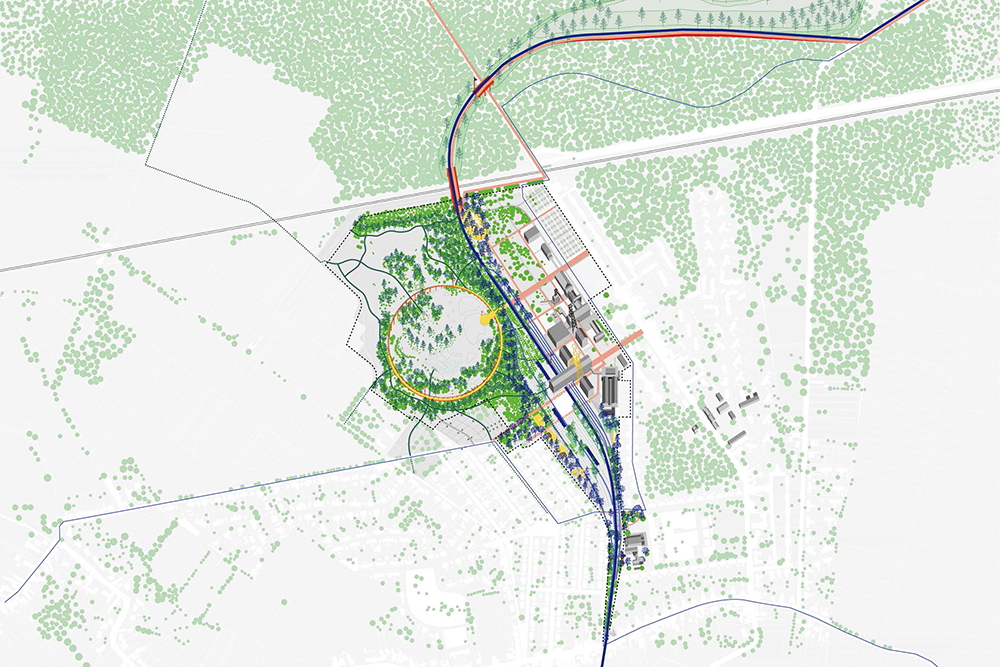
PROJECT IN PROGRESS
Process
Category(ies): Co-creative processes, Competitive processes, Participative processes, Participation of the Living processes
Co-creative processes
Following the competition, a workshop gathering the three Europan rewarded teams was organised to define priority areas for action; the Arenberg mining site was then identified as a priority.
Competitive processes
The urban authority launched a tender for the project management of public and landscape spaces on the Arenberg site. The contract was awarded to the Europan French winning team (Vis-à-Vis), associated with the belgium runner-up (Kollektif).
Participative processes
For this project, both teams began with preliminary studies in which they involved residents and local stakeholders to define development principles.
Participation of the Living processes
The project brings together the built heritage of the mine and the natural heritage that has reclaimed the site since its closure. It takes into account the mosaic of varied habitats, both natural and man-made.