DotsAndLoops
Author(s)
SMAQ architecture urbanism research
Sabine Müller (DE)
Andreas Quednau (DE)
Marta Malé-Alemany (ES)
Client(s)
Aragon Izquierdo, S. L. Burgos
Competition Team
Sabine Müller (ES)
Andreas Quednau (DE)
Architects
Europan 6 Burgos
winner
2001
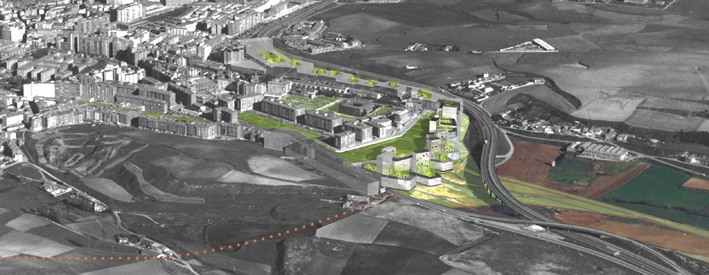
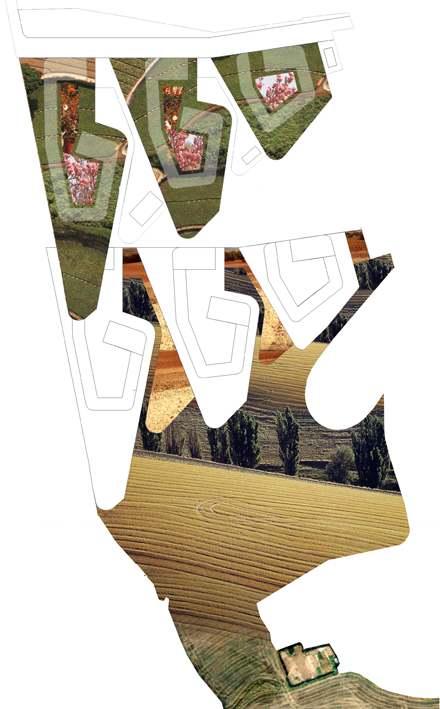
DostAndLoops creates a city edge of transition and permeability. Considering landscape to have become a function of the urban, it occupies the border without physically establishing a separation between the poles.
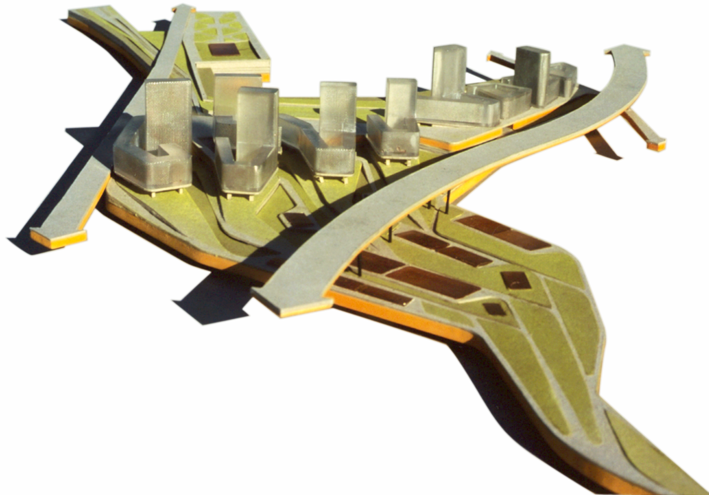
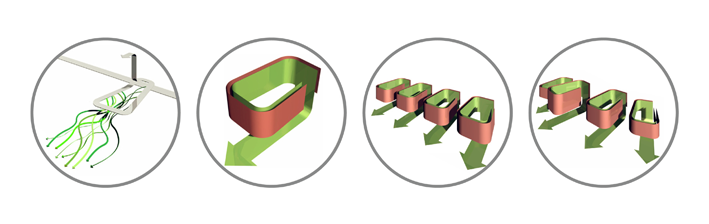
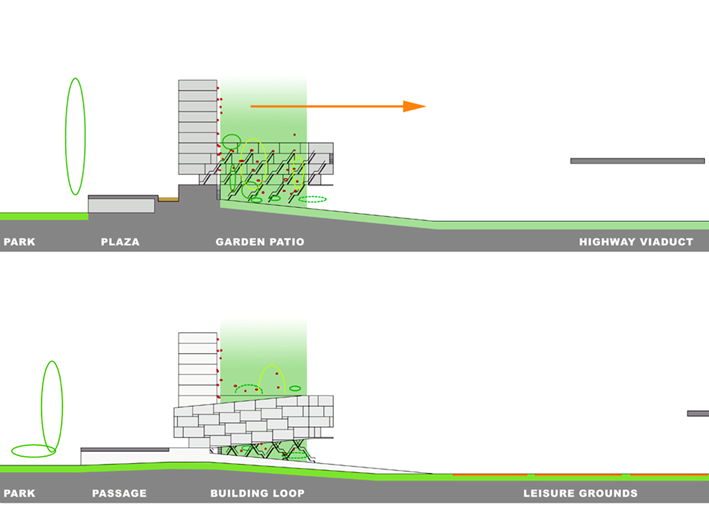
DotsAndLoops, therefore, is a diagram designed to negotiate the site-inherent potential of proximity to the countryside with its site-specific disadvantage of noise pollution caused by the nearby highway. Patio-like housing-loops screen off the sound while inviting the landscape to continue and condense within their well-tempered interior gardens.
DotsAndLoops is a high-density living environment that ensures low-density qualities such a car accessibility with guaranteed parking and private connectivity to the green surroundings. It integrates a collective binding to the traffic system with a web of individual pathways leading outdoors.
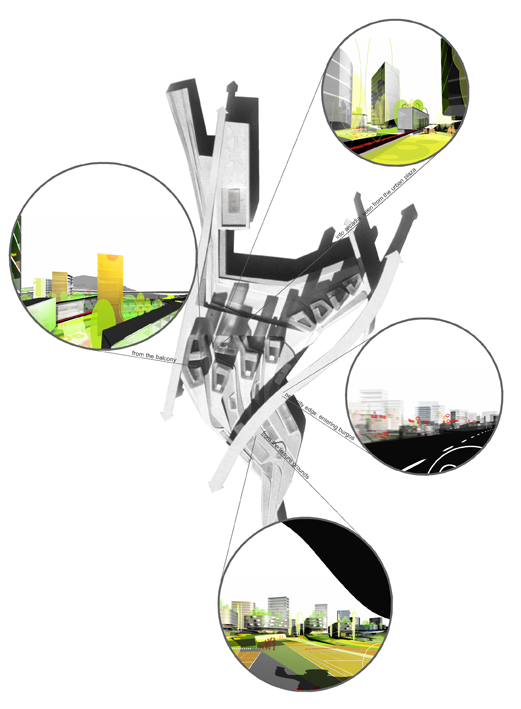
DotsAndLoops turns its housing designation into a virtue for the entire city. Its in-between spaces serve as public gateways to the adjacent playing fields and frame a multitude of transitions into the landscape.
DotsAndLoops transformative description of the site conditions results in a public porosity that firmly structures the new edge condition.
2001-2005
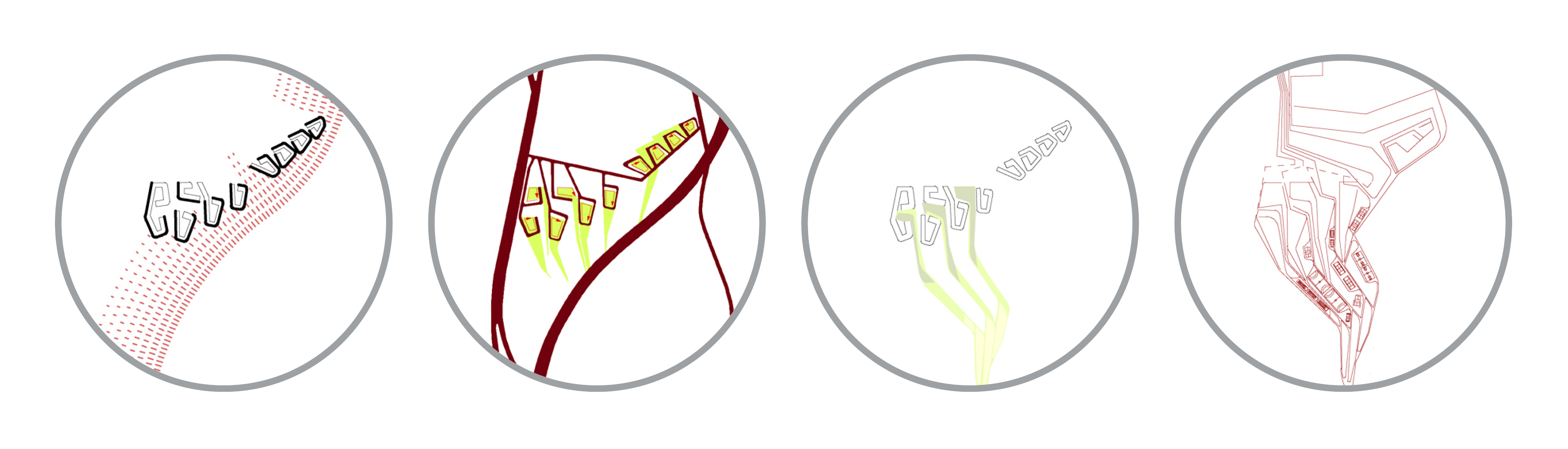
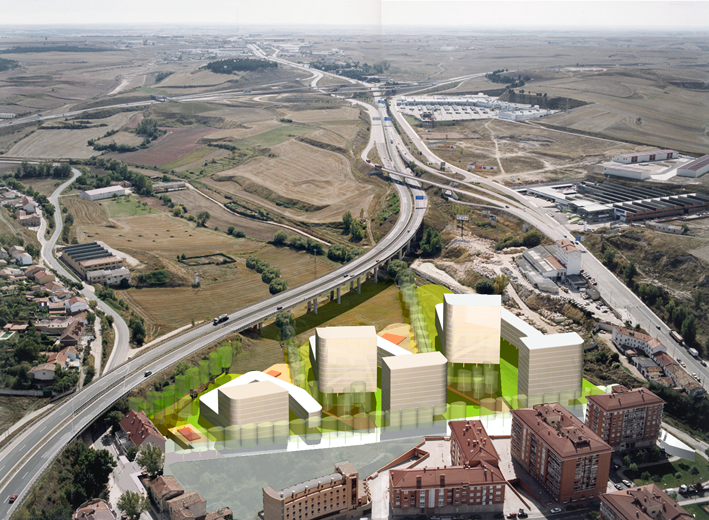
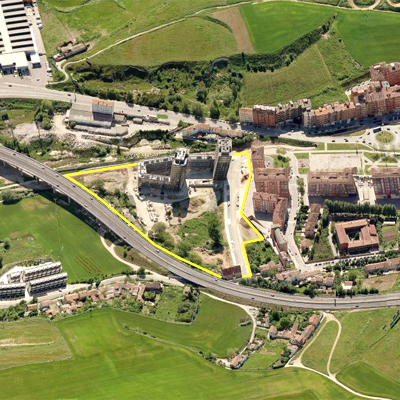
The city of Burgos was attracted by the winning project, which transforms a wasteland into an attractive urban housing district at the city entrance. However, the city was not the owner of the land. After the competition, a private developer – Aragon, Izquierdo S.L. – acquired the land, unaware of the competition. In response to the city’s strong interest in the Europan project, in October 2001 the developer commissioned the SMAQ team to produce the urban development plan for just part of the Ronda Sur site, in collaboration with a local architect. The financial constraints imposed by the developer were tight and the architects’ team was asked to adapt its project to them: 30% of the space was allocated to public spaces and roads. The remaining private spaces were to be exploited to a maximum. The underground car park was shifted above ground and the buildings made taller to increase the district’s profitability and density.
After discussion with the city, it was decided to use the sector’s urban rules as guidelines, with the option of adapting them to the project design. In addition, a large proportion of the plots set aside by the developer for the community could now be used for sports grounds, which were a significant aspect of the competition project.
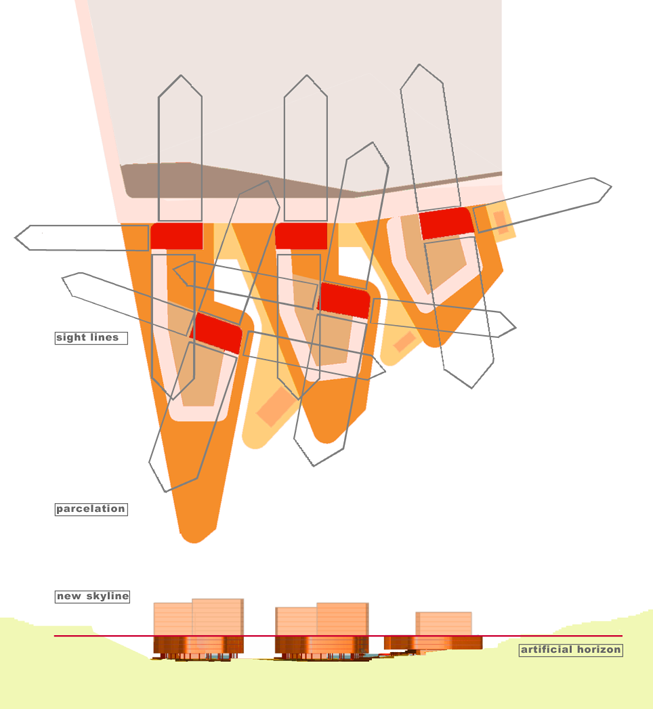
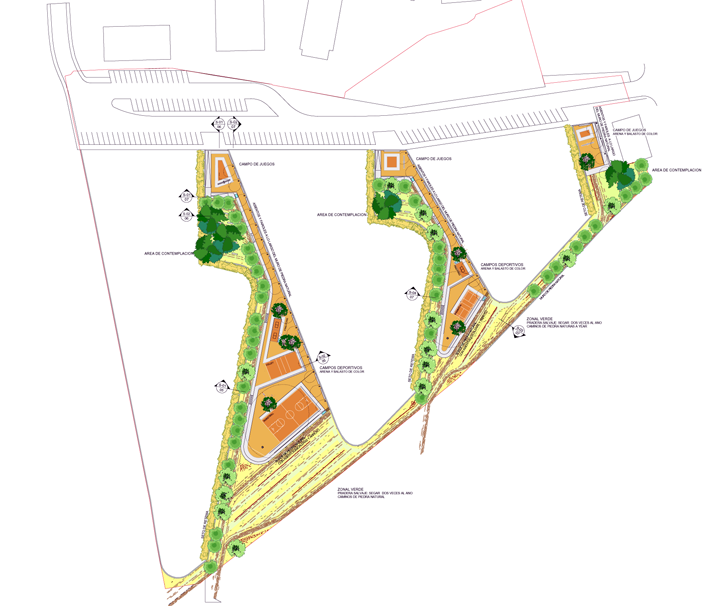
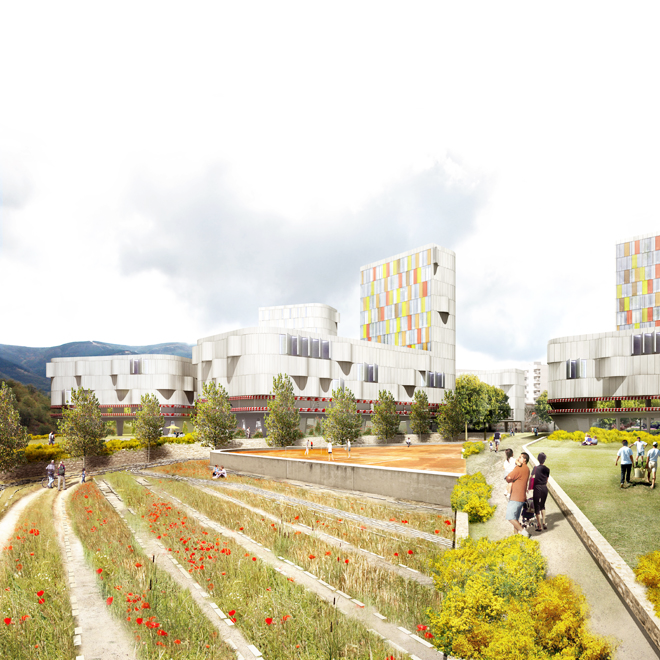
After an intermediate scheme comprising four buildings, the number of constructions was reduced to three. The plan designates the southern edge of the city of Burgos as a permeable boundary. This zone, with an area of some 3.5 hectares, would accommodate 245 apartments, 1500 square metres of retail space, 748 parking spaces and public spaces. The division between private and public plots reflects the ornamental model of the pre-existing agrarian landscape at the edge of the city, as well as the zone’s topographical profile. This creates a “finger-shaped park”. The project allows smooth access to the countryside via the urban public spaces. The volumetric distribution of the buildings adopts the competition’s loop typology, with the housing units in the form of raised patios creating a connection with the landscape. They create an artificial landscape within the topography of the valley. These towers preserve the view from the apartments, while at the same time establishing the city’s image when entering Burgos from the south.
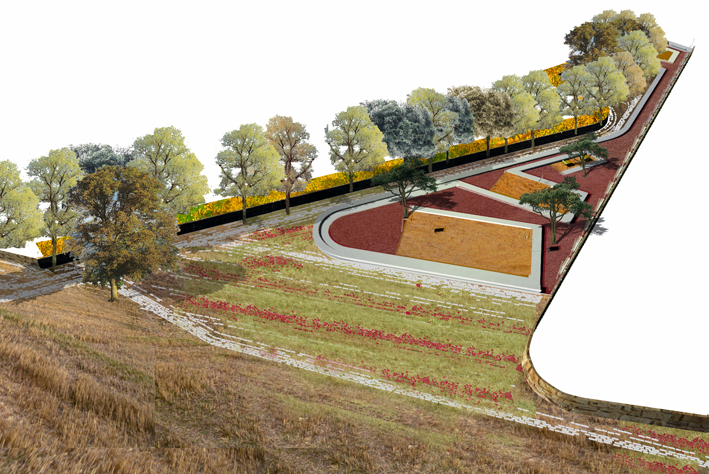
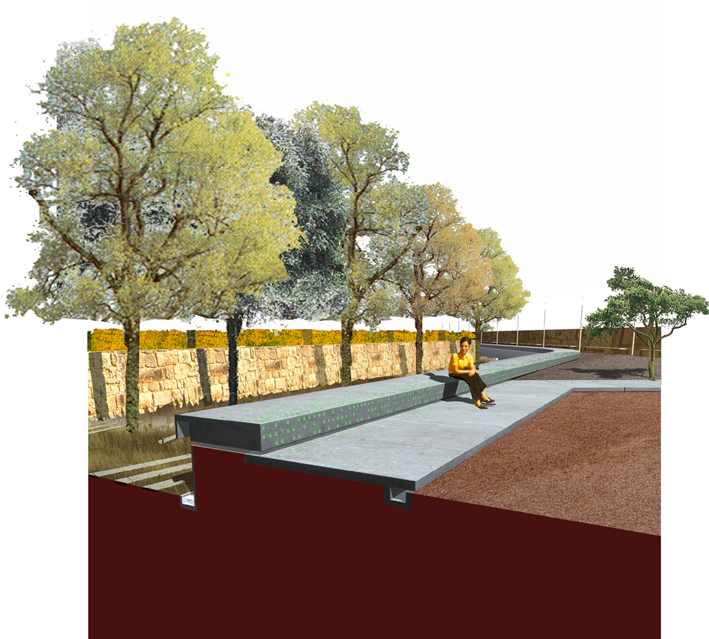
The SMAQ team was then commissioned to conduct a study for the public spaces on the Ronda Sur site. The plan for these spaces is based on the zone’s urban development scheme and helps connect the city with the landscape through the topographical profile and by means of the materials and vegetation. Different typologies, elements of the surrounding countryside, are transposed to the site: courtyard and orchard flowers and fruits on the private plots, the red sand and rock of the natural landscape on the sports fields, and the tall grasses of cultivated land in the “glove-finger park”. Rows of willows line the pedestrian pathways creating a natural unity with the adjacent agrarian environment.
Site informations
Burgos
Synthetic site file EN