Le mystère de la Pomme et de l'Ours
Riez (FR) - Winner
TEAM DATA
Associates: Lea Kauffeisen (FR), Raphaël Jolly (FR) – architect urbanists
bureaukau@gmail.com / bureaukau.com
See the complete listing of portraits here
See the site here
TEAM PORTRAIT
VIDEO (by the team)
INTERVIEW
Click on the images to enlarge
1. How do you define the main issues of your project in relation with the theme “Re-sourcing”? Re-sourcing thanks to nature, to social dynamics, to new materiality? In which way do you think your project can contribute to an ecological and/or social evolution? And in which way do you think your project can be called a “regenerative project”?
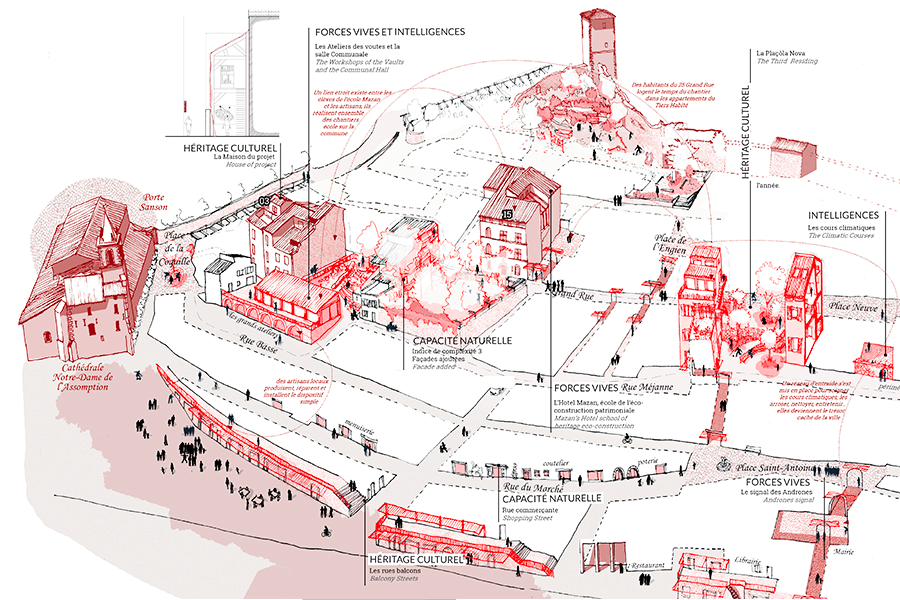
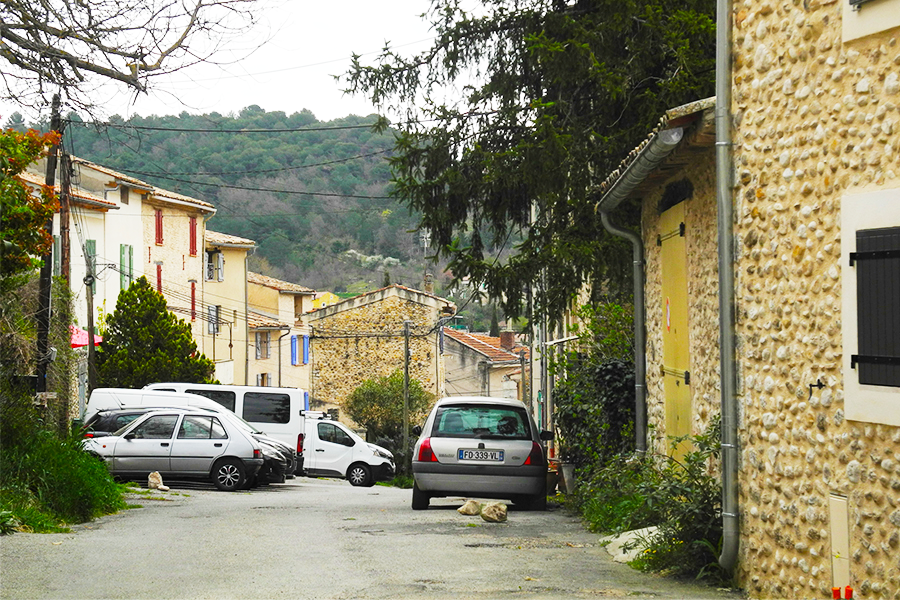
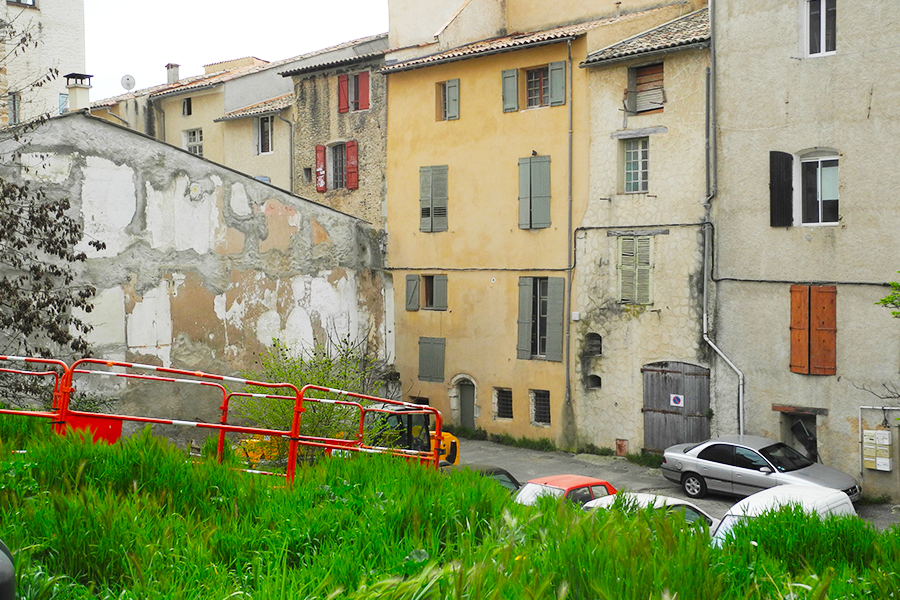
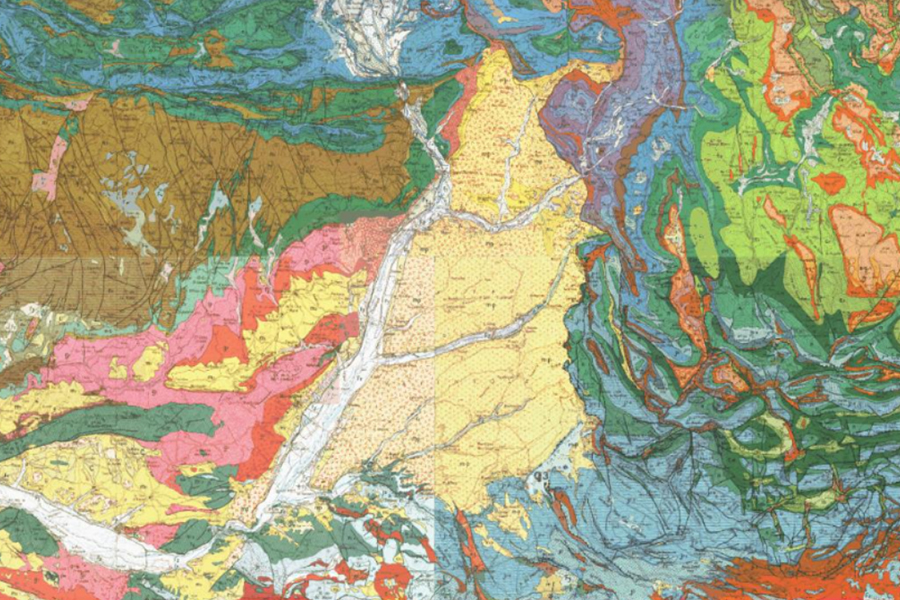
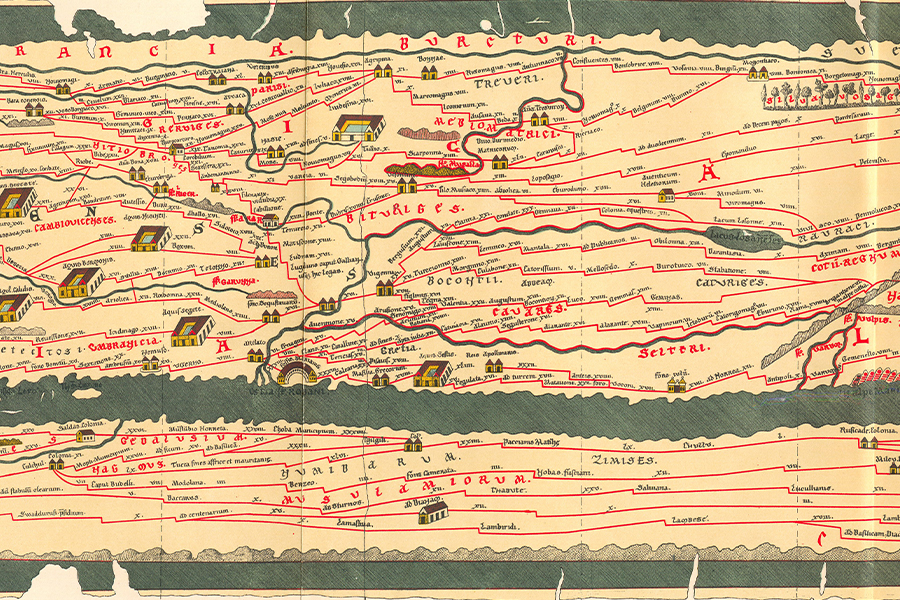
RE-SOURCE starts with finding the source, or at least look. Re-sourcing heritage ? We chose to speak of “deep heritage”. Stones, monuments and everything that makes a place: gestures, uses, stories, landscapes, soils, other living beings. Time does not erase, it covers, superimposes, fragments. We propose to read these layers to better understand what is at play, what persists, what still pulsates. There is an urgency to act against the “risk of abstraction” with awareness, in re-actions. Understanding, transmitting, transforming: living heritage as a shared, moving, anchored experience.
2. How did the issues of your design and the questions raised by the site mutation meet?
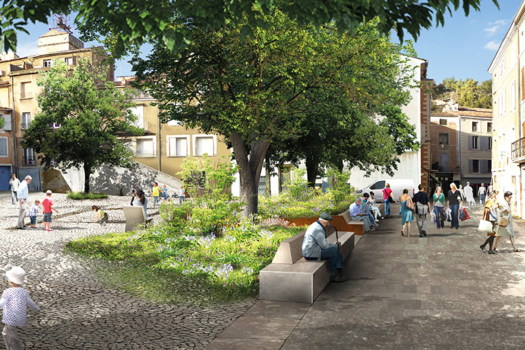
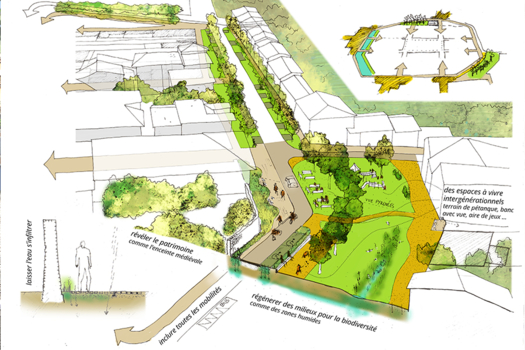
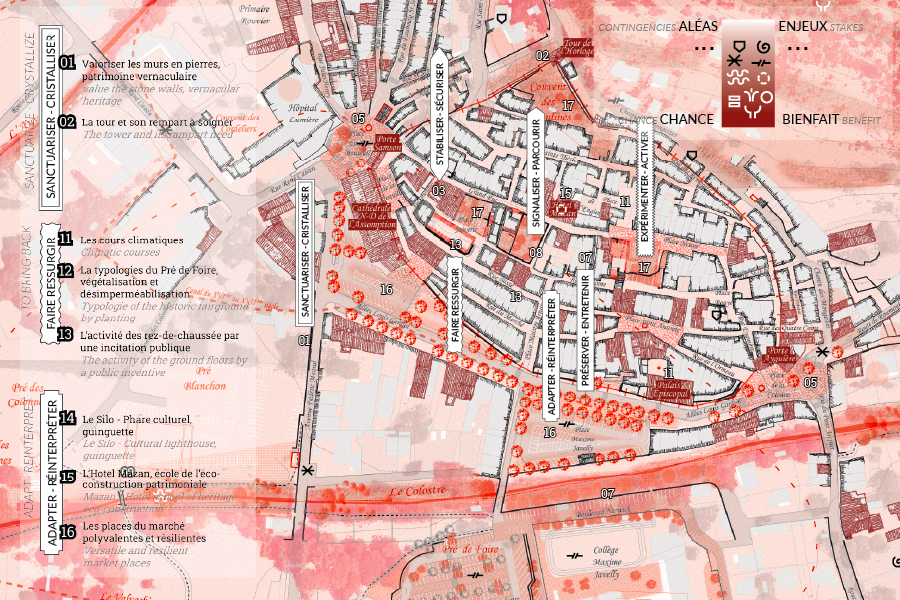
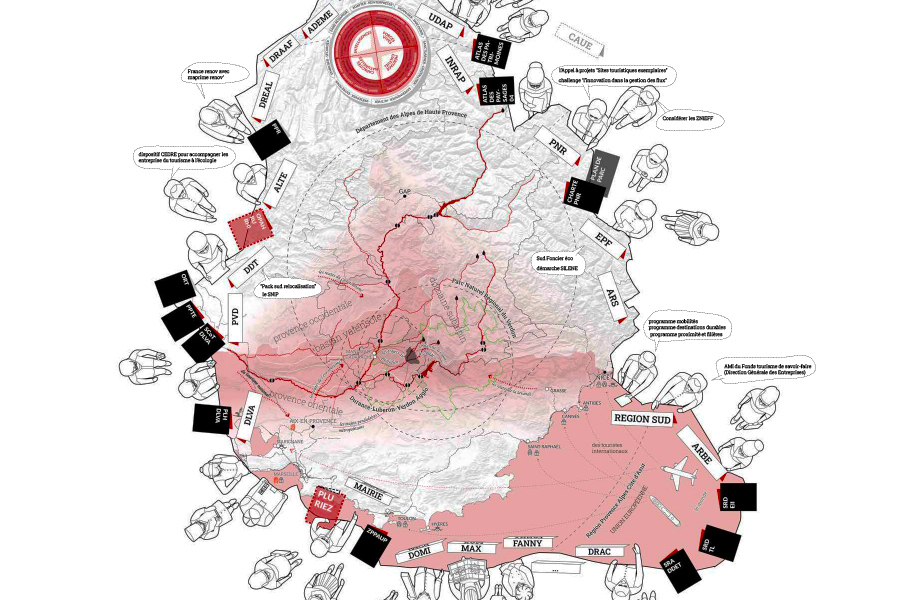
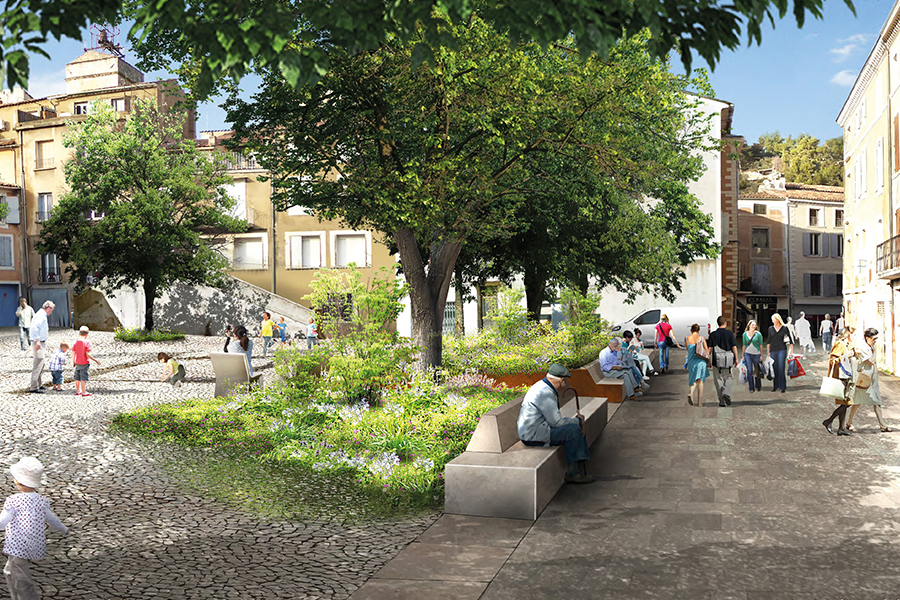
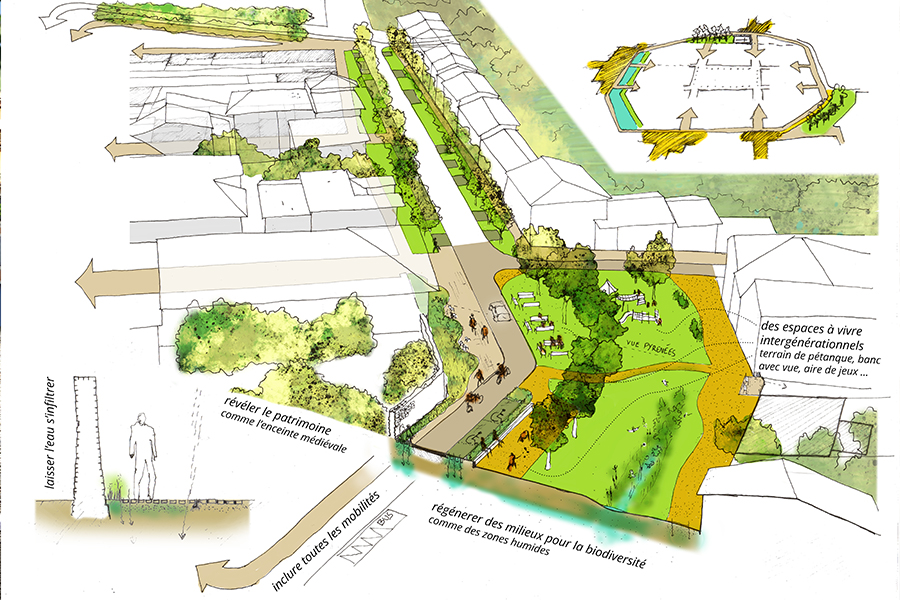
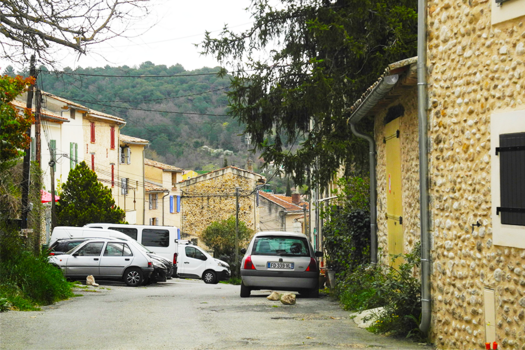
A series of tools is offered to address the complex situation faced by Riez : reading its heritage (matrix of “deep heritage”), building awareness (the “risk of abstraction”), strengthening partnerships (the “municipal table”. Emulating this common culture, is the first step. Then, by the creation of a “project counter”, many projects may take place : from climate-ready public space (the Plaçolas), to housing buildings for new form of inhabiting (the “tiers habiter”), even a school to transmit constructive know-hows. (“l’Ecole Mazan”). All of them are “re-actions” to address the loss of link to heritage.
PROJECT:
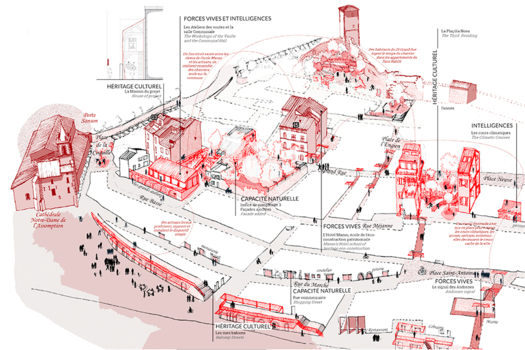
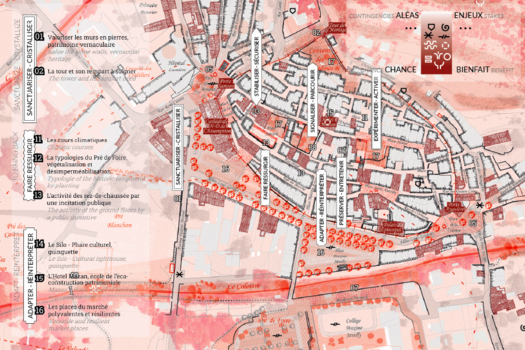
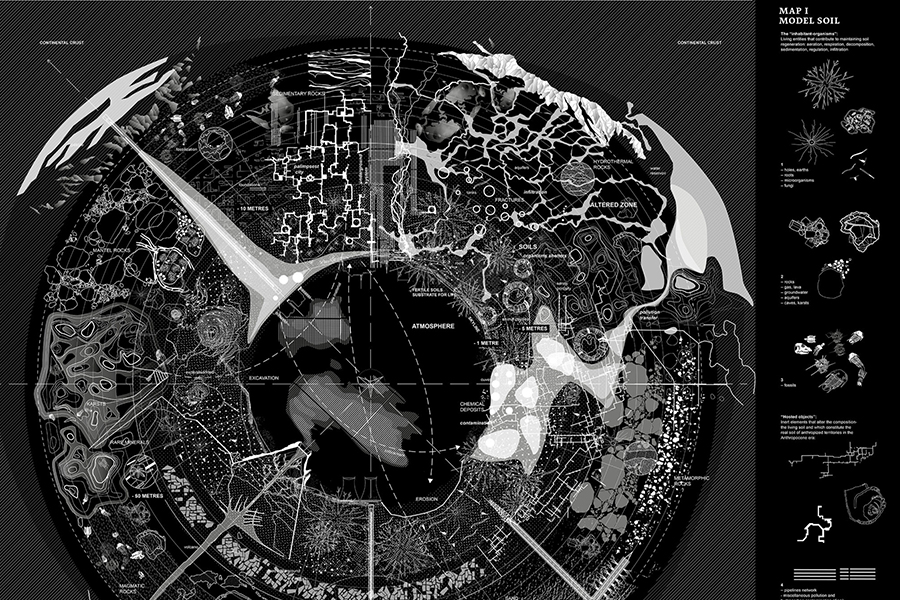
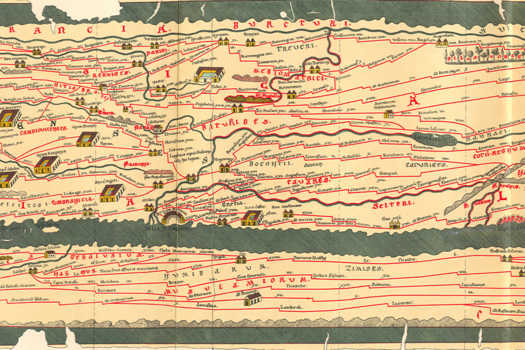
We directly found common inspiration in the book “Terra Forma, A Book of Speculative Maps”. It stimulates new ways of reading and writing the territory. It invites us to adapt to the richness and the depth of our surrounding. Deeply look, to justly act, together. Our proposal can also be considered as a synthesis of all the concerns we developed in our past professional experiences, a kind of manifesto.
SITE:
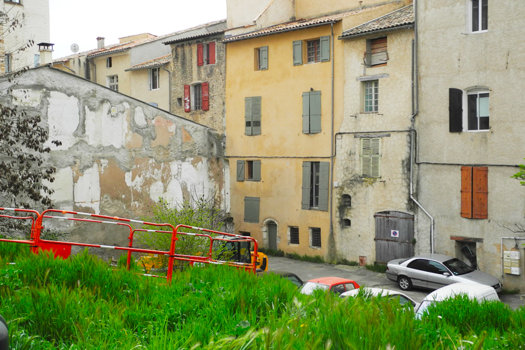
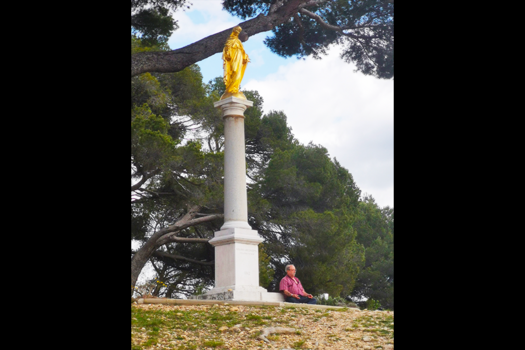
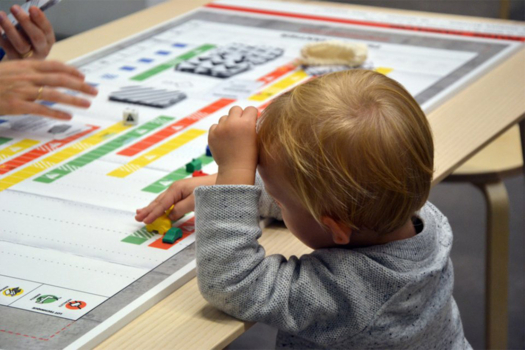
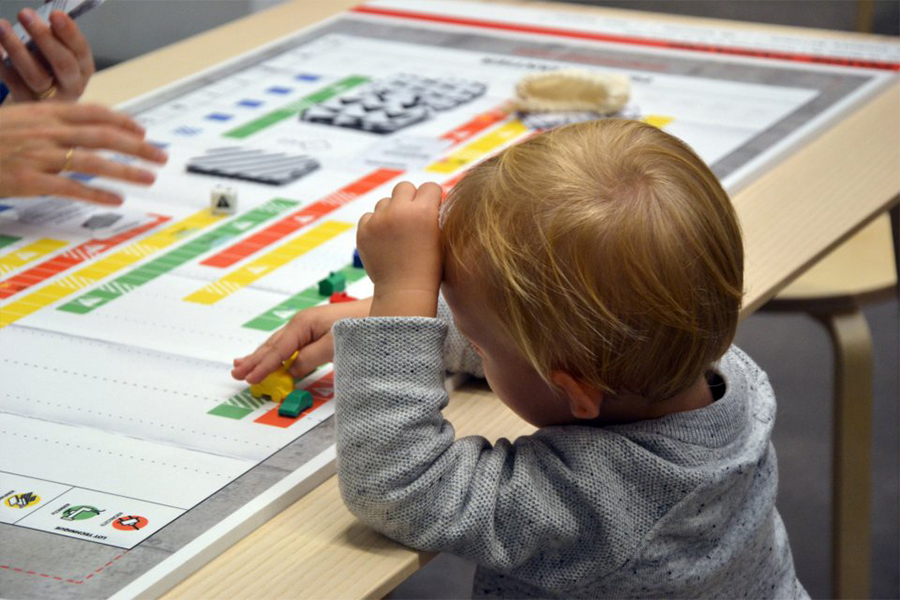
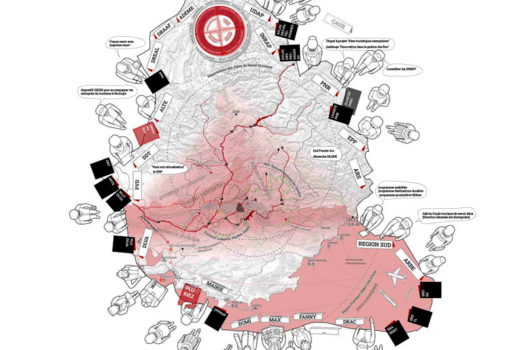
Our schematic “the way to decide” offers a clear path to implement in order to re-source Riez. Our proposal sets our first diagnosis and offers a scenario of what could be. It must now be completed together with local authorities. A “guiding plan” could emerge, setting the negotiated collective vision. The main goal is then to start a process of mobilizing a diversity of actors (people and institutions alike) : elected officials, civil associations, land and building owners and so much more. It can be hosted by the project counter, a sort of filter that leads to action.
REFERENCES:
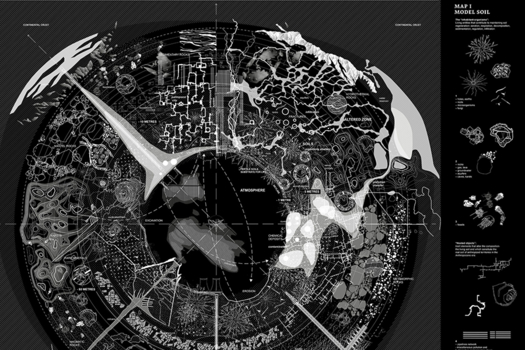
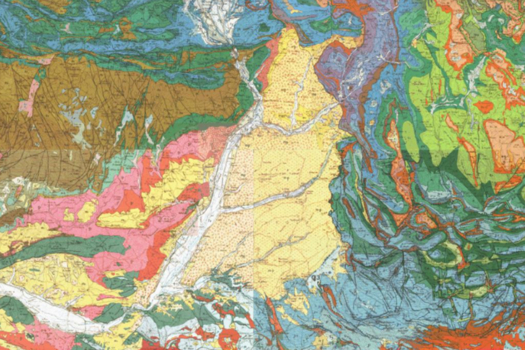
We both graduated from the same architecture school and both then have worked on urban planning and for public spaces. Our affinity with territorial issues is what unites us, focusing on the continuity of space whether it is built, unbuilt, or strategic design. We are also complementary. There is on the one hand the urban and territorial fabrication processes and the landscape approach. On the other, a sensitive reading, and interest on drawing and representation, on mediation.
6. How could this prize help you in your professional career?
Europan 18 can be a great opportunity for us to develop a new way of fabricating urban projects. Riez can now be this laboratory. The connection with a more theoretical approach was also very stimulating and plants interesting seeds on both parts.
TEAM IDENTITY
Legal status:
Team name:
Average age of the associates: 34 years old
Has your team, together or separately, already conceived or implemented some projects and/or won any competition? if so, which ones?
We had already competed on the same team over other projects, but Europan 18 is our first effective collaboration.
WORKS: