The Commons Laboratory
Blagnac (FR) - Winner
TEAM PORTRAIT
VIDEO (by the team)
INTERVIEW
Click on the images to enlarge
1. How do you define the main issues of your project in relation with the theme “Re-sourcing”? Re-sourcing thanks to nature, to social dynamics, to new materiality? In which way do you think your project can contribute to an ecological and/or social evolution? And in which way do you think your project can be called a “regenerative project”?
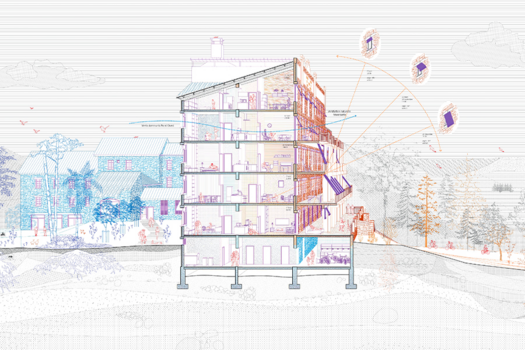
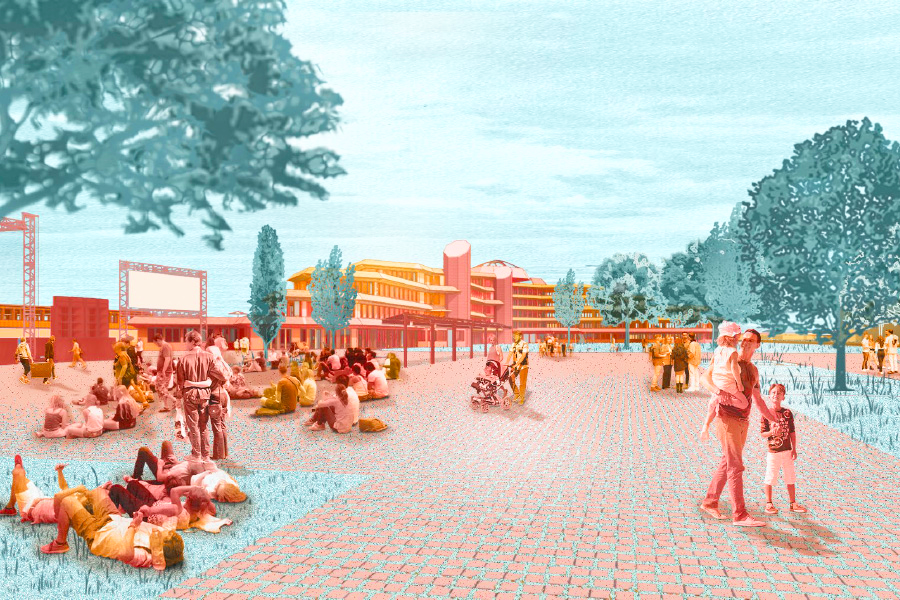
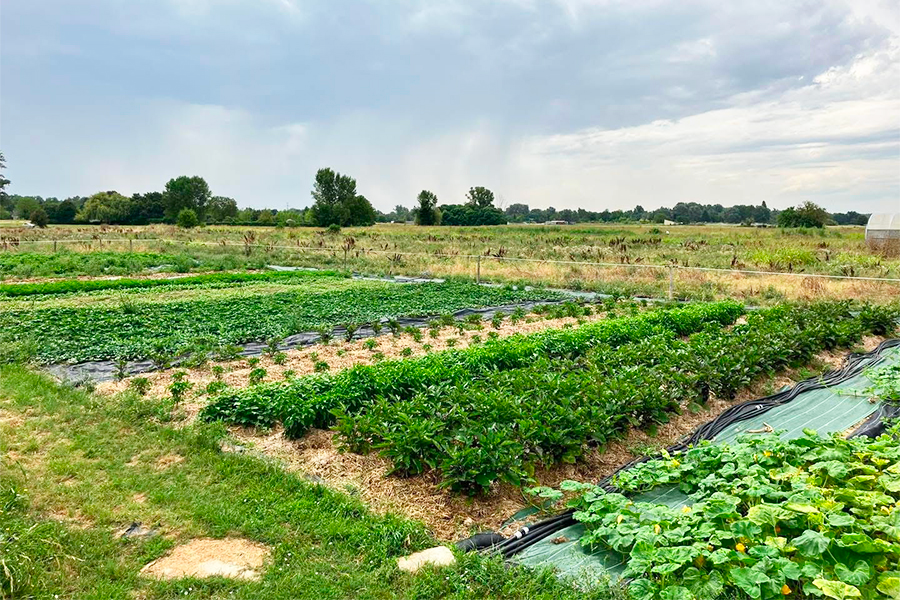
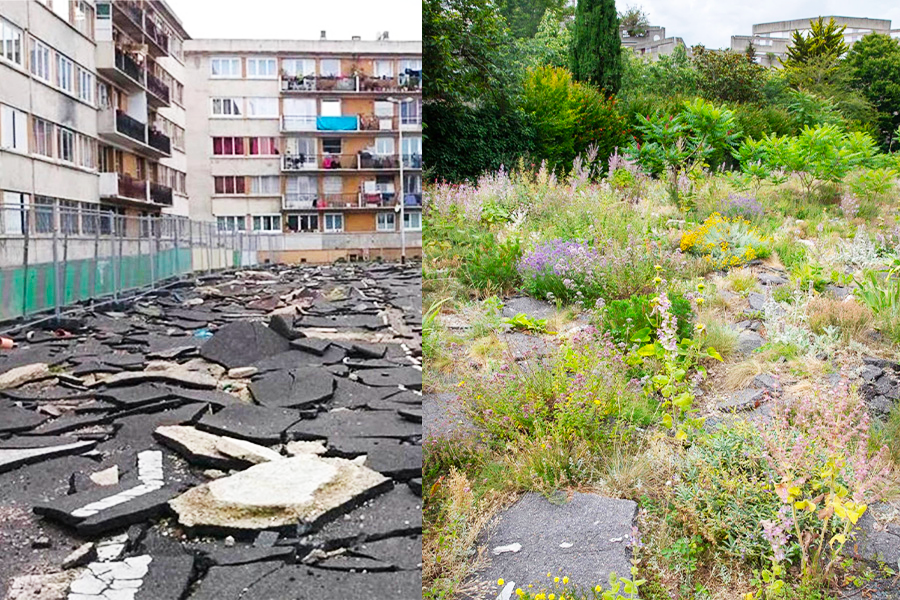
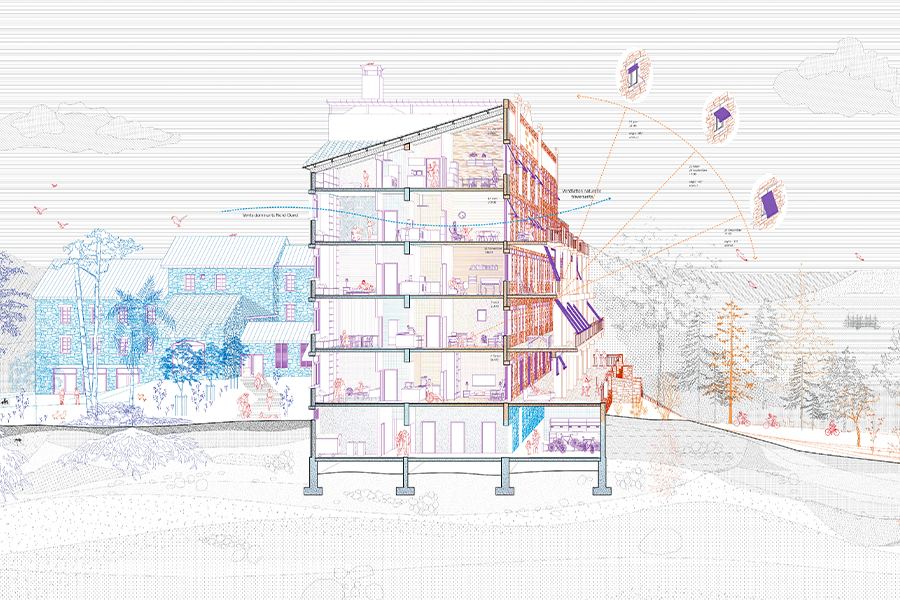
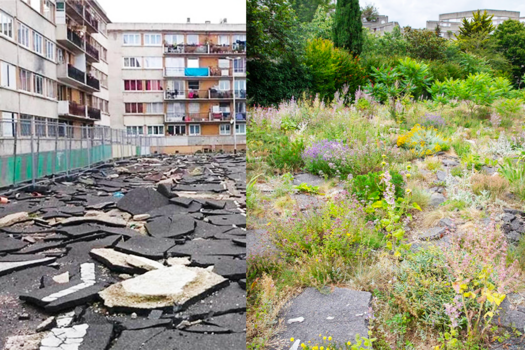
Our project addresses the theme of “re-sourcing” by building on the existing resources of the site and its territory, both material and immaterial, within a commons-based approach. Conceived as an evolving process, it relies on experimentation and dialogue between uses, local know-how, and ecosystems. It supports both ecological transformation through the restoration of soils, natural continuities, and biodiversity and social transformation by creating shared spaces, reversible infrastructures, and spaces for cooperation.
2. How did the issues of your design and the questions raised by the site mutation meet?
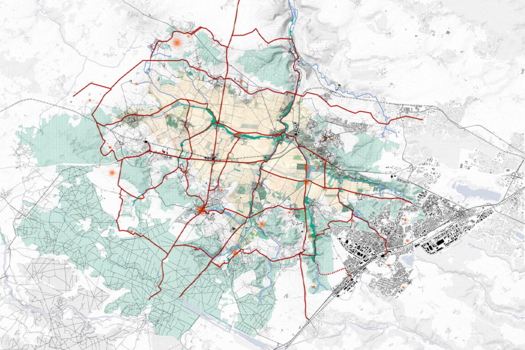
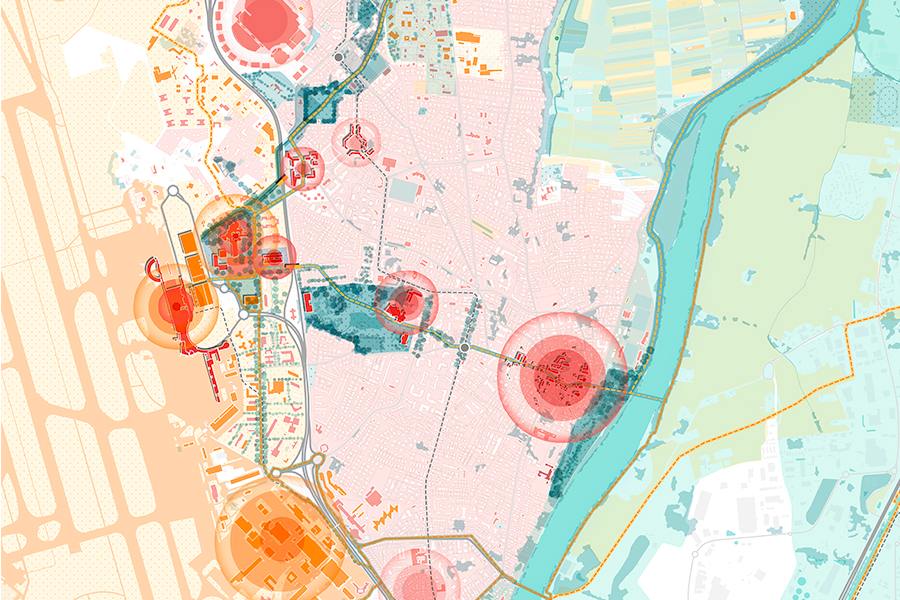
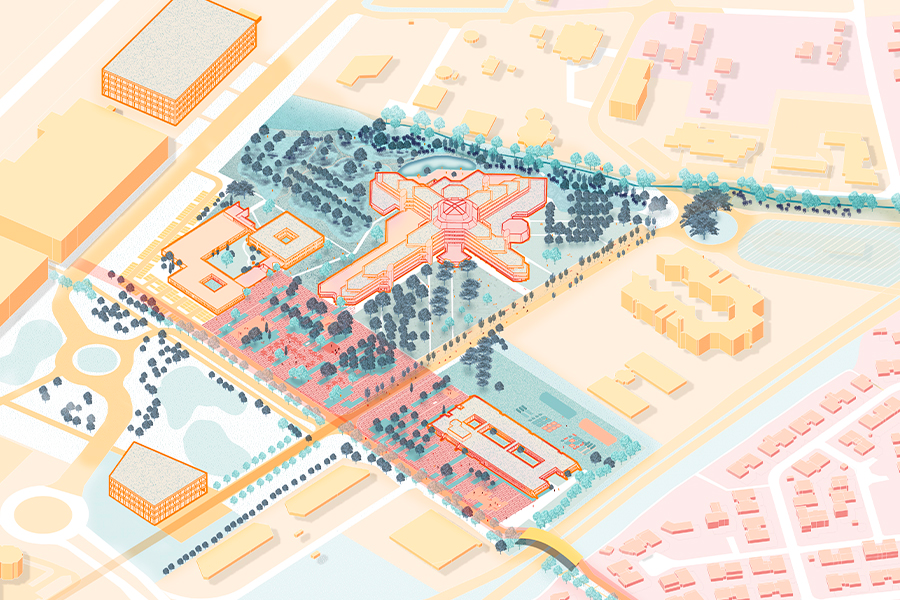
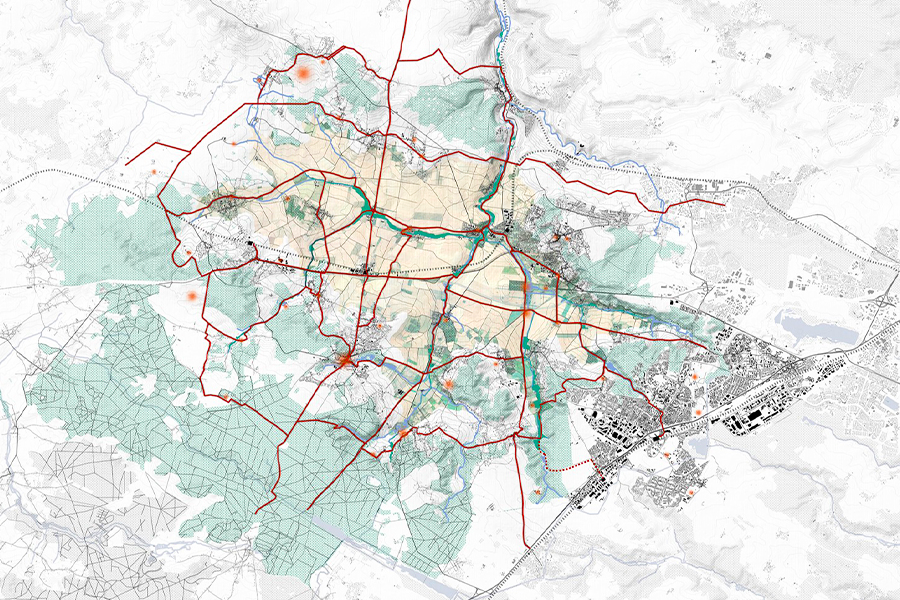
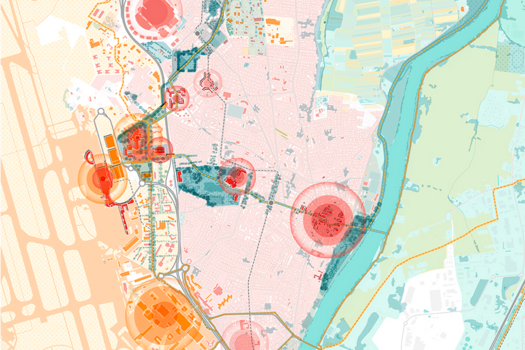
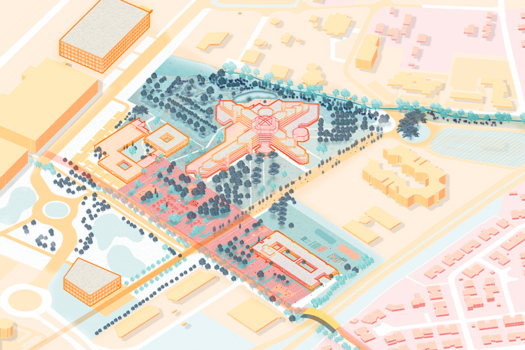
By reintegrating the site into its broader environment, we take advantage of its renewal to address issues at the scale of Blagnac. Indeed, after studying the urban fabric, we identified three juxtaposed types of cities: the productive city, separated from the residential city by the expressway, and to the far east, the natural areas along the banks of the Garonne. The Orange site lies at the crossroads of these three systems and can become a space of convergence where residents and workers come together at the heart of a tree-lined park. All the elements are already there: they simply need to be revealed and brought together.
PROJECT:
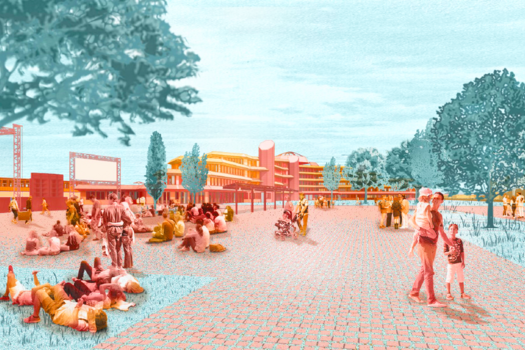
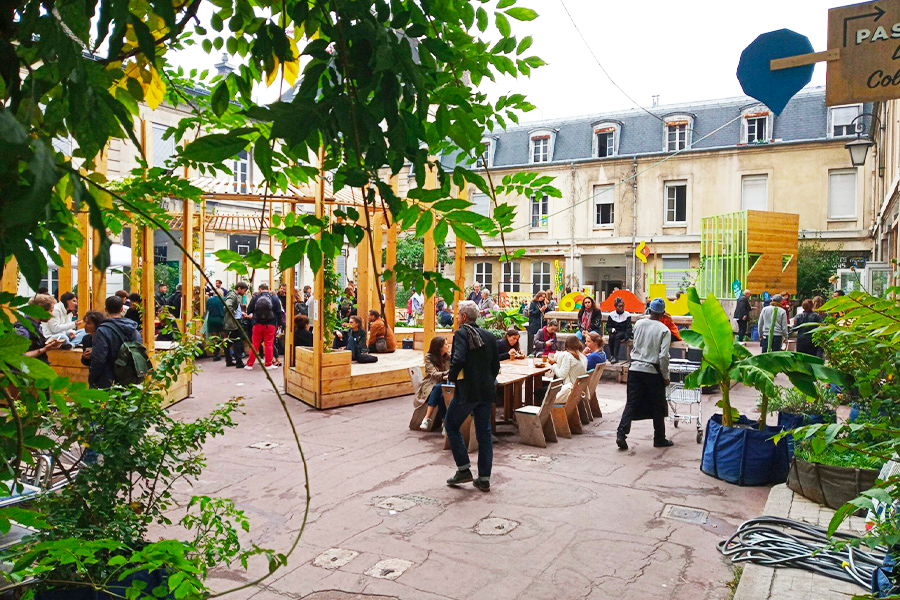
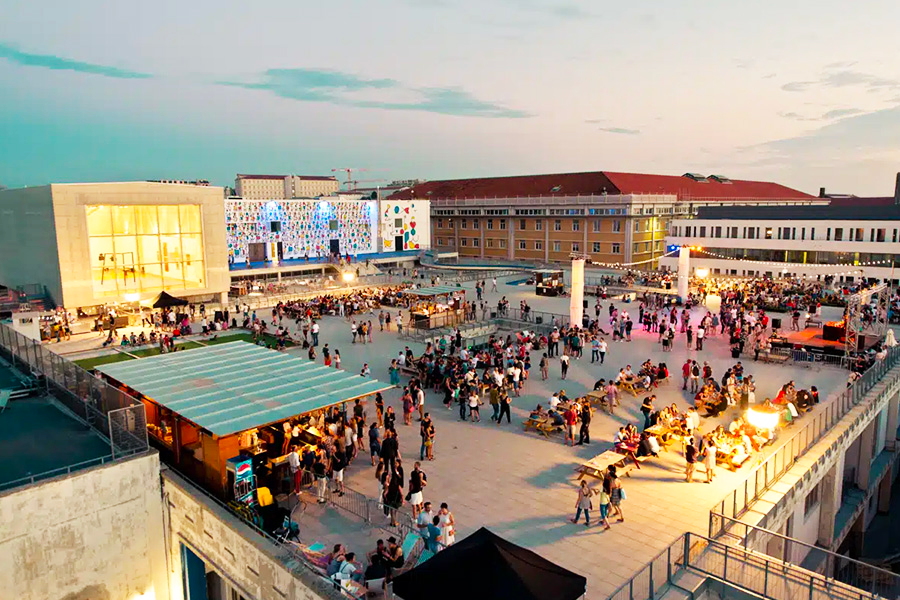
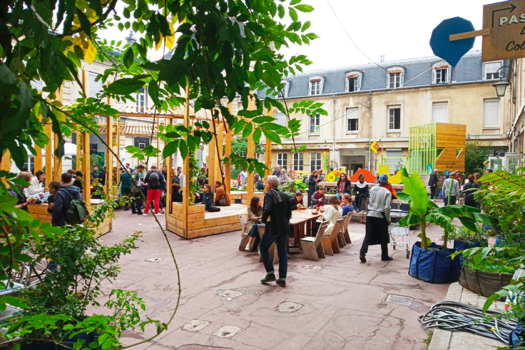
These issues (environmental, social, territorial, and operational) have already been addressed in transformation projects based on process-led approaches, such as Les Grands Voisins in Paris, the Friche of la Belle de Mai in Marseille, and the “Île de Nantes”. These references bring together ecological transition, shared governance, and evolving programming over long timeframes. They have informed our approach to a site in transition and will continue to nourish our thinking within the framework of a project open to experimentation.
SITE:
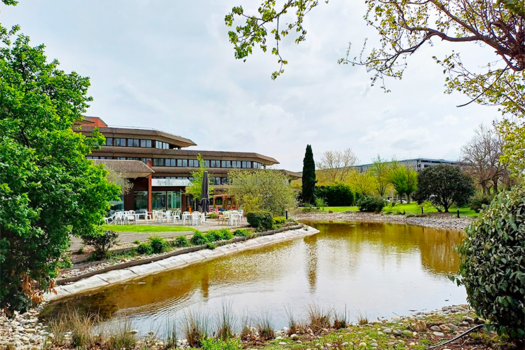
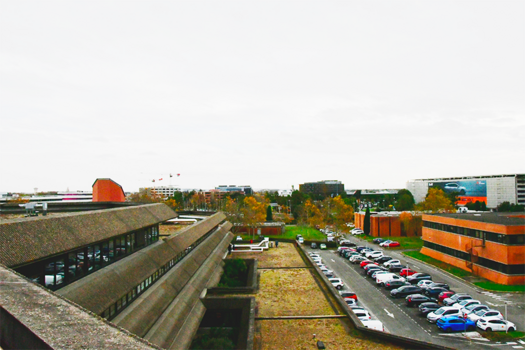
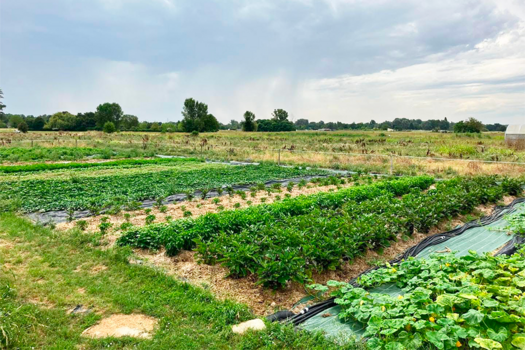
Our proposal is a set of actions at three different scales, organized across three timeframes, from the short-term starting as soon as the site is vacated by the company Orange, to the long term, beyond 2050. The project is a process that adapts to opportunities and evolving lifestyles, makes it possible to test uses before making them permanent, and gradually builds the long-term program in collaboration with the municipality and the partners who join the project over time.
REFERENCES:
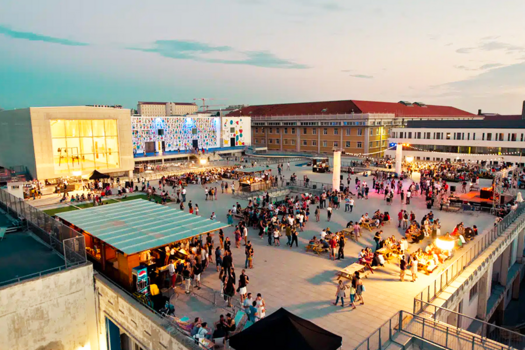
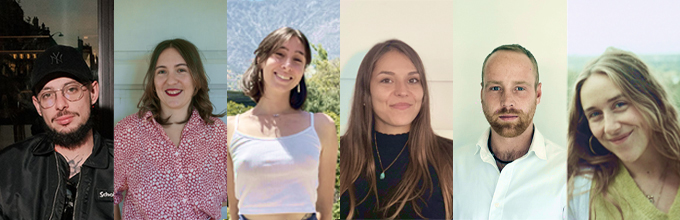
Our team is built on diverse skills and experience. Architects and urban planners, we have joined forces around a shared interest in territories in transition and sustainable transformation. This complementarity allows us to develop the project on several scales and to simultaneously consider social, ecological, strategic and architectural issues, in order to create a strong link with the territory.
6. How could this prize help you in your professional career?
This award and the Europan competition represent an important form of recognition and a lever for us as young professionals. The competition indeed fosters an engaged approach and provides access to a national and more broadly European network, opening opportunities for collaboration. Developing our project within this framework also strengthens our ability to pursue a practice that is attentive to the ecological, social, and economic challenges of each territory. It is also a great opportunity for some members of the team to structure themselves and to help a young practice gain visibility.
TEAM IDENTITY
Legal status:
Team name:
Average age of the associates: 28,5 years old
Has your team, together or separately, already conceived or implemented some projects and/or won any competition? if so, which ones?
No.
WORKS: