ZÄME
Luzern (CH) - Winner
TEAM DATA
Associates: Geronimo Felici Fioravanti (IT) – urban planner, Cris Skenderi (IT) – architect urbanist
info@lia-collective.it
www.lia-collective.com / www.dereurbana.com
See the complete listing of portraits here
See the site here
TEAM PORTRAIT
VIDEO (by the team)
INTERVIEW
Click on the images to enlarge
1. How do you define the main issues of your project in relation with the theme “Re-sourcing”? Re-sourcing thanks to nature, to social dynamics, to new materiality? In which way do you think your project can contribute to an ecological and/or social evolution? And in which way do you think your project can be called a “regenerative project”?
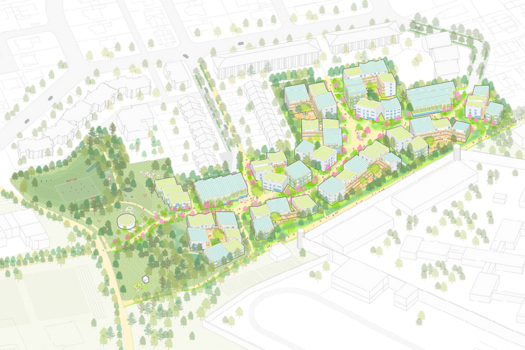
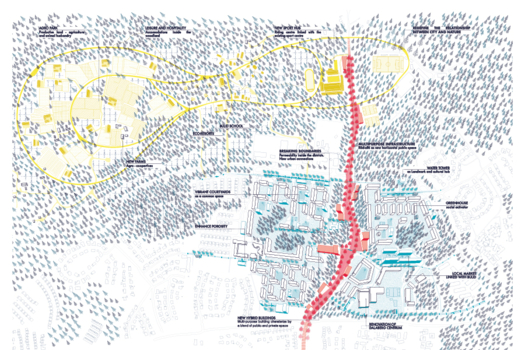
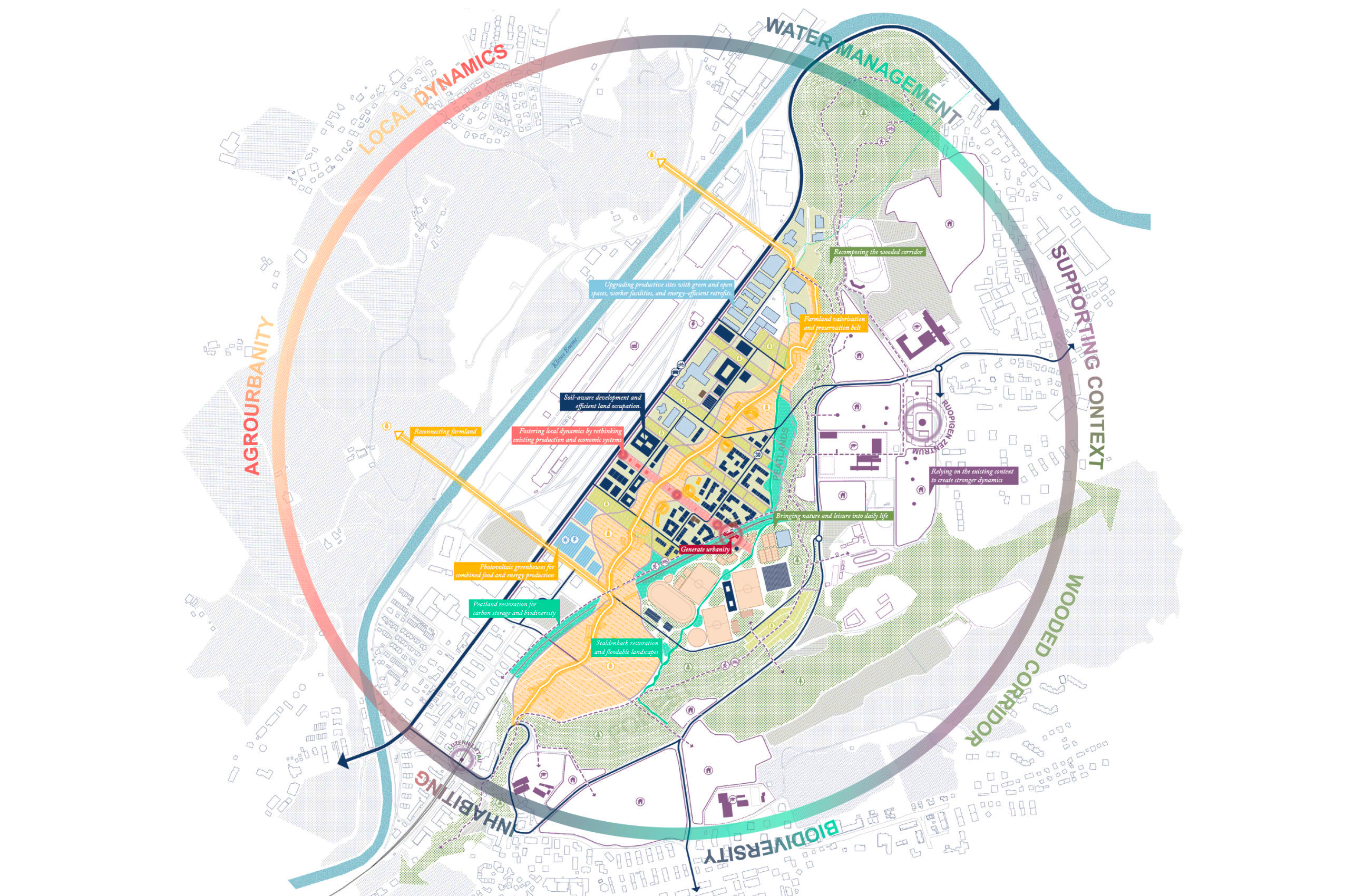
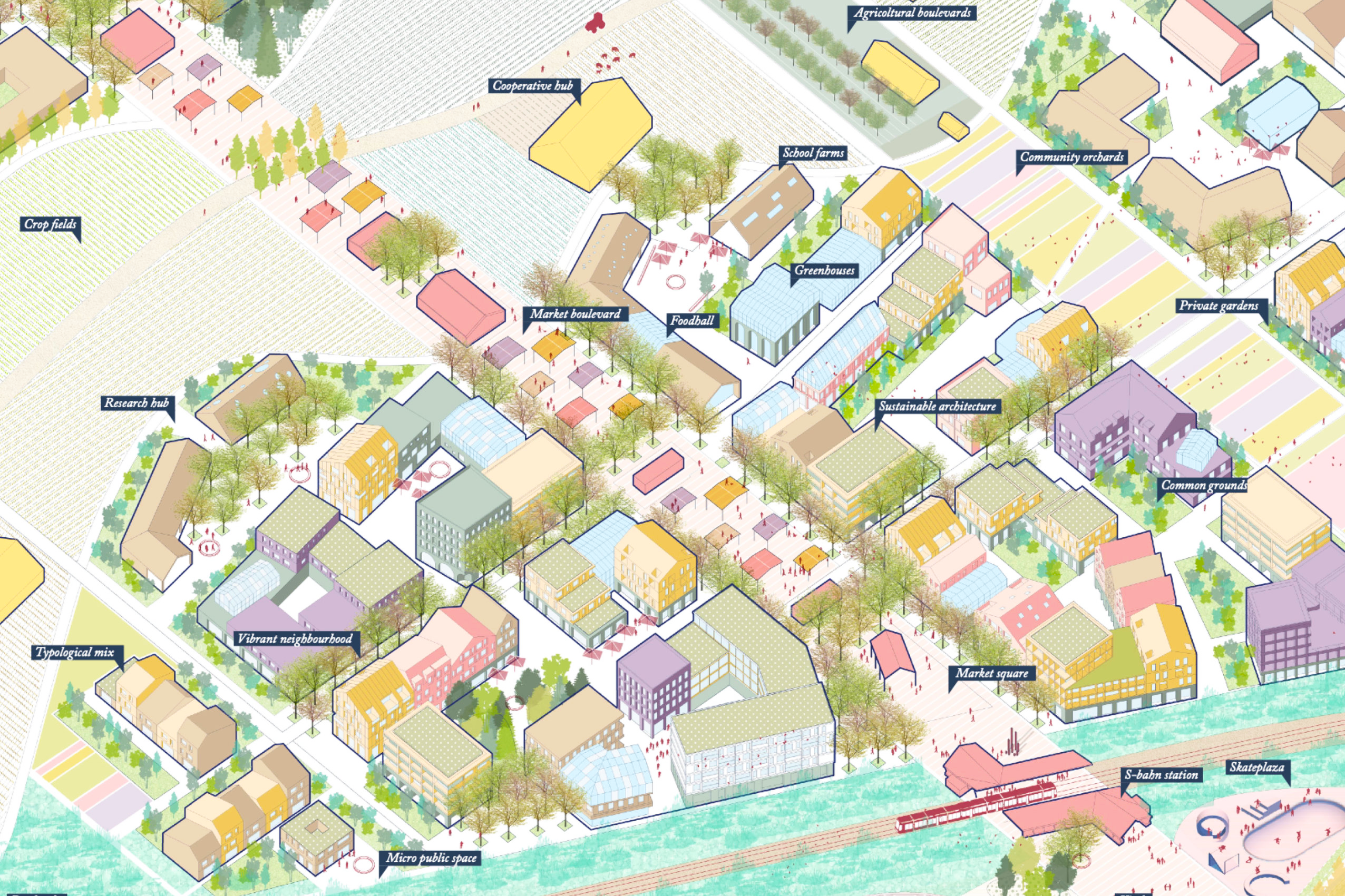
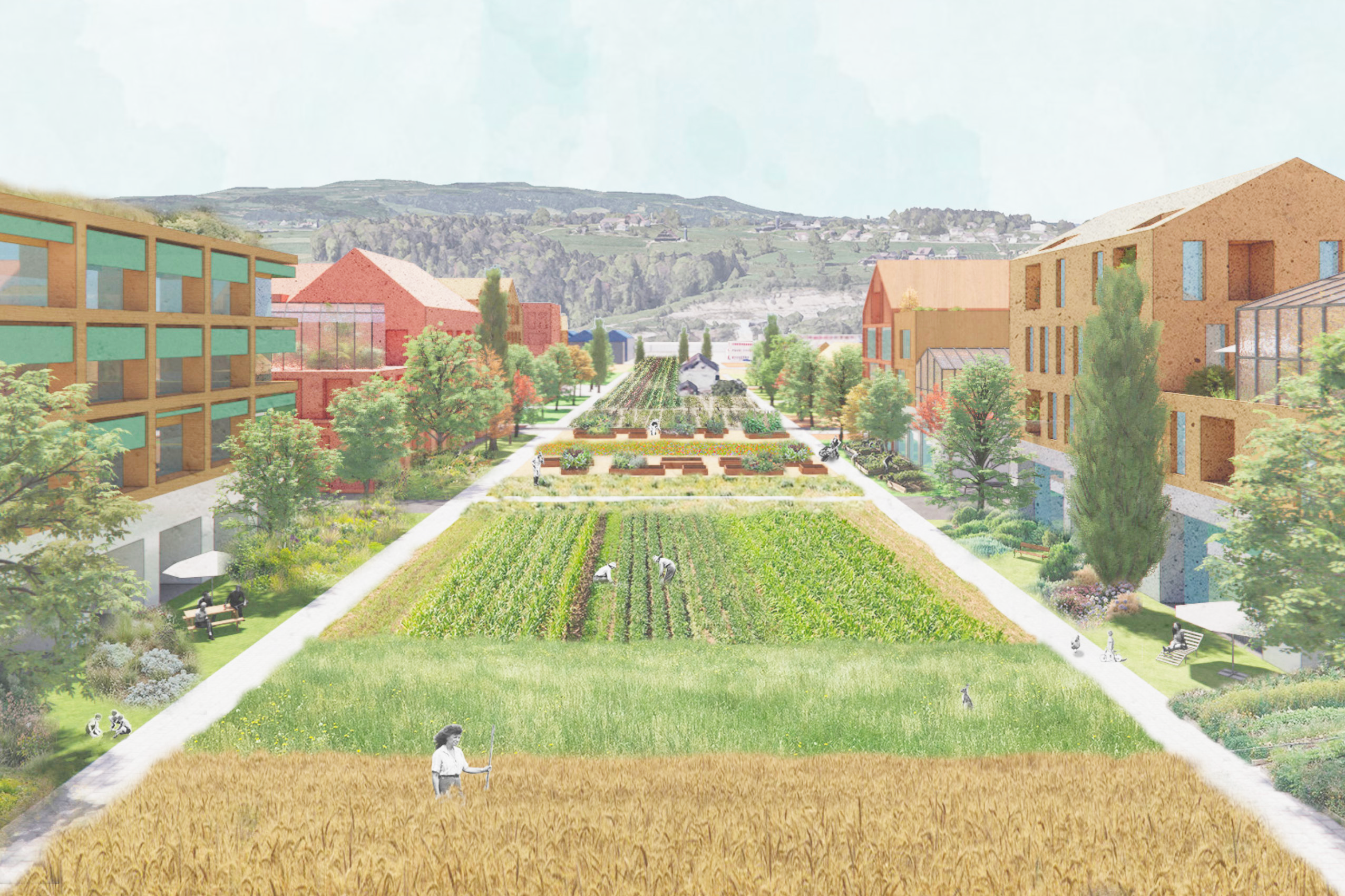
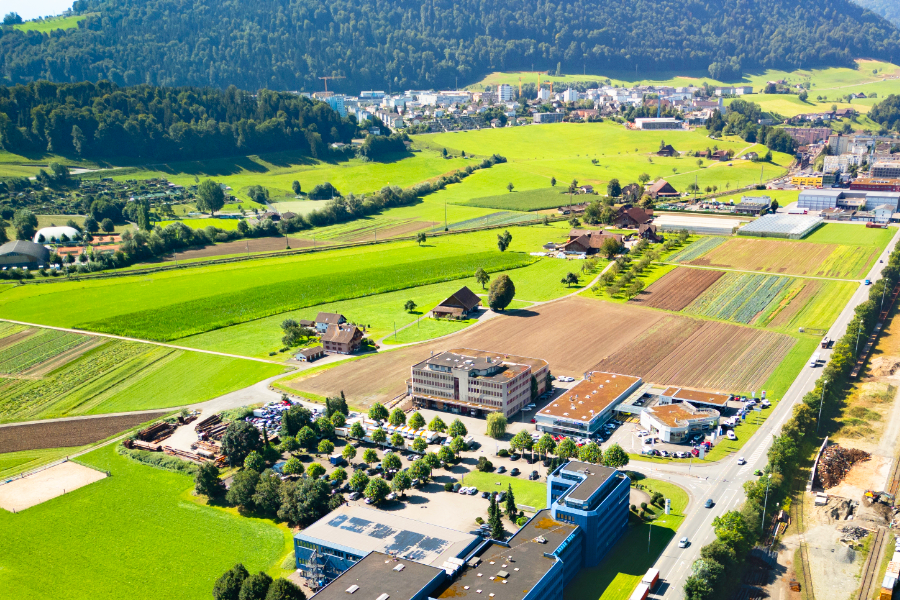
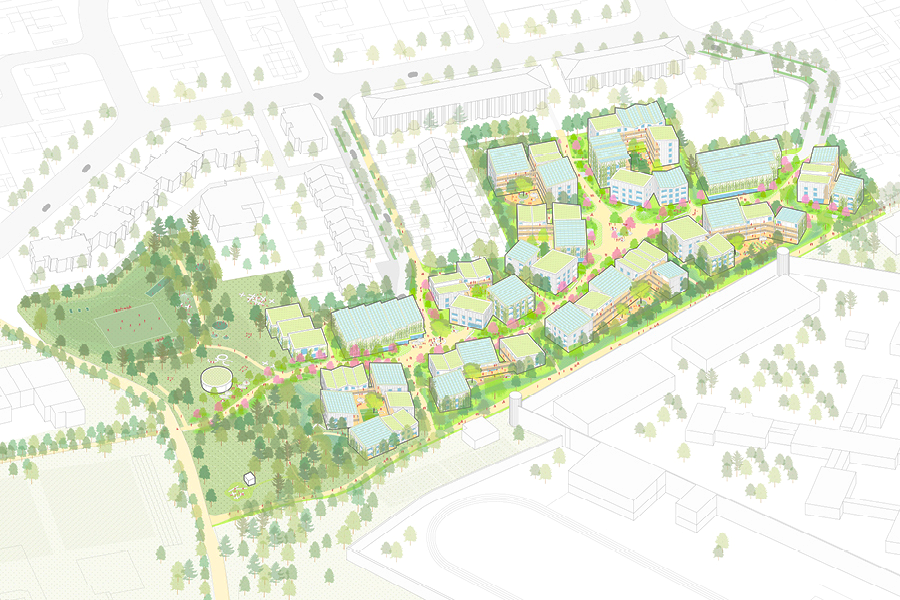
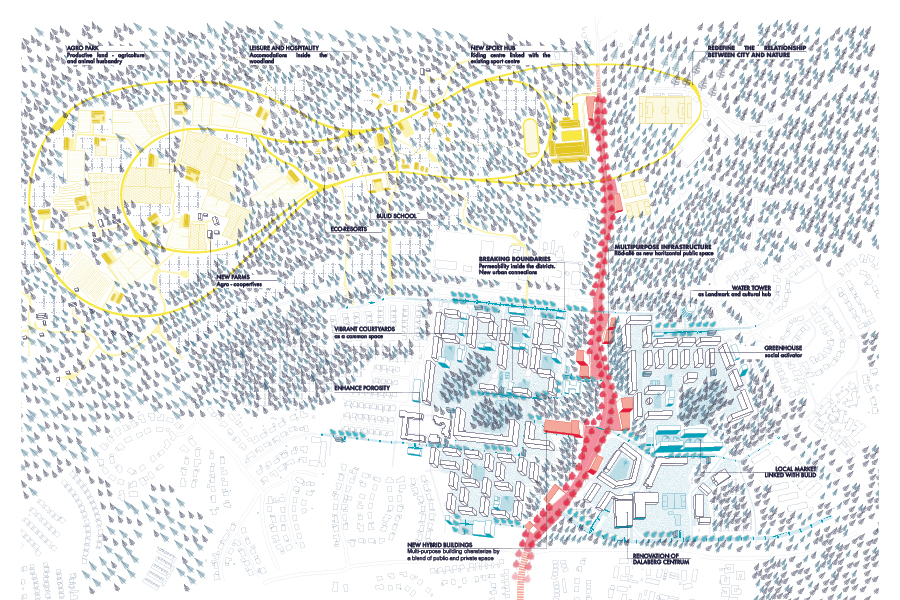
The project interprets Re-sourcing as the ability to activate Littau’s latent territorial and social resources, its fragments, agricultural edges, peatlands, and residual structures. ZÄME recomposes what already exists, transforming these elements into drivers of ecological, spatial and social renewal. ZÄME re-sources through nature, restoring peatlands, reconnecting forests, and integrating climate-resilient landscapes. Through social dynamics via cooperative governance, shared cultivation and hybrid uses, and through new materiality by adapting existing buildings and using low-carbon, flexible structures. Ecologically, the project enhances biodiversity, water management, and soil health while creating a resilient urban–rural interface. Socially, it supports new forms of proximity living, productive neighbourhoods and cooperative participation, fostering inclusion, well-being and a strong local identity. ZÄME is regenerative because it restores ecosystems, revitalizes agricultural heritage, and builds long-term community stewardship through public–cooperative governance. It activates positive cycles where nature, production, and inhabitation strengthen one another, cultivating the future city from existing resources rather than imposing new ones.
2. How did the issues of your design and the questions raised by the site mutation meet?
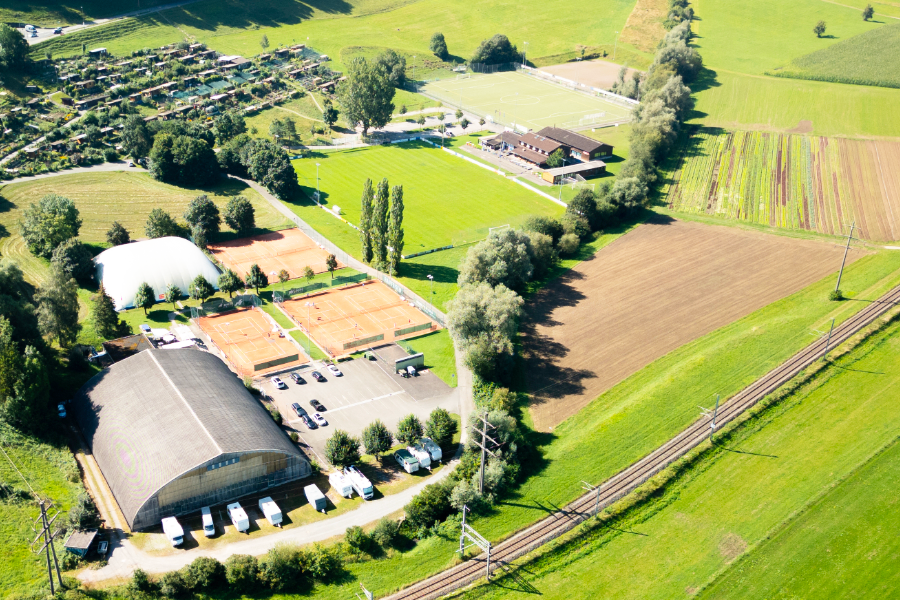
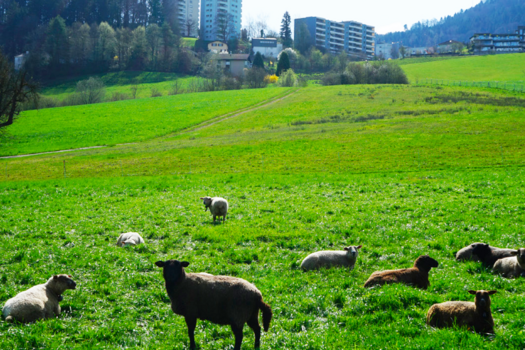
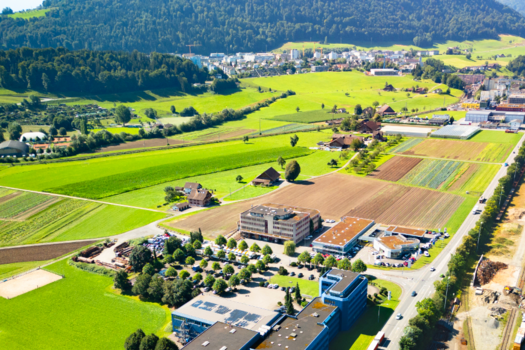
The site of Littau is undergoing a mutation from a fragmented “Zwischenstadt” condition to a territory seeking new ecological, social, and productive balances. Our project meets these questions by recomposing its residual landscapes, restoring the agricultural belt, reconnecting ecological systems, and hybridising living and productive uses. ZÄME directly responds to the site’s need for coherence, resilienc,e and identity, transforming its fragments into a fertile and inclusive urban framework.
PROJECT:
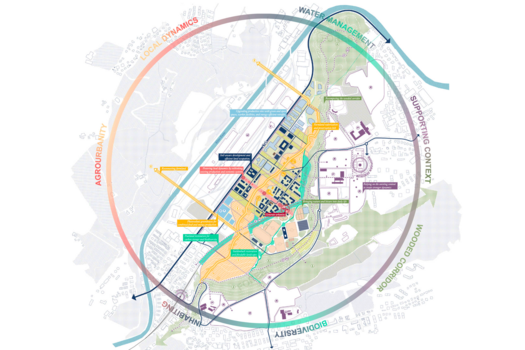
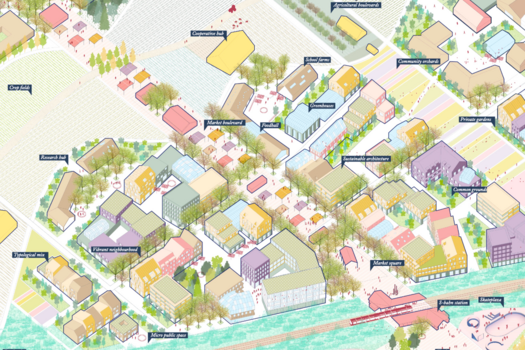
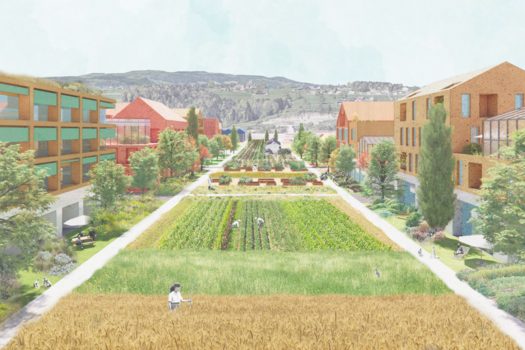
The issues of resourcing are now present in all our projects. As a generation, we face the challenge of doing less and re-sourcing more. While the context was once a simple starting layer from which new forms emerged, today it has become the essential material to be transformed. Working with what already exists is the only way to respond meaningfully to planetary changes and to prepare resilient frameworks for future generations.
SITE:
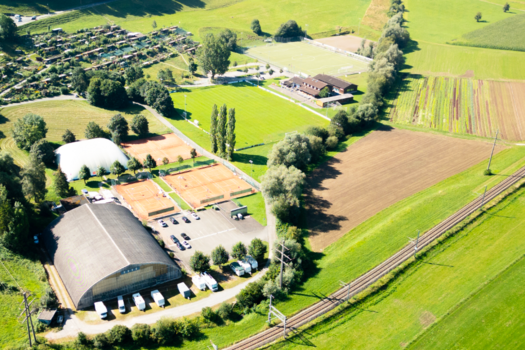
Our project can be implemented through a negotiated, incremental process thanks to the cooperative governance model at its core. By positioning public institutions and cooperative organisations as the main drivers, the project ensures long-term affordability, shared decision-making, and progressive transformation. Phased development, starting from the agricultural belt and existing structures, allows actors, residents, and stakeholders to shape the neighbourhood over time, ensuring adaptability and collective ownership of the process.
REFERENCES:
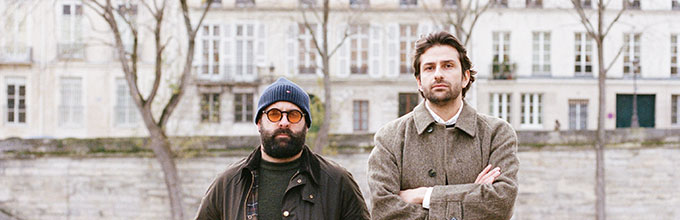
Geronimo, urban planner and urban designer, and Cris, architect–urbanist, originally come from the same area in Italy but met in Paris in 2023. There, they discovered a shared passion for territorial and urban project practices, as well as a convergence of ideas on contemporary urban futures. This alignment, together with the complementarity of their backgrounds, naturally led them to collaborate on Europan. Geronimo brings strong territorial, spatial, and social analysis skills, with a capacity to read contexts and translate them into coherent urban strategies. Cris contributes a forward-looking vision of the future city, along with personal research on urban languages and architectural conceptualization. Together, they were able to merge method and imagination into a visionary yet grounded proposal.
6. How could this prize help you in your professional career?
Beyond the prospect of being involved in the next phases and advancing the project, we see this prize as a decisive accelerator for our professional trajectory. It gives legitimacy to our emerging voices in the field of urban and territorial design, opening doors to new collaborations, research opportunities, and commissions. More than an acknowledgment, it amplifies our credibility and strengthens our ambition to contribute meaningfully to the future of cities.
TEAM IDENTITY
Legal status:
Team name:
Average age of the associates: 33 years old
Has your team, together or separately, already conceived or implemented some projects and/or won any competition? if so, which ones?
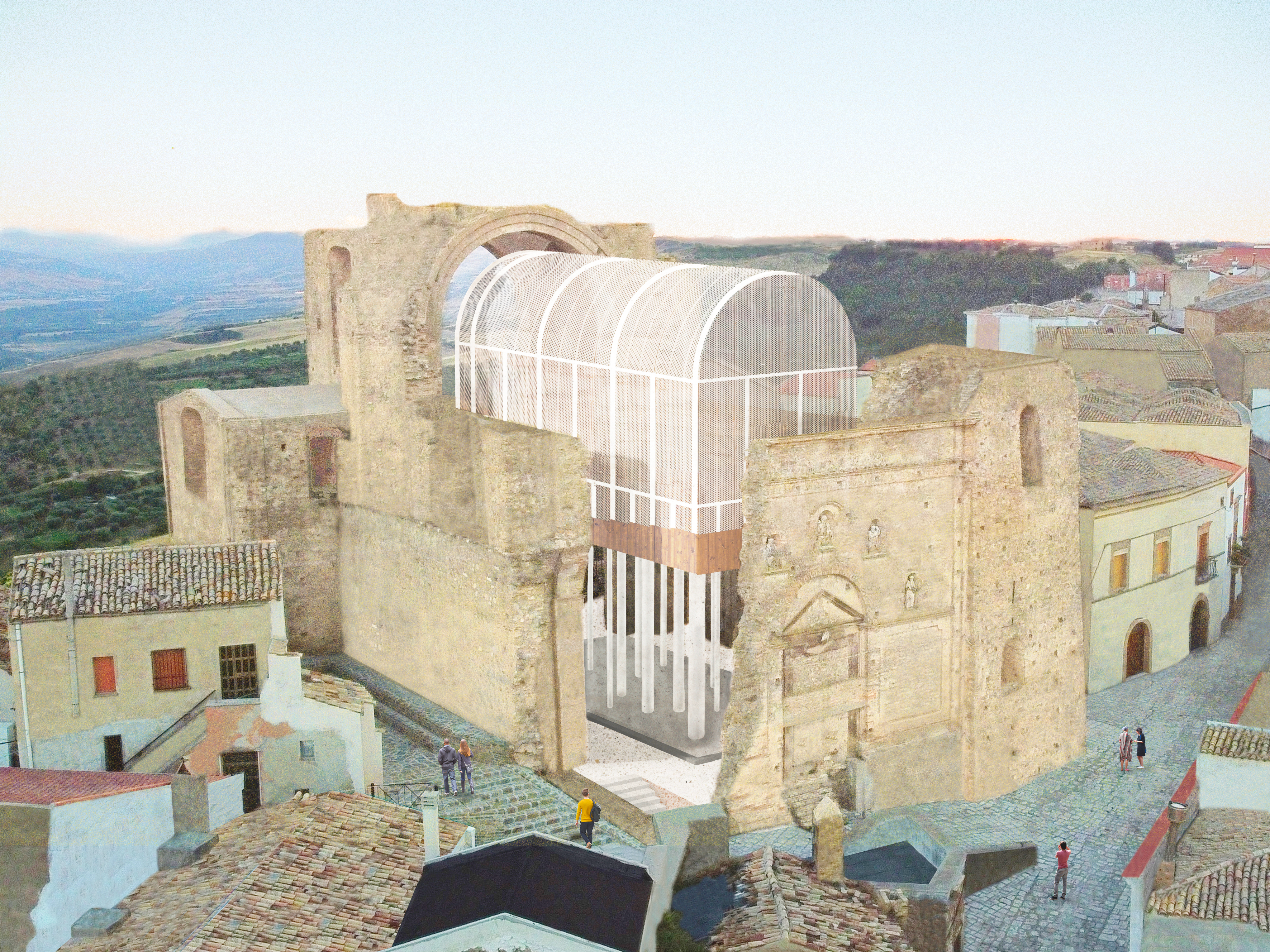
This is our first collaboration. Geronimo already won as a co-author the Europan 15 Sweden in Uddevalla with the project proposal “JALLA!”, the special mention as a Author in Europan 16 Norway for Fagerstrand with the project proposal “HYGGE”, the first prize in Landsberg am Lech with “Lech-Anger Lansberg” as a LIA Collective associate and a third prize in the Banja Luka competition for an urban park with the project proposal “BlooPark”. As a student, he won the UrbanPromo young X° edition with the project “San Siro. Living Inside-OUT”. Cris has obtained an honorable mention for the competition “Reuse the fallen church-Chiesa Deruta” for REUSE Italy in 2019. As a student, he was shortlisted in the top 15 and exhibited at La Termica Malaga for the competition Amphibious Habitat, organized by UCL Bartlett Lobby in 2017, and published in Lobby magazine.
WORKS: