From ideas to process-projects
Europan 16 - Grenoble (FR)
« L'ARC DES VIVANTS . Laboratoire à ciel ouvert »
Project strategy family:
- Ecological connections
- Inclusive morphologies
- Inventive typologies
- Reinterpreted heritage
- Urban articulations
Process category:
- Direct order processes
- Competitive processes
- Co-creative processes
- Collaborative processes
- Participative processes
- Participation of the Living processes
- Adaptative legal framework processes
Authors: Team GRAB: Grenoble RAbot Bastille (including the 3 prize winning teams for Grenoble site E16)
Client(s): City of Grenoble, Metropolitan area
Dates: 2021 - 2025
Driving forces: Team + Client
Site
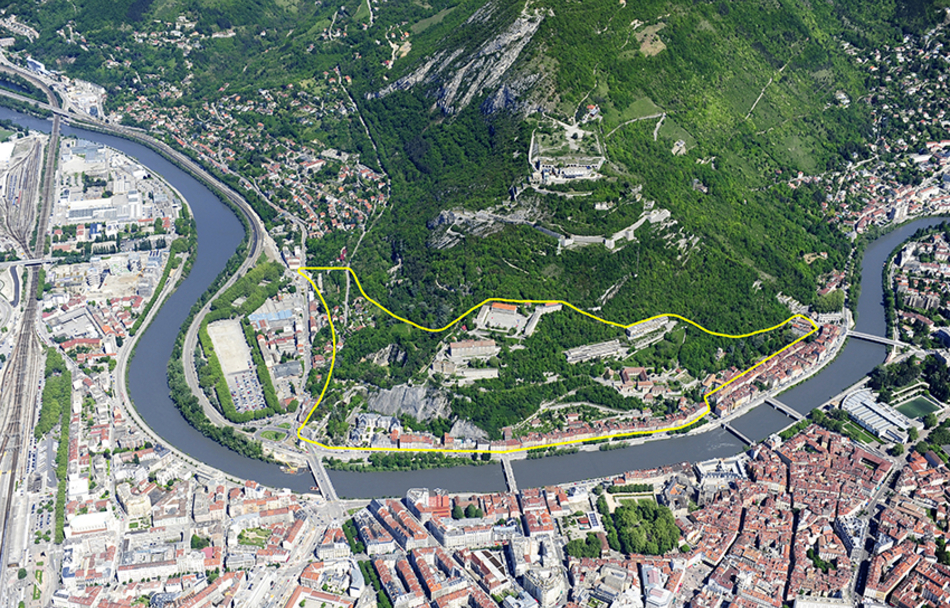
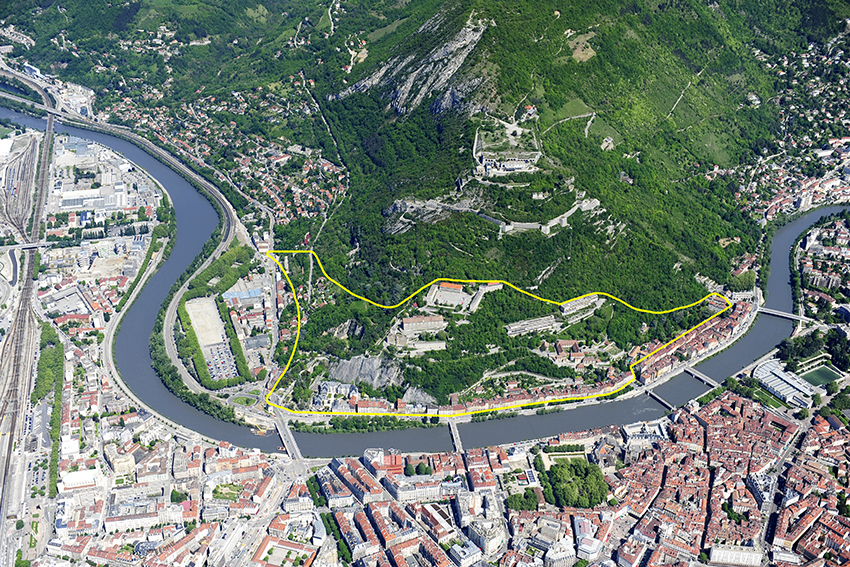
Grenoble (FR)
BETWEEN LIVING SLOPES AND INHABITED AREAS
SCALE XL/S SIZE 432 ha / 25ha
A privileged site for contemplating in the historical city centre, articulating river (Isère), massif (Chartreuse) and urbanized plain (Grenoble urban area), the Bastille suffers from the absence of a unifying narrative about its future.
How can a project be developed that contributes to a renewal of its image and practices, while preserving its singularity?
What are the elements available to be mobilized to establish a narrative of the development and management of a common good such as the Bastille?
Awarded Idea
Project - Ideas
L'ARC DES VIVANTS . Laboratoire à ciel ouvert
SPECIAL MENTION (Marie Ludmann, Luc Doin, Inès Hubert, Hélène Cossedière, FR)
A NEW EAST-WEST CONNECTION
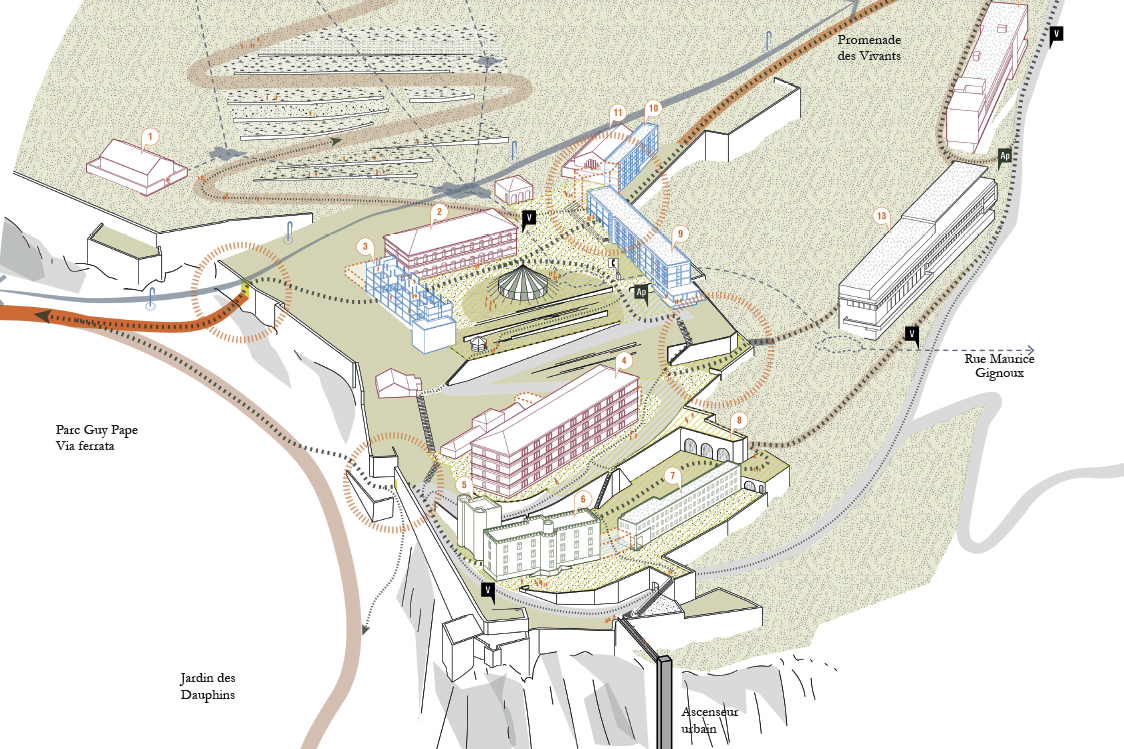
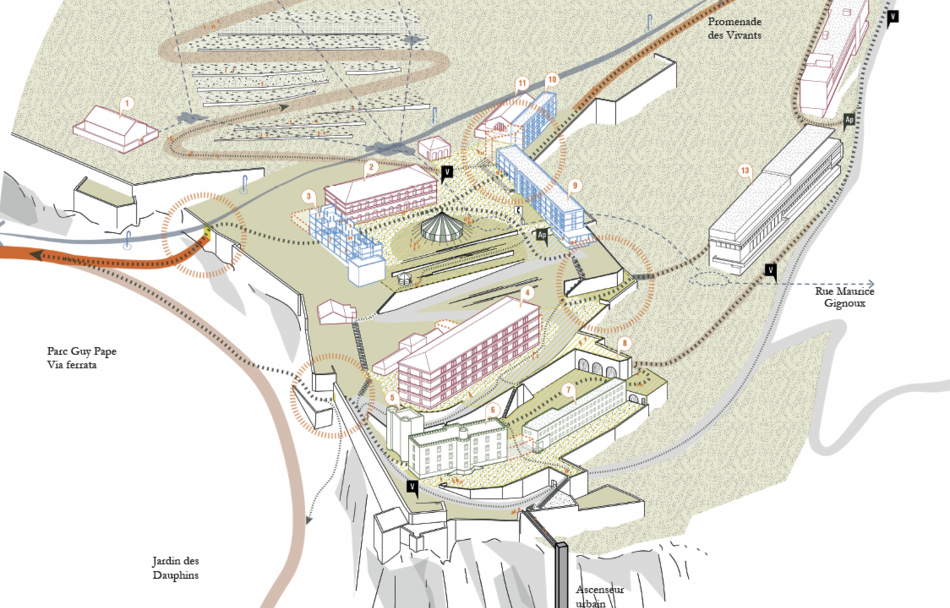
On the edge between the plain and the mountains, the Arc des Vivants redesigns the intermediate layer of the Bastille. This strategic relay for fauna and flora is reinforced by an alternative management scheme for water, absorbing natural hazards and irrigating cultivated areas. The project opens up the Micropole, resulting from the mutation of the Rabot's vacant buildings, and becomes a laboratory and observatory for culture and nature.
Project Strategy
Family: Ecological connections
SPECIAL MENTION ASSOCIATED FOR THE IMPLEMENTATION WITH THE TWO OTHER PRIZE-WINNING TEAMS:
Winner "Labo Rabo": see competition project here
Runner-up "The urban refuge": see competition project here
The process is a spatialized programmatic study, with an architectural and landscape residency including public events and workshops, as well as action sheets and a guide-plan. The study also included a tactical urbanism focus, and an operational plan for the next few years.
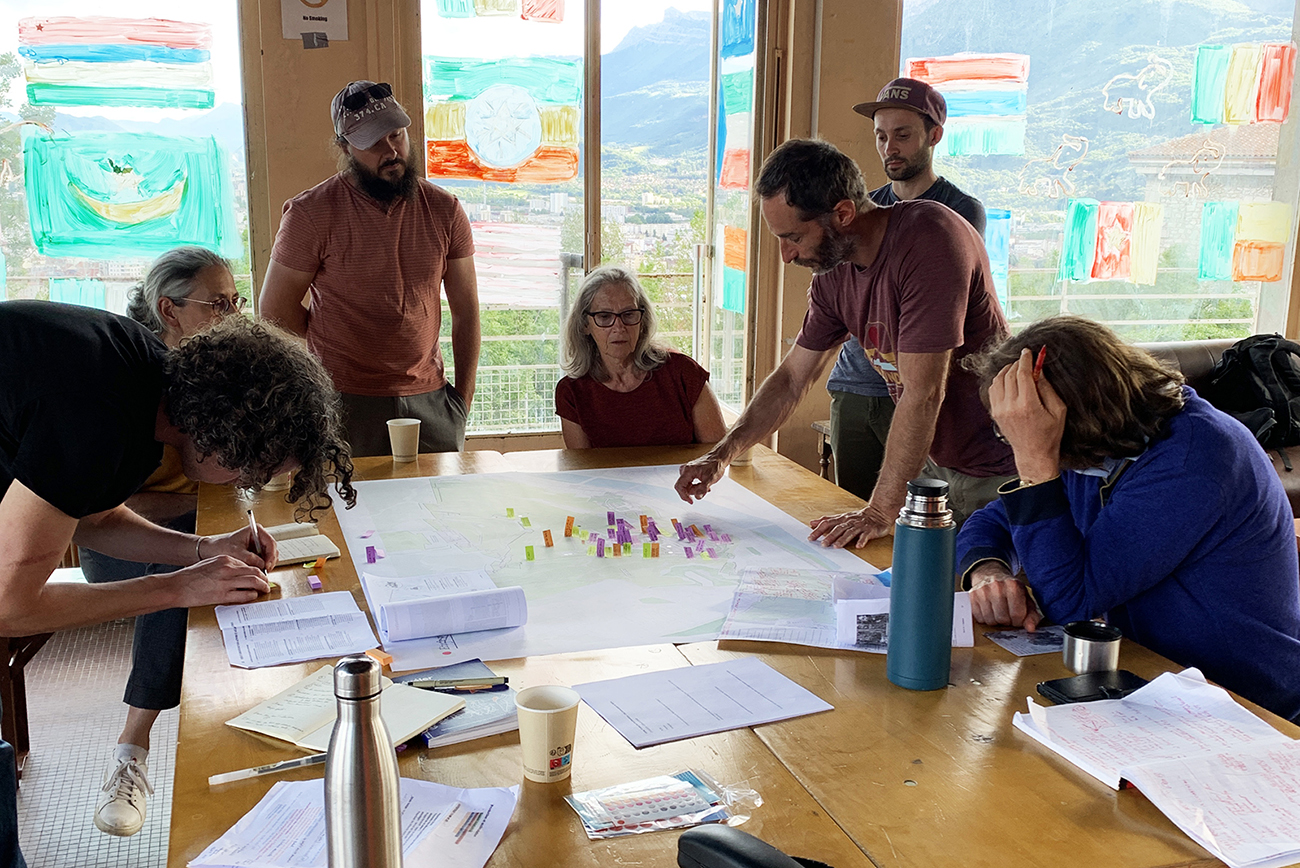
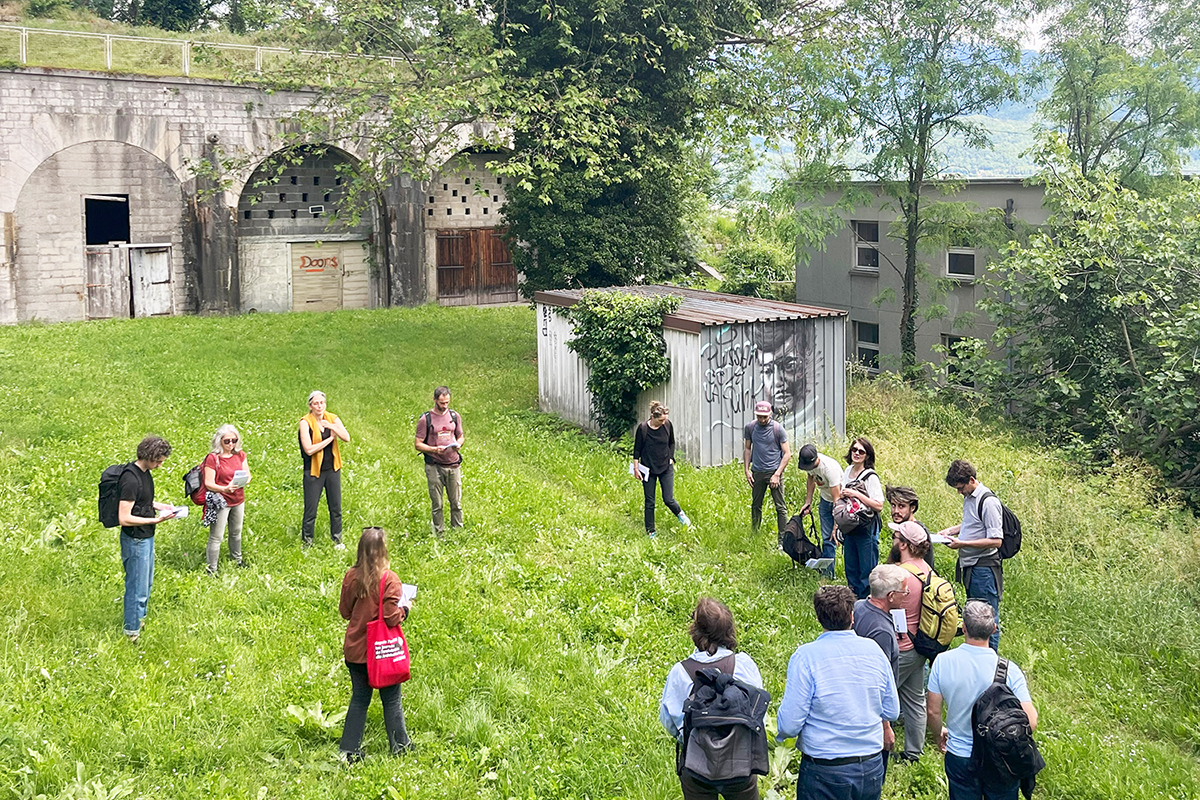
The main ideas concerning the adaptation to climate change and the east-west connection through the programme, have been integrated into the project. The preservation of this special environment and built heritage, coupled with on-site experimentation, has also been a major focus of the study. The overarching ambition is to establish the site as a shared common ground: public, traversable and rooted in collective stewardship.
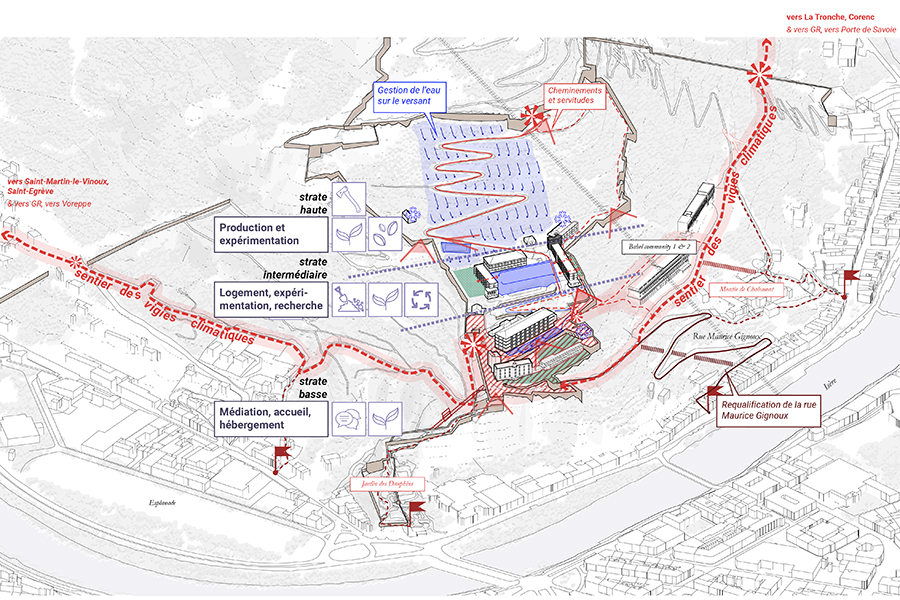
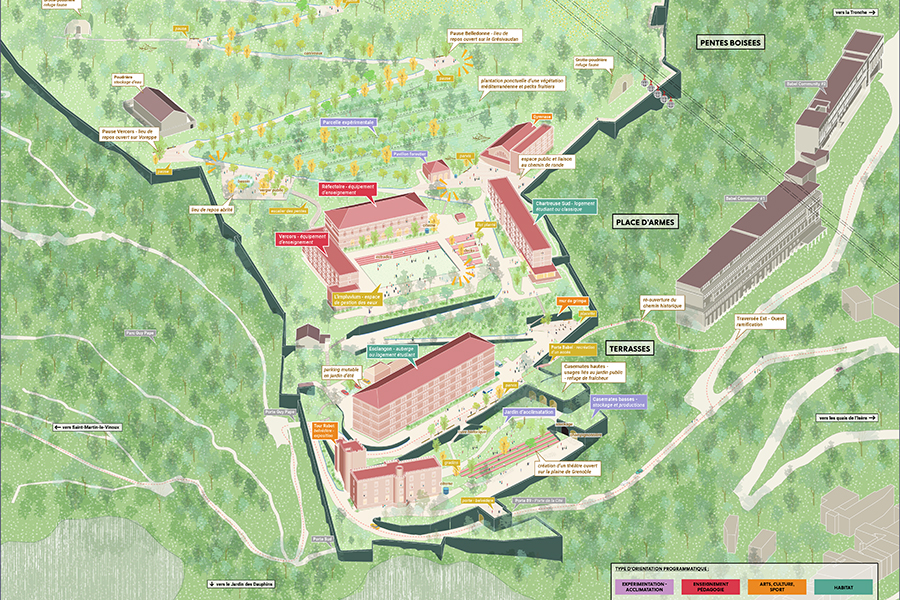
Following the completion of the study in early 2025, several additional events were organised for the City of Grenoble during the year to communicate around the project (roundtables, an exhibition, the Cities in Transition biennial, etc.).
At the end of 2025, the GRAB collective contributed to the launch of the Call for Expressions of Interest (AMI), initiated by the French State in conjunction with the City of Grenoble, by presenting the study and outlining the site’s challenges.
The team responded to this Call for Expressions of Interest.
PROJECT COMPLETED
Process
Category(ies): Competitive processes, Co-creative processes, Collaborative processes, Participation of the Living processes
Competitive processes
Following the competition, the city worked on new specifications based on the ideas of the three rewarded projects, in order to launch a new restricted tender for the three Europan rewarded teams.
Co-creative processes
The three teams decided to join forces to answer this tender and formed a new, single team (GRAB), which was then commissioned to carry out a programmatic study on the Rabot Bastille competition site.
Collaborative processes
During this programmatic study, a phase was dedicated to actions involving the participation of the public and local stakeholders through workshops and open days, organised during on-site residencies by the GRAB team.
Participation of the Living processes
Living systems in the broad sense are taken into account throughout the project: through the design of outdoor spaces that are sensitive to the site's biodiversity (specific plant varieties and species), and by incorporating essential qualities for climate change resilience (plantings, raw water management, natural risk mitigation, reduction of the human footprint, etc.).