CINQ/CINQ : Penser les transversalités
Grand Nancy (FR) - Special mention
TEAM PORTRAIT
INTERVIEW
Click on the images to enlarge
1. How do you define the main issues of your project in relation with the theme “Re-sourcing”? Re-sourcing thanks to nature, to social dynamics, to new materiality? In which way do you think your project can contribute to an ecological and/or social evolution? And in which way do you think your project can be called a “regenerative project”?
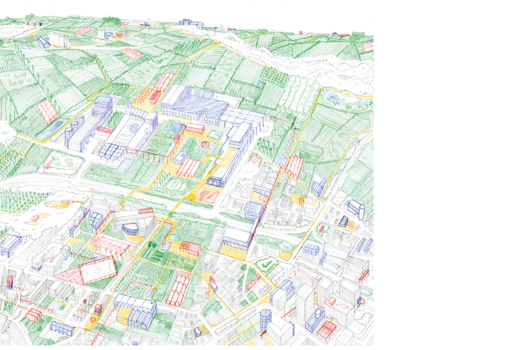
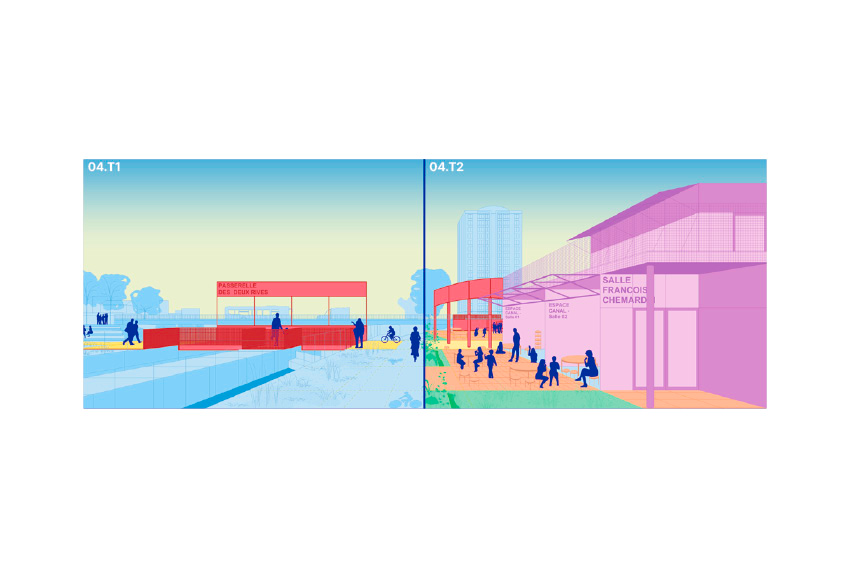
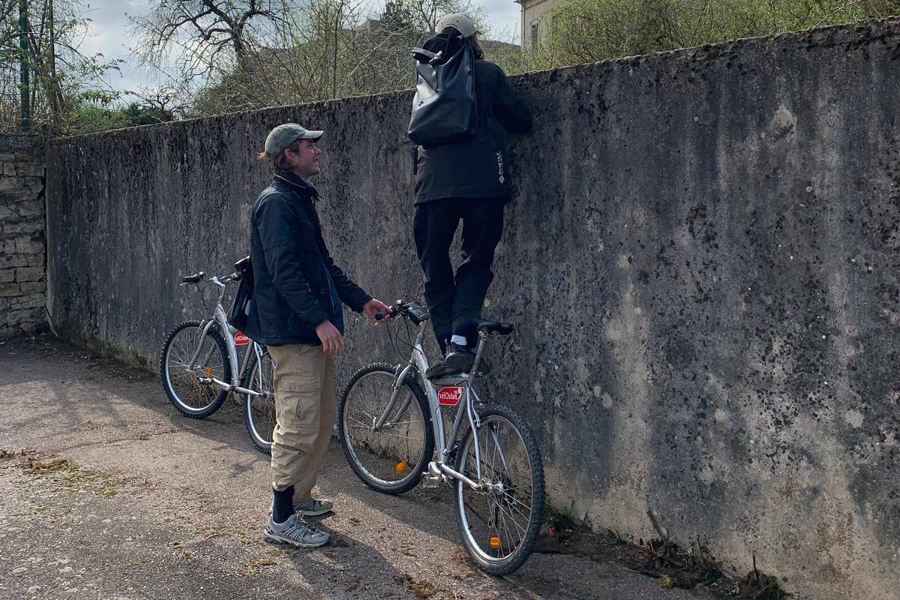
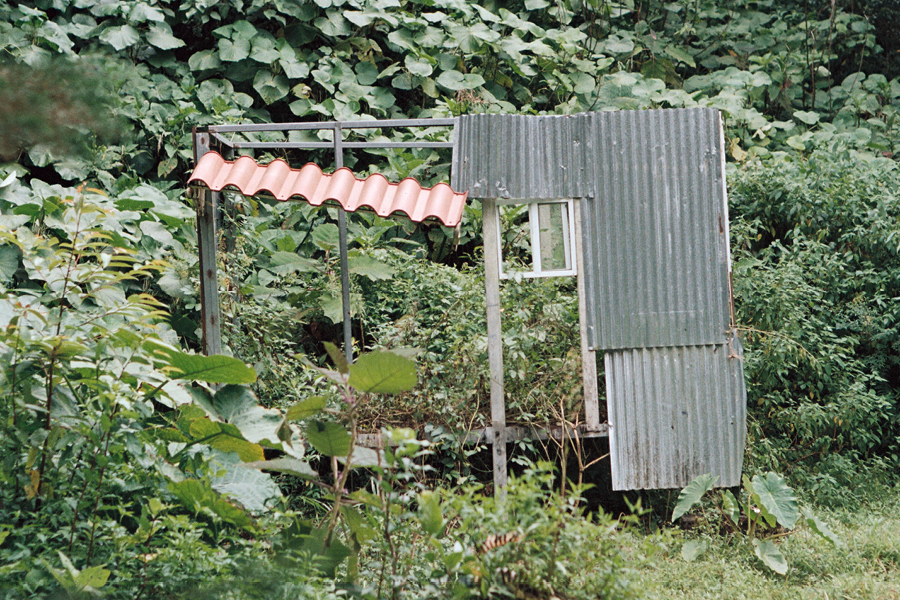
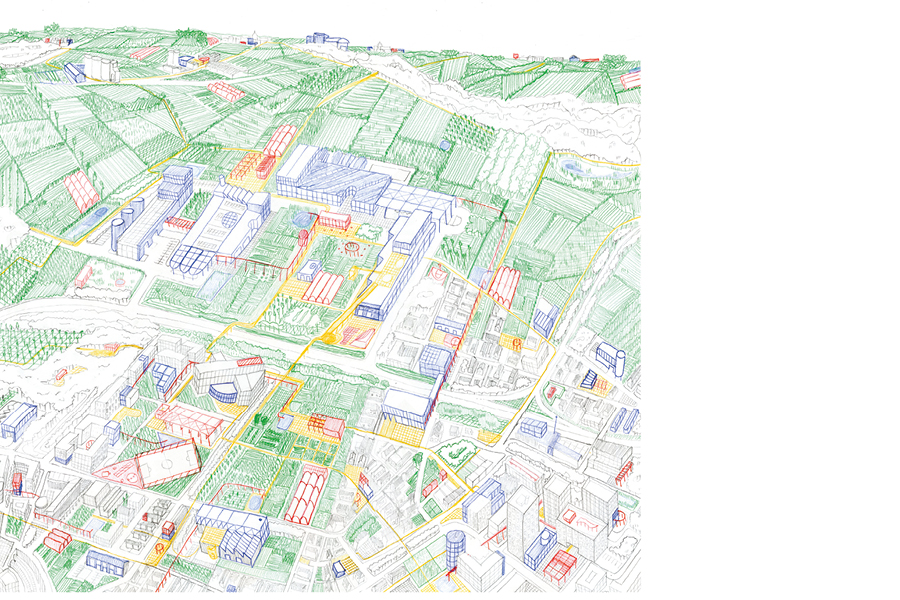
Working with a fragmented territory, between infrastructures and heterogeneous urban fabrics, the project deliberately takes root from a contextual positioning: working with what is already there. Rather than overlaying an exogenous narrative, the aim is to reveal the potential of each site by building on and from existing structures whether built, programmatic, landscape, social, and historical. The project does not seek to impose itself on the urban area, but rather to understand it and amplify where potential allows. Existing pedestrian routes, pockets of vegetation, everyday use, and local dynamics become the project’s driving forces. They are what determine where new places, openings, and continuities are explored. Nothing is demolished, nothing further compartmentalized, instead, spaces are opened up, connected, and revealed.
2. How did the issues of your design and the questions raised by the site mutation meet?
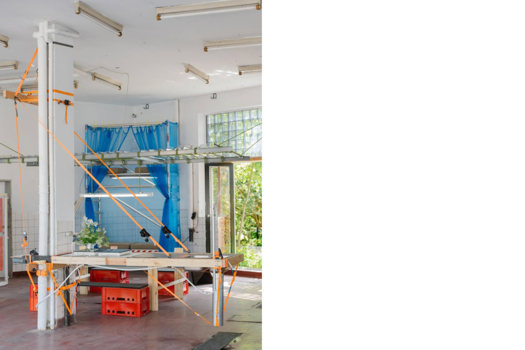
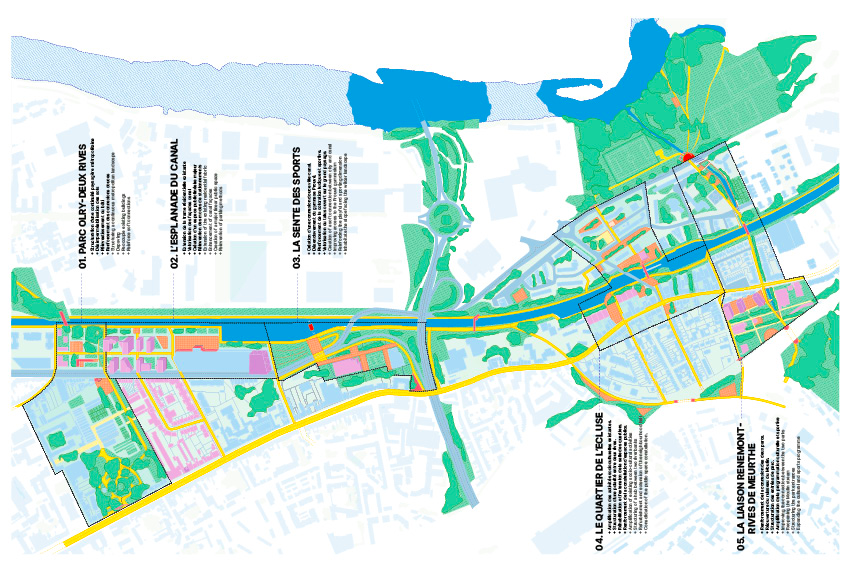
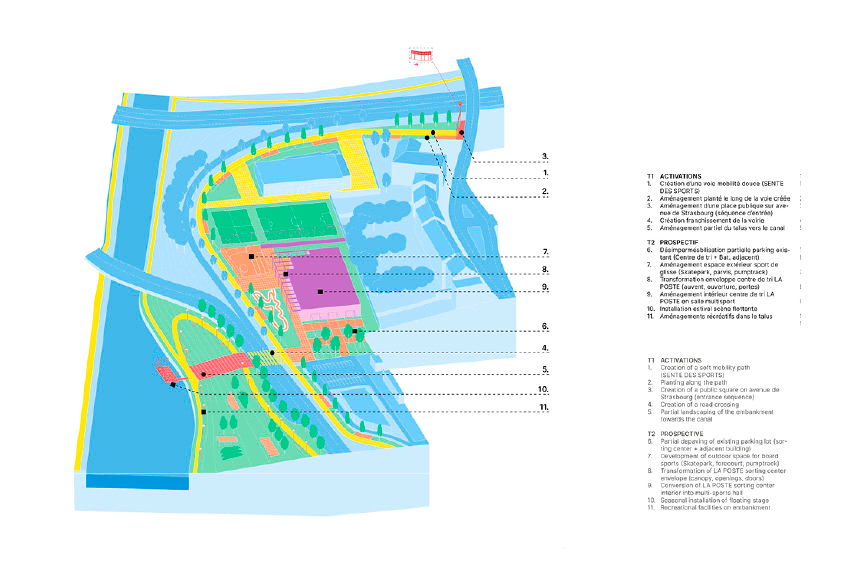
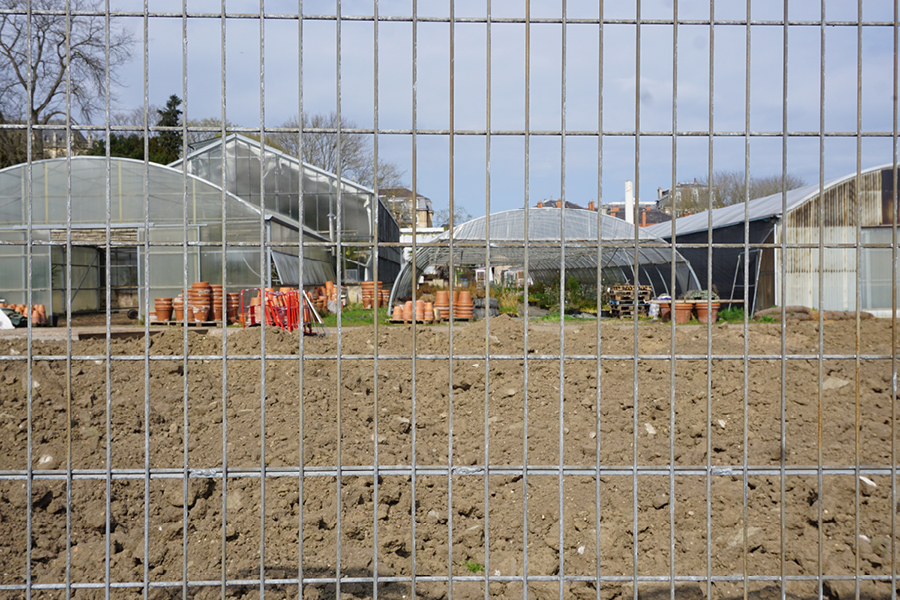
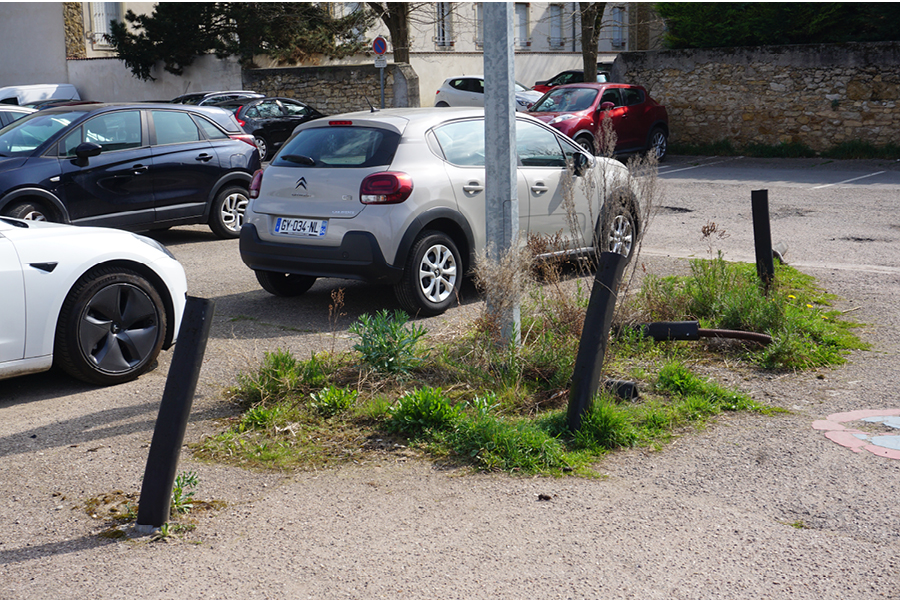
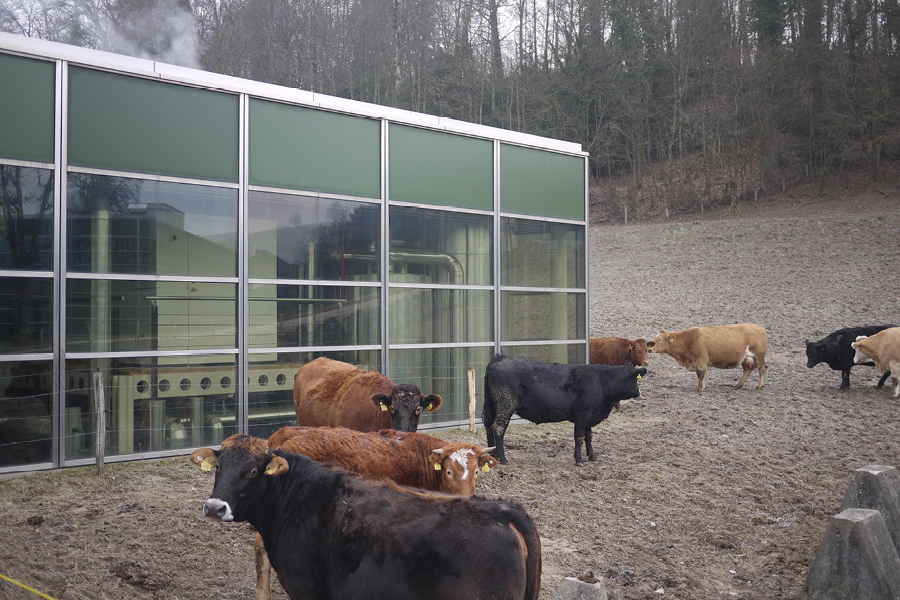
The heterogeneity of the Grand Nancy site appeared to us as one of its key strengths. Enclosed parks, commercial hubs, logistical ruins, and forgotten streams form transversal fabrics that reveal a dormant structure between the canal and its surroundings. Rather than focusing on the infrastructure itself, the project builds on these existing dynamics to reconnect the canal to the city and the larger urban territory. Although 4 project sites are proposed in the brief, we identified 5 from which to work with, allowing us to provide even more diversity along the canal banks. This vision is accompanied by our guiding hypothesis: to active sites we propose targeted, site-specific interventions that can enable new uses, acting as catalysts for broader territorial transformation. By combining short-term, easily implementable actions with a long-term, forward-looking direction, we believe urban change can happen as of today while allowing the process to be iteratively shaped by time, including local initiatives and inhabitants, and integrating feedback loops.
PROJECT:
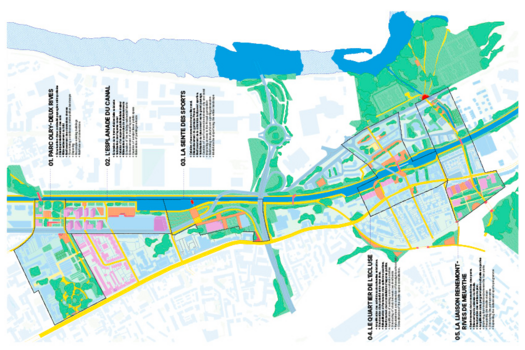
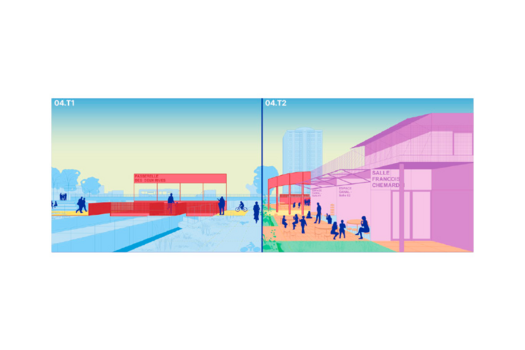
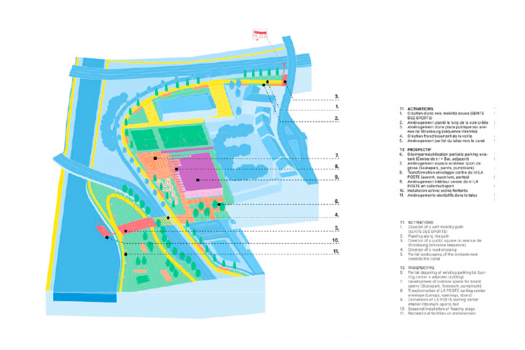
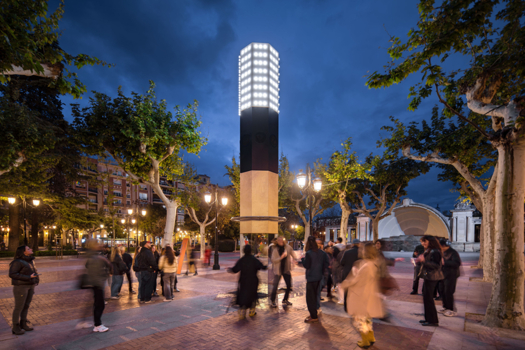
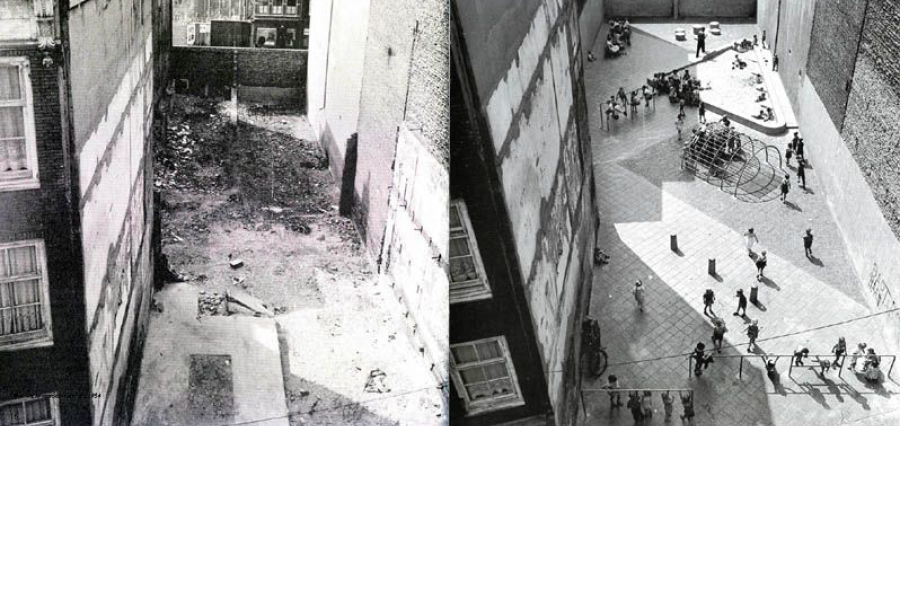
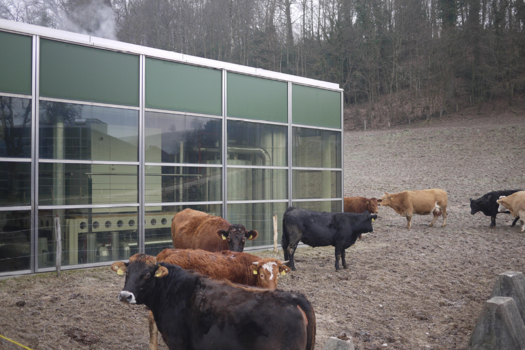
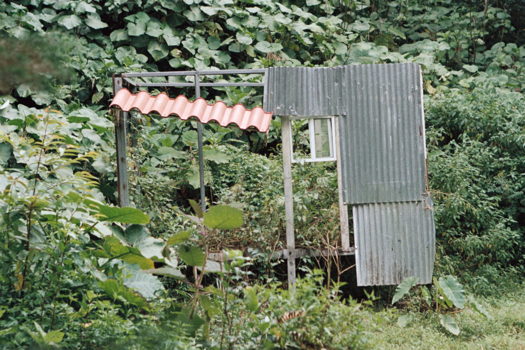
Although we have never worked on this specific case study, this type of issue is far from uncommon, particularly in the relationship infrastructure has with fragmenting urban fabrics, or the connection between built fabric and open space. These challenges are present in many cities undergoing post-industrial transition. Such contexts offer latent opportunities that can need to be revealed to be valorized, giving rise to a form of contextual radicality. Our approach consistently seeks to build on the qualities of what already exists, embracing a trans-scalar way of thinking in which very large-scale conditions can be radically influenced by highly localized interventions, and vice versa. In this sense, our work aligns with work such as Cedric Price’s notion of “magnets” as catalysts for urban transformation, as well as bottom-up initiatives and co-constructed projects between architects and inhabitants, empowering citizens to actively shape their environment.
SITE:
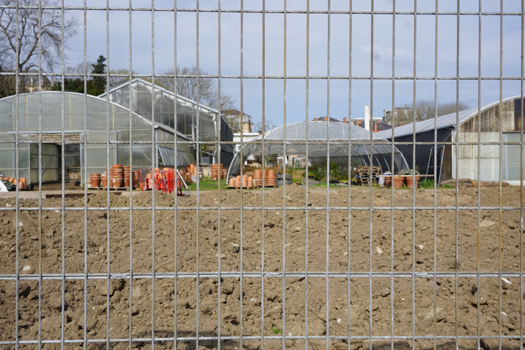
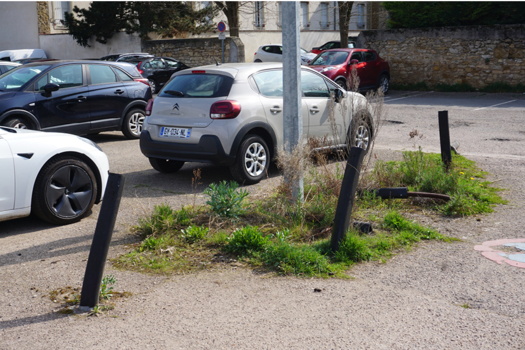
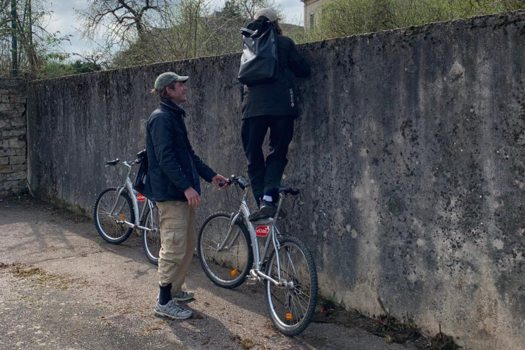
The five sites define operational perimeters that are more focused than the initially identified larger territory. This division makes it easier to identify local issues to be addressed, as well as the different growing dynamics and the stakeholders involved. Identifying five sites also helps reduce the inertia inherent in metropolitan-scale transformation along the canal by channeling it through smaller-scale interventions and opportunities, operating across varied temporalities. The five actions we propose, that is Rewild, Reconnect, Rotate, Open, Interact, form a shared vocabulary that enables dialogue with all stakeholders. These verbs apply across scales, fields of action, and multiple timeframes. Implemented across all sites, they provide a framework for discussion and concrete avenues for action, whether engaging with metropolitan actors, residents, landowners, a toad, or reeds. Together, the five sites and the five actions constitute a set of tools that allows the project to be developed in depth, to engage relevant actors, and to envision the long-term transformation of the canal.
REFERENCES:
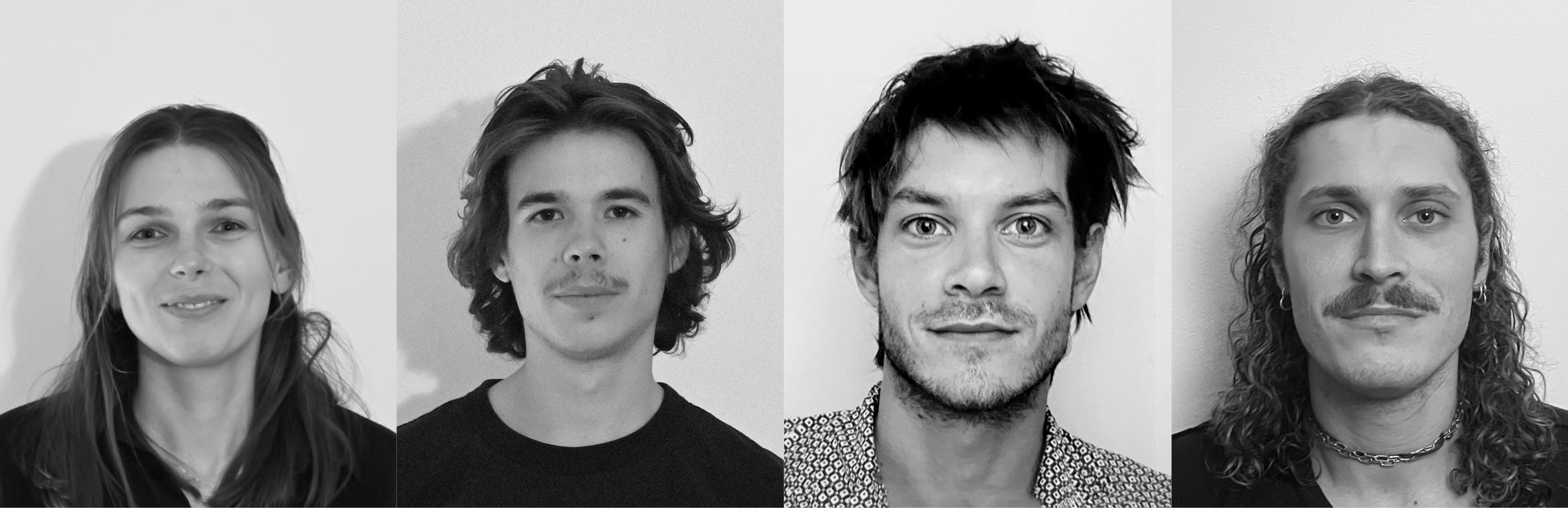
Alex, Anatole, and Juliette met at the architecture school of Versailles (ENSA) and have been collaborating since 2018 on projects of varying scales. Hadrien attended the Technical University of Delft in the Netherlands and met the three teammates while moving to Paris after his master’s. Through their own professional experiences and practices, they all share and complement each other in the realms of participatory and self-building initiatives, architectural transformation, and operational urbanism and territorial planning. The collaboration emerged from a desire to bring in complementary perspectives to best answer a complex site like that of the Grand Nancy. Our approach to the project has primarily focused on acknowledging the heterogeneity of the project sites and answering a territorial challenge with site specific interventions that touch both on built and landscape infrastructures. At the same time, establishing an operational and temporal methodology was essential, allowing for quick implementation and long-term foresight. With our diversity of perspectives, our team was well equipped to look at these transversalities of discipline, scale, and time.
6. How could this prize help you in your professional career?
As a project incubator, Europan has allowed us to start developing a collective methodology that stems from our own academic research, personal experimentations and professional experiences in architecture and landscape architecture firms. With this project and the jury’s mention, we hope to further develop and apply our approach to urban transformation while working with the various actors of the Grand Nancy to help them define and answer their needs.
TEAM IDENTITY
Legal status:
Team name: Studio H2AJ
Average age of the associates: 28 years old
Has your team, together or separately, already conceived or implemented some projects and/or won any competition? if so, which ones?
Some of our team members already conceived some projects together. Alex, Anatole and Juliette have been working together on several projects and open calls since 2018. All members have won and implemented various projects professionally whether personal, collective, or within a firm context.
Notably,
- Juliette and Anatole have won the prize for best diploma project in 2022
- Alex and Anatole (+ E. Nuzzo & J-B. Vetillard) have won the Concentrico #10 open call with the project called Palo de Mayo in 2024.
- Hadrien has taken part of “What a Waste” residency in Ghent (BE) in 2025. The project will soon be published in 2026.
WORKS: