From ideas to process-projects
Europan 13 - Goussainville (FR)
« Des ailes et des racines »
Project strategy family:
- Ecological connections
- Inclusive morphologies
- Inventive typologies
- Reinterpreted heritage
- Urban articulations
Process category:
- Direct order processes
- Competitive processes
- Co-creative processes
- Collaborative processes
- Participative processes
- Participation of the Living processes
- Adaptative legal framework processes
Authors: Collectif "Hyacinthe s’Imagine" including the 3 teams (Camille Le Bivic, Florent Vidaling, FR, Diana Levin AT, Sidonie Bouillerot, Elodie Bru, Francois Ricros Guillaume Duranel, Frédéric Blaise, Julia Lenoir, FR)
Client(s): Communauté d’Agglomération Roissy Pays de France, City of Goussainville
Dates: 2015 - 2019
Driving forces: Team
Site
Goussainville (FR)
SCALE XL/L SIZE 922ha / 52ha
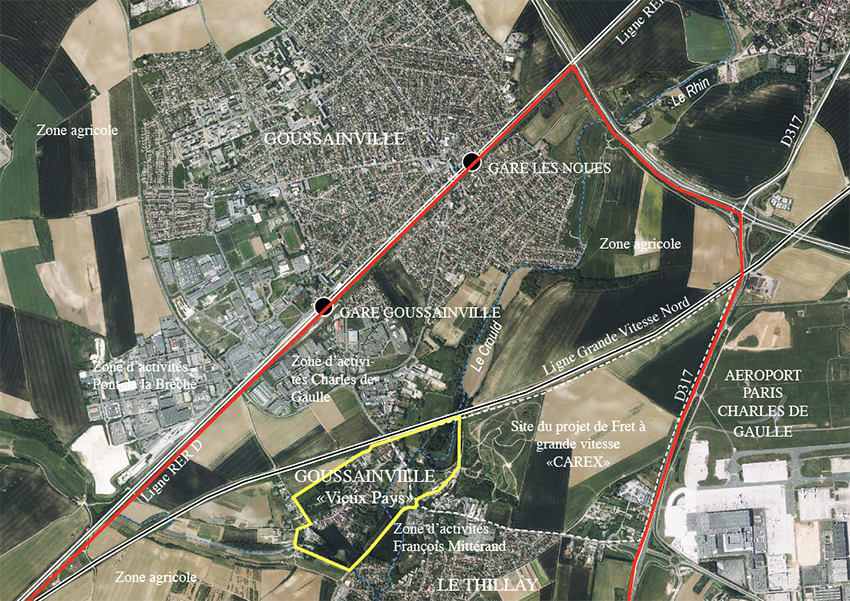
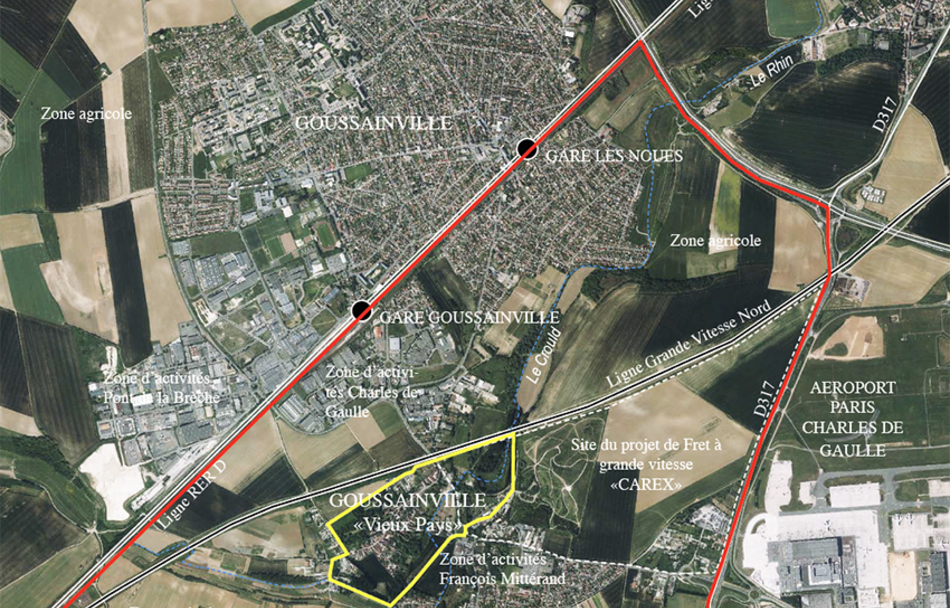
Situated immediately adjacent to the “airport city”, at one of the only two entries to Goussainville, full of landscape and architectural qualities which protected it from demolition when the airport was built, the historic village has the potential of becoming a unifying element amidst the surrounding urban archipelagoes, with the capacity to change perceptions of an area too often considered as a “support function”. The Municipality is therefore looking for projects with a vision for the future, that will support the transition from a hypo-metropolitan space to a hyper-metropolitan space.
Awarded Idea
Project - Ideas
Des ailes et des racines
RUNNER-UP (Diana Levin AT, Sidonie Bouillerot, Elodie Bru, Francois Ricros FR)
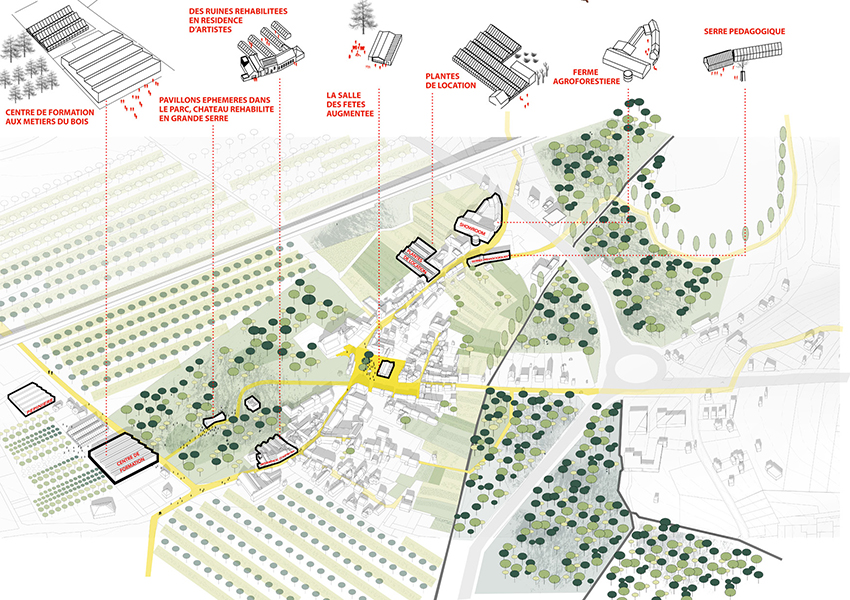
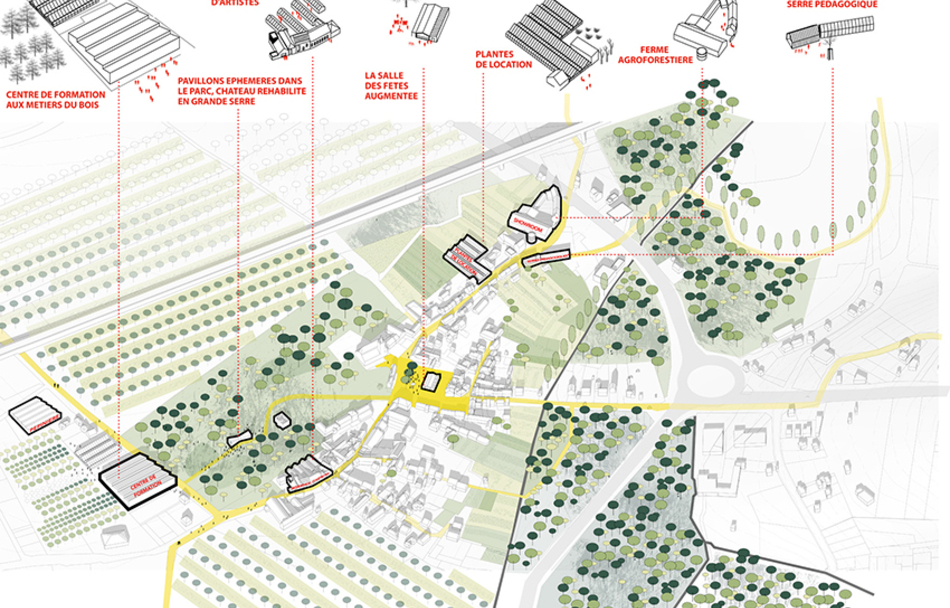
To support the securing of land property and the reduction of atmospheric pollution, this project proposes to develop forestry on a local scale and to let the village shine as a wood-laboratory display. Goussainville's future implies the foundation of agricultural activities, of the social landscape and natural spaces within the area. Forestry under a much larger angle, the proposal develops within decades and implies a diversified pool of key players. Between city and village, it articulates around 3 objectives: ecology, landscape and production.
Project Strategy
Family: Reinterpreted heritage
RUNNER-UP ASSOCIATED FOR THE IMPLEMENTATION WITH THE TWO OTHER PRIZE-WINNING TEAMS:
Winner "Base vie": see competition project here
Special mention "Vieux pays - Nouvelle étape": see competition project here
A PARTICIPATORY GUIDE PLAN TO HELP INHABITANTS TO TAKE OWNERSHIP OF THE PROJECT
The three prize-winning projects share common ideas: public participation, the showcasing of heritage, and a connection to the Croult River, which flows through the village.
An association called “Yacinthe s’Imagine” brings together the three prize-winning teams to carry out an urban and programmatic feasibility study, with a participatory diagnosis, programmatic scenarios and an economic evaluation.
Programmatic orientations have re-emerged from the work carried out with the inhabitants: crafts, a participatory building site, agriculture, cultural enhancement of the village, lodging of leisure. Others were added to the list: a centre for the conservation and showcasing of the Archéa Museum’s collections, as well as the creation of a "third place" co-managed by inhabitants. Finally, certain trails —such as agroforestry— were abandoned.
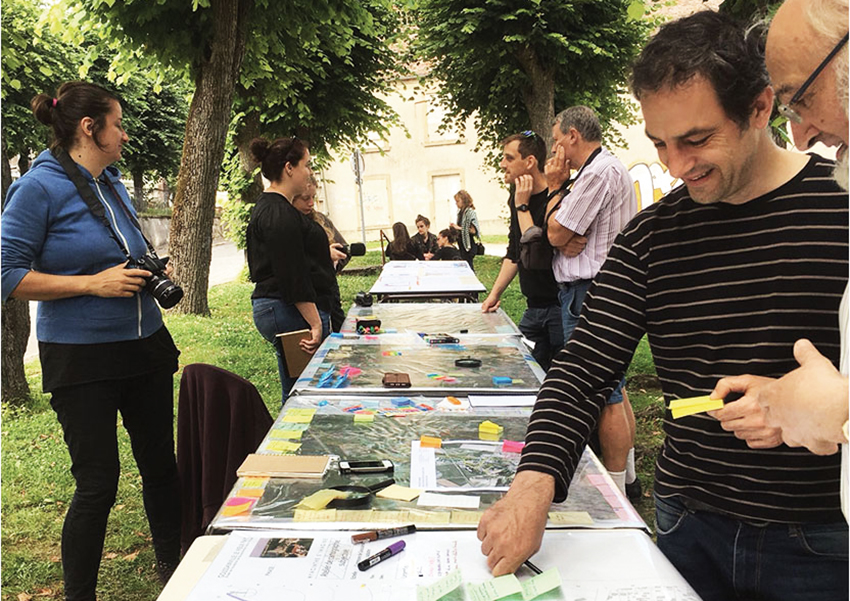
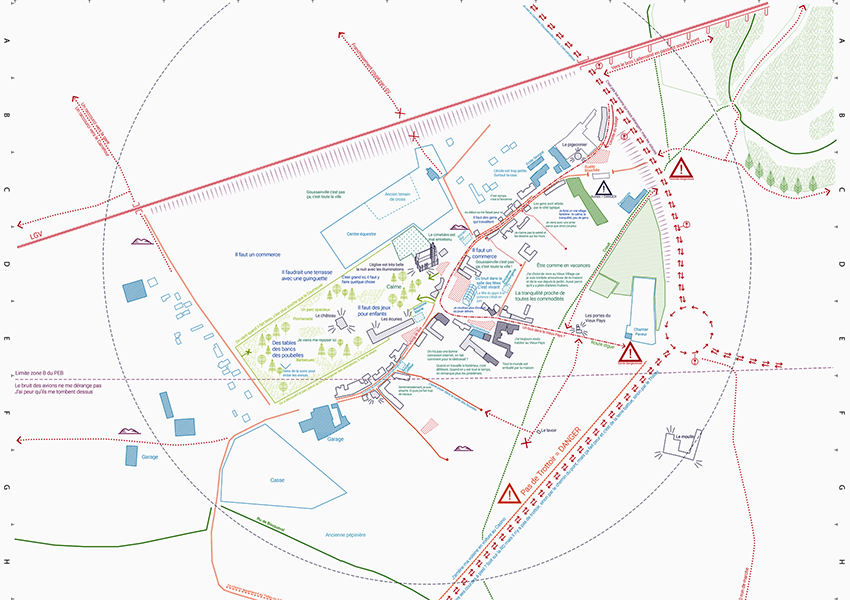
A guide plan of Vieux Pays has been developed and validated. “Yacinthe s’Imagine” helped communities to take the project over and organized the pre-operational phase. Interventions in public spaces were carried out through the recovery of rubble from a collapsed house with the help of a paving company located at the entrance to the village.
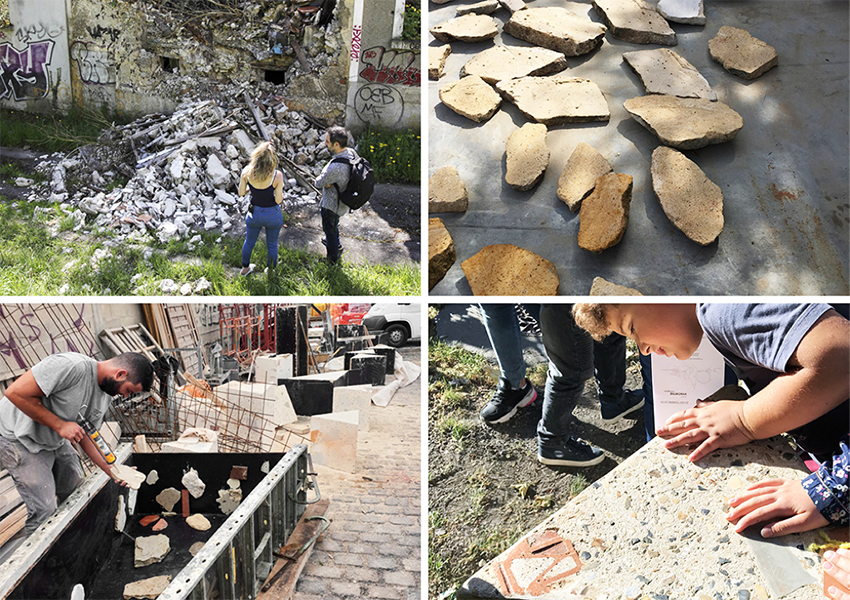
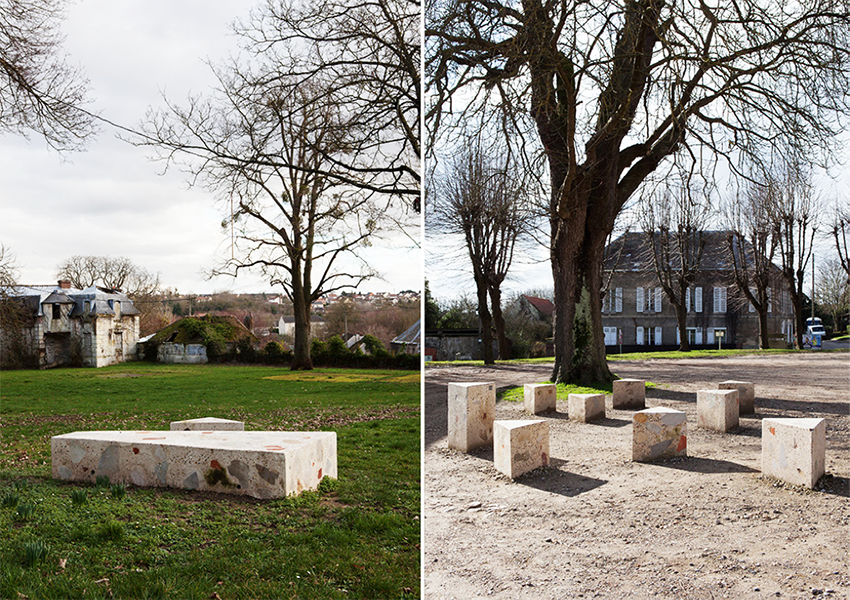
PROJECT COMPLETED
Process
Category(ies): Co-creative processes, Participative processes, Participation of the Living processes
Co-creative processes
Following the competition, the urban community awarded a contract to the 3 teams, which joined forces to form a collective called ‘Yacinthe s'Imagine’ to carry out an urban and programmatic feasibility study, including a participatory assessment, programmatic scenarios and an economic evaluation.
Participative processes
To this end, the collective organised various workshops with residents to define the programme's guidelines.
Participation of the Living processes
The proposed masterplan sets out the foundations for agricultural activities, the social landscape and natural spaces in the region.