From ideas to process-projects
Europan 11 - Ingolstadt (DE)
« [Re] Naturalized histories »
Project strategy family:
- Ecological connections
- Inclusive morphologies
- Inventive typologies
- Reinterpreted heritage
- Urban articulations
Process category:
- Direct order processes
- Competitive processes
- Co-creative processes
- Collaborative processes
- Participative processes
- Participation of the Living processes
- Adaptative legal framework processes
Authors: Oficinaa (Silvia Benedito, PT, Alexander Häusler, DE)
Client(s): City of Ingolstadt
Dates: 2011-2015
Driving forces: Client
Site
Ingolstadt (DE)
SCALE XL/L SIZE 106ha / 75ha
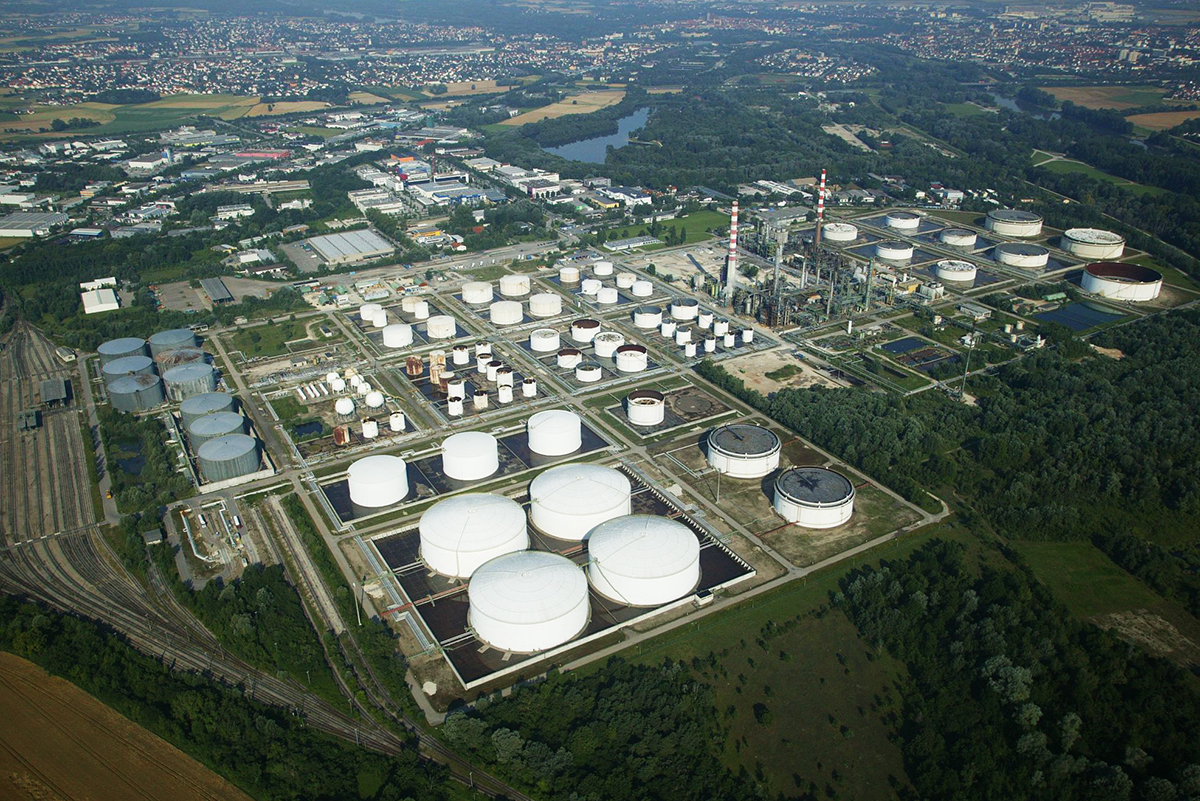
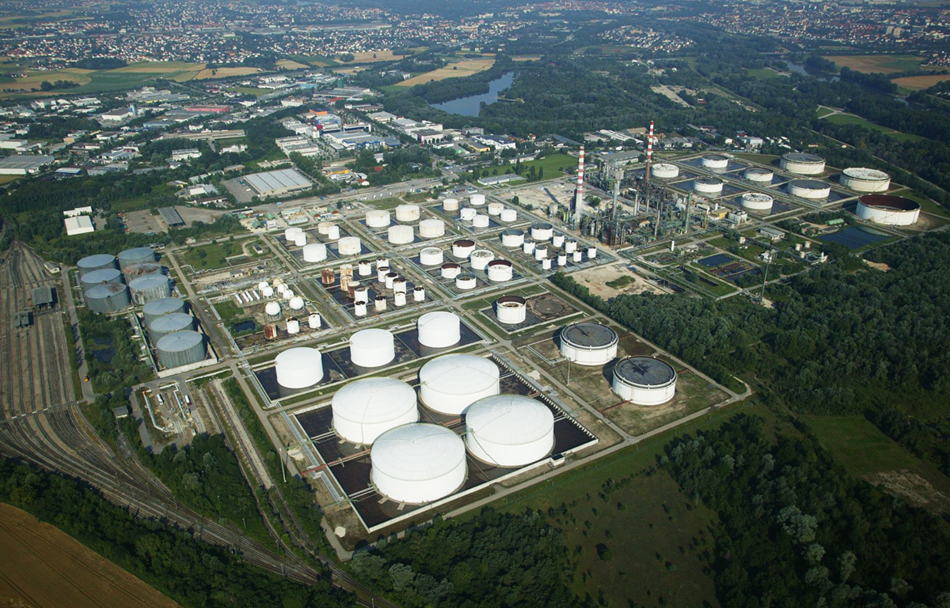
With the closing of the refinery site a huge area on the southeastern periphery of the town is available for future use that offers various potentials for development. The programmatic objective has to give consideration to the exceptional site location between the River Danube, the nature reserve area Kälberschütt and Auwaldsee and should contribute to the ecological balance of the city.
Awarded Idea
Project - Ideas
[Re] Naturalized histories
SITE'S HISTORIES
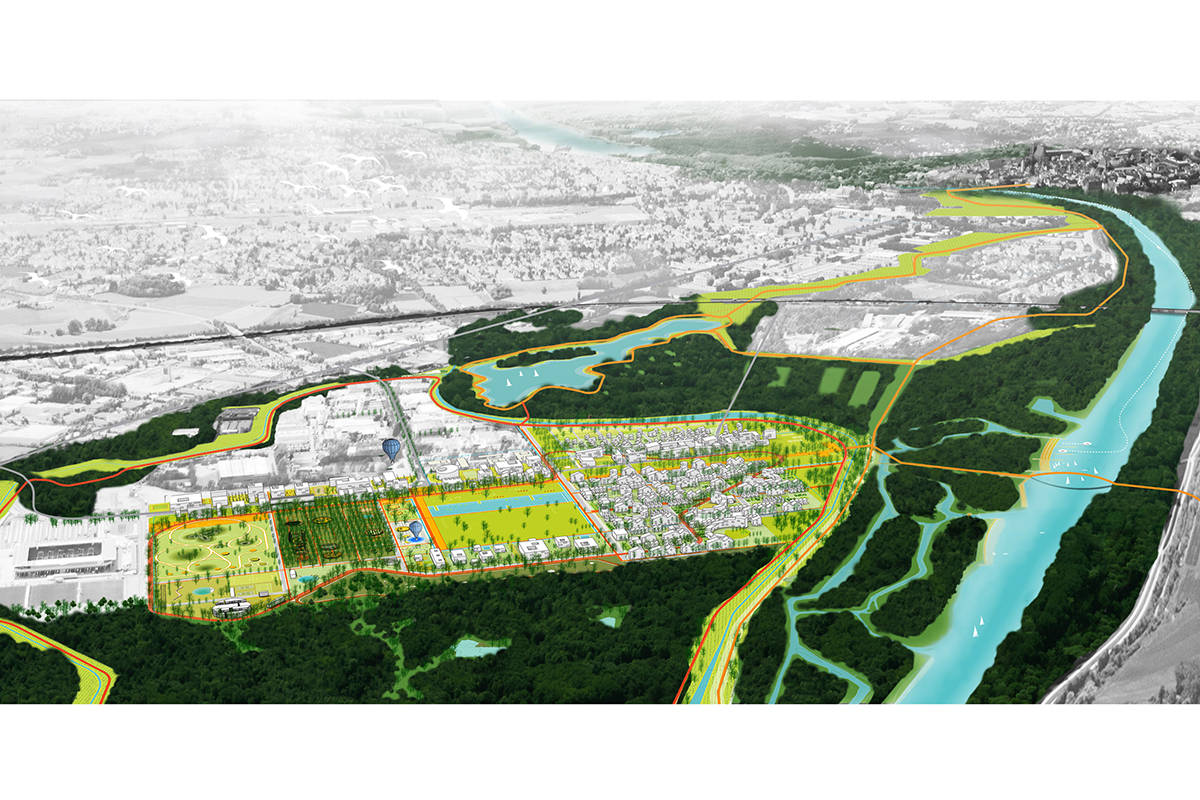
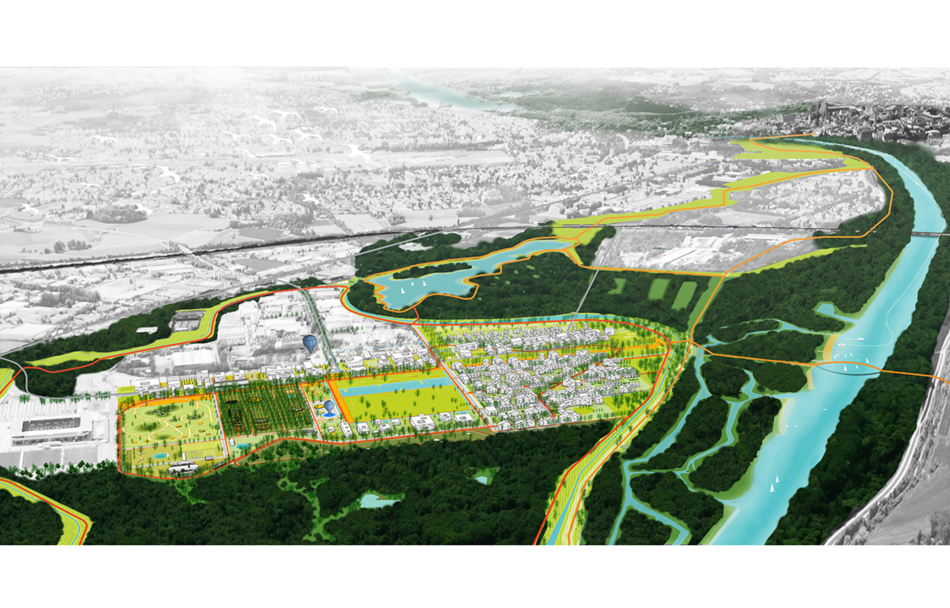
"[Re] Naturalized Histories" is a proposal that merges the different histories of the site into a lifestyle strategy dedicated to sustainable environments: the relinkage to the Danube River; the re-use of the scars derived from the 20th century refinery industrial history of the site; the proposal of two new 21th century figures for living ecologies in 2 scales (city and site).
Project Strategy
Family: Ecological connections
FROM INDUSTRIAL WASTELAND TO AN URBAN AND ECOLOGICAL RECONNECTIONS WITH THE DANUBE RIVER
On an easily accessible industrial wasteland, the project proposes three different histories with three different times: the re-linkage to the Danube River –to its history and to its ecological importance- that suffered significant changes at the beginning of the 19th century; The re-use of the scars derived from the 20th century refinery industrial history of the site – the grid and the tanks; the proposal of two new 21th century figures for living ecologies in 2 scales – city and site.
In 2012 the team submitted an overall concept for a 210 ha urban park along the Danube. With its ecological, aesthetic and sustainable added value, as well as its offering of recreation and repose the “City Park Danube” wants to reconquer the river for the citizens of Ingolstadt. The project creates a connected strip at the river, which includes multiple landscapes and various recognizable access points, paths and loops, which are connecting back to the medieval city centre as well as the adjacent neighbourhoods. With its social, cultural and ecological goals, the project revives an almost forgotten fluvial landscape with small, useful and adaptable measures. With its different scales the project operates regionally and simultaneously with its nuanced design it includes itself in its surrounding.
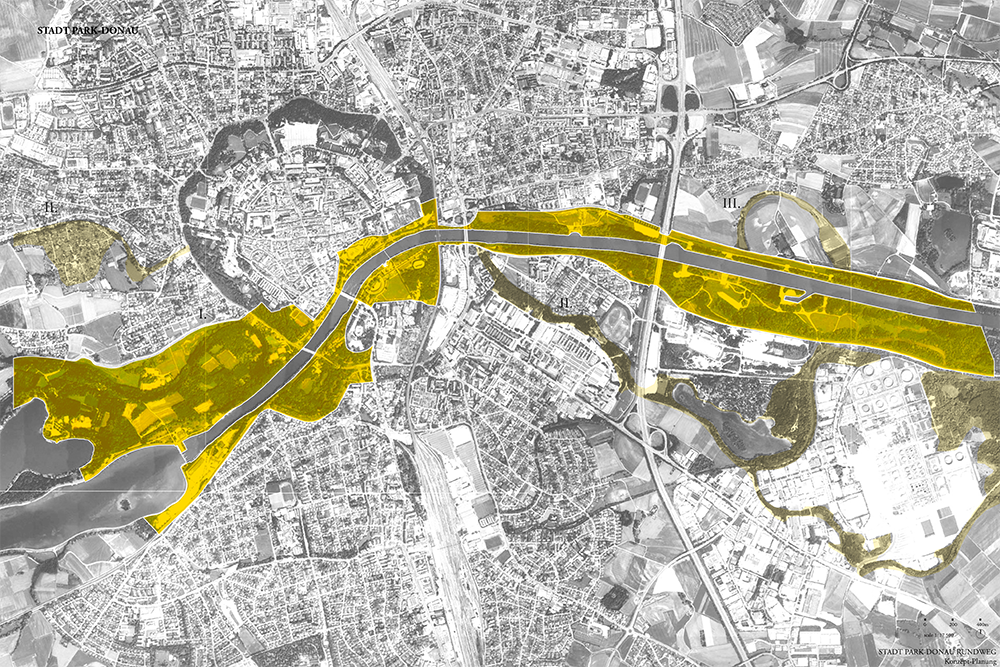
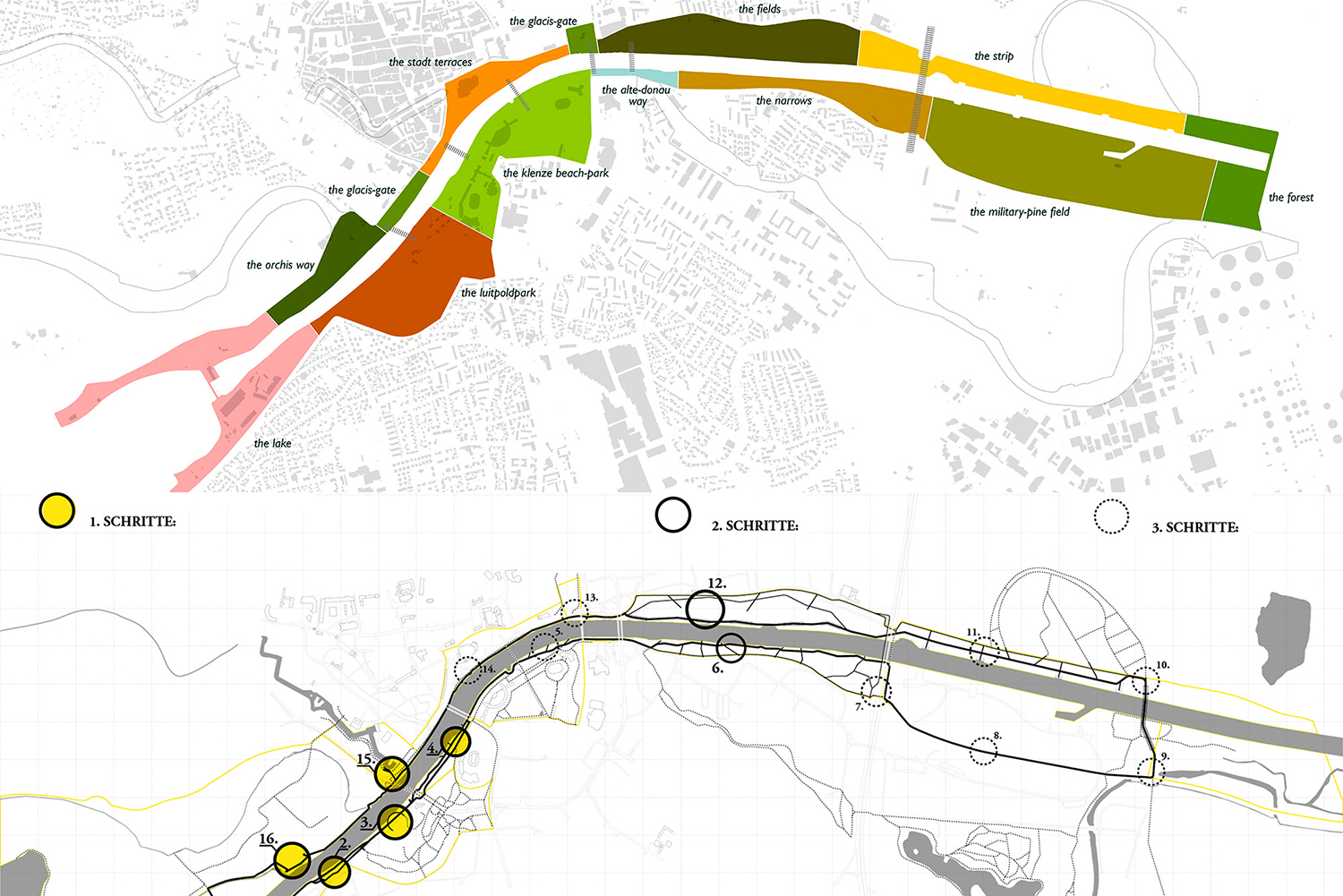
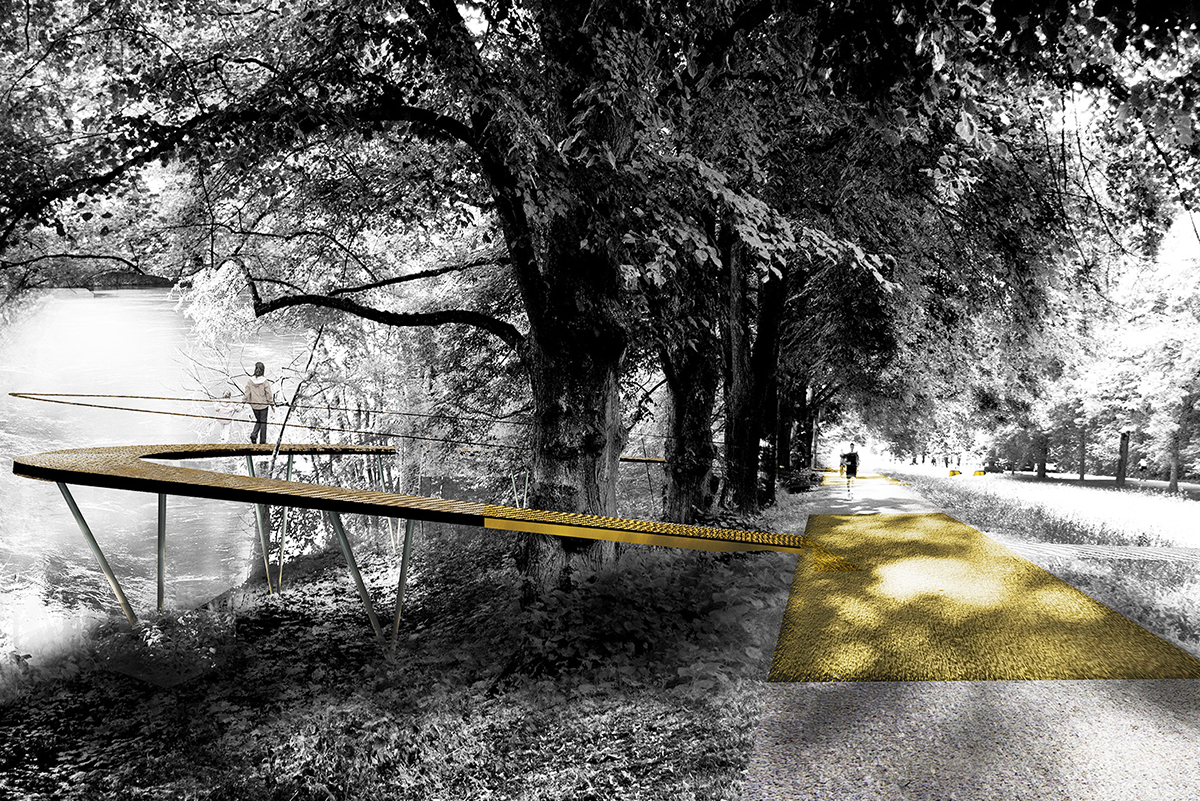
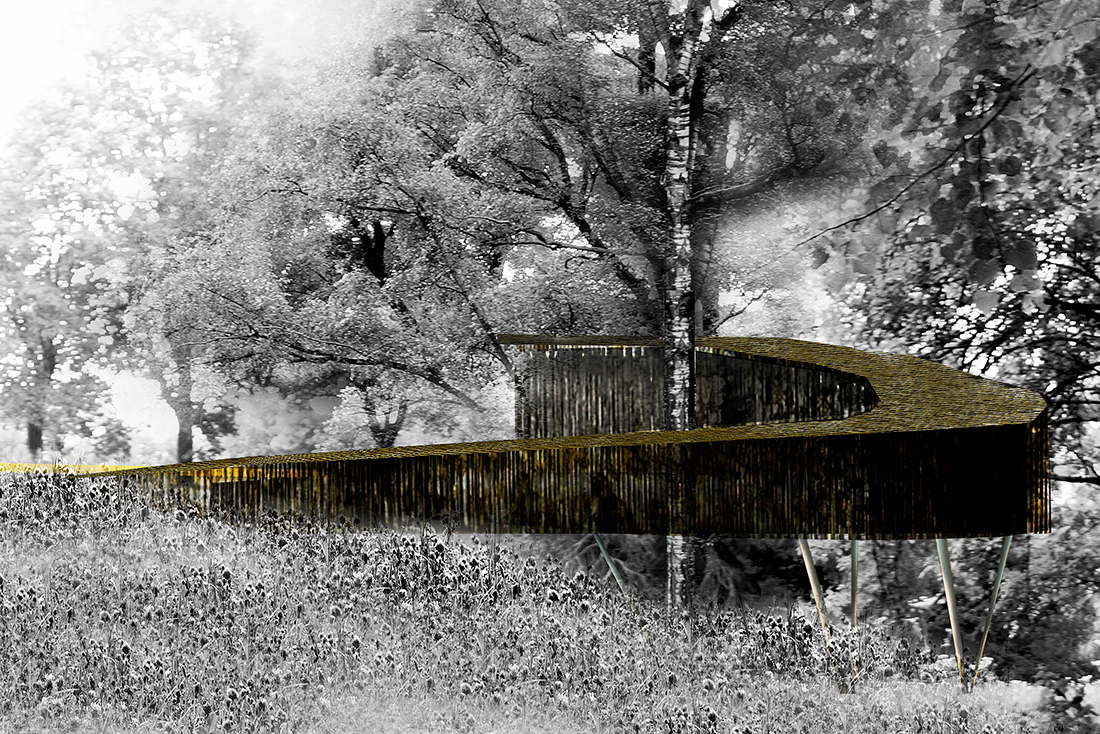
In 2013, the team made a proposal for the Donau-Loop project, focused on a multi-modal pathway (13km). The Donau-Loop is a recognizable and curated pathway along the river edge. The path connects to existing program as well as new program. Made of consistent furnishings and materials creating a unified identity throughout the larger network, 16 sequences of experiences/stations are proposed along its 13-km course. From recreational to educational, from water sports to tree climbing, from boat cruising to bike riding, from swimming to bird watching, the Donau-Loop is a destination by itself. The pathway and its program will allow expanding the use throughout the year by offering comfortable zones to stay, exercise and dwell along the river.
PROJECT COMPLETED
Process
Category(ies): Direct order processes, Participation of the Living processes
Direct order processes
Following the competition, the city directly asked the OFICINAA team, which had been shortlisted in the Europan competition and was the only team to consider the Danube as a unique feature, to develop a broad vision of the relationship between the river and the city, between the river and its ecology, and between the river and its potential as a civic framework.
The city then commissioned them to conduct a study on the Donau-Loop project, focusing on a 13km multimodal route along the river.
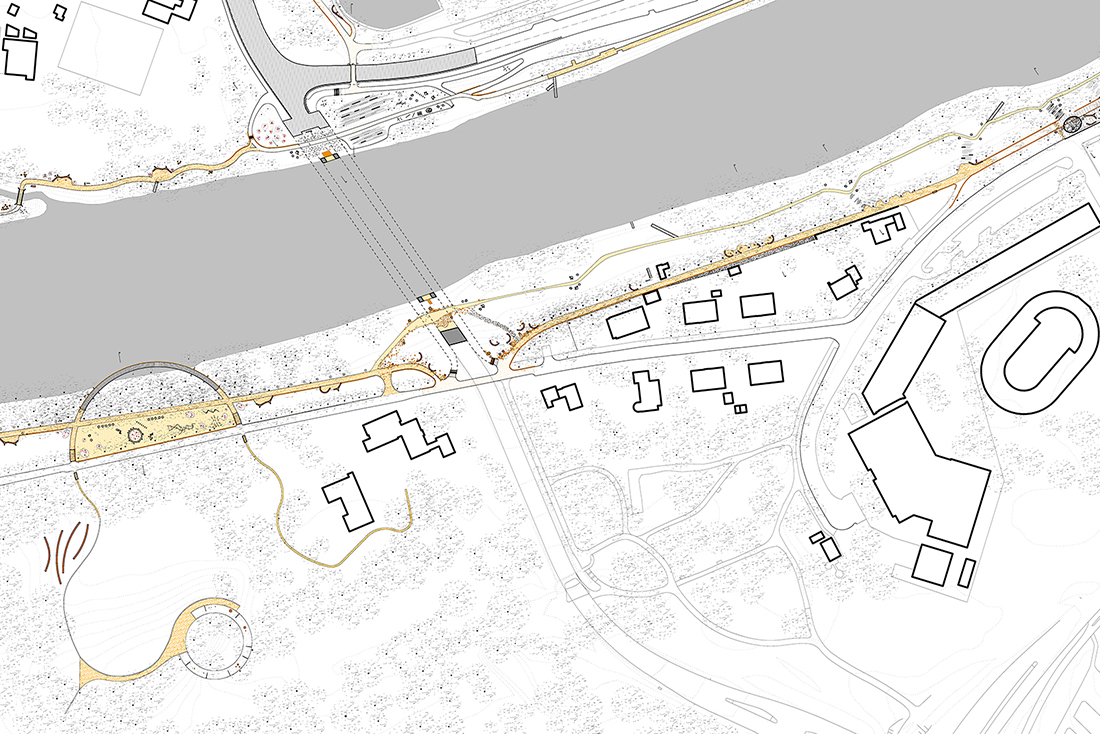
Finally, the city gave the team a contract as a starter to test their ideas on a 400m section of the Donau-Loop project.
Participation of the Living processes
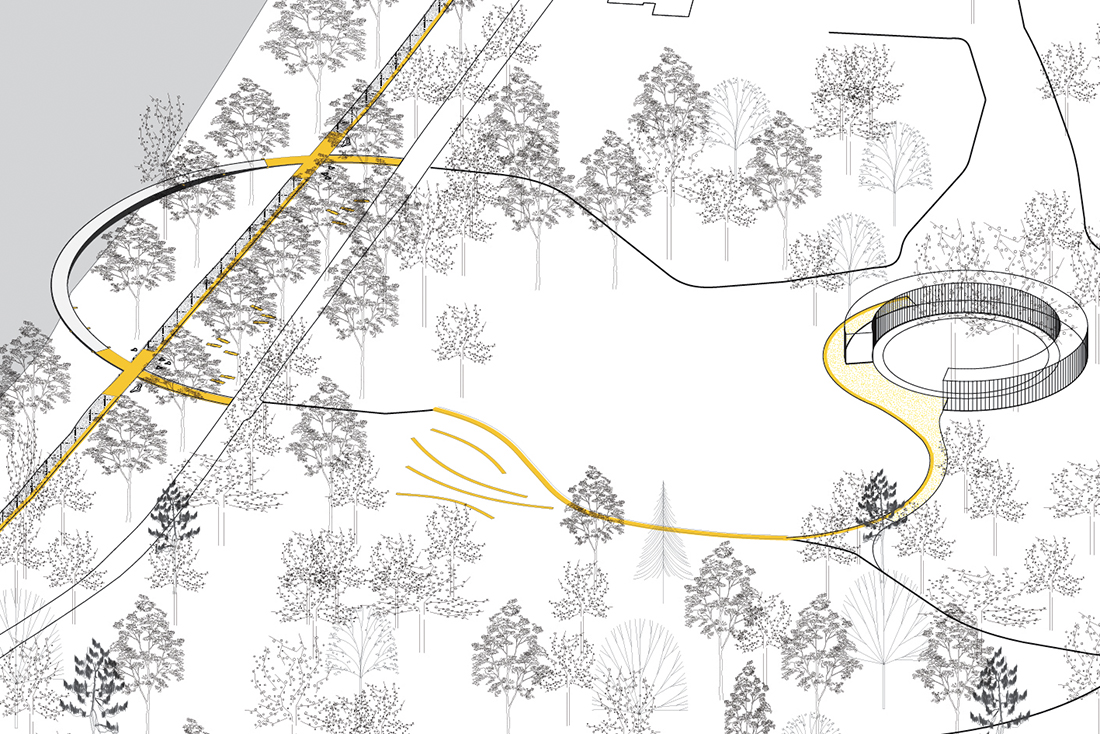
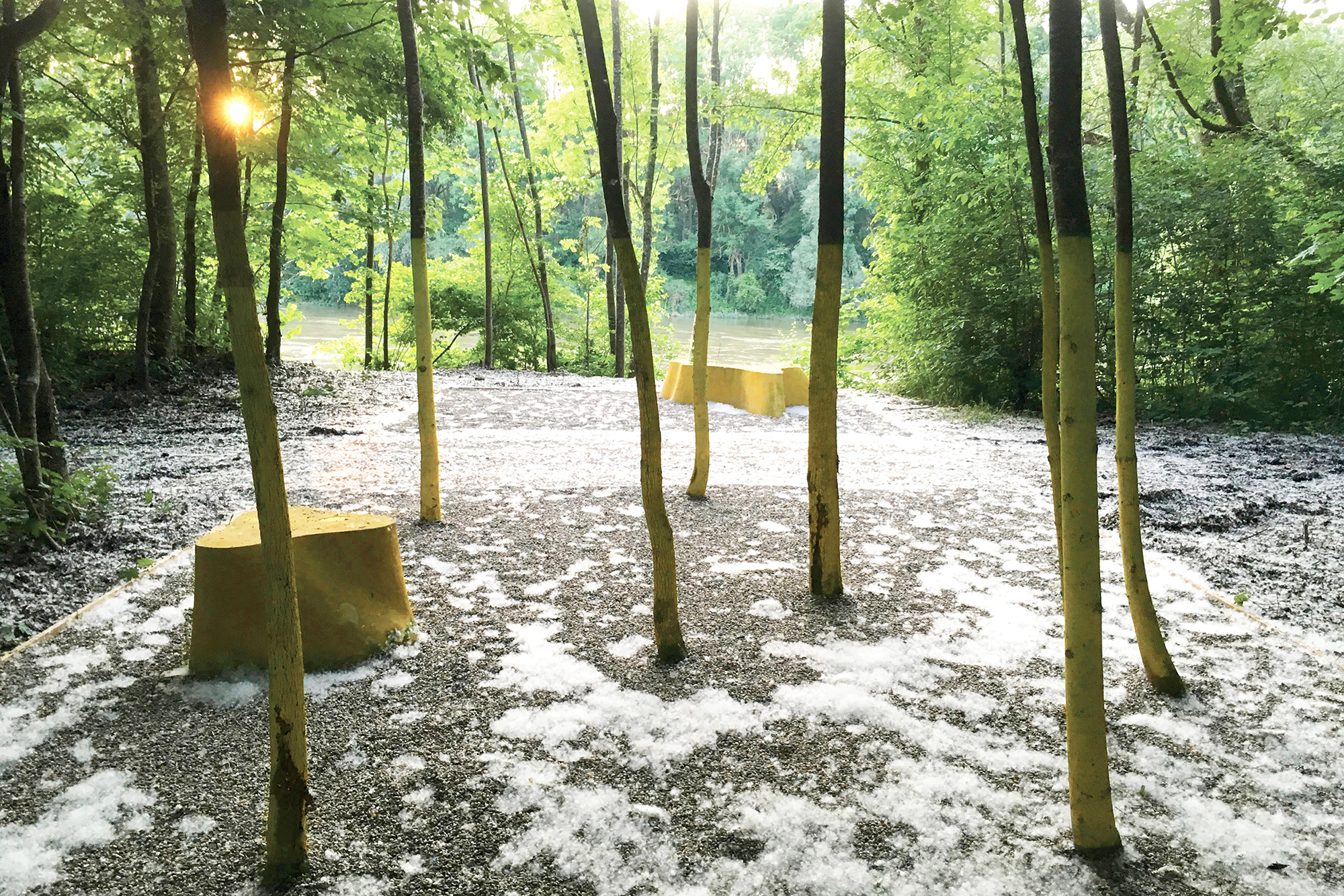
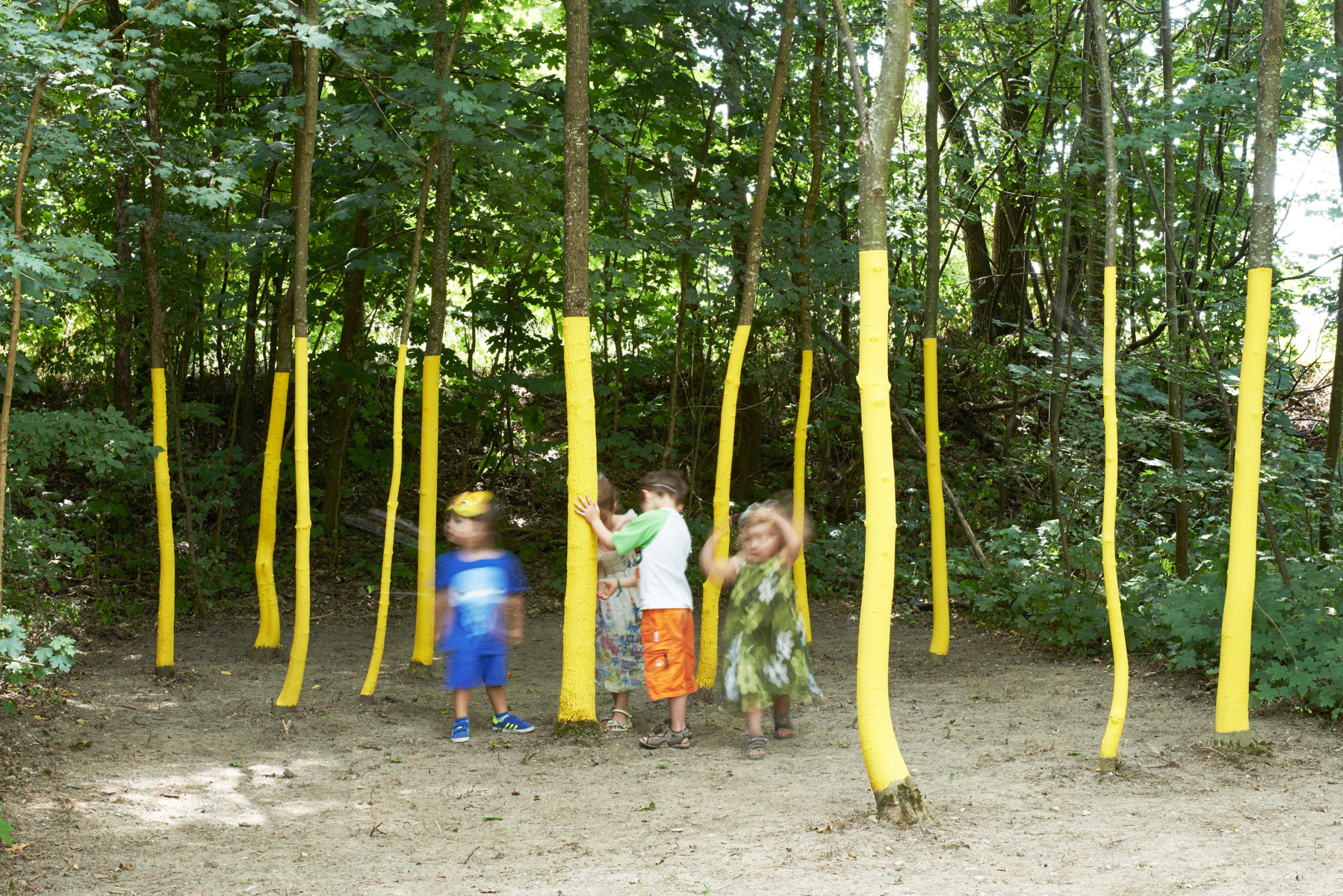
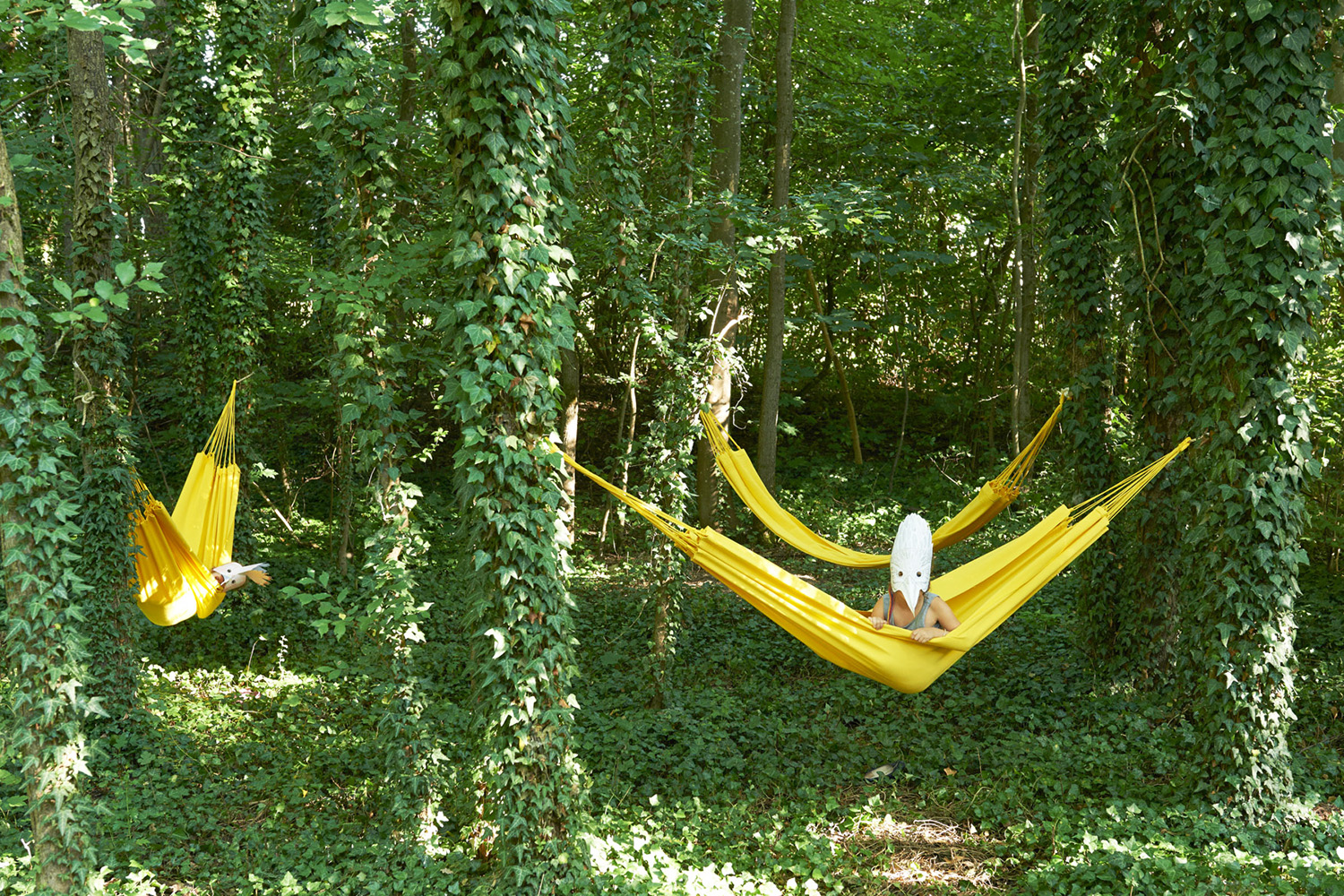
The specific characteristics of the river landscape were taken into account through the implementation of a 400m path along the river: the location of trees, ivy cover, the incidence of light, wind and sounds from the river. These were used to conceptualize minimal interventions that create unique and distinct atmospheres and microclimates.
A Scent Cabinet was also created to celebrate the different scents of the nearby alluvial forest.