From ideas to process-projects
Europan 12 - Wien - Siemensäcker (AT)
« Urban software »
Project strategy family:
- Ecological connections
- Inclusive morphologies
- Inventive typologies
- Reinterpreted heritage
- Urban articulations
Process category:
- Direct order processes
- Competitive processes
- Co-creative processes
- Collaborative processes
- Participative processes
- Participation of the Living processes
- Adaptative legal framework processes
Authors: Arenas Basabe Palacios Arquitectos (Enrique Arenas Laorga, Luis Basabe Palacios, Luis Palacios Labrador, ES) - Local partner: Soyka-Silber-Soyka Architekten
Client(s): City of Vienna – MA 21 Office, Siemens AG Österreich, Sozialbau AG, ARE (Austrian Real Estate)
Dates: 2013-2021
Driving forces: Team + Client
Site
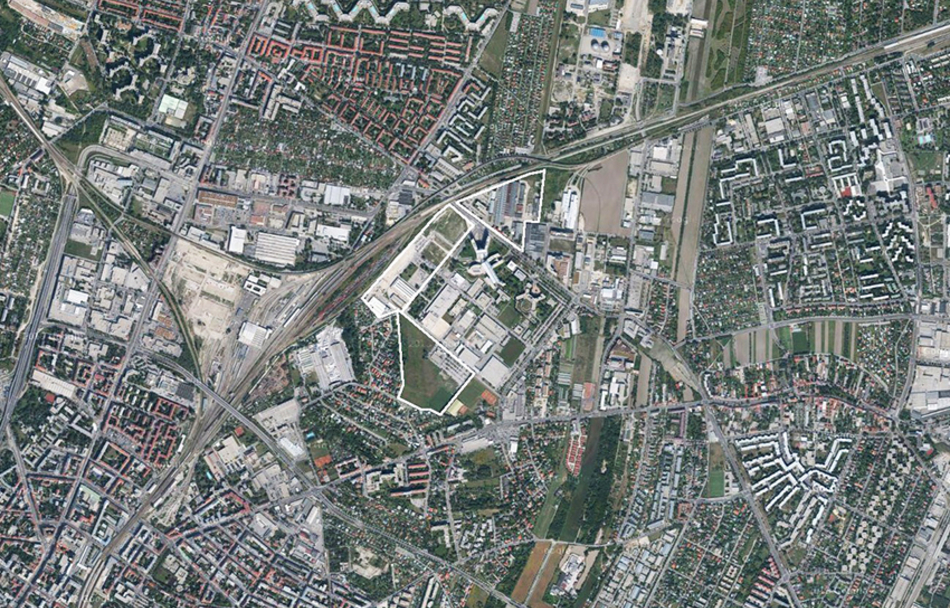
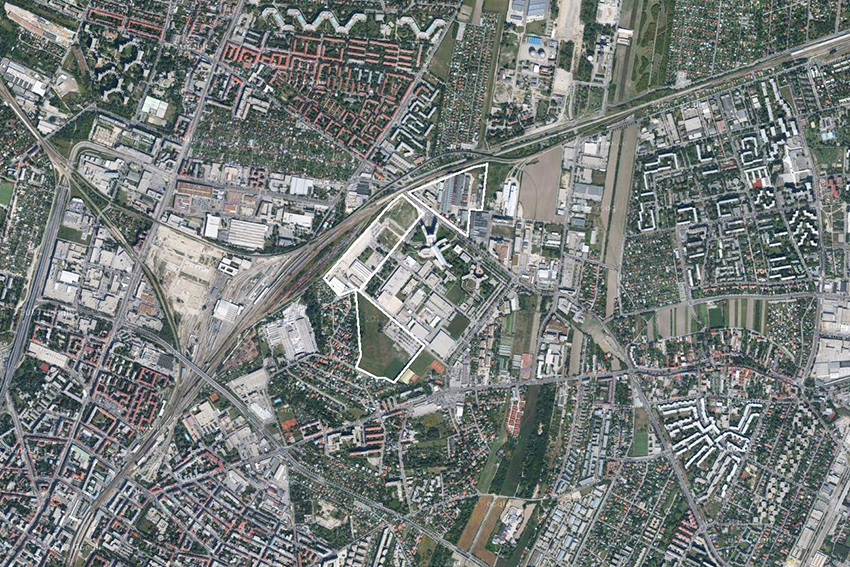
Wien - Siemensäcker (AT)
SCALE L/S SIZE 84ha / 6.7ha, 11.7ha, 8.4ha
Due to the growth of population housing is an opportunity to intensify suburban areas and coexist with process of industrial developments giving new urban qualities due to the lack of conflicts between housing and certain innovative industrial developments.
Awarded Idea
Project - Ideas
Urban software
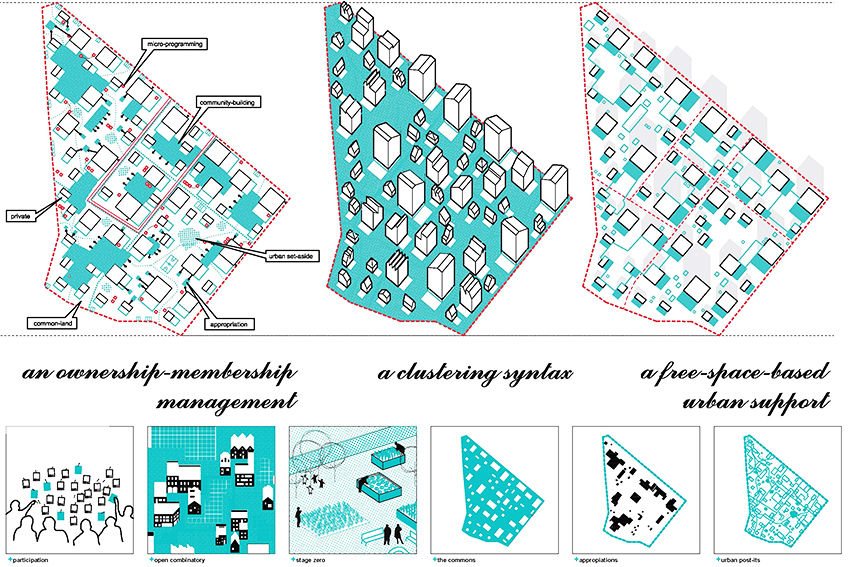
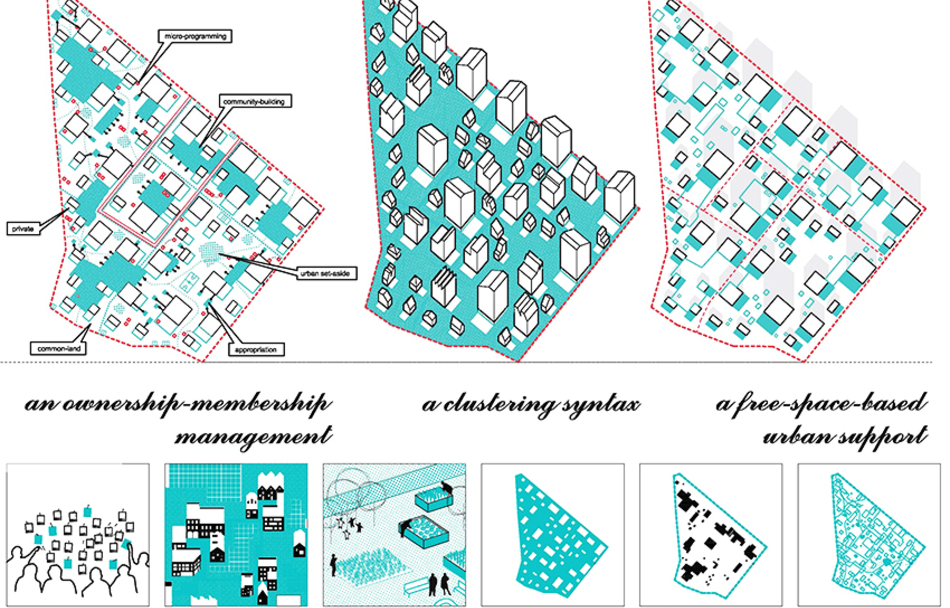
The project seeks a solution to the complex “Siemensäcker” area through a matrix that crosses 3 very different existing urban situations by means of 3 instruments. Each site requires an unconventional approach: an urban void awaiting occupation; a tertiary fabric awaiting completion; and an old factory seeking a new use.
The team proposes 3 TOOLS to solve the different situations:
- the design of flexible SUPPORTS;
- a SYNTAX that describes the production of the urban fabric without defining the outcome;
- SOFTWARE that manages the supports.
Employing the 3 tools in the 3 identified situations generates a strategic approach to the project that will be the start of a negotiation between the different actors involved in deciding the production of the city.
Project Strategy
Family: Inclusive morphologies
SUPPORTS, SYNTAX AND SOFTWARE; THREE TOOLS FOR A NEGOTIATED DESIGN
Their proposal ‘Urban Software’ did not solve the complexity of the area with an architectural project, but it set up a matrix as tool to define a negotiated planning. The compatibility of their project with the winning one allowed the team to be involved in a collaborative planning process.
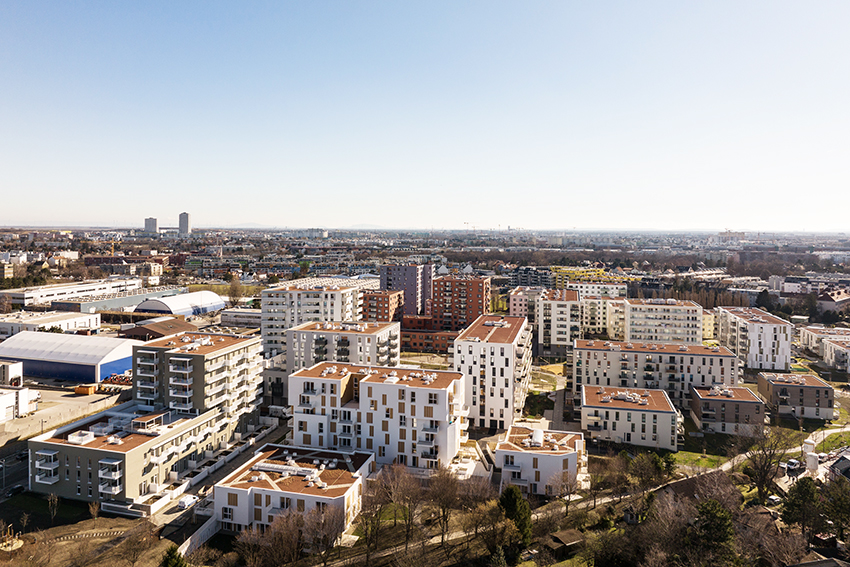
The operational plan designed with the winning team and the involved stakeholders, creates a diverse, complex fabric, open to different scales. In a gradation of density from its edge with Siemens industrial area, buildings decrease from big scale to the small scale of single-family dwellings. Buildings of multiple sizes (XL, L, M, S) are arranged on each side of a large linear park with a pedestrian accesses network, freeing the new neighbourhood from the presence of the car.
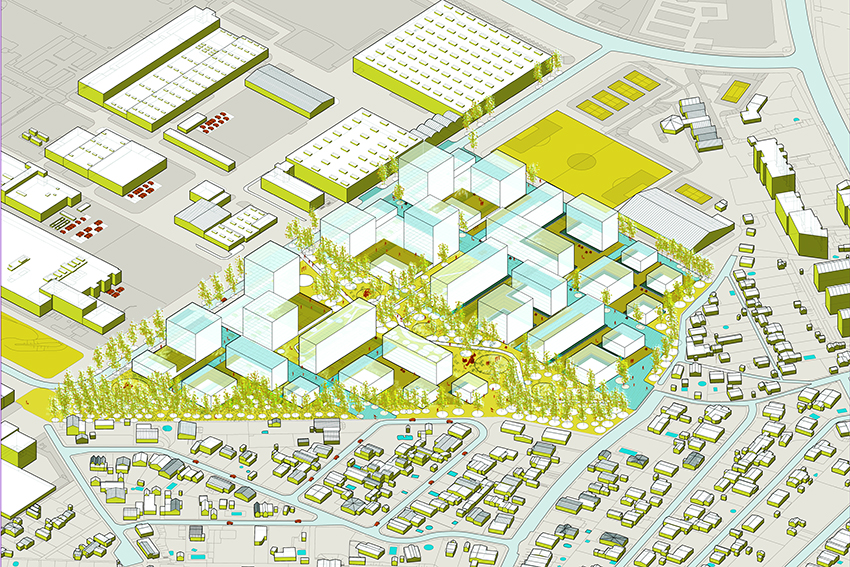
Once the master plan is completed, the process continues with the detailed description for the qualities of free spaces, alternative mobility and mix of uses, as well as the definition of architectural projects. The new district will include a shopping area, a daycare centre, a nursery, playgrounds, sport field…
The masterplan approved by the Viennese city hall, the landowner commissioned the runner-up team with the design of 65 housing units in 3 blocks of different scales (size S, M, L).
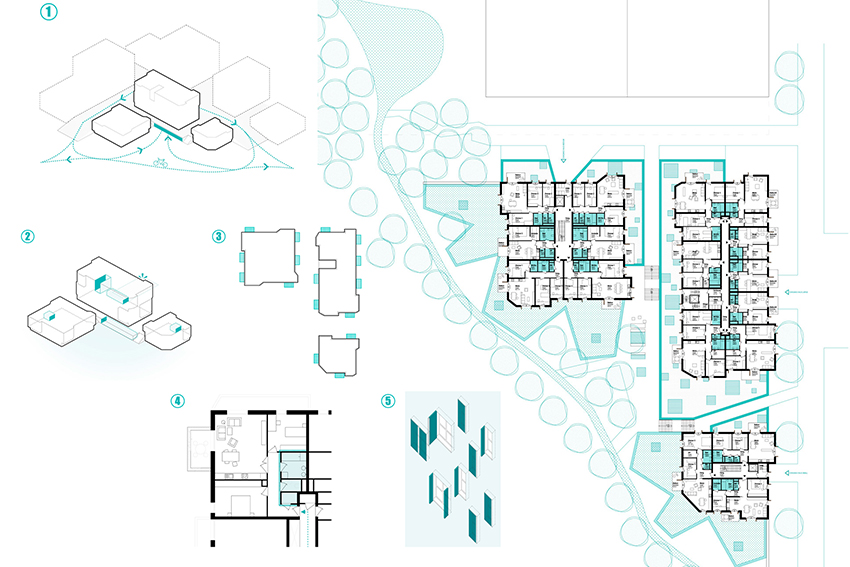
The architecture design is determined by 5 qualities:
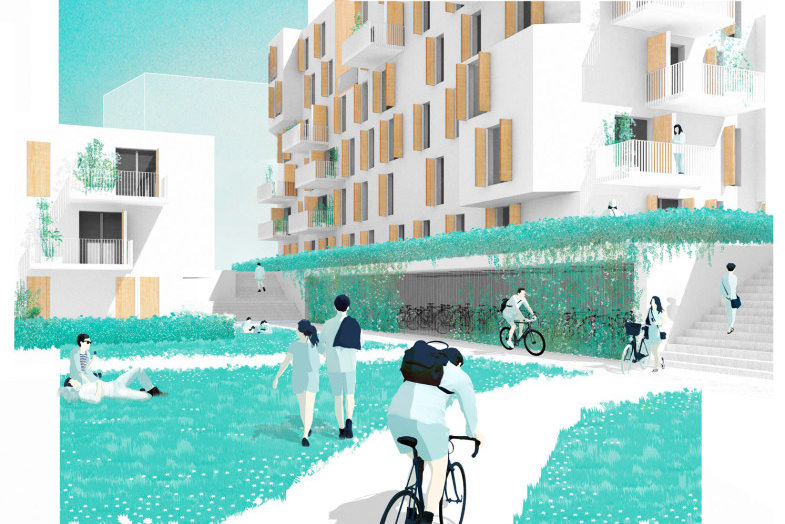
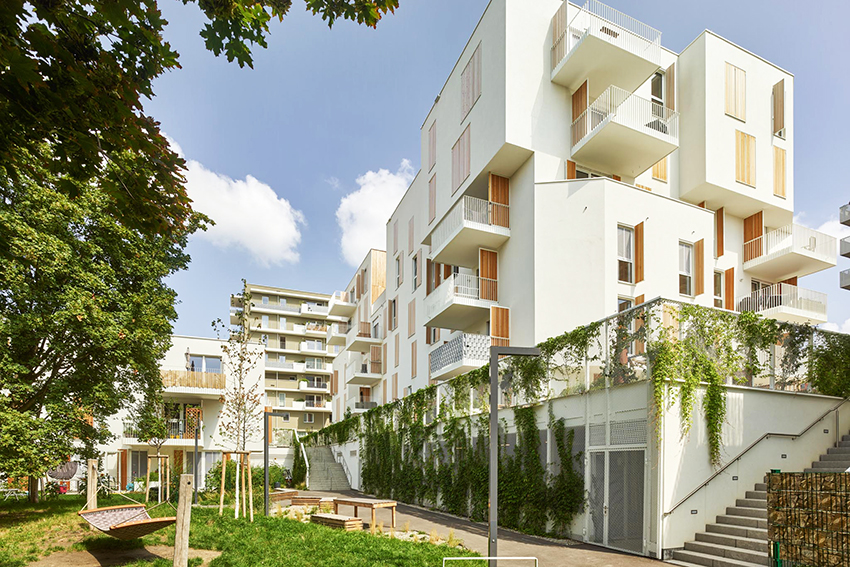
1- Bike city: the 3 housing blocks are connected within a platform in the basement floor, which as well resolves the plot’s complex topography and provides direct access to the homes by means of pedestrian lanes arriving at the community gardens with bicycle parking.
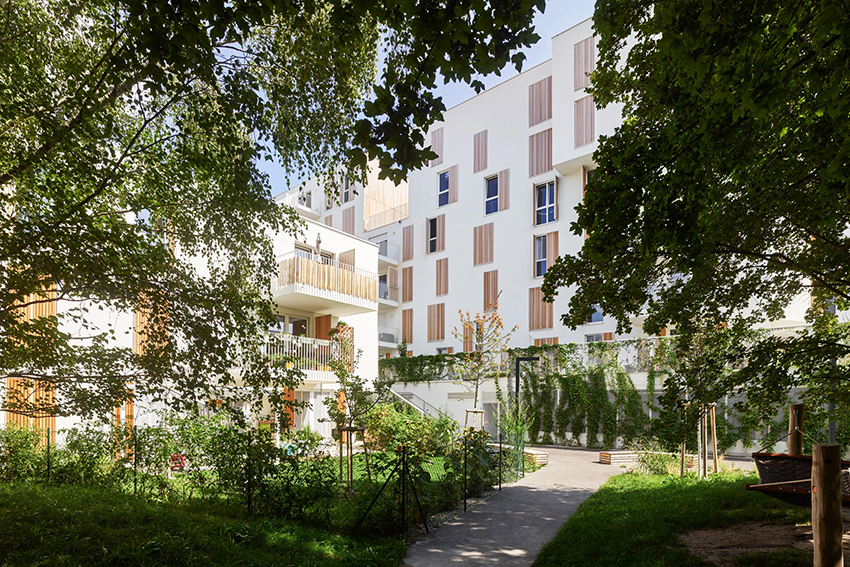
2- Commons: the collective character of the design is also reflected in the architecture design. Community spaces like the big bicycle parking, the large kitchen opened for the quarter’s community, a sun terrace and a children’s playground are connecting the 3 blocks with those spaces connecting the community.
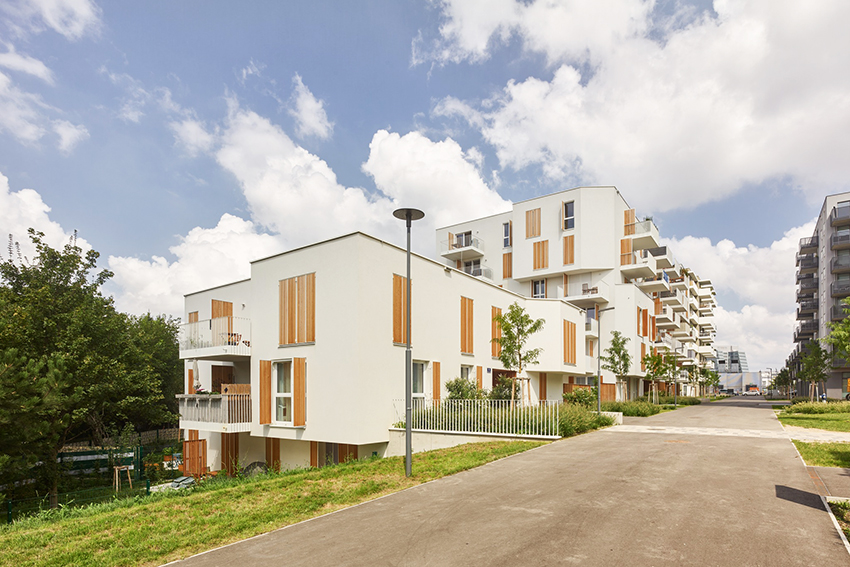
3- Exterior unit: The design incorporates a new trend of Viennese contemporary housing: each of the 65 housing units includes a space referring to the exterior. Like this, balconies, bow windows, terraces and gardens are alternating among the flats improving housing quality and opening the homes to a green pedestrian-friendly surrounding.
4- Servant furniture: The housing takes place round single service furniture, which includes service zones, storage and sanitary installations. Like this, the living areas are orientated to the exterior and the day zone (living, dining, cooking) is disposed at the building’s edge receiving day light for many hours during the day.
5- Local materiality: wooden shutters are reflecting the materiality and the constructive system which are used in the buildings’ structure (bearing concrete walls with exterior thermal isolation, selection of local woods). Furthermore, the selection of indigenous plants and trees for the green spaces is a necessary condition to conserve the ecological and sustainable quality of the construction process of the new district Siemensäcker.
PROJECT COMPLETED
Process
Category(ies): Direct order processes, Collaborative processes
Direct order processes
DIRECT ORDER PROCESS + CO-CREATIVE PROCESS
Following the competition, the Europan winning and runner-up teams —SLLA Architects and Arenas Basabe Palacios arquitectos— were commissioned to draw up the urban masterplan that will serve as the basis for planning and regulating construction on part of the competition site.
Once the masterplan was approved by the City of Wien, the landowner commissioned the runner-up team to design 65 dwellings spread across 3 buildings of different sizes (S, M, L).
Collaborative processes
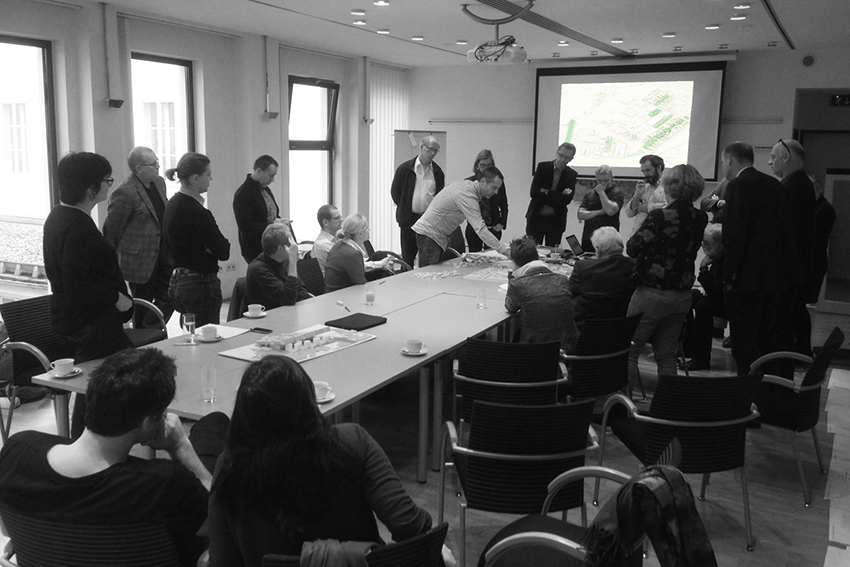
A collaborative process was established to develop the urban plan, involving a team of landscape architects, traffic planners, local architects, developers and representatives from the City of Wien administration.