Histoire d'un ruisseau
Nailloux (FR) - Special mention

TEAM DATA
Associate: Orlane Bouguennec (FR) – architect urbanist
bouguennec.orlane@gmail.com / odearchitectures.fr
See the complete listing of portraits here
See the site here
TEAM PORTRAIT
INTERVIEW
Click on the images to enlarge
1. How do you define the main issues of your project in relation with the theme “Re-sourcing”? Re-sourcing thanks to nature, to social dynamics, to new materiality? In which way do you think your project can contribute to an ecological and/or social evolution? And in which way do you think your project can be called a “regenerative project”?
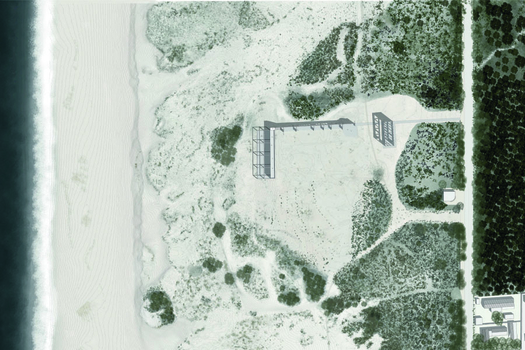
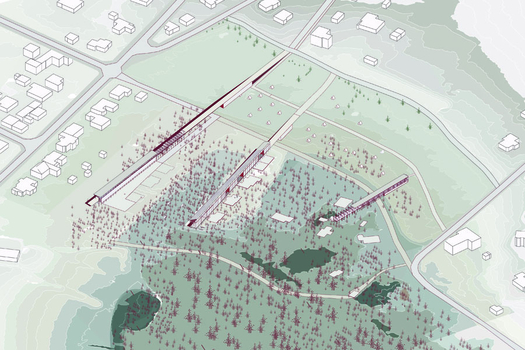
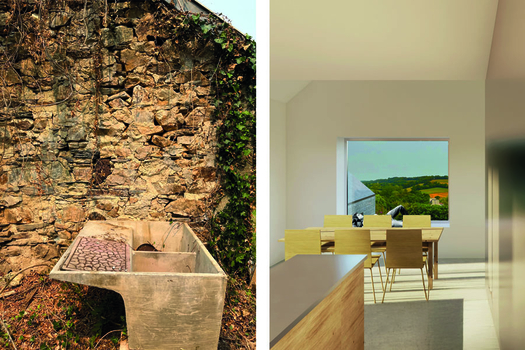
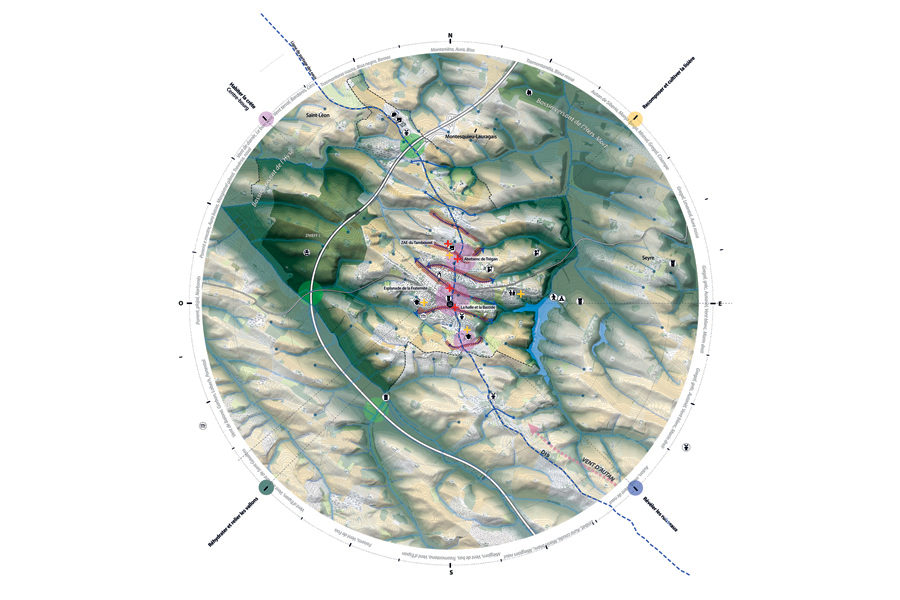
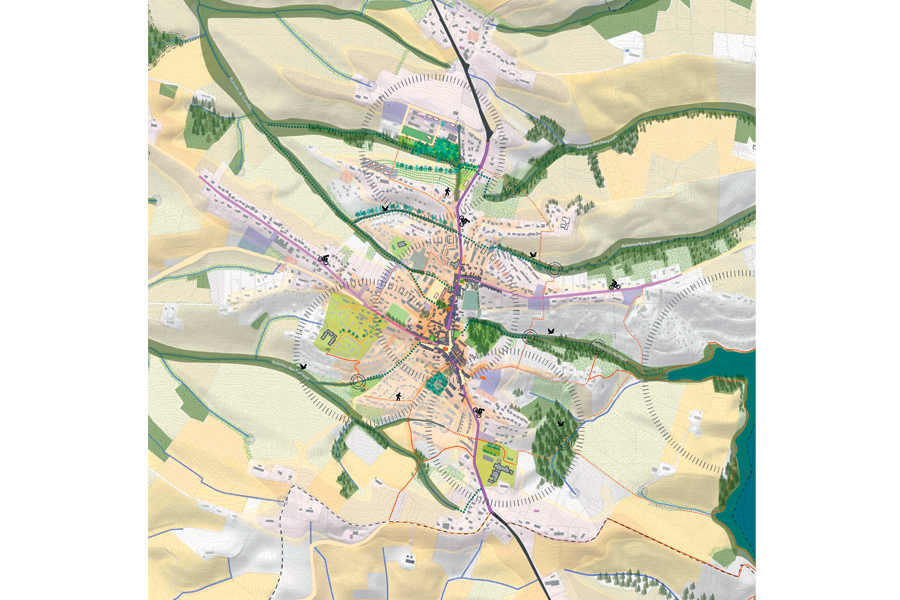
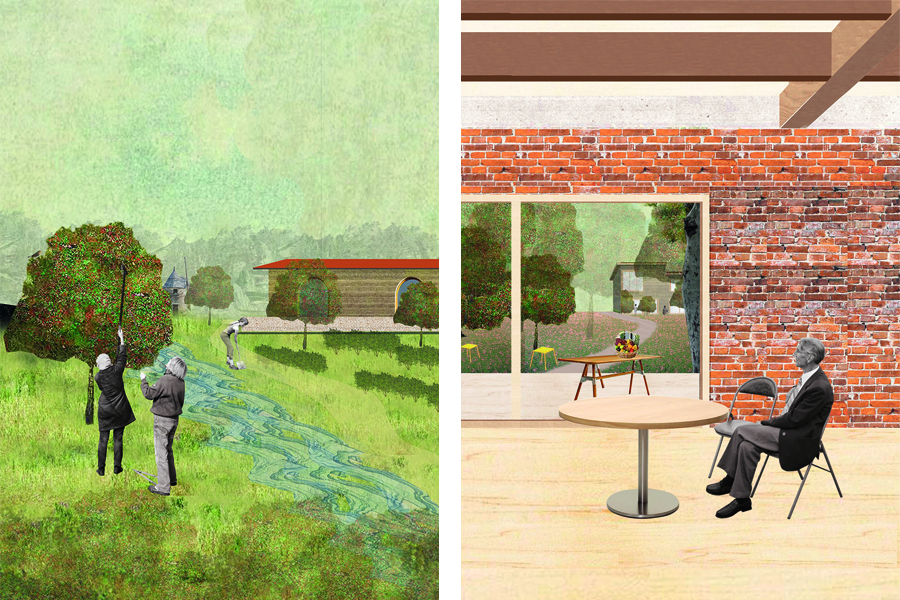
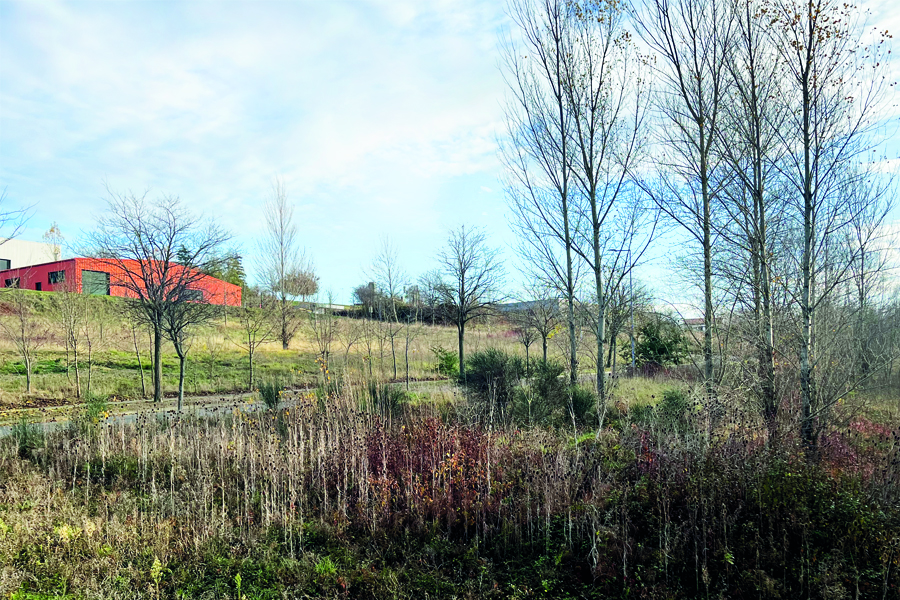
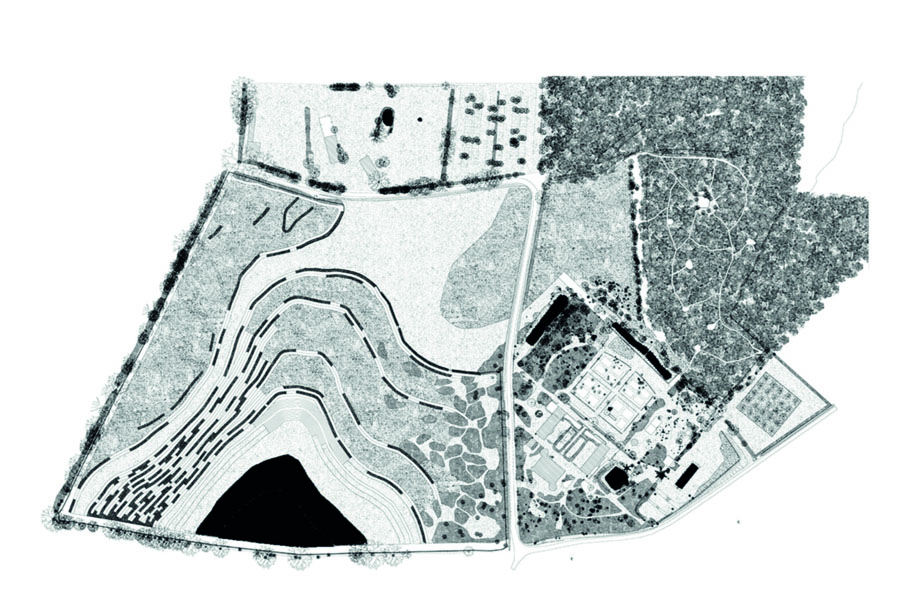
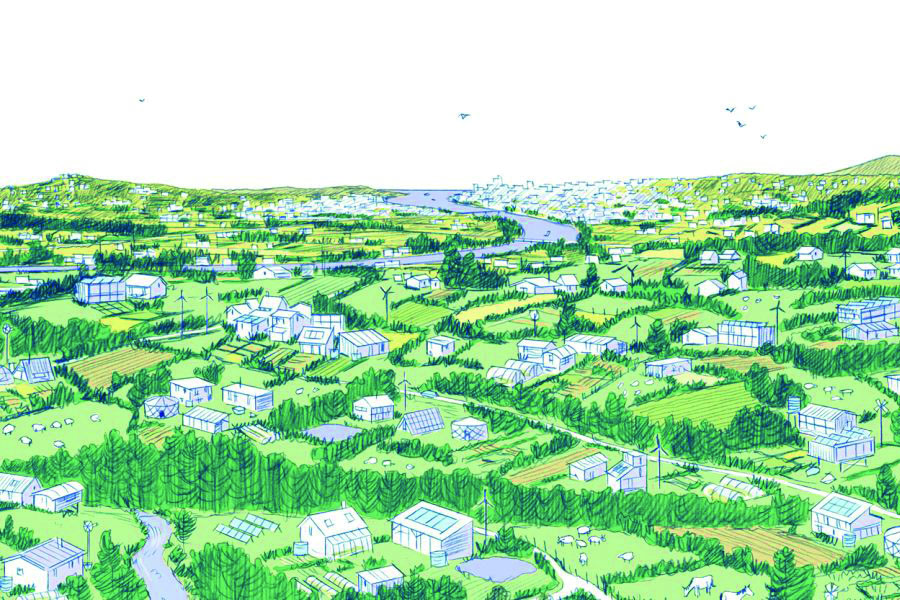
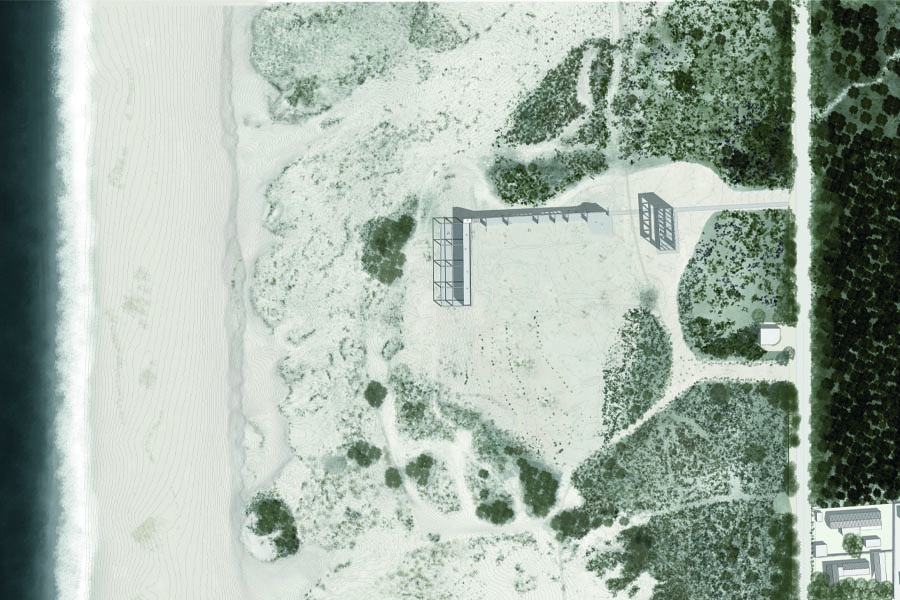
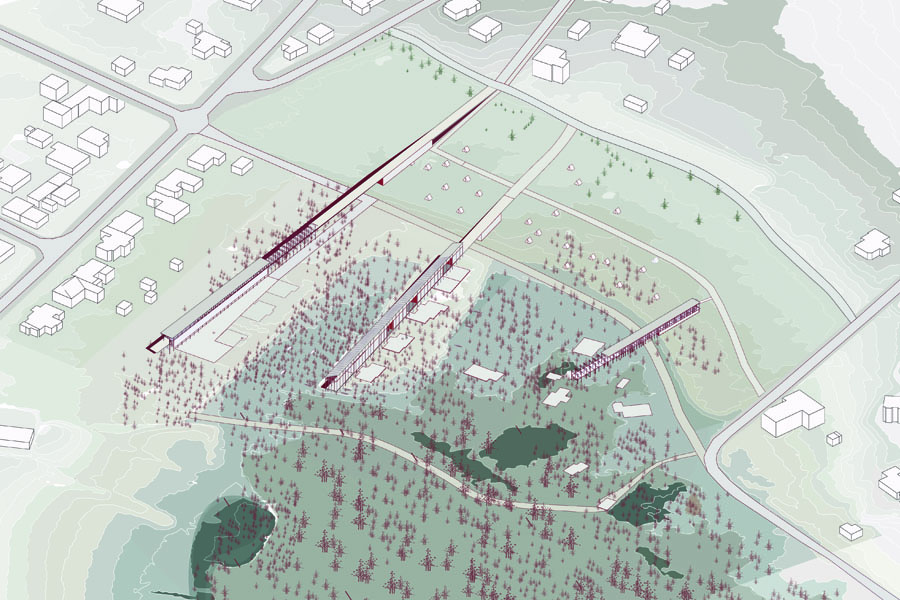
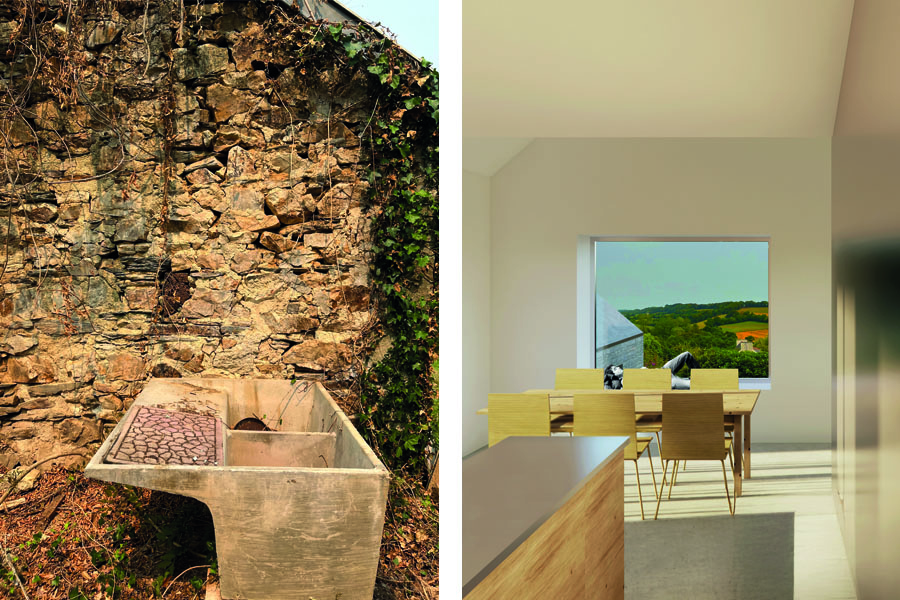
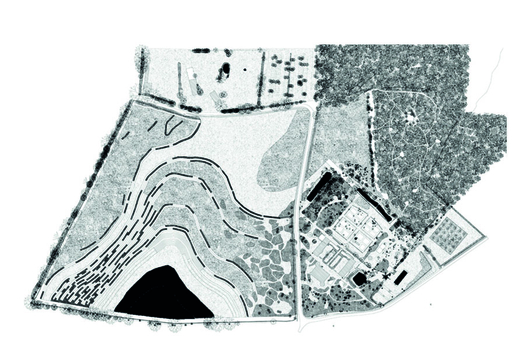
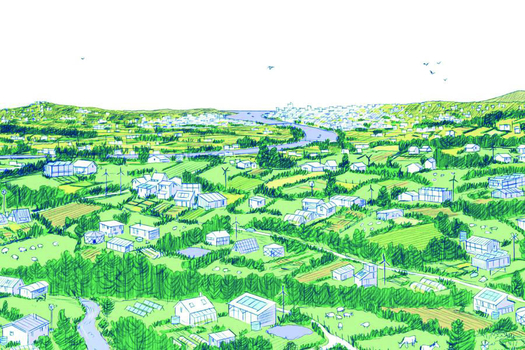
The heart of the project lies in implementing a careful territorial strategy that builds on the geography of Nailloux — the ridges, edges, valleys, and network of discreet streams that structure the landscape. Re-sourcing consists of mobilizing these environments as the foundation for a regenerative project: restoring soils, rehydrating valleys, slowing down and enhancing waterways, reconfiguring forest edges to accommodate new uses, transforming existing buildings, and optimizing artificial land rather than expanding the city. The aim is to strengthen local ties and pave the way for more socially cohesive and less resource-intensive ways of living.
2. How did the issues of your design and the questions raised by the site mutation meet?
The challenges facing Nailloux — urban sprawl, car dependency, droughts, and floods — have demonstrated the need to incorporate each localized action into a broader approach. It is not just a question of developing or building on specific sites, but of rethinking the way in which the territory is structured: how ecological continuity, water management, mobility, meeting spaces, and the environments that support them are organized. These changes to the site have guided the project towards a landscape-based approach, capable of linking local interventions to a broader vision that remains consistent over time.
PROJECT:
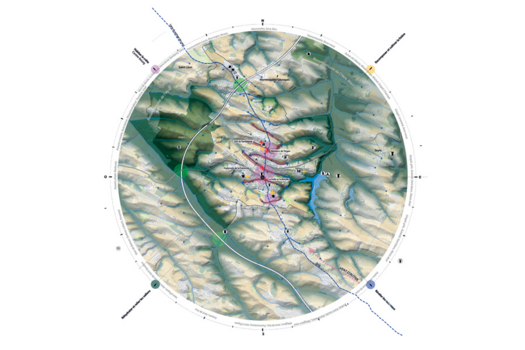
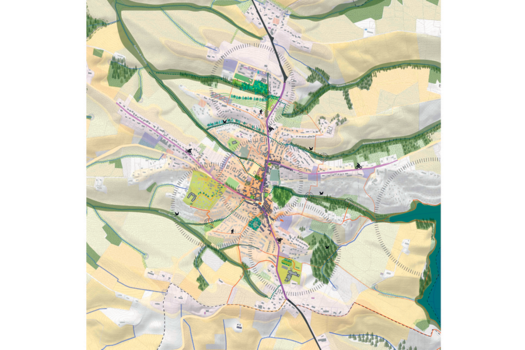
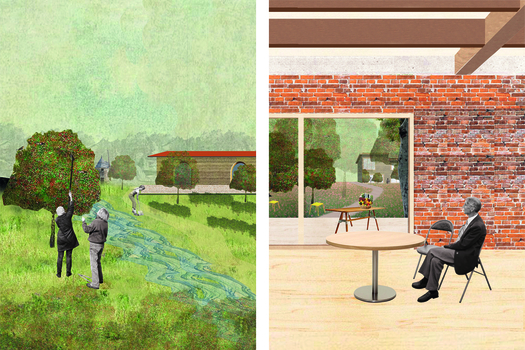
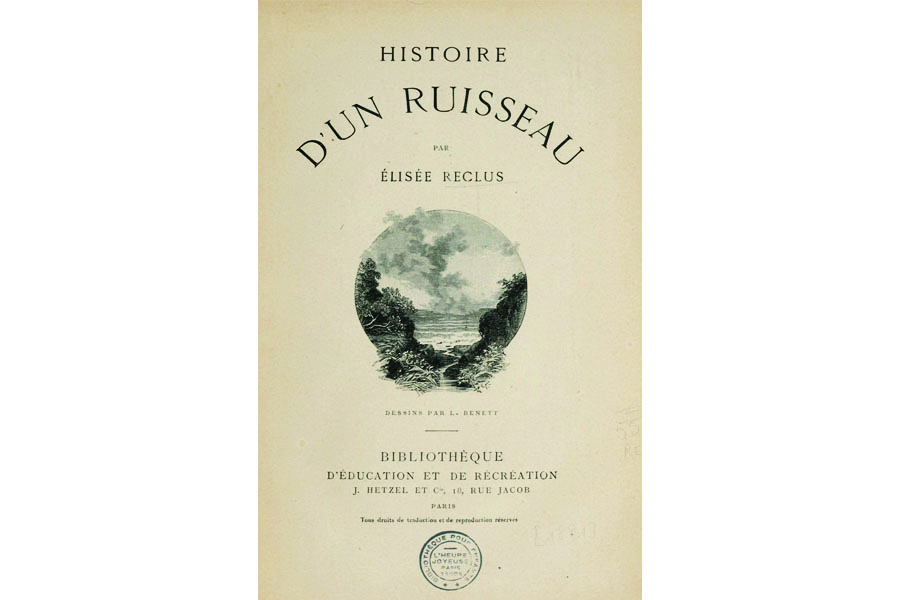
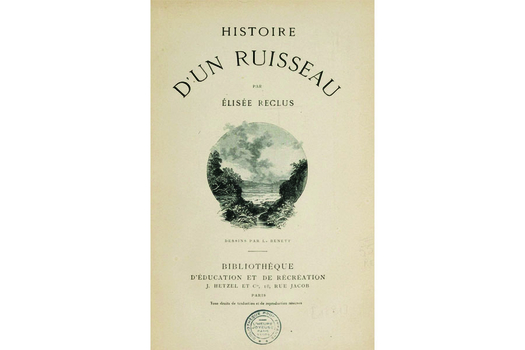
My approach is based on interpreting landscapes and their architecture, hydraulic structures, and uses, which form the foundation of architectural and territorial projects. Echoing the theme of “Re-sourcing,” my approach is inspired by the thinking of Élisée Reclus, questioning the relationship between nature and human societies. It also draws on contemporary references, notably projects by Bas Smets (Château de Padiès, Lempaut (81), 55 hectares for nature, Bordeaux (33)), the work of Paola Viganò (Val de Sambre, Strategic plan for Vesdre, Belgium) or Sébastien Marot (Taking the country’s side).
SITE:
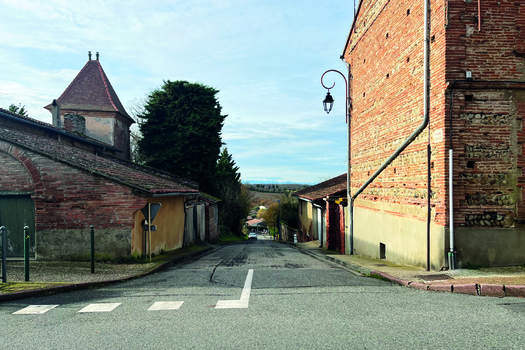
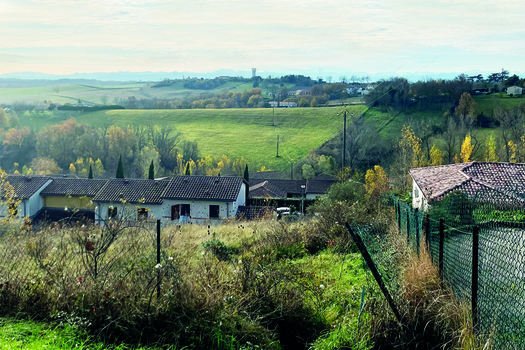
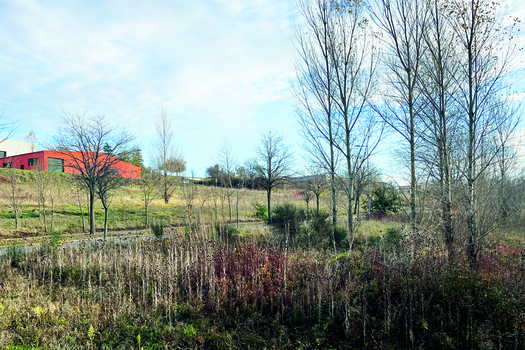
The project is based on time: it proposes short- and medium-term actions that are part of a broader process and can be implemented today by local stakeholders in the region. The challenge is to integrate future dynamics, not to set a distant horizon in stone, but to evoke possible transformations and bring about new ways of living in Nailloux. Time thus becomes a tool for managing change, enabling the evolution of uses and appropriations by residents.
REFERENCES:
I am an architect and urban planner. I graduated from ENSA Paris–Val de Seine and ENSA Paris-Est. I develop an approach focused on landscapes and their architectures, with a particular interest in rural and suburban territories.
6. How could this prize help you in your professional career?
This award represents an opportunity for my professional practice, highlighting a cross-disciplinary and multi-scalar approach attentive to the transformations of rural and suburban territories. It serves as a lever to further develop projects and strengthen support for local authorities and local stakeholders, both in the definition of planning strategies and urban studies, as well as through architectural and project delivery commissions.
TEAM IDENTITY
Legal status:
Team name:
Average age of the associates: 29 years old
Has your team, together or separately, already conceived or implemented some projects and/or won any competition? if so, which ones?
WORKS: