From ideas to process-projects
Europan 15 - Oliva (ES)
« Productive Memories »
Project strategy family:
- Ecological connections
- Inclusive morphologies
- Inventive typologies
- Reinterpreted heritage
- Urban articulations
Process category:
- Direct order processes
- Competitive processes
- Co-creative processes
- Collaborative processes
- Participative processes
- Participation of the Living processes
- Adaptative legal framework processes
Authors: Terrario Arquitectura (Luis Bernardo Vaamonde, Ignacio Burgos González, ES)
Client(s): Oliva municipality, Valencia Region
Dates: 2019 - 2023
Driving forces: Client + team
Site
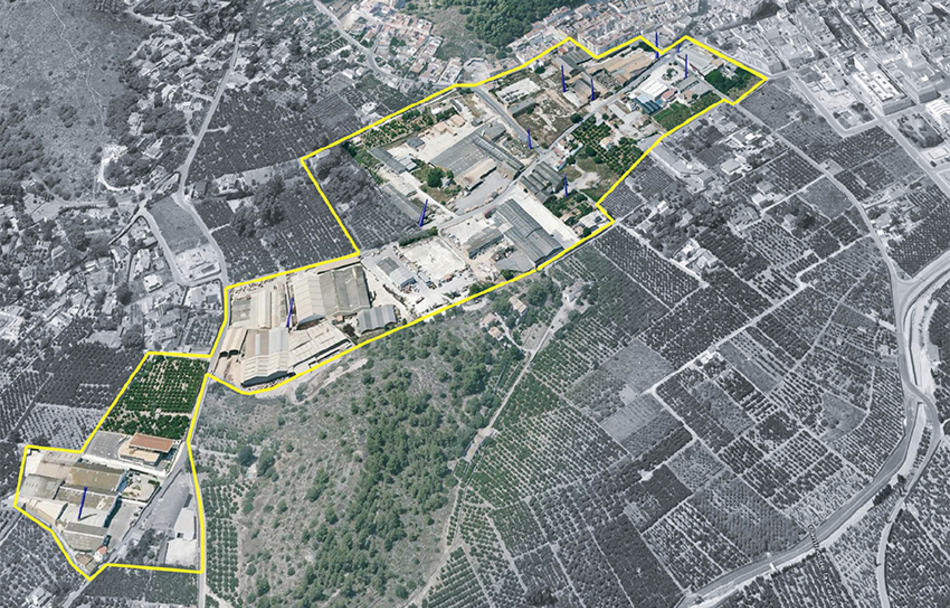
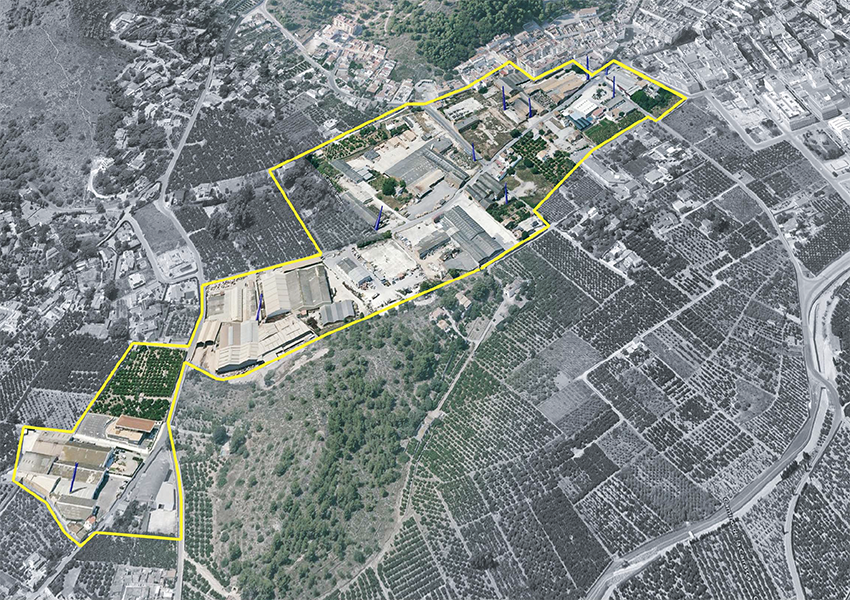
Oliva (ES)
SCALE XL/L SIZE 230ha / 18ha
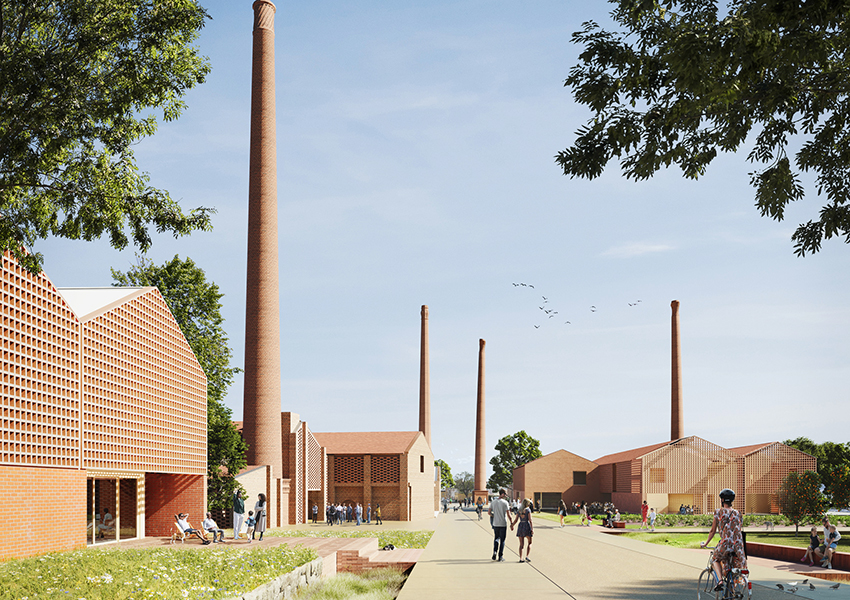
The site is an old and largely abandoned industrial zone, with a powerful identity projected by former brick factory equipment and facilities (heritage listed chimneys, kilns, large drying areas and buildings).
The city is looking for new feasible urban dynamics which apply economic and environmental sustainability criteria, respect for the area’s architectural and engineering heritage, a mix of uses, citizen participation and encouragement of high-performance job training.
Awarded Idea
Project - Ideas
Productive Memories
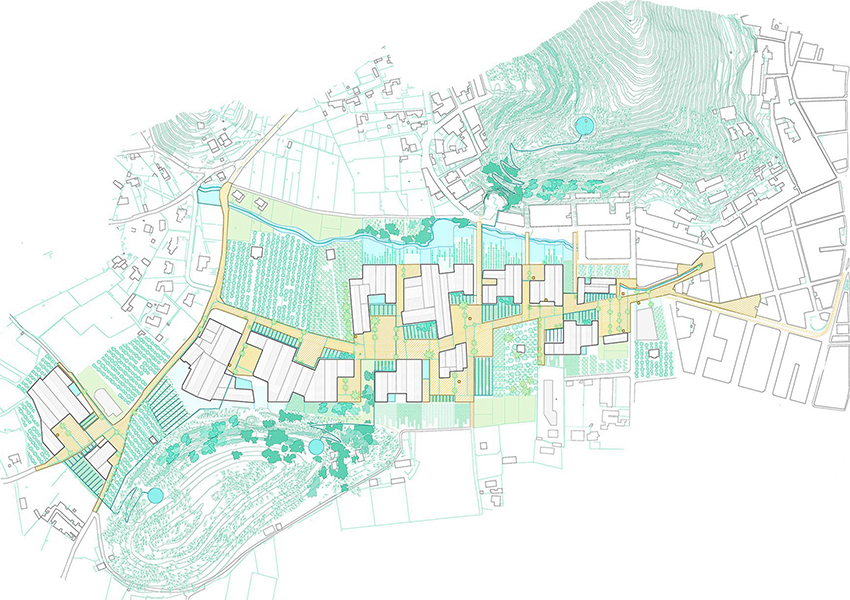
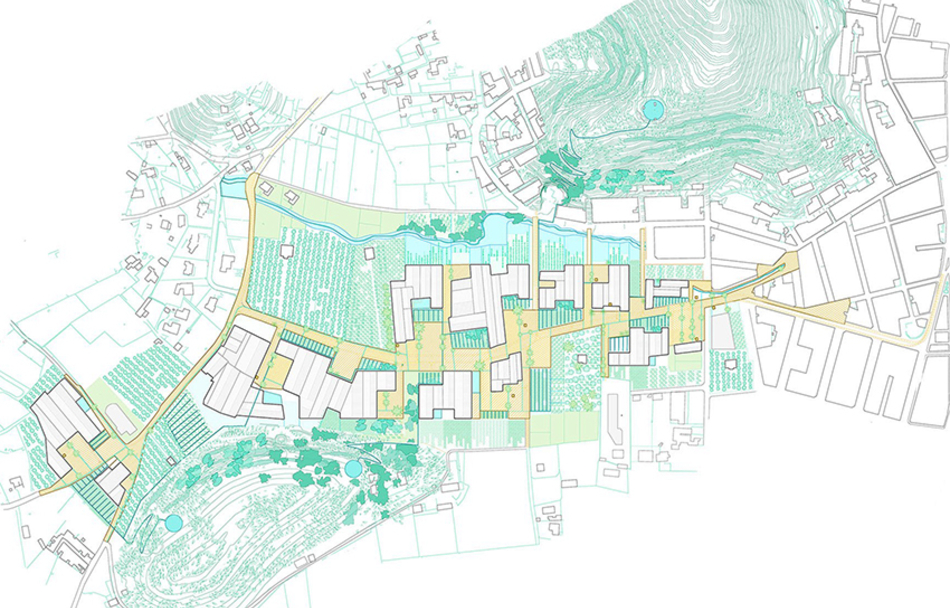
Memories tell us about the previous configuration of the territory. Areas that acquire a particular intensity, as if a sort of conscience of the territory was emerging out of them, which patiently awaits for the upcoming productive logic to develop the local economy activity.
The winning project “Productive Memories” assumes that the productive recovery of Oliva goes through the reactivation of this territorial identity, the consolidation of its differences, and the enhancement of the natural continuities, understood as a model of production. Strategies that replace addiction by purification, by taking off the environment everything that is not its own. A simultaneous intervention covering three scales of action in different phases. Three memories, reinterpreted in a contemporary code, and which introduce three new productive models, which in reality, have always been there.
Project Strategy
Family: Reinterpreted heritage
ENHANCING HERITAGE BY PREVENTING ENVIRONMENTAL RISKS AND ADDING NEW USES
The urban development master plan for the Els Rajolars neighborhood has been developed following three phases:
1/ Analysis of the current state;
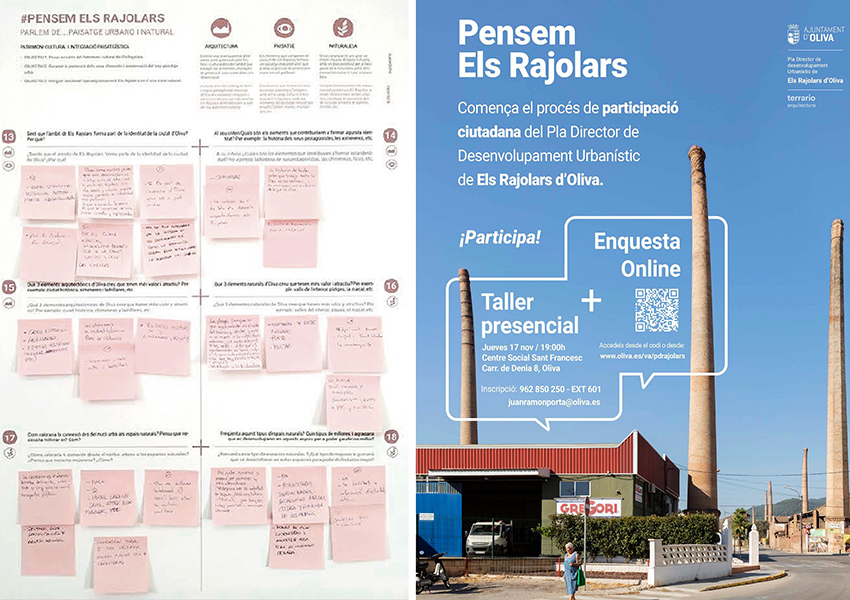
2/ Participatory phase via a citizen workshop and an online survey;
3/ Development of a master plan based on the information collected in phases 1 and 2.
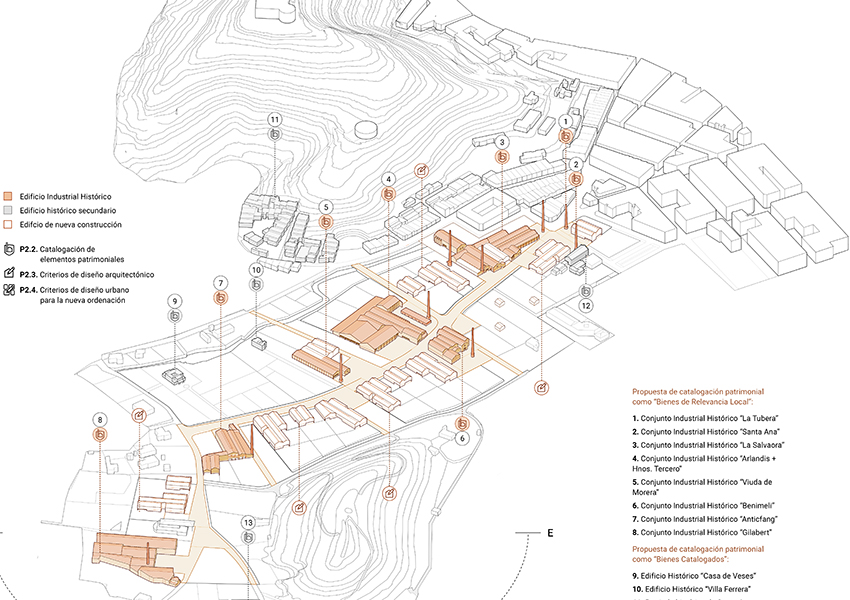
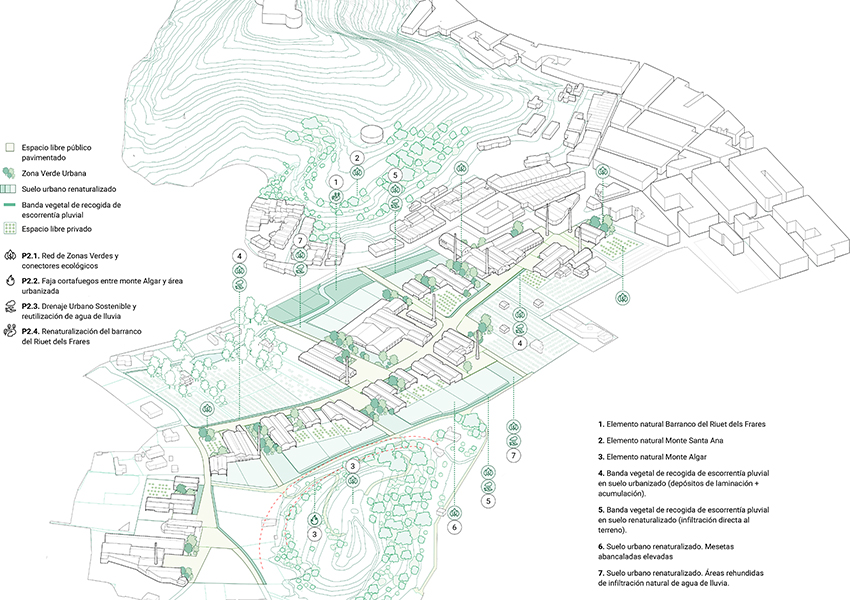
The urban renewal strategy focuses primarily on protecting the urban area from environmental risks, preserving the built heritage, and integrating new productive programs.
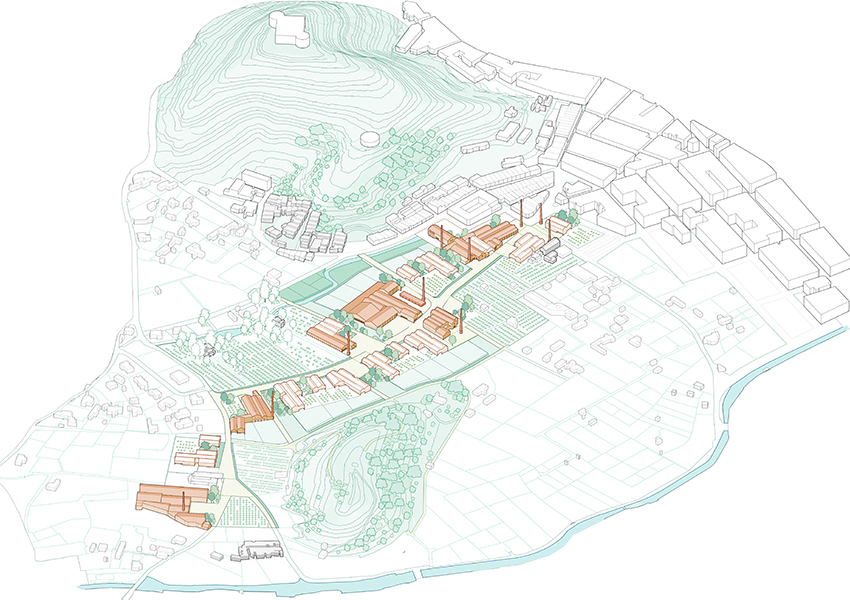
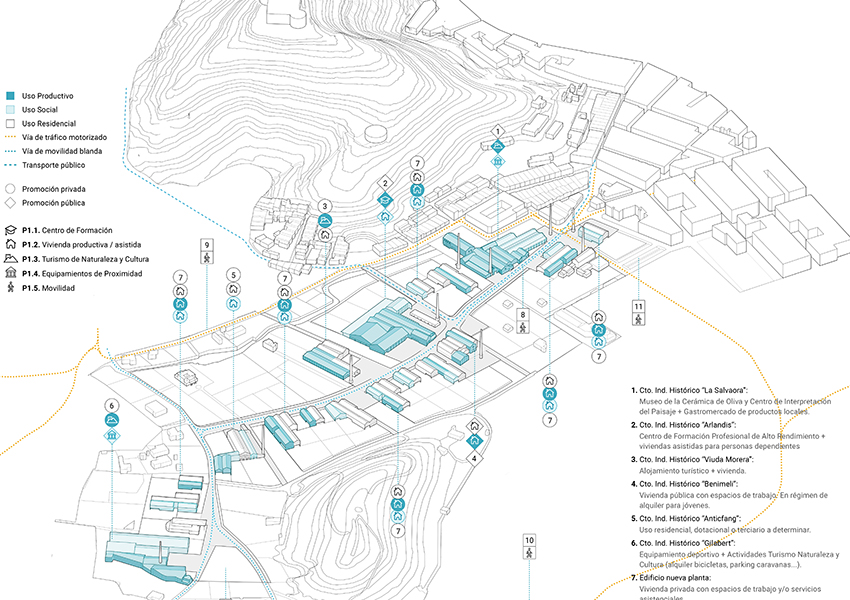
The project is structured around three areas of work, each with its own main objectives:
1. Productive and Social - The productive program to be implemented in the area must function as an "urban catalyst" capable of attracting activities and population in order to facilitate local economic recovery and improve urban quality;
2. Urban renewal - with optimal urban density, a variety of typologies and a mix of uses, a system of green spaces and open spaces promoting sustainable urban mobility, and integrate industrial components of heritage interest;
3. Integrated and Resilient - The planning of a new urban development must take into account the adaptation of the site to its natural environment, where the integration of ecosystems and resilience to natural factors are essential.
PROJECT COMPLETED
Process
Category(ies): Direct order processes, Participative processes, Participation of the Living processes
Direct order processes
Following the competition, the team was commissioned to develop the masterplan for the urban development in the Els Rajolars district.
Participative processes
This work included a second participatory stage involving a workshop with citizens and an online survey, which enabled the team to gather the residents' expectations and develop the project.
Participation of the Living processes
The urban renewal strategy takes into account the site’s adaptation to its natural environment, integrating ecosystems and resilience to natural factors.