From ideas to process-projects
Europan 17 - Eibar (ES)
« Ulysses Began his Odyssey »
Project strategy family:
- Ecological connections
- Inclusive morphologies
- Inventive typologies
- Reinterpreted heritage
- Urban articulations
Process category:
- Direct order processes
- Competitive processes
- Co-creative processes
- Collaborative processes
- Participative processes
- Participation of the Living processes
- Adaptative legal framework processes
Authors: Miguel Angel Diaz Gonzalez, Ignacio Hornillos Cardenas, Eduardo Dipre, Agustin Lozada, Agustin Berzero, ES
Client(s): Basque Regional Government
Dates: 2023 - ...
Driving forces: Client
Site
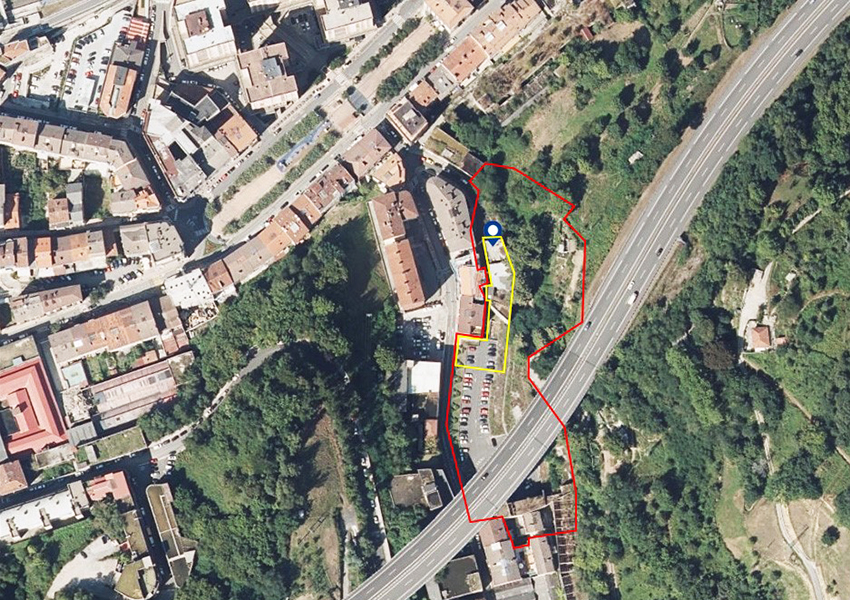
Eibar (ES)
SCALE S/S SIZE 13.5ha / 1.5ha
Eibar has an industrial heritage with a very high demand for housing. The renovated and expanded old factory AIBE in disuse must fulfil an urban function as an attractor of the neighbourhood: 1-providing quality and welcoming urban spaces
2-Converting industrial heritage into new types of housing;
3-Integrate in the industrial property spaces for public use;
4-integrating large infrastructures with a natural landscape.
Awarded Idea
Project - Ideas
Ulysses Began his Odyssey
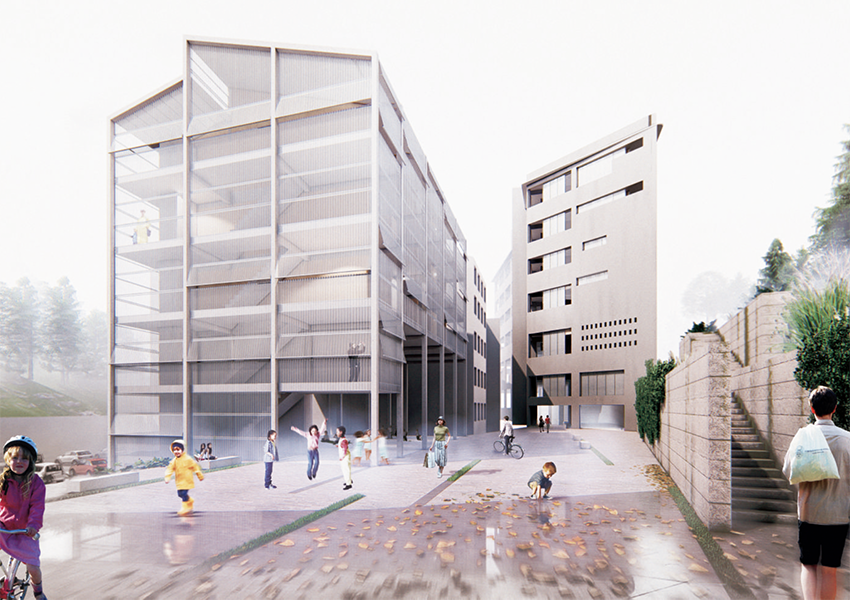
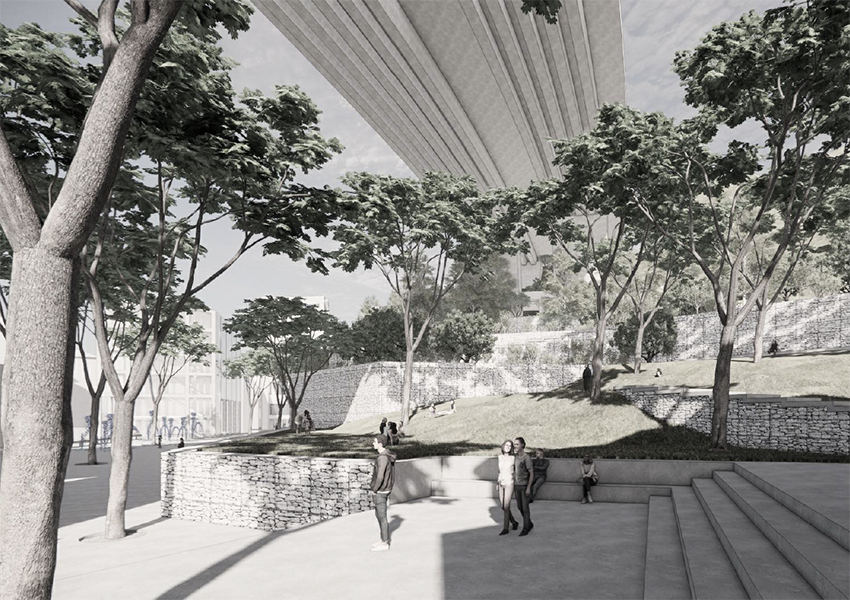
The project proposes a romantic drift that seeks to restore the vitality of yesteryear to the Txonta neighbourhood, incorporating a new life to the abandoned industrial development through residential development and the reorganization of the mount.
The project attacks the need to operate in the urban environment with the respect that the heritage value of the AIBE industrial building deserves, while vindicating its urban image, the public space, the habitability programmatic solution and the circulatory relations between the neighbourhood of Txonta and the natural orography of the city of Eibar.
The idea is to activate through reusing and reinterpreting the “ruin”.
Project Strategy
Family: Reinterpreted heritage
REUSE AND REINTERPRETATION OF A "RUIN"
The theme of re-use was the leitmotiv of the competition proposal, and the team is sticking to it throughout the project's development. They have had to adapt to both state and regional regulatory requirements, but after working closely and intensively with the Basque Government, they were able to preserve the overall identity of the project.
As proposed in the competition, the team is reusing the Aibe building almost in its entirety. They are preserving its volume and structure with minimal, almost surgical interventions, ensuring it remains completely recognizable to the neighbourhood residents. This intervention takes place entirely within its walls; the building is stripped of non-essential elements, such as internal partitions, to incorporate housing units built using dry construction methods. This way, the housing is there today, but tomorrow the building could recover its character as a container to host a new activity without changing the structure itself.
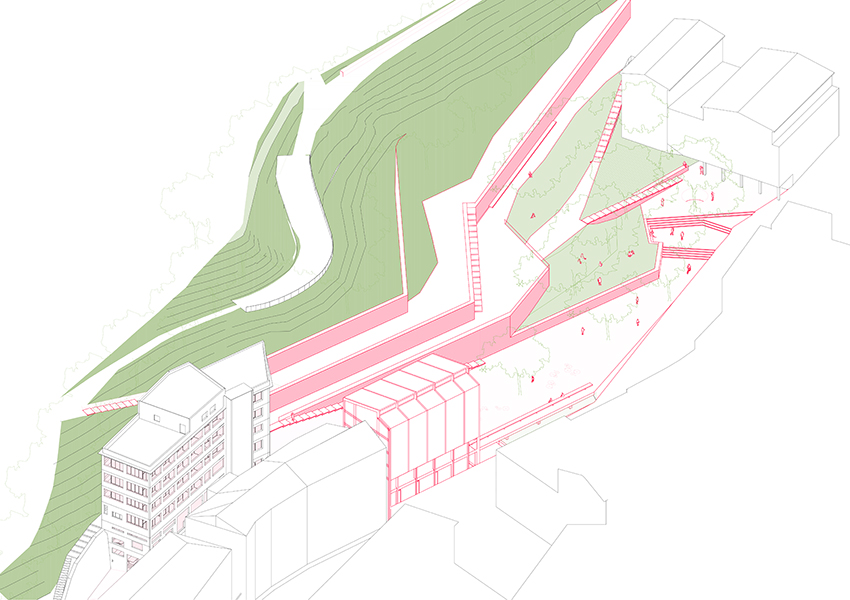
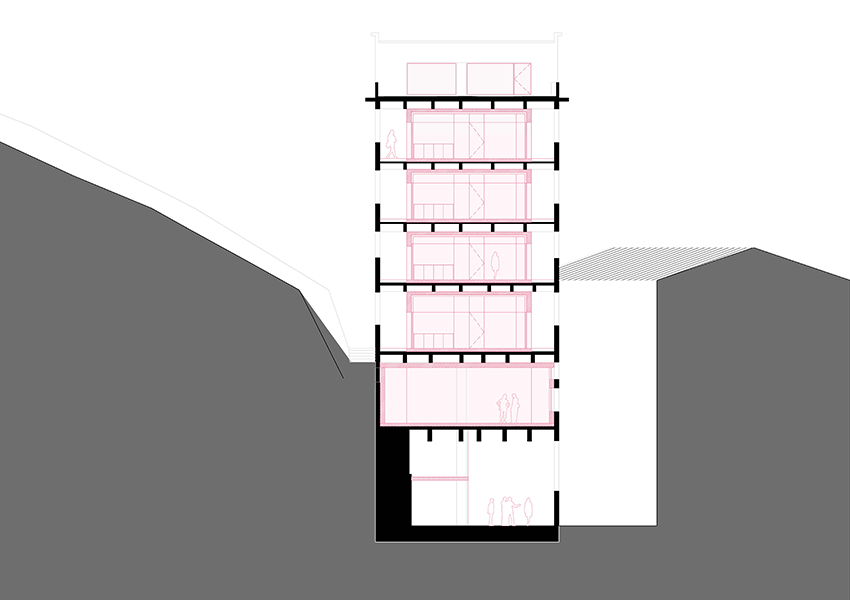
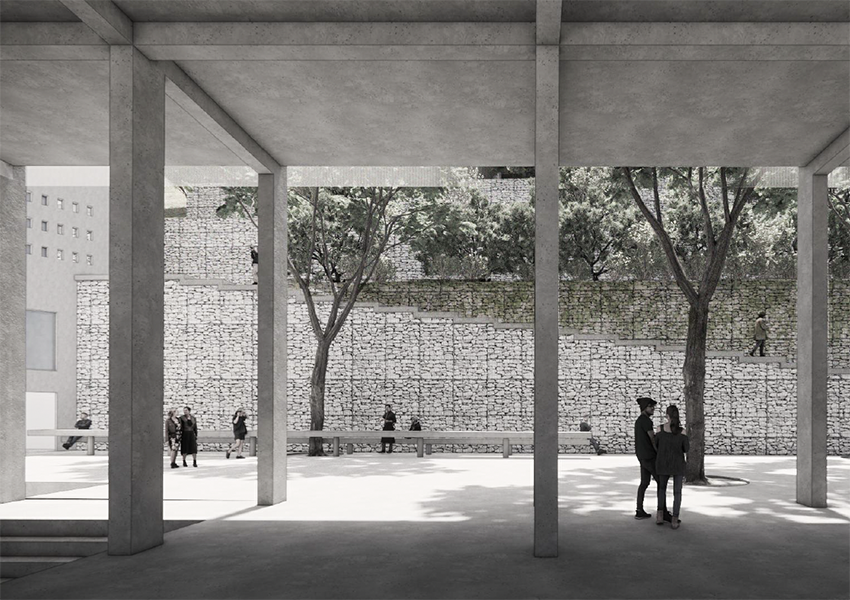
The ground floor is going to be a public street which is covered, protected from the rain so typical of Eibar, with a future bar on the south, bike room and access to the municipal space. The first floor combines municipal space with adapted housing units. Like the second floor, this level connects directly to the mountain. The upper floors are dedicated to residential units, while the top floor features a communal space for residents to hold meetings or celebrations.
A new building was added to accommodate the housing units that could not be integrated into the existing structure due to the site's topography. This building stands as an independent element, distinct from the Aibe building, with its own architectural language that establishes a dialogue with its surroundings.
The Basque government plans to launch the call for tenders for the construction work by the end of 2026, so that construction can begin in the first quarter of 2027.
PROJECT IN PROGRESS
Process
Category(ies): Participative processes, Direct order processes
Participative processes
Following the competition, the team organised several project presentations to the local council, residents and the Basque government; the project can then be developed based on feedback from the different stakeholders.
Direct order processes
The team has been commissioned to develop a programmatic study for the reuse of the industrial building and then for the architectural project management.