From ideas to process-projects
Europan 10 - Wien (AT)
« Garden>Courtyard »
Project strategy family:
- Ecological connections
- Inclusive morphologies
- Inventive typologies
- Reinterpreted heritage
- Urban articulations
Process category:
- Direct order processes
- Competitive processes
- Co-creative processes
- Collaborative processes
- Participative processes
- Participation of the Living processes
- Adaptative legal framework processes
Authors: arenas basabe palacios arquitectos (Enrique Arenas Laorga, Luis Basabe Montalvo, Luis Palacios Labrador, ES) + Buschina & Partner ZT GmbH
Client(s): City of Vienna, ARE (austrian real estate)
Dates: 2009-2022
Driving forces: Team + Client
Site
Wien (AT)
SCALE XL/L SIZE 62.5ha / 10.7ha
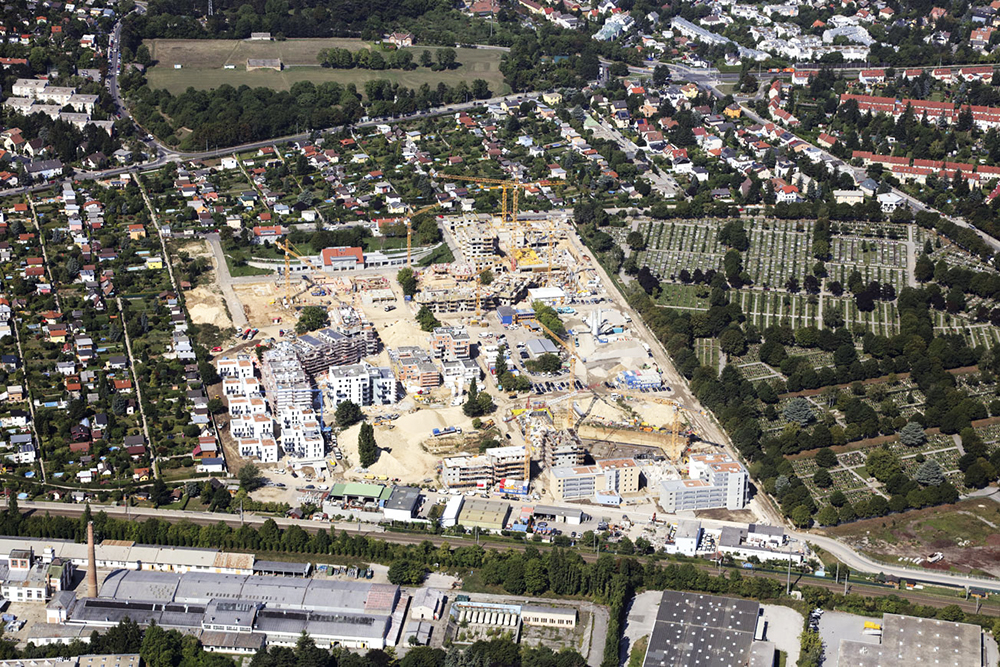
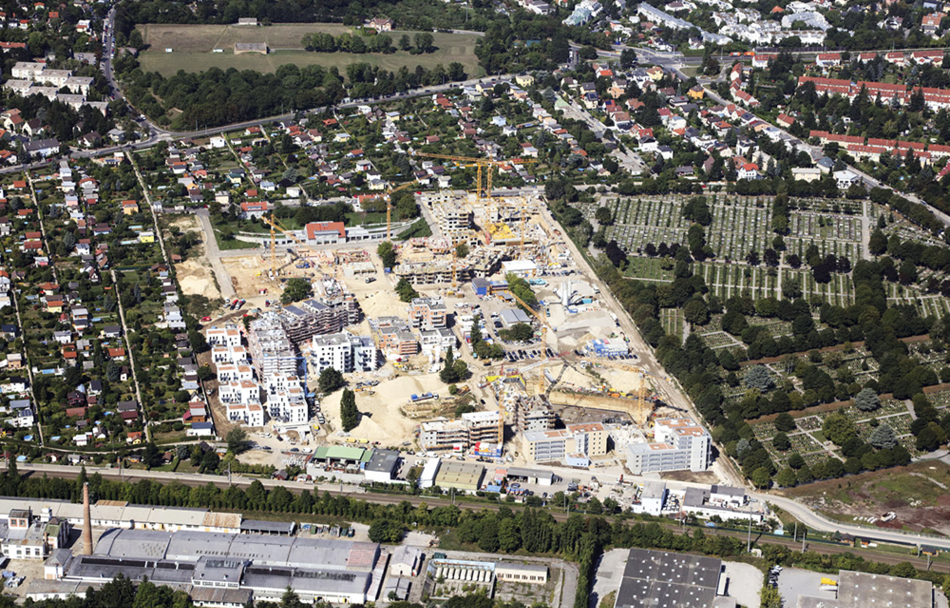
Vienna is growing – and with it the opportunity to rethink lifestyles. On Rosenhügel, an offshoot of the Vienna Woods in Vienna's 12th district, on approximately 11 hectares, 2,300 people will live in close proximity to nature, yet in an urban setting.
Awarded Idea
Project - Ideas
Garden>Courtyard
THE POROUS CITY AS A NEW GARDEN CITY
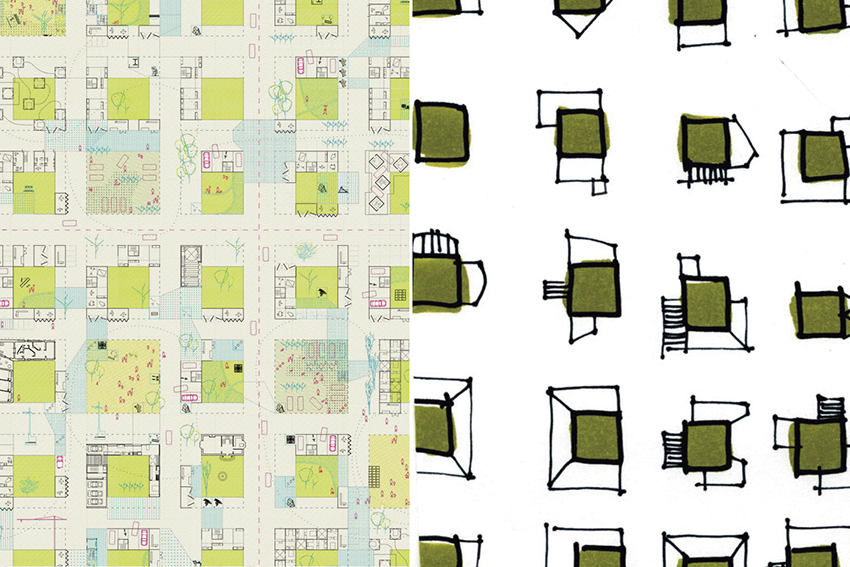
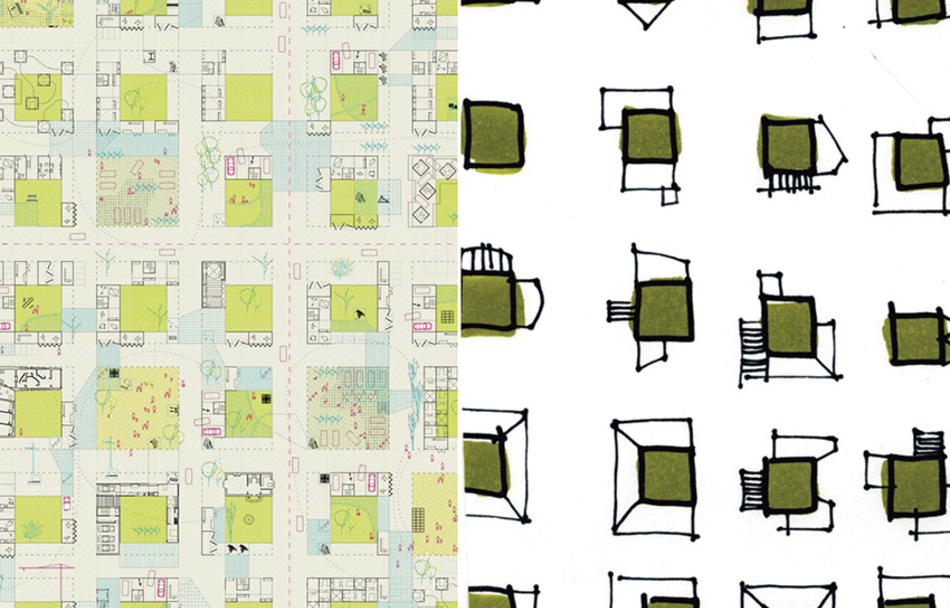
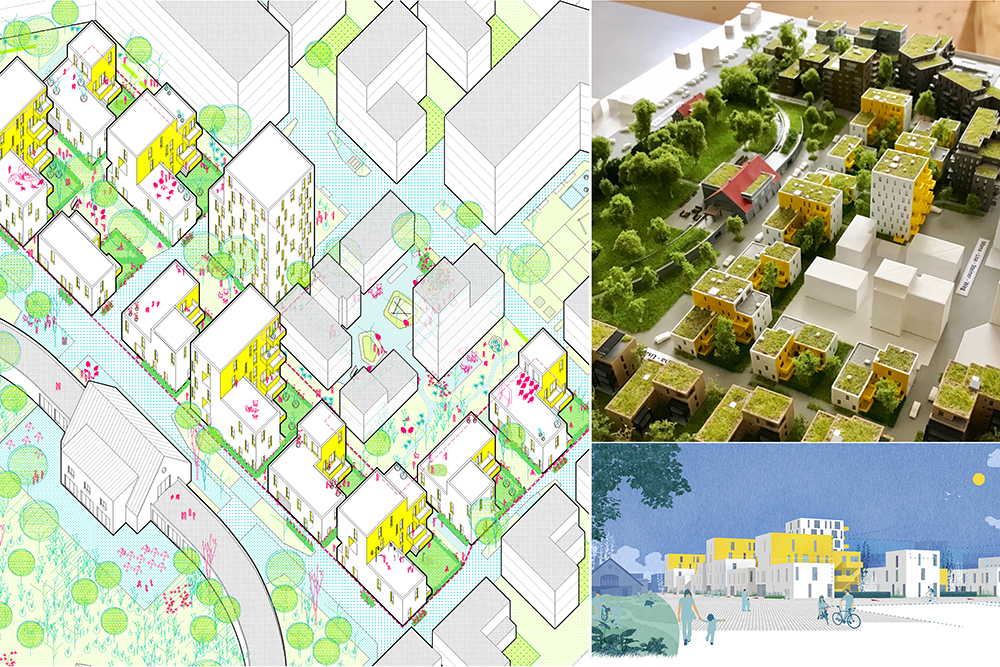
1- A grid of gardens structures the site. 2- Construction takes place around – but not inside – each of these gardens, concentrated in the northern part, allowing a more open facade towards the south. 3- These plots are colonized by different occupants: public, developers, cooperatives, individuals…
Project Strategy
Family: Inclusive morphologies
A POROUS AND ADAPTABLE URBAN DISTRICT BUILT AROUND A GRID OF GARDENS
On a 11-hectare site on the northern outskirts of Vienna, this project envisions the collective framework of an individual interpretation.
(1) First, a grid of gardens initially structures the area, forming land subdivisions and urban objects.
(2) Building takes place around – but not inside – each of these gardens, concentrated on the north parts of the site, allowing for a more open frontage to the south.
(3) These ‘extroverted’ plots are colonised by different occupants: public, developers, co-ops, individuals, etc. Initially there will be 4 public housing blocks per hectare.
(4) Each garden initially contains 370m² of potential building land, that can be increased by buying more from neighbours or sold if not needed.
(5) The neighbourhood gradually becomes denser, but in a heterogeneous way that always reflects its population’s needs.
Once this structure was fixed, the next stage of the project was to investigate the relations that this framework can produce by redefining a configuration of free space.
The proposal is a collective space that is reprogrammable over time and with ownership capacity. The result is a fabric that is porous not just in terms of low environmental impact, but also of constructive flexibility and process continuity: a liquid that adapts to society's changing needs.
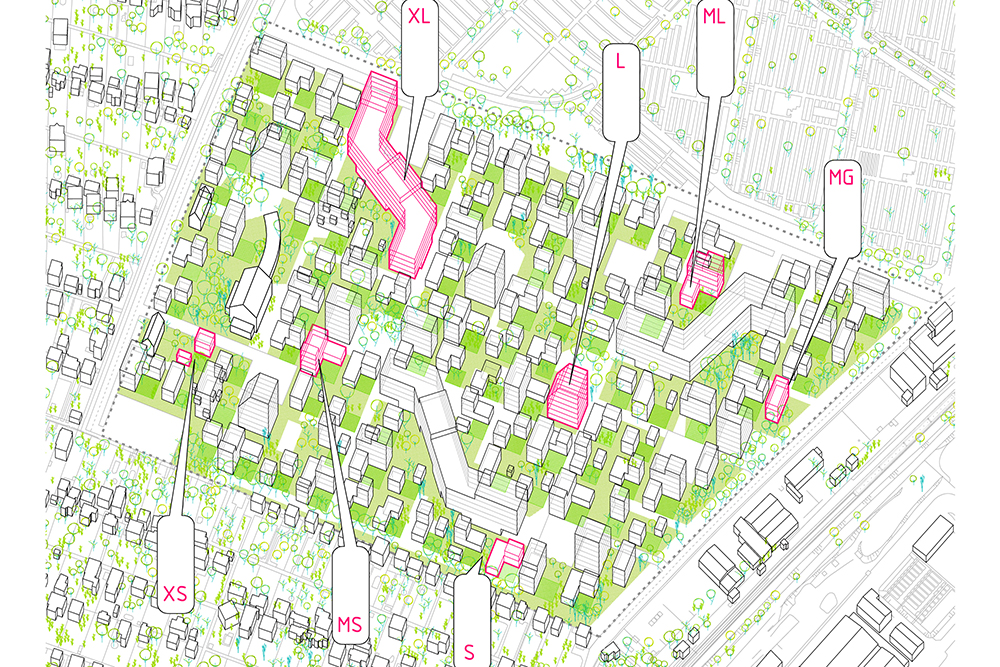
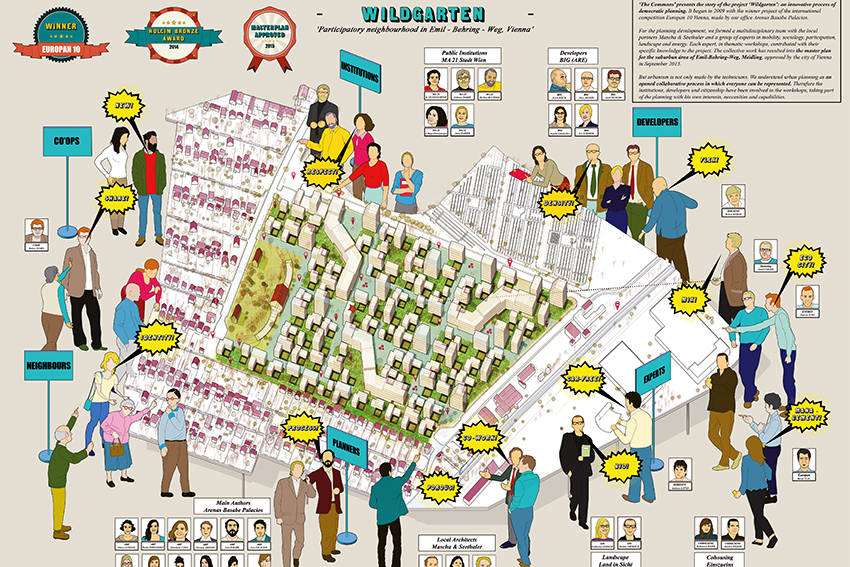
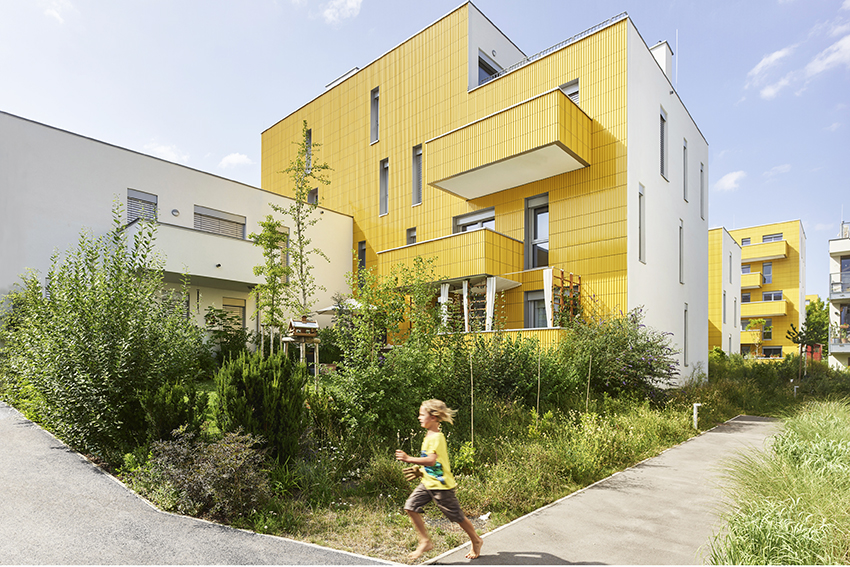
In addition to their role as urban planners and coordinators of the various designers, Arenas Basabe Palacios arquitectos were commissioned with the design and execution of 11 housing blocks in different scales, including 82 housing units with a total of 9500 sqm constructed surface containing community spaces, shared parking facilities for bicycles and commercial spaces in the ground floor zone.
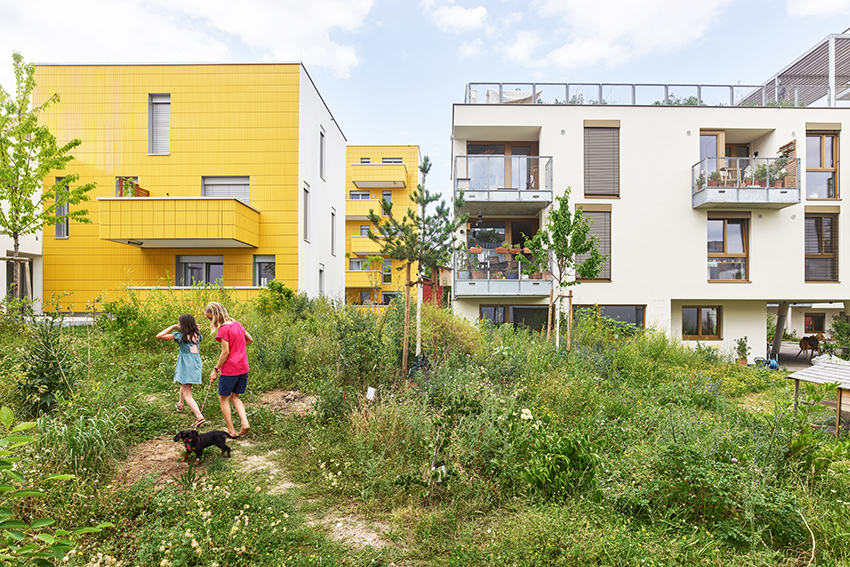
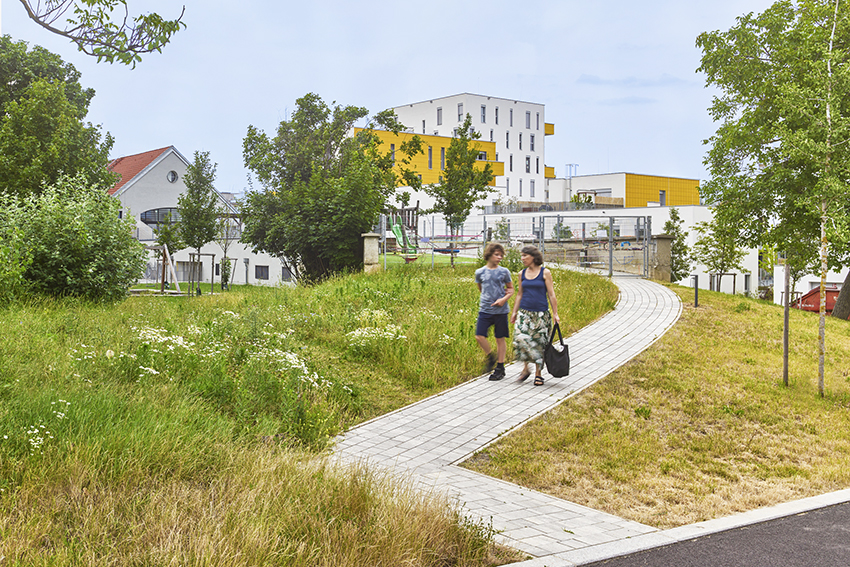
In the foreseen urban fabric, the series of buildings joins different urban elements: a rehabilitated historic building transformed into a cultural centre, a grouping of cooperative housing units, an urban square with local suppliers and services, etc. The wild/natural free space between the buildings, strengthens pedestrian connections and the continuity of local flora and fauna. Those characteristic green zones are low maintenance and flexible to adapt to resident’s needs.
PROJECT COMPLETED
Process
Category(ies): Direct order processes, Collaborative processes, Participation of the Living processes
Direct order processes
Following the competition, the site owner ARE commissioned the team to develop a masterplan for the competition site based on the winning idea, proposing a network of gardens to structure the area.
Following approval of the masterplan, ARE commissioned several teams of architects to develop the district and entrusted the Europan team with the design and construction of 11 housing blocks of various sizes, including 82 housing units, community spaces and commercial spaces.
Collaborative processes
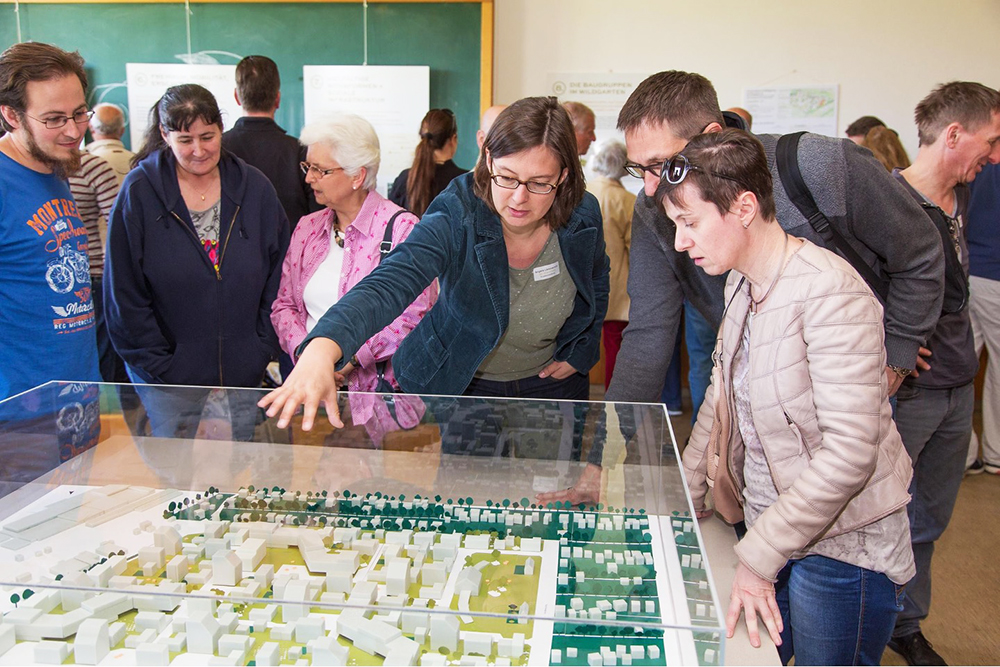
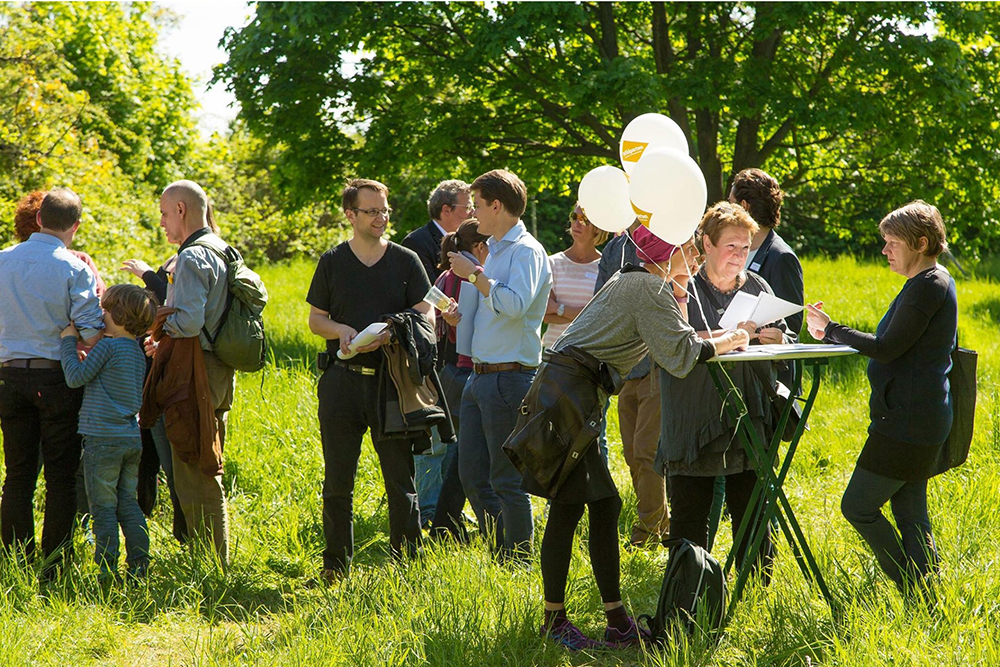
This urban structure was developed in collaboration with a local team of architects and various experts ranging from project management to landscaping, mobility, energy and sociology. Representatives from the district, the owner ARE and the Wien City Council MA21 also participated in the design of the masterplan until its approval by the city.
Participation of the Living processes
The garden matrix structuring the new district offers a multitude of green spaces that are flexible enough to adapt to residents' needs and allow local flora and fauna to thrive.