From ideas to process-projects
Europan 10 - Seilh (FR)
« Neighbourhood knitwork »
Project strategy family:
- Ecological connections
- Inclusive morphologies
- Inventive typologies
- Reinterpreted heritage
- Urban articulations
Process category:
- Direct order processes
- Competitive processes
- Co-creative processes
- Collaborative processes
- Participative processes
- Participation of the Living processes
- Adaptative legal framework processes
Authors: AR 357 (Hervé Ambal, Thersile Dufaud, David Rupp, FR)
Client(s): Urban community of Grand Toulouse, City of Seilh, Oppidea, AMETIS + IDEOM (housing - B8 lot)
Dates: 2009-2027
Driving forces: Client + Team
Site
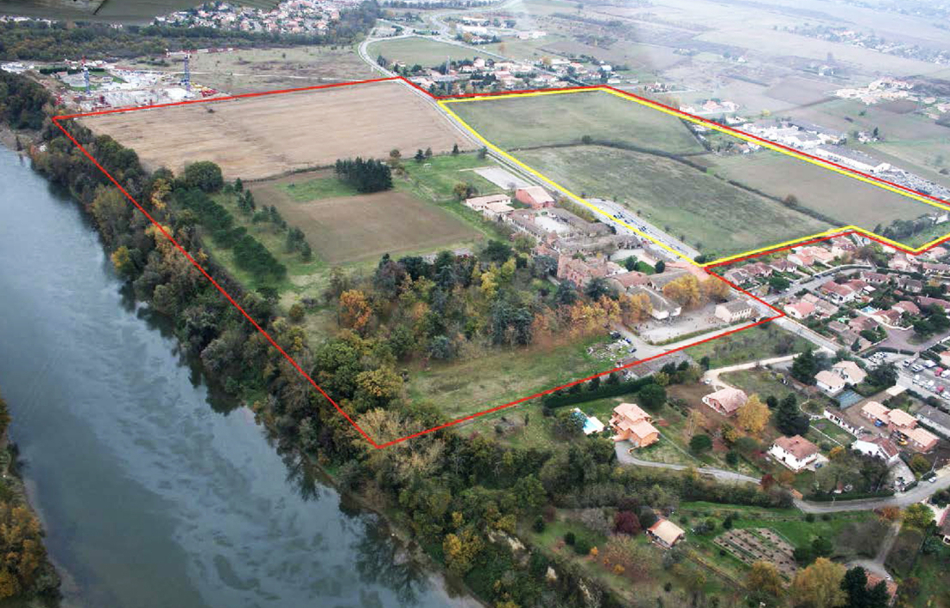
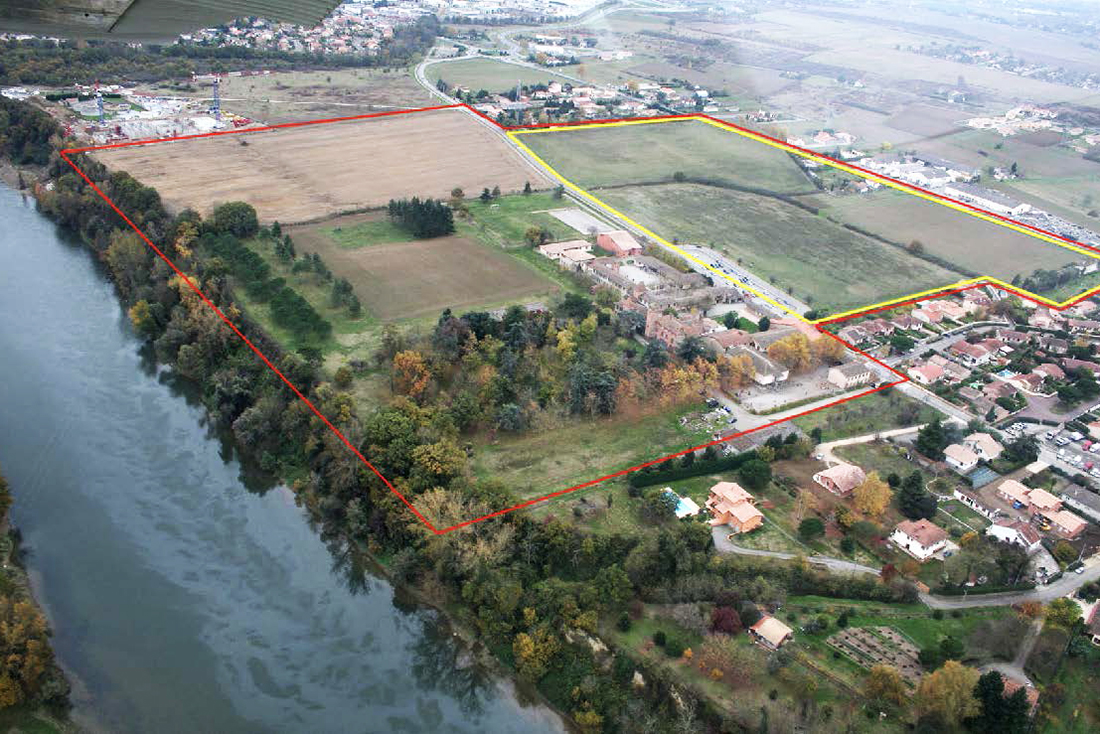
Seilh (FR)
SCALE XL/L SIZE 20ha / 9.5ha
In the suburbs of Toulouse, expe-riencing a strong economic development, Seilh (3,000 inhab.) leading to a residential demand. The city aims to create an ecological residential neighborhood—an alternative to singlefamily housing—combining built density, architectural diversity, and a variety of uses.
Awarded Idea
Project - Ideas
Neighbourhood knitwork
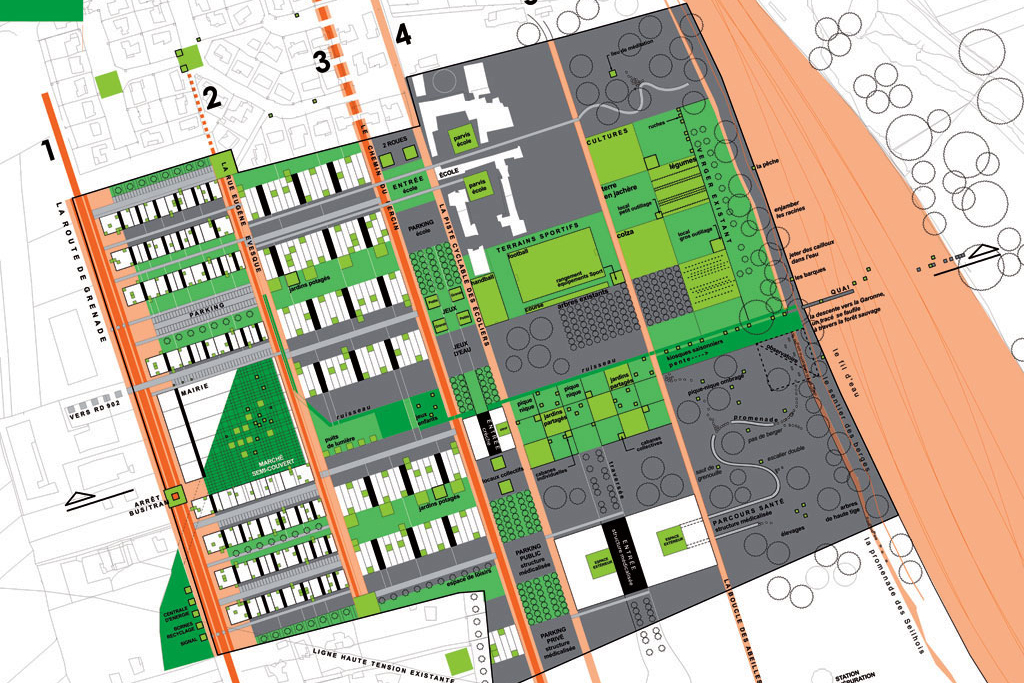
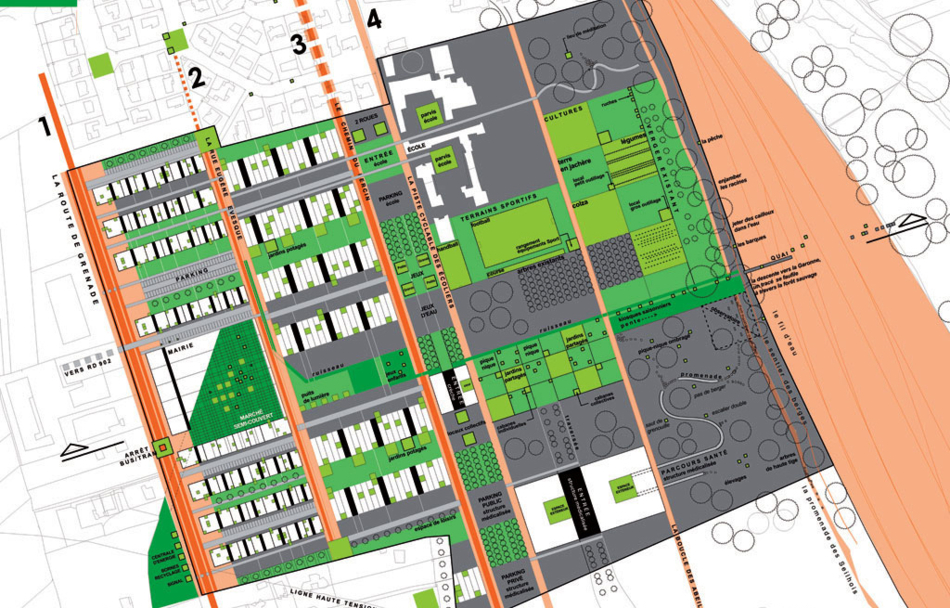
North/south-oriented traffic routes connect the various geographic centres of the urban area. They cross the site and define sections that gradually diverge, like the strips of the former agricultural fabric. The gradation offers different pathways between city and nature. The plots define living spaces or voids.
Project Strategy
Family: Inclusive morphologies
A GRADATION OF “GUIDING THREADS” / ROUTES BETWEEN DENSITY AND POROSITY
The tramway service to the site located on the city's outskirts allows for a rethinking of the relationship between residential urban morphology and urban transport in an area where travel is almost exclusively by car. Using the metaphor of weaving, the project proposes “interweaving yarn meshes with special needles to create a fabric.” Roads running North to South link the different geographical centres of the Toulouse conurbation. They weave its principal network, run across the site and define its divisions. These sections gradually separate, reflecting the old strip form of the urban fabric. The gradual expansion runs both west to east and east to west, weaving a “guiding thread” of roads. The gradation offers different routes between city and nature, between the dense and the porous. Natural features are preserved (ditches, streams, hedges). The plots delineate living spaces or empty areas. A square emerges. Amenities take root.
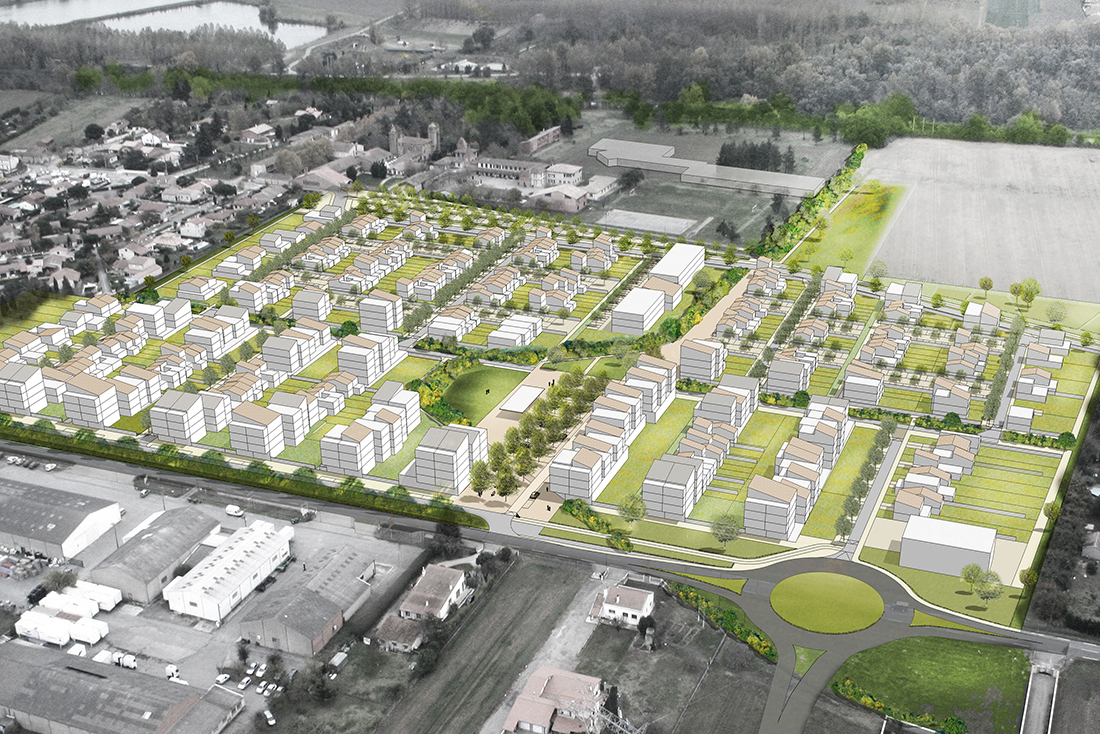
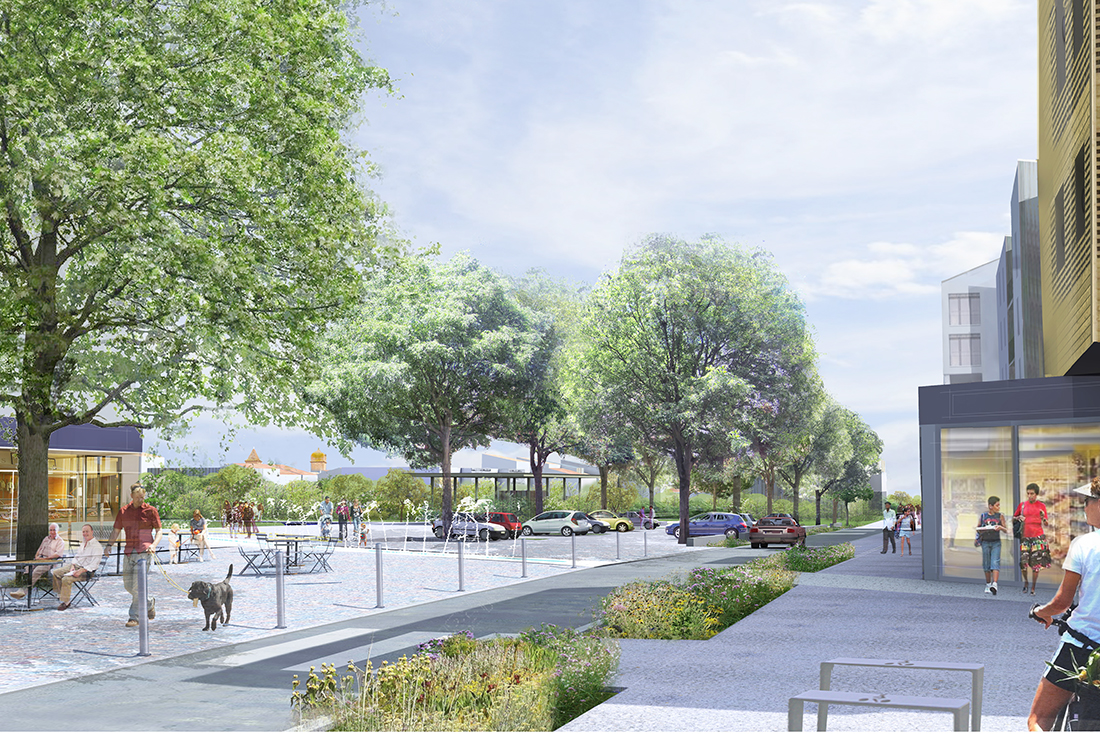
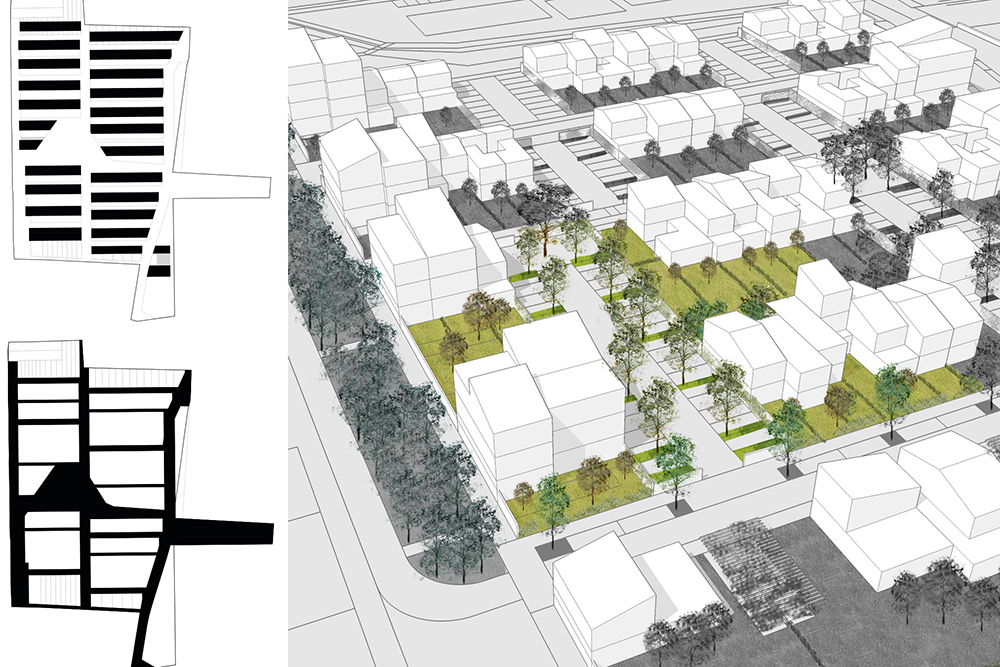
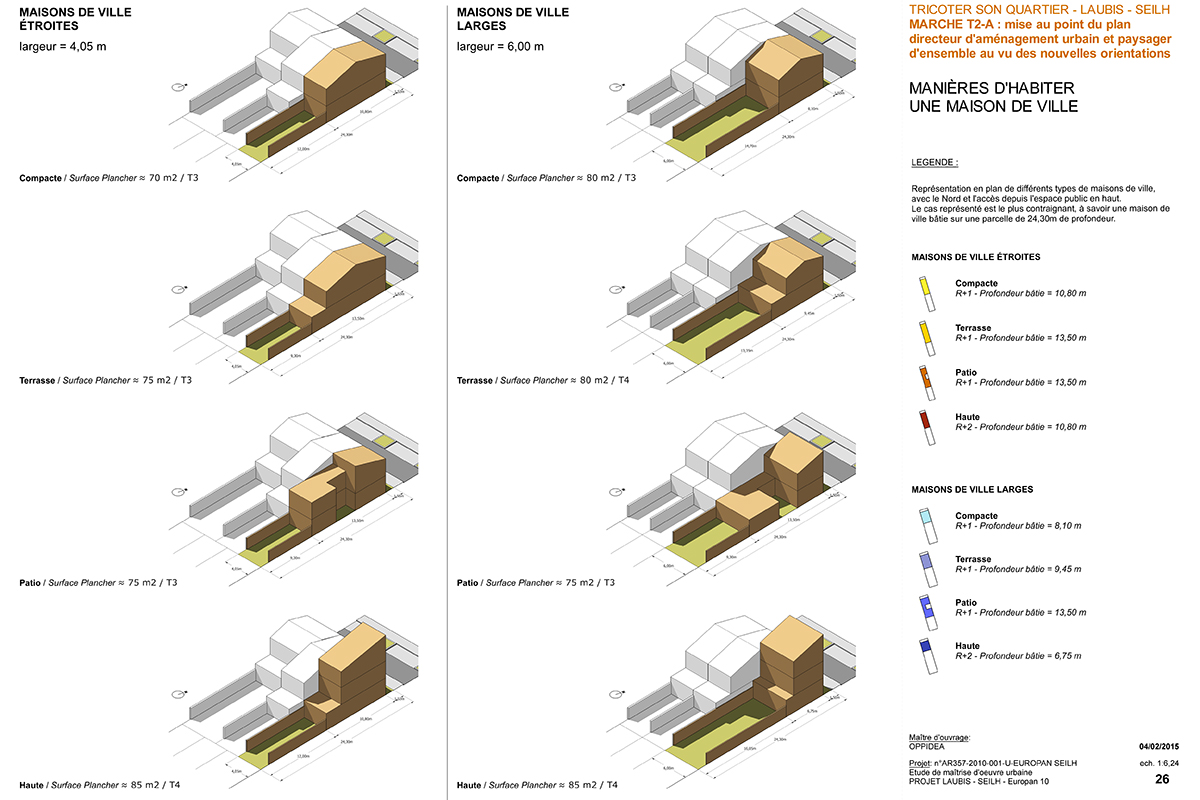
During the urban study phase, the team kept the generators principles of their Europan project:
- Cutting the blocks into strips perpendicular to structural axes,
- Landscape transition from Toulouse road in western edge to the Garonne in the East,
- A centrality to the district scale with shops and services.
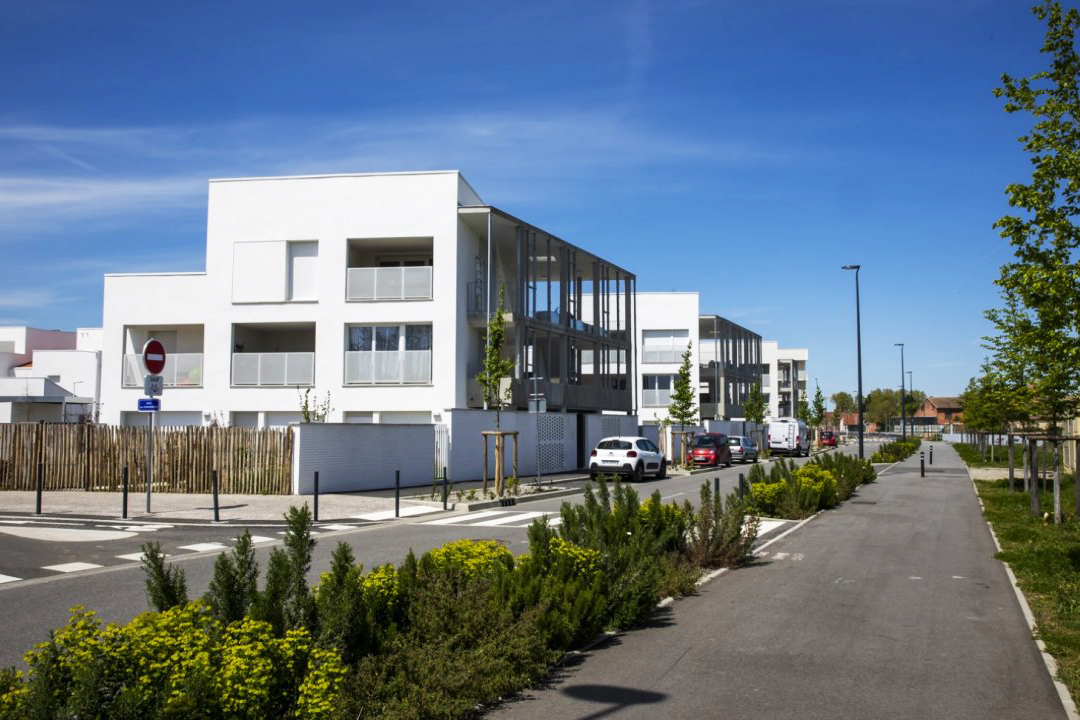
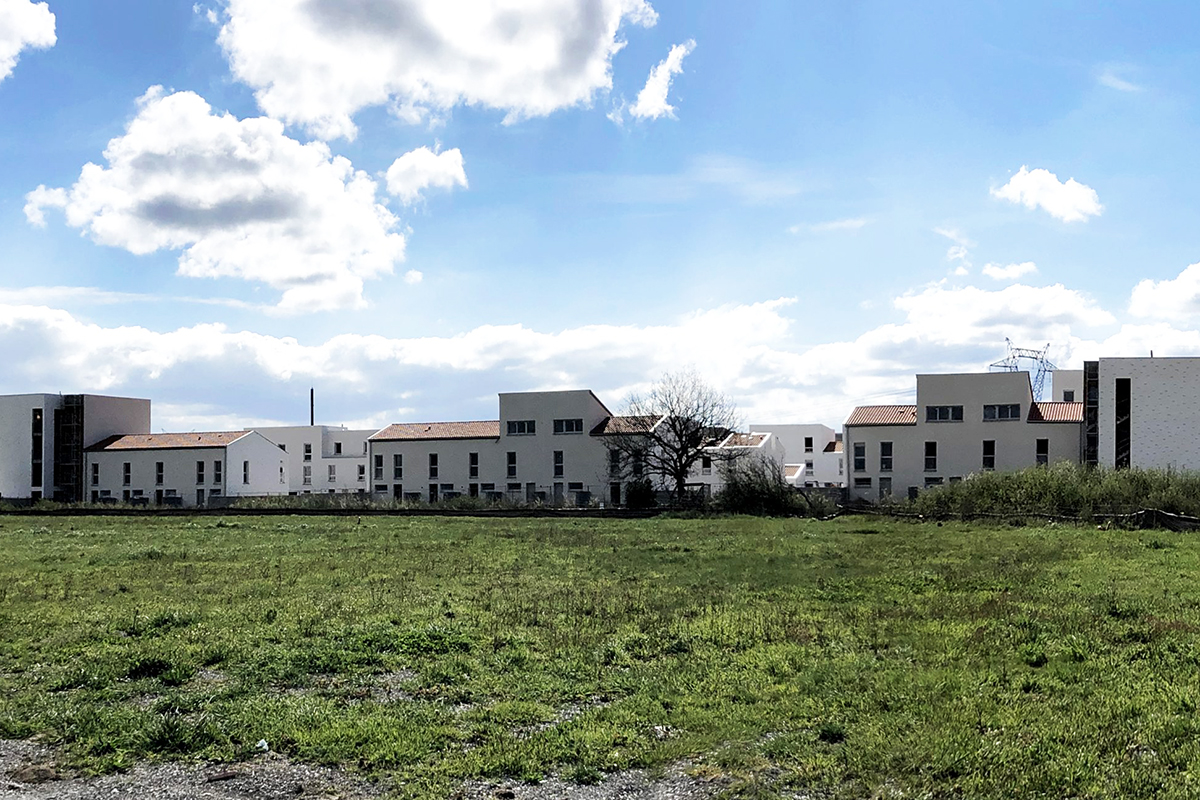
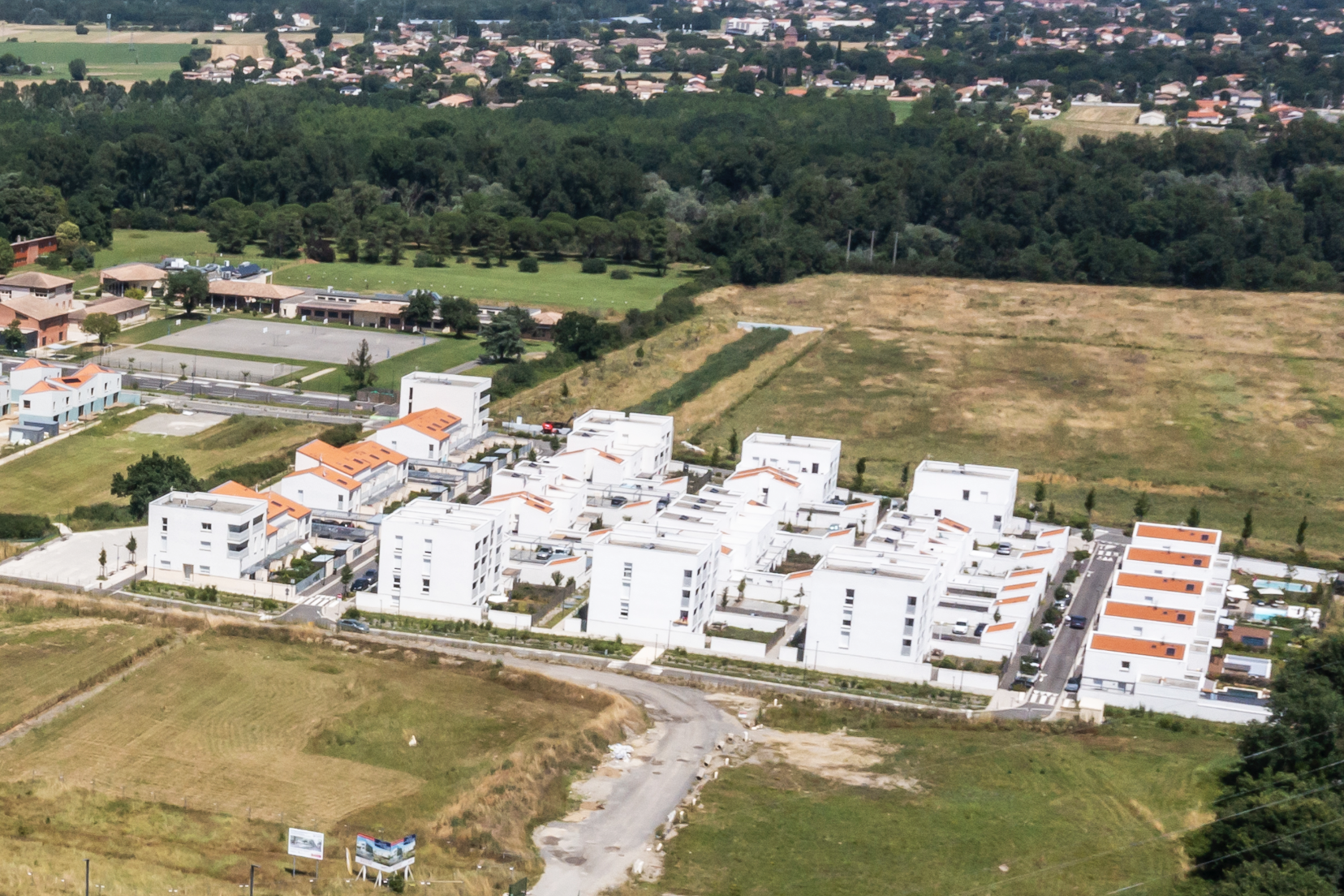
PROJECT IN CONSTRUCTION (2nd phase)
Process
Category(ies): Competitive processes, Collaborative processes, Direct order processes
Competitive processes
Following the competition, the urban community organised a preliminary consultation with the three Europan rewarded teams, enabling them to further develop their projects and test their feasibility, as well as the teams' ability to adapt to changes on the site. The AR357 team was ultimately selected for an urban project management assignment including monitoring of the urban project, project management of public spaces and feasibility for a future housing programme.
Collaborative processes
This urban project management phase involved various local stakeholders and experts in order to produce the architectural, urban, landscape, environmental and technical specifications for the entire Laubis development zone (ZAC), which will include a total of 530 housing units, an intergenerational facility, a gymnasium, shops and craft workshops.
Direct order processes
Following approval of the masterplan, there was a phase involving land acquisition and tendering for housing lots. AMETIS + IDEOM entrusted the AR357 team with architectural project management for the B8 lot, including 8 collective dwellings and 14 terraced houses.