From ideas to process-projects
Europan 10 - Gembloux (BE)
« Looking through »
Project strategy family:
- Ecological connections
- Inclusive morphologies
- Inventive typologies
- Reinterpreted heritage
- Urban articulations
Process category:
- Direct order processes
- Competitive processes
- Co-creative processes
- Collaborative processes
- Participative processes
- Participation of the Living processes
- Adaptative legal framework processes
Authors: DEMOGO (Simone Gobbo, Alberto Mottola, Davide De Marchi, IT)
Client(s): City of Gembloux
Dates: 2009 - 2015
Driving forces: Cleint + Team
Site
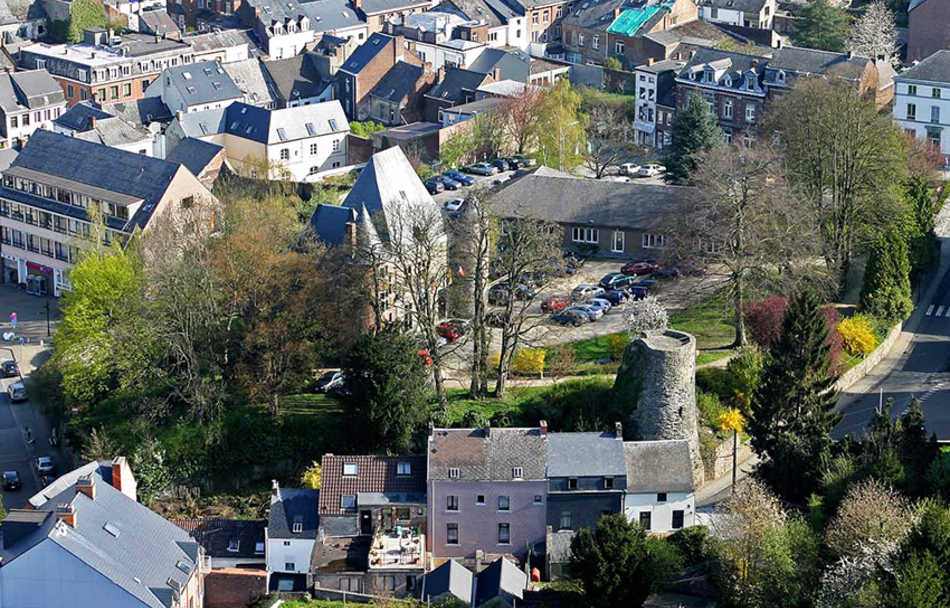
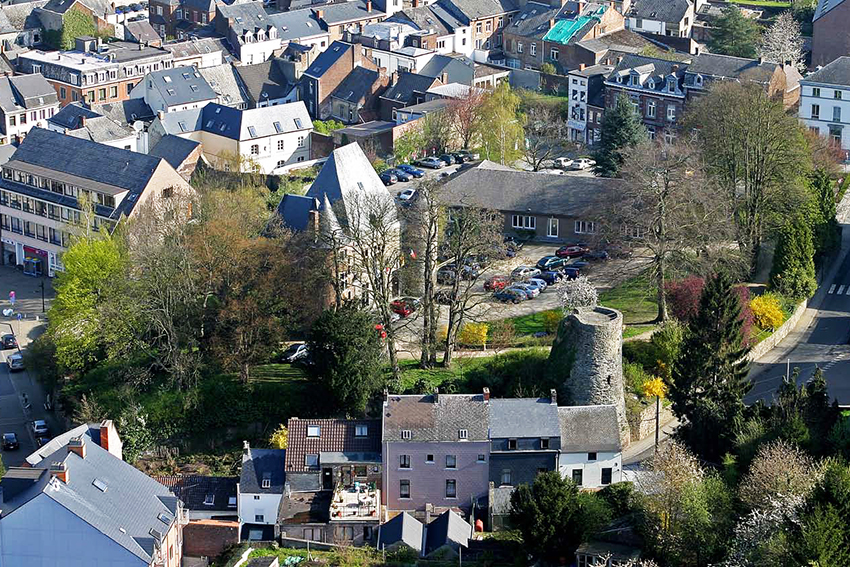
Gembloux (BE)
HISTORICAL CENTRE
SCALE S/S SIZE 2ha / 0.85ha
Over the last fifteen years, Gembloux has had the largest increase in population in the Walloon Region and an increase in economic and research activities.
The aim is to strengthen the city's presence by building a new town hall within the boundaries of Epinal Park, overlooking the Place de l'Hôtel de Ville, thus recreating a continuous built frontage.
The park itself will be redesigned as a meeting place for the entire population. Its strategic location between the medieval centre and the primary urban expansion gives it a distinct advantage.
Awarded Idea
Project - Ideas
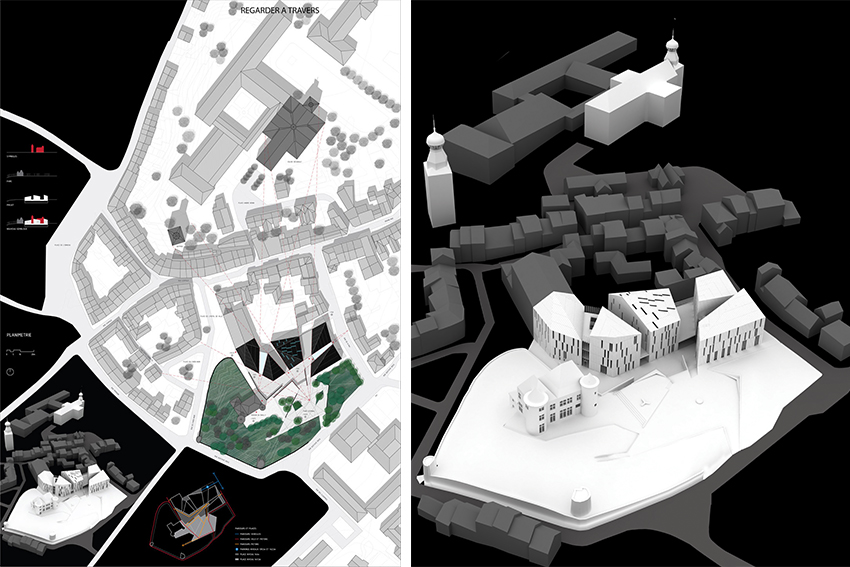
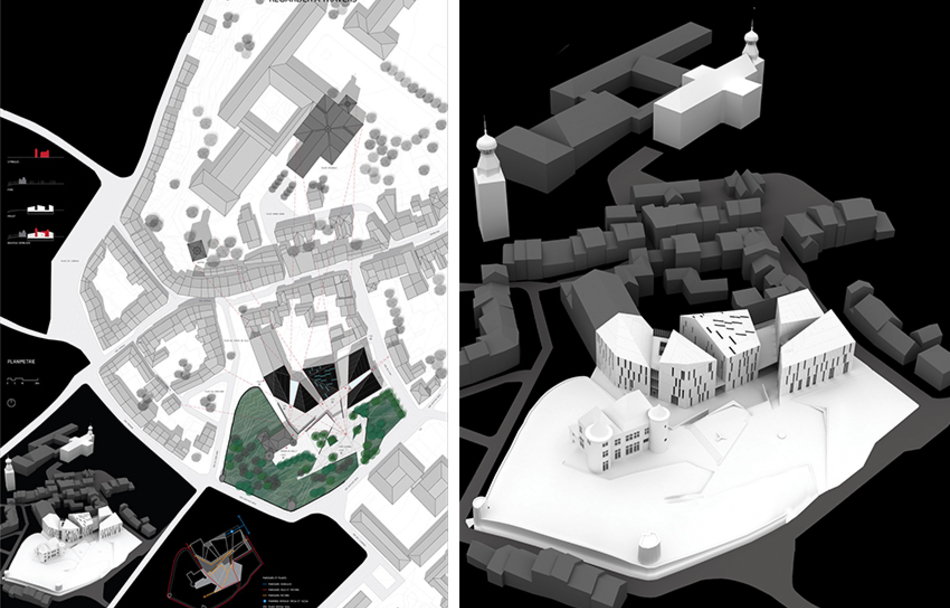
Looking through
FRAGMENTATION AND CONTEXTUALISM
The project establishes a strong dialogue between the new administrative town pole and the context, in order to imagine the ”Beffroi”, the “Eglise Decanale” and the “Maison du Bailly” as prolongations of the same project. The new buildings graft them in the urban nucleus on the ”Place de d’Hôtel de ville”, creating a re-stitching with the existing fabric, offering the possibility to devote the whole south side to the “Parc d’Epinal”, a garden thought as an urban park open to the city. The generating sights on the symbols of Gembloux fragment the new town pole in smaller parts in conformity with the urban staircase and they create a separated functional program in more fields. The new fragments settle and emerge from the irregular surface of the park exploiting the variations of quota, they constitute two new public spaces complementary one to the other. Established in different quotas the two squares are parts of the ascensional route: city - town hall - park. Buildings fragment the new town centre into smaller parts, according to the urban scale, and create a programme divided into functional areas.
Project Strategy
Family: Inclusive morphologies
CONTEMPORARY INSERTION IN THE EXISTING
The supervisory authorities acknowledged that the Europan competition itself constituted a competitive process that could lead to a negotiated procedure. This allowed the city of Gembloux to negotiate a contract with the Italian winning team for the reconstruction of the town hall. For this project, the team partnered with Belgian offices: Syntaxe Architectes for local operational support and Bureau d'études Lemaire for structural and engineering assistance.
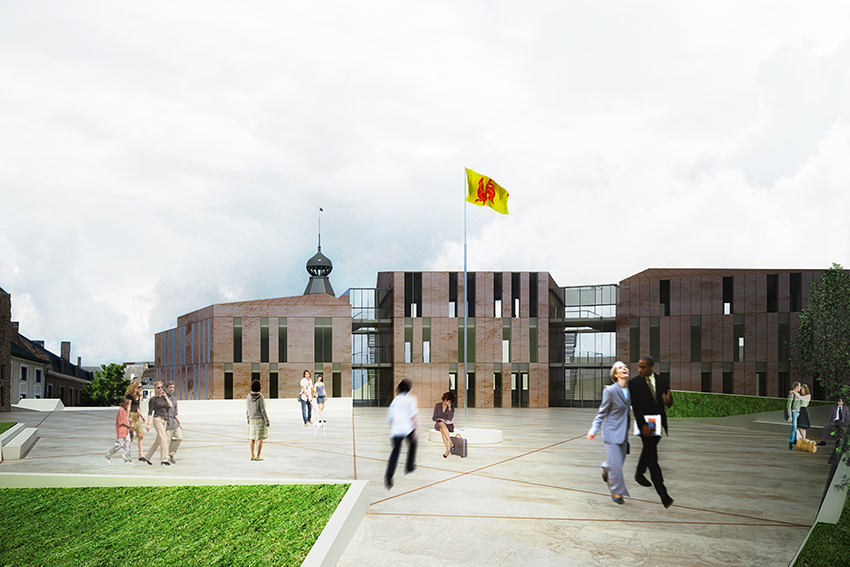
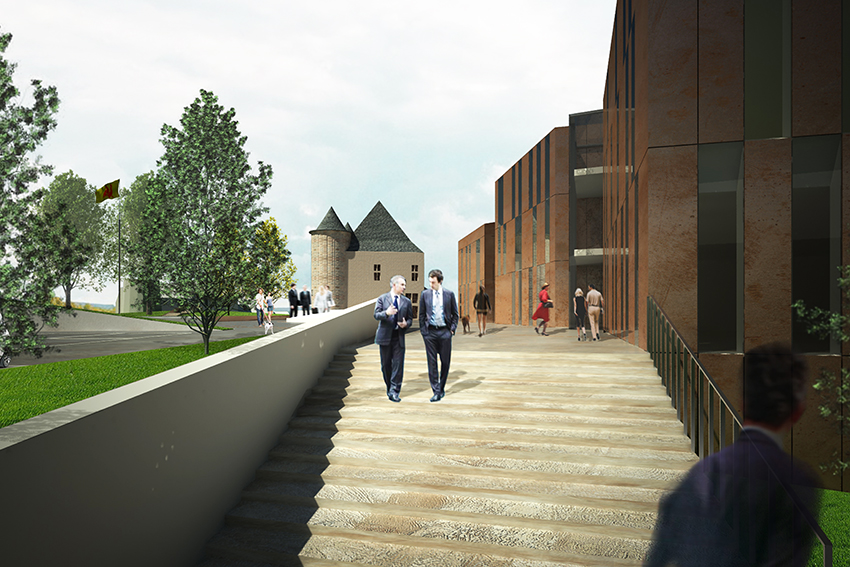
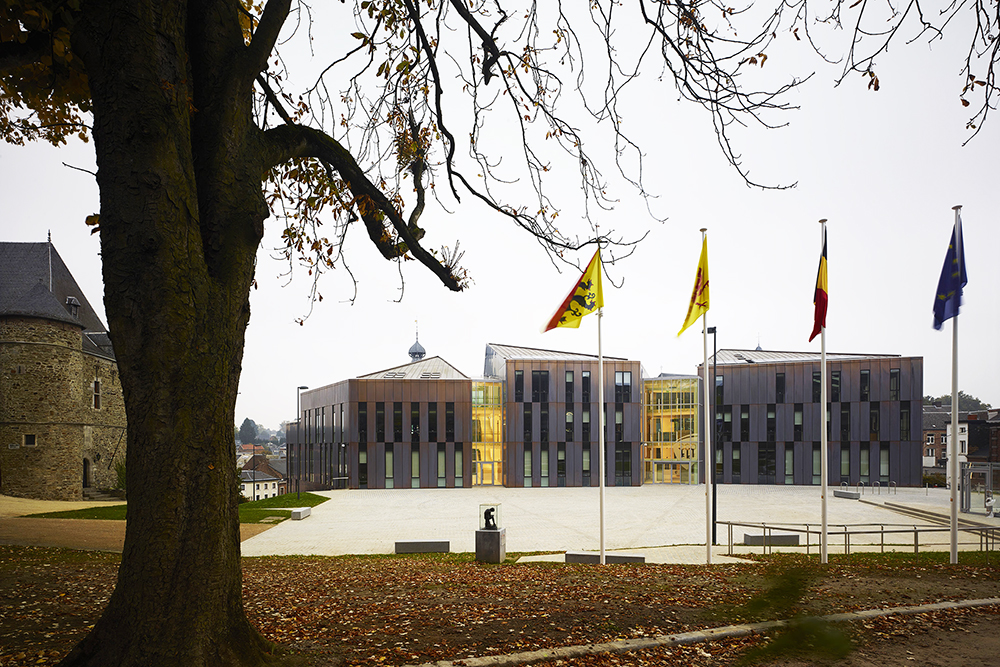
The implemented project is grafted in the ancient urban centre, with its tangle of irregular and narrow streets, and it's designed as an operation of coherent integration with the existing urban tissue: in this case the south front of the building is entirely opened on the Parc d’Epinal, that becomes the central garden for Gembloux citizens.
The definition of specific points of view focused on the symbols of Gembloux activates a process of fragmentation of the unitary mass of the building into three smaller parts, that adjust to the urban scale of the city and house different functional programs.
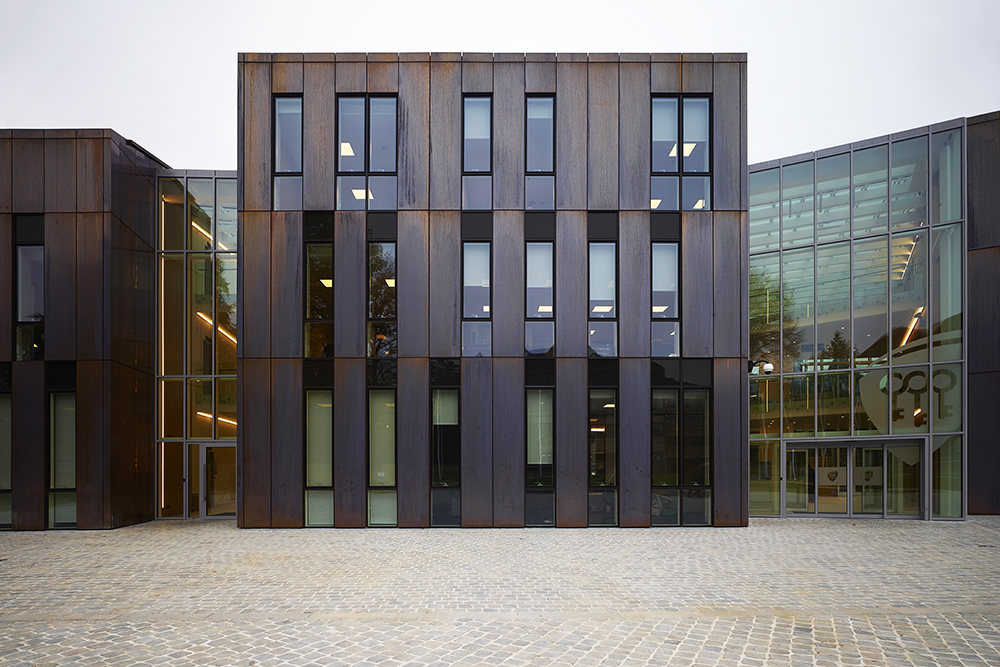
The resulting fragments, covered with a copper cladding, take advantage of the various elevations of the project site and generate an articulated sequence of public spaces complementary to each other. Between each of these blocks there are glazed diaphragms: empty space between solid building masses, places of transition from where the user can appreciate the surrounding townscape.
PROJECT COMPLETED
Process
Category(ies): Direct order processes
Direct order processes
Following the competition, the team was commissioned to rebuild the town hall, working in partnership with two Belgian agencies for local operational support and structural and engineering assistance.