From ideas to process-projects
Europan 12 - Amstetten (AT)
« OPEN »
Project strategy family:
- Ecological connections
- Inclusive morphologies
- Inventive typologies
- Reinterpreted heritage
- Urban articulations
Process category:
- Direct order processes
- Competitive processes
- Co-creative processes
- Collaborative processes
- Participative processes
- Participation of the Living processes
- Adaptative legal framework processes
Authors: Ramon Bernabe Simo (ES), Tomas Labanc (SK)
Client(s): City of Amstetten, ÖBB
Dates: 2013 - 2018
Driving forces: Client
Site
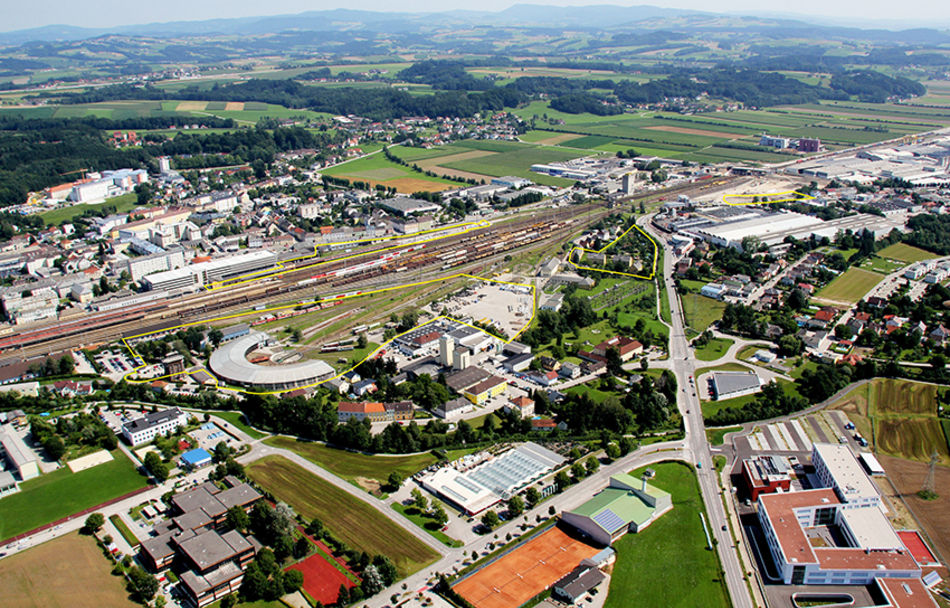
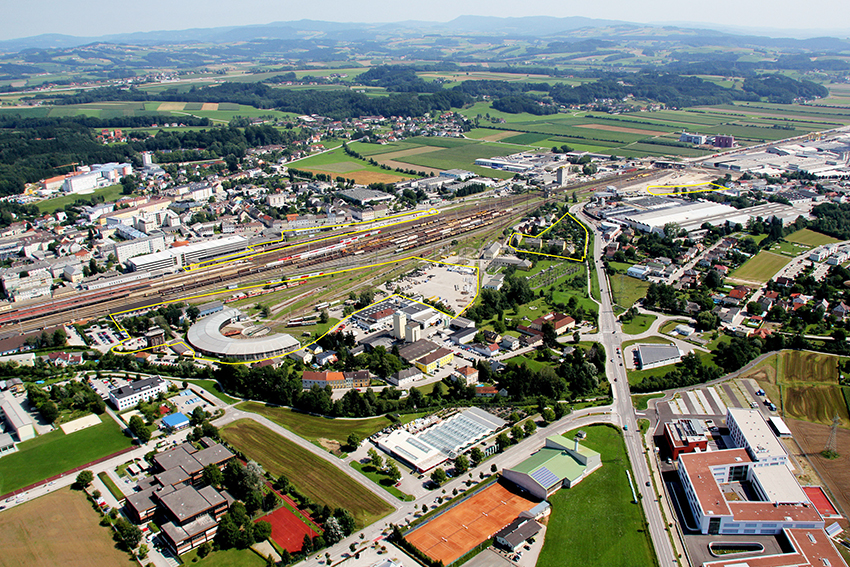
Amstetten (AT)
SCALE XL/L SIZE 117ha / 1.8; 0.6; 5.6; 1.2; 1ha
The main east-west train line of Austria runs through the town. Due to technological and logistical adaptations the railway company can offer parts of their terrain for urban develo-pment. The city want to take advantage of this opportunity and adapt its border to the railway as a productive limit with 2 faces, one directed to the city, the other to the trains.
The city asked for an overall strategy – “a common sense” – for the fragmented areas, to see their tasks in an overall development-concept which will redefine the relation between the city and the railway. The physical, the programmatic and the cultural relationship have to be studied.
Awarded Idea
Project - Ideas
OPEN
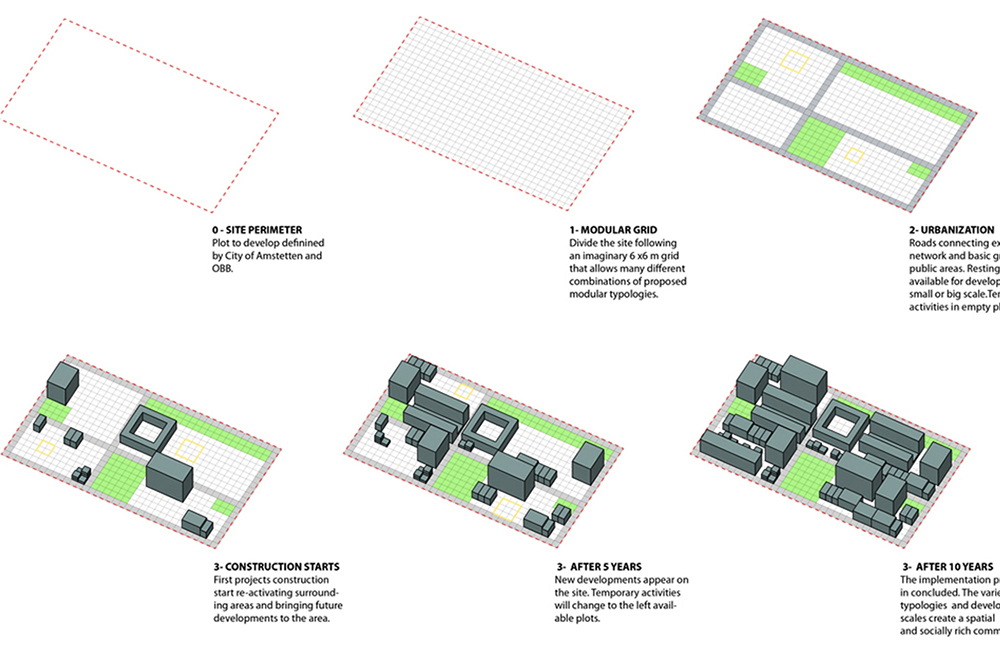
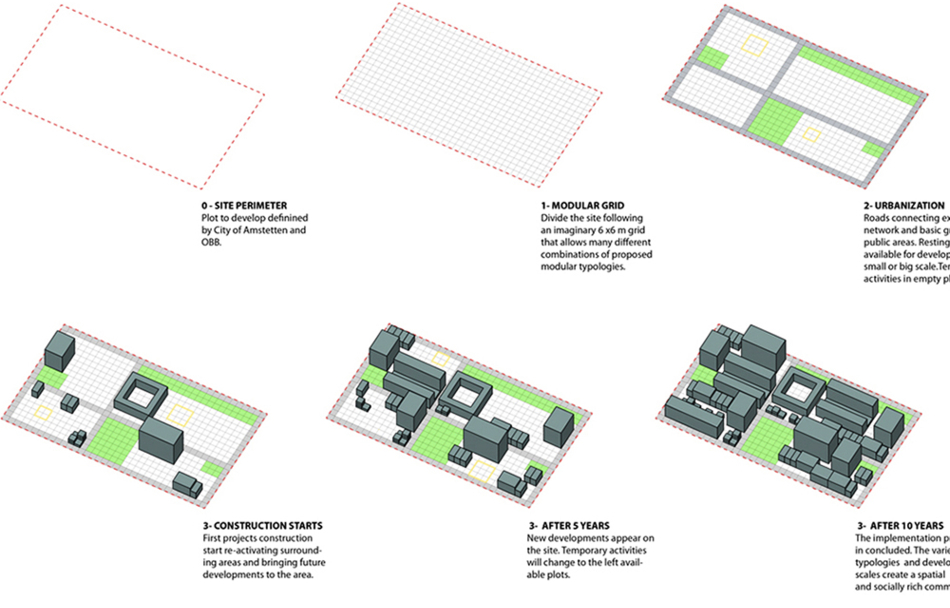
A FLEXIBLE GROWTH STRATEGY
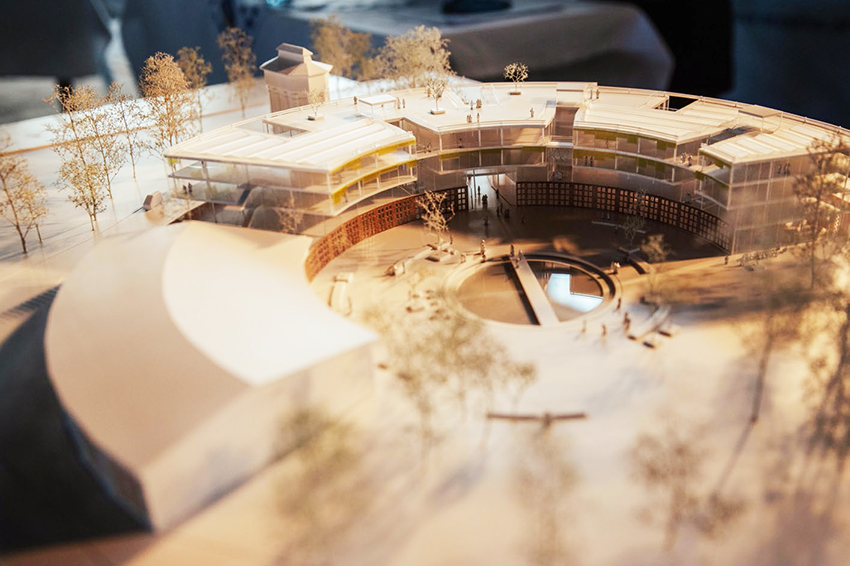
“When the future is unknown, the most logical course of action is to propose something flexible.” Cities are dynamic and ever-changing entities. If we assume that a city experiences positive growth over time, the most important goal in planning is to ‘control’ or ‘predict’ which direction and form the urban growth will take. By creating a series of flexible typologies that could work for very different programmatic scenarios, the team allows change of use in the future and fosters mixed use. With a strategy of different typologies, the sites will grow organically to generate diversity. It will eliminate districts that ‘die at night’ by providing 24/7 activity, creating rich spatial qualities and most importantly, a diverse community of people.
Project Strategy
Family: Inclusive morphologies
A FLEXIBLE MASTERPLAN
Based on the winning concept, the team developed an urban planning principle for the five sites submitted to the competition. The team created a more precise and detailed urban proposal, adjusting the built areas to meet density and programmatic goals, refining building typologies to adapt them to different functions, and improving the quality of public spaces and mobility, while maintaining the principles of flexibility, mixed-use development, and varied urban forms.
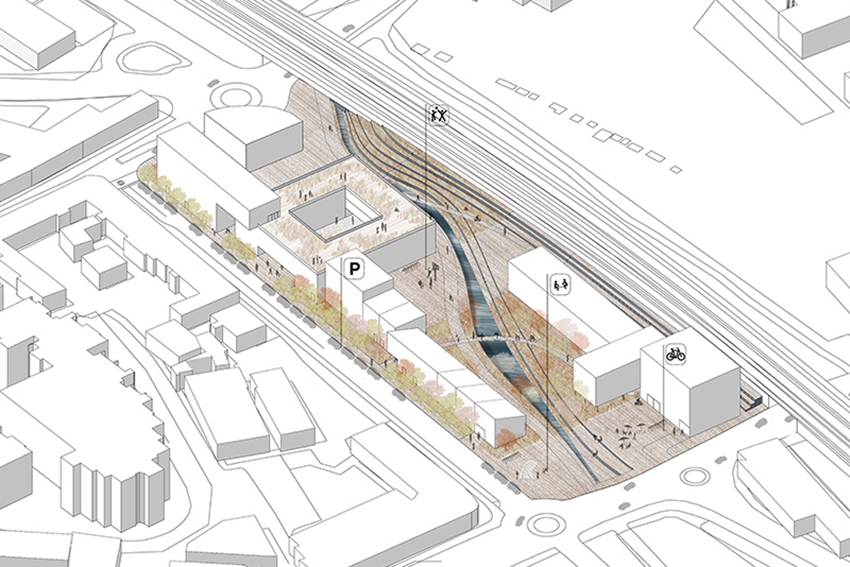
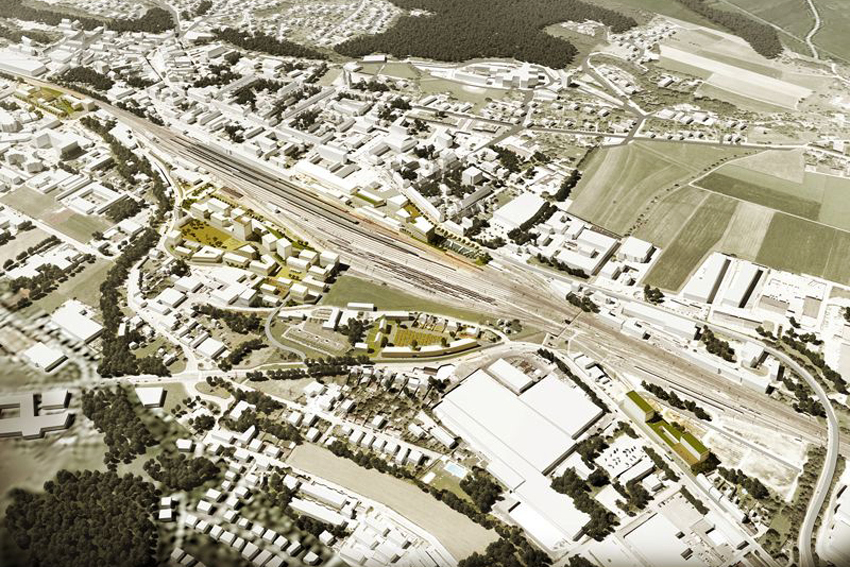
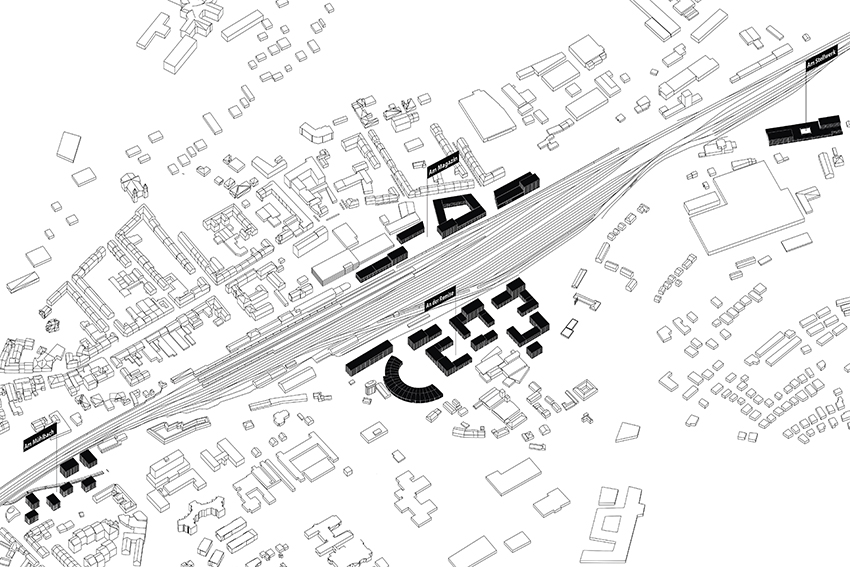
A master plan was then developed for four of the five sites, based on the urban planning concept but incorporating some modifications defined with the stakeholders involved—the old train depot building was retained, but the program remained the same: diversity of uses and an emphasis on the relationship between life and work.
The City of Amstetten approved this master plan and formalized it into a legal planning document, thus launching the development of the four sectors, each with its own distinct identity:
- Site 1: "Am Magazin" – a healthcare hub including medical services, housing, retail, and public spaces
- Site 2: "An der Remise" – a central hub featuring high-density housing, shared spaces (fitness, coworking, events), restaurants, rooftop amenities, etc.
- Site 3: "Am Stellwerk" – a logistics and office area connected to the railway network
- Site 4: "Am Mühlbach" – a green, residential neighborhood by the water, within walking distance of the town centre.
The team's mission concluded with the approval of the master plan by the city, which is now operational.
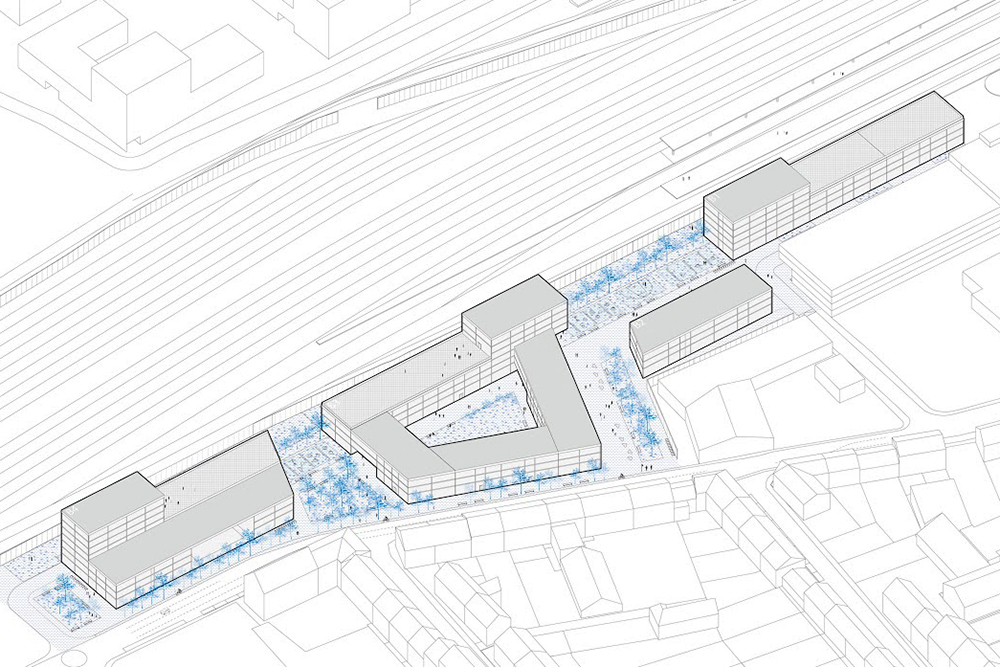
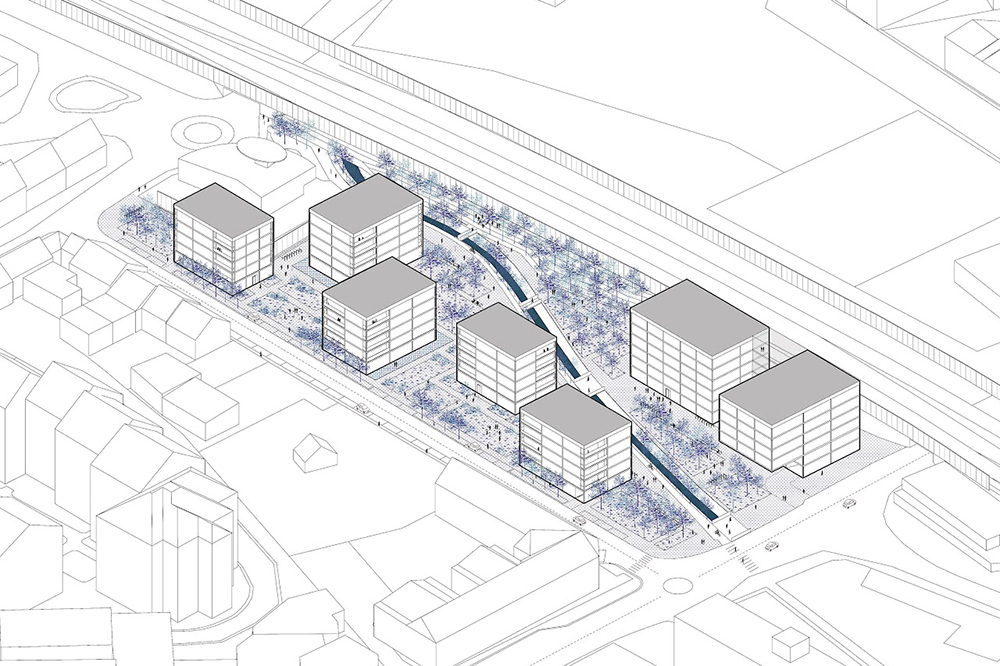
PROJECT COMPLETED
Process
Category(ies): Direct order processes, Collaborative processes
Direct order processes
Following the competition, the winning team signed a contract with ÖBB (the national railway company) to develop an urban planning concept for the 5 competition sites. The team was then commissioned to develop a masterplan for 4 of the 5 sites initially studied, based on the urban planning concept, while taking into account new parameters defined by the stakeholders involved.
Collaborative processes
To develop the urban planning concept, the team organised 8 workshops with local stakeholders in order to refine their initial project into a more precise urban proposal that was better suited to the client's requirements.